Qun Kwa vs Xiu He Fu: Traditional Chinese Wedding Attire Guide
The Renaissance of Traditional Chinese Ceremonial Wedding Attire
In recent years, the global revival of traditional Asian garments has profoundly influenced modern bridal fashion. For Han Chinese brides, the morning tea ceremony and traditional wedding banquets demand attire that honors ancestral heritage while celebrating marital bliss. While the Western white gown often dominates the main ceremony, the traditional Chinese wedding dress remains the undisputed centerpiece of the morning rituals. According to cultural historians and publications like BBC Culture, the modern resurgence of traditional clothing is not merely a nostalgic trend, but a profound reclamation of cultural identity among younger generations.
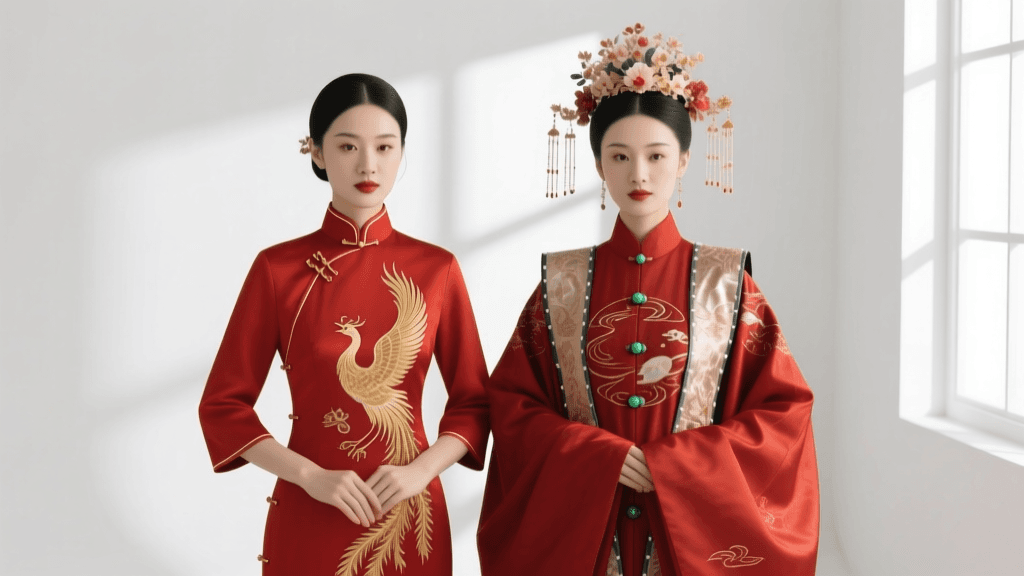
When selecting traditional Chinese wedding attire, brides are primarily choosing between two iconic silhouettes: the structured, heavily embroidered Qun Kwa (裙褂) and the flowing, romantic Xiu He Fu (秀禾服). Understanding the historical context, craftsmanship, and practical nuances of each is essential for making an informed decision for your ceremonial wardrobe.
The Qun Kwa (裙褂): A Masterpiece of Density and Heritage
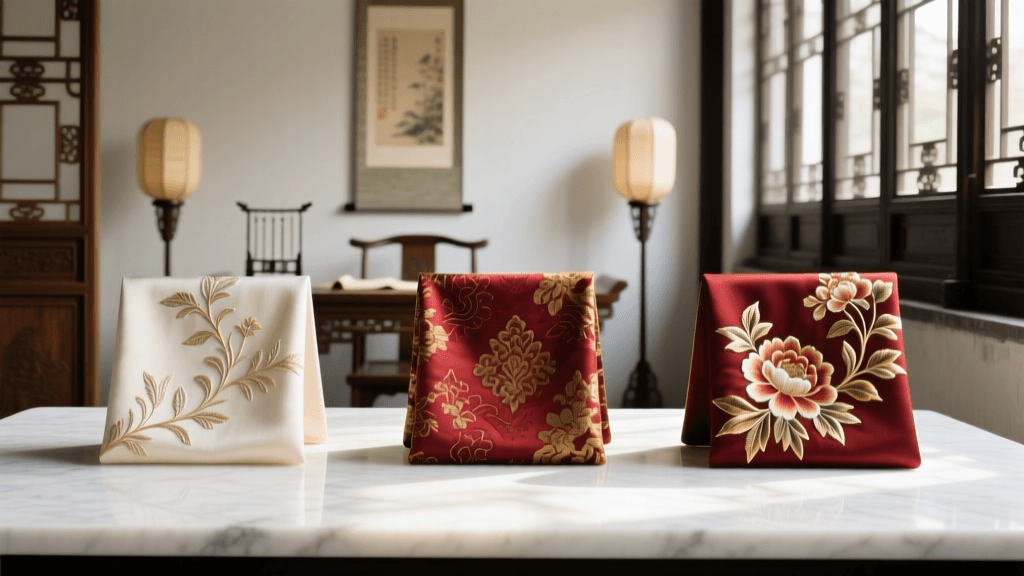
Originating from the Guangdong and Fujian regions during the Qing Dynasty, the Qun Kwa is a two-piece ensemble consisting of a tailored jacket (Kwa) and a straight, pleated skirt (Kwa Qun). It is renowned for its stiff, structured silhouette and dense, intricate embroidery. The base fabric is typically heavy silk or satin, entirely covered in gold and silver thread embroidery—a technique known as panjin.
The Qun Kwa is categorized into five distinct tiers based on the density of its embroidery, which directly dictates its cost, weight, and prestige:
- Xiao Wu Fu (Small Five Blessings): The most accessible tier, featuring about 30% embroidery density. The red base fabric is highly visible.
- Zhong Wu Fu (Medium Five Blessings): Features roughly 50% embroidery density, offering a balanced look between red silk and metallic threads.
- Da Wu Fu (Large Five Blessings): With 70% density, the gold and silver threads begin to dominate the visual landscape.
- Gua Hou (Jacket Empress): Boasting 90% embroidery density, this tier is incredibly heavy and luxurious, with only faint glimpses of the red base.
- Gua Huang (Jacket Emperor): The pinnacle of Qun Kwa craftsmanship. It features 100% embroidery density, meaning the red base fabric is entirely concealed by metallic threads. Crafting a single Gua Huang can take a master artisan over a year to complete.
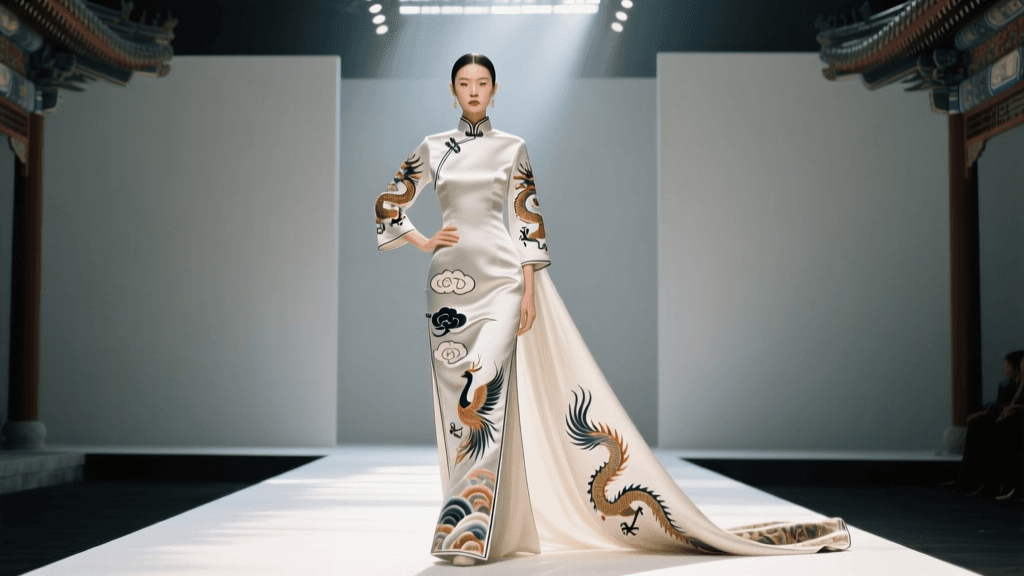
As noted by the Victoria and Albert Museum (V&A), the motifs embroidered onto these garments are deeply symbolic. Dragons and phoenixes represent the balance of yin and yang, while peonies symbolize wealth, and pomegranates denote fertility. The structural rigidity of the Qun Kwa demands impeccable posture, making the bride appear regal and statuesque during the formal tea ceremony.
The Xiu He Fu (秀禾服): Fluidity, Comfort, and Modern Romance
Unlike the centuries-old Qun Kwa, the Xiu He Fu is a relatively modern invention, though it draws heavy inspiration from historical Hanfu and Qing Dynasty folk clothing. The name originates from the protagonist 'Xiu He' in the acclaimed 2001 television drama Orange is Red, who wore a similar garment. Today, it has become a staple for brides seeking comfort and a softer, more romantic silhouette.
The Xiu He Fu features a relaxed, A-line jacket with wide, flared sleeves (often layered with contrasting silk linings) and a voluminous, pleated skirt that resembles the traditional Ma Mian Qun (horse-face skirt). Because it is not heavily padded or stiffened with dense metallic threads like the Qun Kwa, the Xiu He Fu is significantly lighter and more forgiving in its fit.
The embroidery on a Xiu He Fu is typically done using colorful silk threads rather than just gold and silver, allowing for a more vibrant and diverse color palette. While red remains the dominant base color, accents of jade green, sapphire blue, and soft pink are common in the floral and avian motifs. Its fluid drape makes it exceptionally comfortable for sitting cross-legged on the marital bed during the traditional 'bed-setting' and tea-serving rituals.
Qun Kwa vs. Xiu He Fu: A Structured Comparison
| Feature | Qun Kwa (裙褂) | Xiu He Fu (秀禾服) |
|---|---|---|
| Silhouette | Straight, structured, tailored fit | A-line, relaxed, flowing drape |
| Embroidery Material | Primarily gold and silver metallic threads | Silk threads, occasionally mixed with metallics |
| Skirt Style | Straight, narrow pleated skirt | Wide, voluminous A-line or Ma Mian pleated skirt |
| Weight & Comfort | Heavy, stiff, requires good posture | Lightweight, flexible, highly comfortable |
| Best Ceremony Phase | Formal Tea Ceremony, Banquet Entrance | Bed-setting rituals, intimate family teas, photoshoots |
| Price Range (Purchase) | $1,500 to $30,000+ USD | $400 to $3,000 USD |
Actionable Guide: Sourcing, Sizing, and Budgeting
Choosing between renting and buying, as well as knowing how to measure for these garments, requires careful planning. Traditional Chinese bridal attire does not follow Western sizing charts; it relies on precise, custom measurements.
1. Essential Measurements for Custom Tailoring
Because the Qun Kwa features a stiff Mandarin collar and a boxy cut, inaccurate measurements can lead to restricted movement or an unflattering fit. Provide your tailor or rental boutique with the following exact metrics:
- Shoulder Width: Measured from the edge of one shoulder bone to the other across the back.
- Bust: Measured around the fullest part of the chest while wearing the undergarments you plan to use on the wedding day.
- Waist: Measured at the natural narrowest point, crucial for the skirt's waistband.
- Sleeve Length: For Xiu He Fu, measure from the shoulder seam down to the wrist bone, accounting for the flared cuff.
- Hollow to Hem: Measured from the base of the neck (hollow) down to the desired skirt length, factoring in the exact heel height of your wedding shoes (typically 2 to 3 inches).
2. Timeline and Sourcing Strategy
If you are purchasing a custom, hand-embroidered Qun Kwa from master artisans in Chaozhou or Suzhou, you must begin the process 8 to 12 months before your wedding date. Hand-embroidery is a painstaking process, and master embroiderers often have extensive waitlists.
For brides on a tighter timeline or budget, renting is the most practical route. High-end bridal boutiques in major cities (or specialized online rental services) offer pristine Qun Kwa and Xiu He Fu rentals. Book your rental fittings 3 to 4 months in advance to ensure availability, especially if your wedding falls during the autumn peak season or auspicious lunar dates.
3. Cost Breakdown (USD Estimates)
- Xiu He Fu Rental: $150 – $400
- Qun Kwa Rental (Da Wu Fu to Gua Hou): $500 – $2,000
- Xiu He Fu Purchase (Machine/Semi-hand embroidery): $400 – $1,200
- Qun Kwa Purchase (Hand-embroidered Xiao/Da Wu Fu): $1,500 – $5,000
- Gua Huang Purchase (Museum-grade hand embroidery): $15,000 – $40,000+
Pro Tip: To verify if a Qun Kwa is hand-embroidered, examine the inside of the jacket. Machine embroidery often uses a continuous bobbin thread that creates a uniform, slightly raised backing. Hand-embroidery (specifically Chaozhou goldwork) will show individual thread knots and a flatter, more organic reverse side.
Essential Accessories for the Complete Bridal Look
The garments are only half the equation. Traditional Chinese ceremonial attire requires specific accessories to complete the auspicious aesthetic.
- Gold Jewelry (Long Feng Zhuo): The Dragon and Phoenix bangles are non-negotiable for the Qun Kwa. Brides typically stack multiple 24K gold bangles on both wrists, gifted by parents and in-laws.
- Hairpieces: For the Xiu He Fu, brides often opt for elaborate silk floral hairpins, jade combs, and dangling pearl ornaments. The Qun Kwa pairs best with a structured updo adorned with gold filigree crowns or traditional red velvet pompoms.
- The Red Veil (Hong Gai Tou): While historically used to conceal the bride's face until the groom lifted it in the bridal chamber, modern brides use the red veil primarily for photography and the entrance into the banquet hall.
Preserving Your Heirloom: Storage and Care
Many brides choose to purchase their Qun Kwa to pass it down as a family heirloom. Proper conservation is vital to prevent the metallic threads from tarnishing or the silk from degrading. According to textile conservation guidelines outlined by institutions like the Metropolitan Museum of Art, antique and vintage textiles require specific environmental controls.
Never hang a heavy Qun Kwa on a standard hanger, as the weight of the gold thread will warp the silk shoulders and cause tearing. Instead, fold the garment gently using acid-free, unbuffered tissue paper to cushion the folds and prevent hard creases. Store the ensemble in a breathable, 100% cotton or cedar wood box in a cool, dark, and humidity-controlled environment (ideally 50% relative humidity). Avoid plastic dry-cleaning bags, which trap moisture and emit gases that accelerate silk degradation and metallic tarnishing.
Conclusion
Whether you choose the majestic, armor-like brilliance of the Qun Kwa or the poetic, sweeping elegance of the Xiu He Fu, traditional Chinese wedding attire offers a profound connection to centuries of cultural artistry. By understanding the craftsmanship, planning your measurements and budget meticulously, and honoring the symbolism woven into every thread, you ensure that your ceremonial wardrobe is as meaningful as it is breathtaking.