Chinese Haute Couture: Runway Trends and Styling Tips
The Intersection of Eastern Heritage and Western Haute Couture
The intersection of traditional Chinese garment-making and Western haute couture represents one of the most fascinating cross-cultural dialogues in modern fashion history. From Yves Saint Laurent’s groundbreaking 1977 'Les Chinoises' collection to John Galliano’s theatrical Dior runway in 1997, Chinese aesthetics have continually captivated global designers. Today, this dialogue has evolved from mere orientalist inspiration to a profound appreciation of structural engineering and artisanal craftsmanship. Modern collectors and fashion enthusiasts are no longer just looking for surface-level motifs; they are seeking the architectural brilliance of the qipao, the structural ingenuity of traditional frog buttons, and the painstaking artistry of regional embroidery techniques.
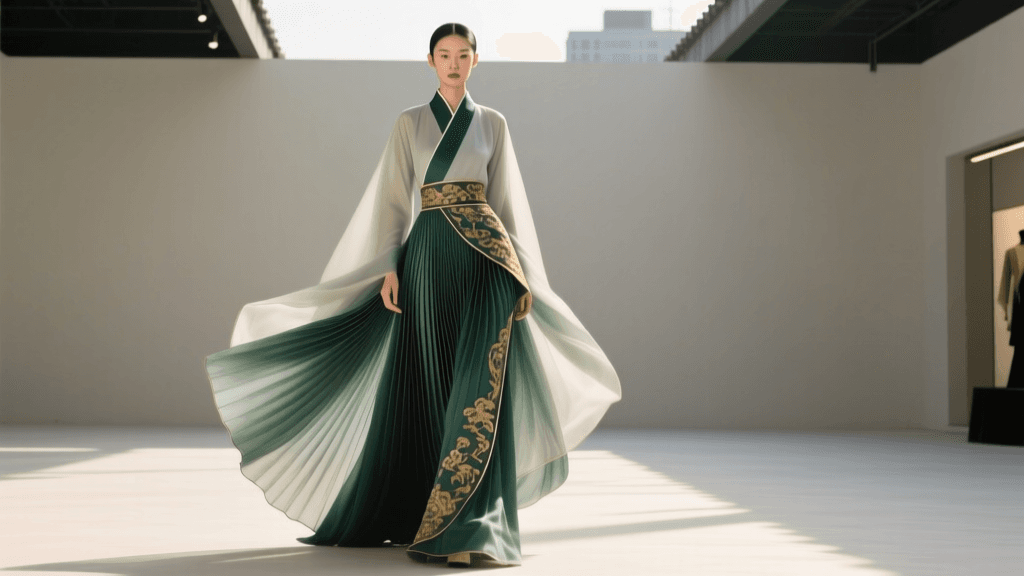
This evolution was masterfully documented in The Metropolitan Museum of Art's landmark 2015 exhibition, 'China: Through the Looking Glass', which explored how Chinese cinematic and sartorial aesthetics have shaped high fashion. Today, Chinese couturiers like Guo Pei are not just participating in the global conversation; they are leading it, merging imperial grandeur with contemporary silhouette design. For the modern wardrobe curator, understanding these runway trends provides a blueprint for integrating investment-level Chinese-inspired pieces into a contemporary, high-end wardrobe.
Core Elements: Suzhou Embroidery and Structural Motifs
At the heart of Chinese couture lies an uncompromising dedication to textile manipulation and surface ornamentation. The most revered of these techniques is Su Xiu (Suzhou embroidery). Recognized on UNESCO's Intangible Cultural Heritage list, Su Xiu is famous for its delicate, intricate patterns and the masterful technique of splitting a single silk thread into 16, 32, or even 64 finer strands. In a haute couture context, this allows for gradients and shading that mimic traditional ink-wash paintings, creating a three-dimensional texture that catches the light dynamically on the runway.
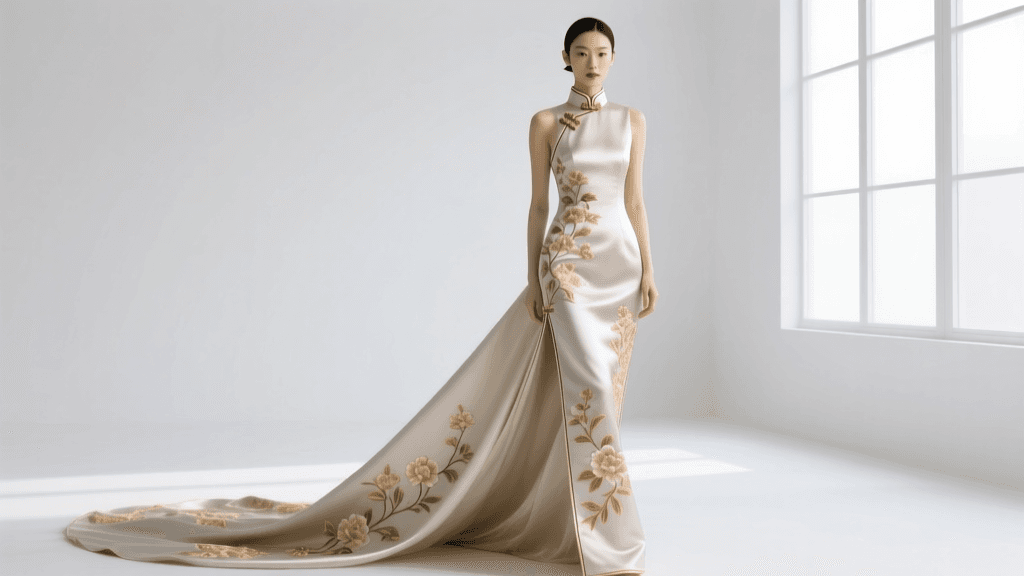
Beyond embroidery, structural elements like the Mandarin collar and Pan Kou (frog fasteners) have been radically reimagined. While traditionally used as functional closures on the qipao or tangzhuang, modern couturiers utilize oversized, jewel-encrusted Pan Kou as central bodice anchors or asymmetric shoulder closures. The collar itself has been exaggerated into architectural neckpieces that frame the face without restricting movement, a hallmark of contemporary luxury design.
Comparison: Traditional Application vs. Couture Adaptation
Understanding how traditional elements are translated onto the modern runway is crucial for identifying true couture pieces versus mass-market imitations. The table below outlines these critical adaptations.
| Design Element | Traditional Application | Haute Couture Adaptation |
|---|---|---|
| Pan Kou (Frog Buttons) | Functional, knotted fabric fasteners on mandarin collars and side slits. | Oversized, sculpted from metallic bullion or jade, used as structural corsetry or dramatic back closures. |
| Su Xiu (Suzhou Embroidery) | Flat, intricate floral or avian motifs on silk robes and formal wear. | 3D sculptural threadwork, double-sided embroidery on sheer organza, blending silk with metallic threads. |
| Qipao Silhouette | Form-fitting, knee-length, with functional side slits for mobility. | Architectural draping, floor-sweeping trains, asymmetrical cuts, and integrated corsetry for shape manipulation. |
| Xiangyunsha Silk | Traditional gambiered silk used for breathable, everyday summer garments. | Treated as a luxury textile, color-blocked with heavy brocades, and used for avant-garde outerwear. |
Actionable Guide: Sourcing, Measuring, and Styling
Integrating Chinese-inspired couture into your personal collection requires a strategic approach to sourcing, precise tailoring, and thoughtful styling. Whether you are commissioning a bespoke piece from a master tailor in Shanghai or sourcing a vintage-inspired couture jacket from a luxury boutique, precision is paramount.
The Bespoke Measurement Protocol
Standard Western sizing does not translate to the structural demands of a couture qipao or a tailored Tang jacket. When commissioning a piece, you must provide your atelier with at least 18 distinct measurements to ensure the garment molds to your body without restricting movement. Essential measurements include:
- Apex to Apex: Crucial for the placement of embroidery motifs across the bust.
- Hollow to Hem (Front and Back):strongstrong> Dictates the exact break of the gown over your chosen footwear.
- Neck Height and Circumference: The Mandarin collar must sit flush against the jawline without choking; a 1cm gap is standard for comfort.
- Shoulder Slope (Degree): Determines how the heavy silk brocade will drape without pulling at the armhole.
- Thigh Circumference: Essential for calculating the exact starting point of the qipao’s side slit to ensure modesty while walking.
Investment Guide: Costs and Timelines
True Chinese couture is an investment in time and artisanal labor. When budgeting for these pieces, consider the following market standards for bespoke and high-end retail:
- Bespoke Su Xiu Couture Jacket: $8,000 - $25,000. (Lead time: 6-12 months, depending on embroidery density).
- Custom Qipao with Partial Embroidery: $3,000 - $7,000. (Lead time: 3-5 months).
- Vintage Auction Piece (1920s-1930s): $2,500 - $15,000+. (Requires immediate professional conservation and archival storage).
For those looking to explore contemporary Chinese couture on a global scale, examining the works of officially recognized members of the Chambre Syndicale de la Haute Couture is essential. The Fine Arts Museums of San Francisco's 'Guo Pei: Couture Beyond' exhibition perfectly illustrates the thousands of hours required to construct these runway masterpieces, justifying their premium market valuation.
Styling for the Modern Gala
The most common mistake enthusiasts make when styling heavily embroidered Chinese couture is over-accessorizing. A Su Xiu jacket or a fully beaded qipao is a standalone work of art. To style these pieces for a modern black-tie event or gala, adhere to the principle of contrast. Pair a heavily structured, embroidered silk couture jacket with a minimalist, bias-cut silk slip dress in a solid, muted tone (such as charcoal, ivory, or deep emerald). Avoid statement necklaces; instead, opt for jade or nephrite drop earrings that echo the traditional Pan Kou knots. Footwear should remain unadorned—classic satin pumps or minimalist strappy heels ensure the hemline and embroidery remain the focal point.
Preservation and Care for Investment Pieces
Couture-level Chinese garments, particularly those utilizing natural silk, metallic threads, and delicate embroidery, require stringent preservation methods. Never hang a heavily embroidered qipao or jacket on a standard wire or wooden hanger; the weight of the embroidery will distort the silk warp and weft over time. Instead, store the garment flat in an acid-free archival box, layered with unbuffered acid-free tissue paper to prevent the metallic threads from oxidizing or catching on the silk base.
When cleaning is necessary, avoid traditional dry cleaning, as the harsh chemicals can strip the natural sericin from the silk and tarnish metallic bullion threads. Seek out a textile conservator who specializes in historical and couture garments. For minor surface dust, use a soft, natural-bristle brush and gently stroke in the direction of the embroidery grain. By treating these garments as wearable museum pieces, you ensure their structural integrity and aesthetic brilliance endure for generations, maintaining their value both as fashion statements and cultural artifacts.