Chinese Motifs on Global Runways: Haute Couture Meets Tradition
The Global Ascent of Chinese Sartorial Heritage
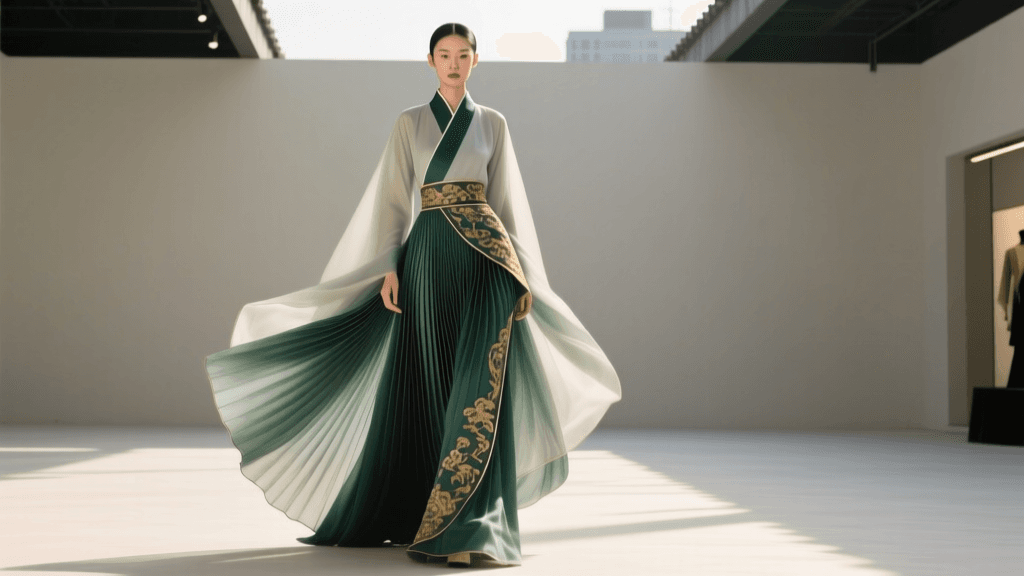
The intersection of traditional Chinese garments and international haute couture represents one of the most dynamic dialogues in modern fashion history. For decades, Western runways have drawn inspiration from the rich tapestry of Asian traditions, often blurring the lines between cultural appreciation and orientalism. However, in recent years, a profound shift has occurred. The global fashion capital is no longer merely borrowing silhouettes; it is engaging deeply with the structural engineering, historical significance, and artisanal techniques of traditional Chinese clothing. From the architectural pleats of the mamianqun (horse-face skirt) to the meticulous knotting of pankou fasteners, Chinese sartorial heritage is being reimagined on the world's most prestigious runways.
For fashion enthusiasts, collectors, and practitioners of the Hanfu movement, understanding how these traditional elements are adapted for international couture provides a masterclass in styling, textile selection, and garment construction. This guide explores the evolution of Chinese fashion on the global stage and offers actionable advice on how to integrate these couture-level traditions into a contemporary wardrobe.
From Orientalism to Authentic Appreciation
Historically, Western interpretations of Chinese dress were heavily stylized and often inaccurate. Yves Saint Laurent’s seminal 1977 'Les Chinoises' collection and Ralph Lauren’s Fall 2011 runway show introduced Chinese motifs—such as mandarin collars, silk brocades, and dragon embroidery—to Western audiences, yet they often relied on theatrical stereotypes rather than authentic garment structures. The turning point in this narrative was widely recognized during The Metropolitan Museum of Art's 'China: Through the Looking Glass' exhibition in 2015. This landmark event meticulously examined how Chinese aesthetics have shaped global fashion, moving the conversation from superficial exoticism to a deeper appreciation of Chinese craftsmanship, textile innovation, and historical silhouettes.
Today, international fashion houses are collaborating directly with Chinese artisans. The integration of Suzhou embroidery (Su Xiu) and Yunjin brocade into Parisian ateliers demonstrates a mutual respect for heritage techniques. Designers are now studying the flat-pattern cutting methods of the Qing dynasty and the zero-waste philosophy inherent in traditional Hanfu construction, applying these ancient principles to modern sustainable couture.
Guo Pei and the Pinnacle of Chinese Haute Couture
No discussion of Chinese fashion on the international runway is complete without acknowledging Guo Pei. As the first Chinese designer to be invited as a guest member of the Fédération de la Haute Couture et de la Mode in Paris, Guo Pei has single-handedly elevated traditional Chinese craftsmanship to the zenith of global luxury. Her work, famously worn by Rihanna at the 2015 Met Gala, merges imperial Chinese motifs with European structural tailoring.
As highlighted by the Fine Arts Museums of San Francisco's 'Guo Pei: Couture Beyond' exhibition, her garments require thousands of hours of hand-embroidery, utilizing techniques that date back millennia. Guo Pei’s use of goldwork, pearl inlay, and rigid silk interfacing transforms traditional Chinese robes into sculptural masterpieces. Her success has paved the way for a new generation of Chinese designers who refuse to compromise on their cultural identity, proving that traditional Asian garments possess the structural and aesthetic complexity required for haute couture.
Translating Runway Concepts to Wearable Tradition
While runway pieces are often avant-garde, the foundational elements of Chinese couture can be seamlessly integrated into everyday luxury wardrobes. Understanding the mechanics of these garments is essential for sourcing, styling, and even commissioning bespoke pieces.
The Mamianqun (Horse-Face Skirt)
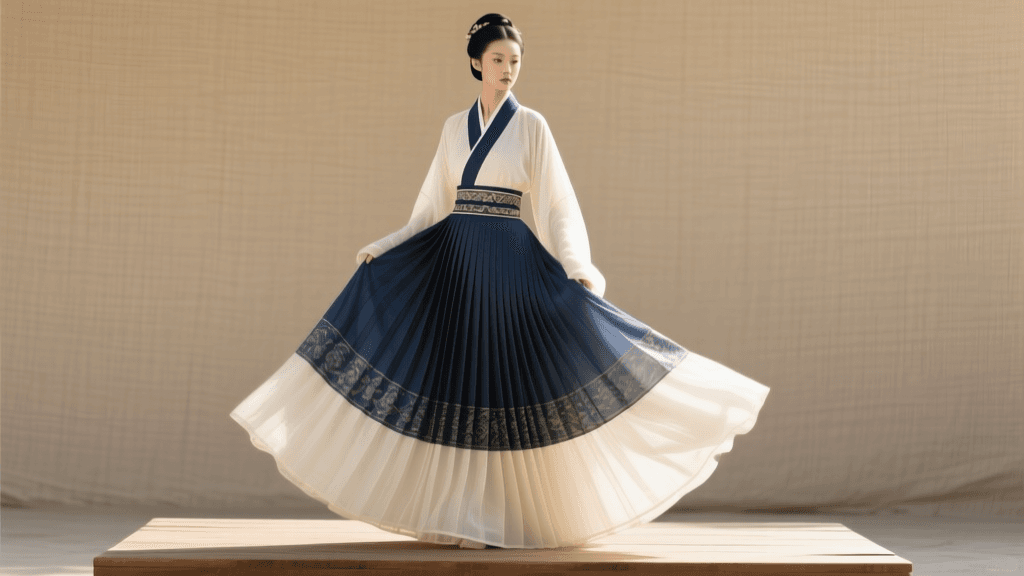
The mamianqun has become a staple on both Milanese runways and the streets of Chengdu. Characterized by two flat, overlapping front and back panels with heavily pleated sides, this skirt is a marvel of kinetic design. In international couture, designers have adapted the mamianqun by altering the hemlines, utilizing metallic jacquard threads, and pairing the skirt with structured corsetry.
Actionable Sizing and Styling Advice:
- Measurements: Unlike Western skirts that sit on the hips, a traditional mamianqun must be measured at the natural waist. The waistband should be exactly 4 to 5 centimeters wide to provide adequate support for the heavy pleats.
- Length: For a modern, couture-inspired silhouette, the hem should hit exactly 3 to 5 centimeters below the mid-calf. This preserves the visual flow of the side pleats while allowing for contemporary footwear like pointed-toe ankle boots.
- Fabric Weight: To achieve the structured, architectural look seen on the runway, avoid lightweight silks. Source heavy jacquard brocade with a weight of at least 300 to 400 GSM (grams per square meter). This ensures the pleats hold their shape without the need for excessive synthetic interfacing.
Suzhou Embroidery and Pankou Fasteners
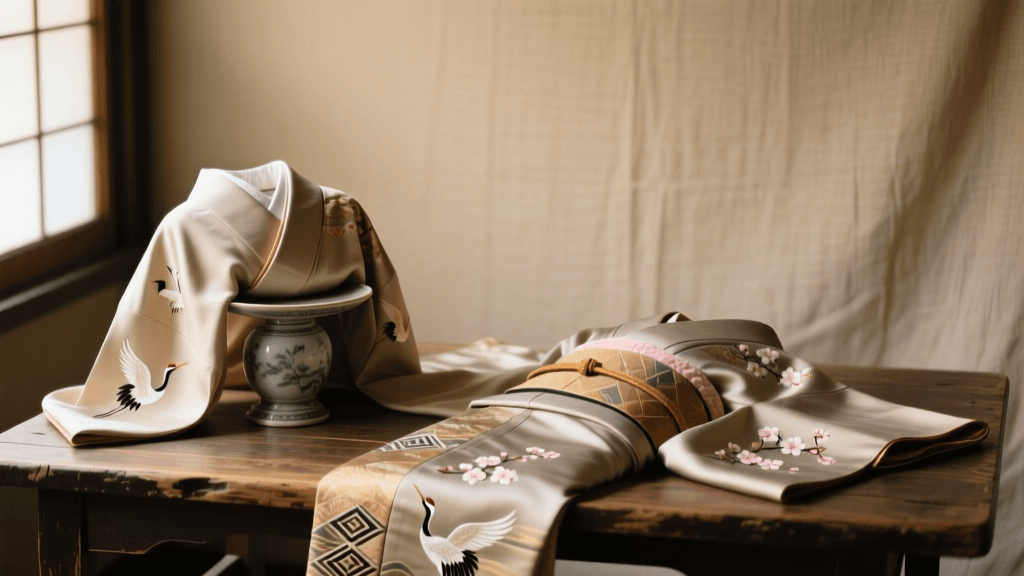
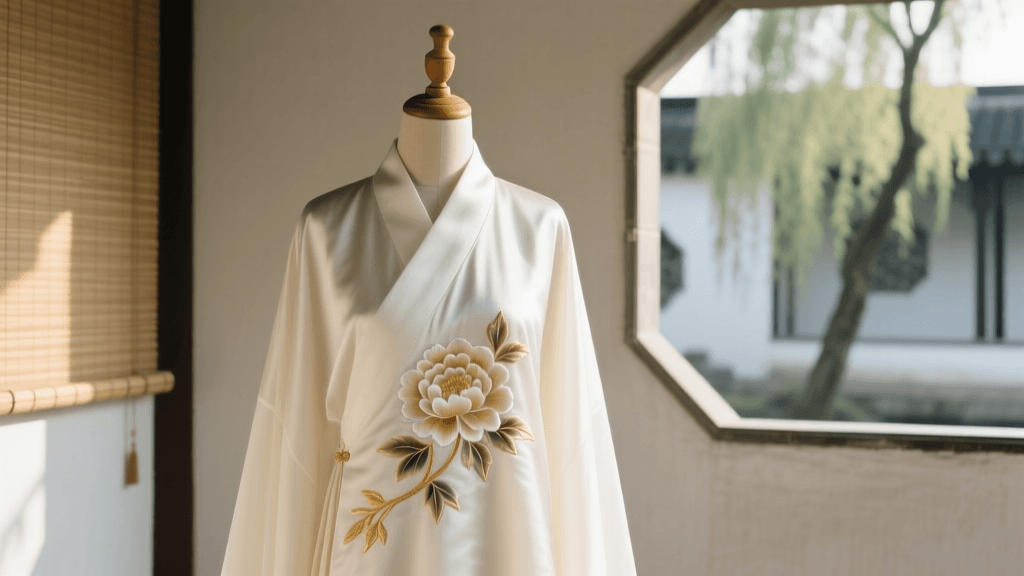
Suzhou embroidery is renowned for its delicate, split-silk thread work, often featuring intricate floral and faunal motifs. On the couture runway, this technique is frequently exaggerated—using 3D padding, gold bullion, and contrasting textures to create tactile, sculptural surfaces. Similarly, pankou (knotted frog buttons) have evolved from functional fasteners into standalone pieces of jewelry and structural embellishments.
Artisanal Sourcing Tips:
- Authentic Pankou: True couture-grade pankou are handcrafted using silk-wrapped copper wire cores, allowing them to be bent and shaped. Machine-made versions use stiff cotton and lack structural versatility. Expect to pay between $40 and $120 per set for authentic, hand-wired artisanal knots.
- Embroidery Density: When investing in Su Xiu pieces, examine the reverse side of the fabric. High-quality, double-sided embroidery (where the pattern is identical and knotless on both sides) is a hallmark of master artisans and significantly increases the garment's investment value.
Comparison: Traditional vs. Couture Adaptations
Understanding how international designers manipulate traditional elements can help you make informed styling choices when building a heritage-inspired wardrobe.
| Garment Element | Traditional Application | Couture / Runway Adaptation | Practical Styling Tip |
|---|---|---|---|
| Mamianqun | Wrap-around skirt, flat panels, side pleats, worn with loose tunics. | Asymmetric hems, metallic weaving, paired with structured corsets or tailored blazers. | Pair a heavy brocade mamianqun with a minimalist, tailored Western blazer to balance volume and structure. |
| Pankou Knots | Functional fasteners used to secure collars and jackets against the cold. | Oversized, sculptural, used as standalone lapel jewelry or waist cinchers. | Detach oversized pankou knots and use them as statement brooches on modern wool overcoats. |
| Su Xiu (Embroidery) | Subtle, flat satin stitch on silk, denoting rank or seasonal motifs. | 3D goldwork, bead integration, dramatic color blocking, and mixed-media textiles. | Invest in one heavily embroidered, couture-quality jacket and treat it as the focal point of a monochrome outfit. |
| Mandarin Collar | High, stiff, rounded collar protecting the neck, often lined with white silk. | Exaggerated height, integrated with metal hardware or sheer organza layering. | Ensure the collar height does not exceed 4cm for daily wear to maintain comfort and modern proportions. |
Actionable Guide: Sourcing and Investing in Couture-Quality Garments
Acquiring garments that bridge the gap between traditional Chinese dress and international couture requires a discerning eye for textile quality and construction. The Victoria and Albert Museum's Asian Collections emphasize the importance of understanding historical textile weaves, such as Kesi (silk tapestry) and Zhuanghua (brocade), when evaluating garment quality.
1. Navigating the Bespoke Market:
True couture-quality Hanfu and modern-traditional hybrids are rarely found in mass-market retail. Engage with bespoke tailors based in Suzhou, Hangzhou, or specialized ateliers in Shanghai. When commissioning a piece, specify your desire for 'haute couture finishing'—this includes hand-rolled hems, silk-lined seams, and hidden structural boning in bodices.
2. Budgeting for Heritage Fashion:
- Entry-Level Luxury ($150 - $400): Machine-woven jacquard mamianqun with basic digital or machine-assisted embroidery. Suitable for daily wear and introductory styling.
- Mid-Tier Artisanal ($800 - $2,500): Hand-loomed silk, authentic hand-wired pankou, and partial hand-embroidery. These pieces offer the structural integrity and visual depth required for high-fashion styling.
- Couture / Bespoke ($3,500 - $15,000+): Fully hand-embroidered Su Xiu, Kesi tapestry weaving, and custom structural tailoring. These are investment-grade garments meant for galas, exhibitions, and archival collecting.
Conclusion
The presence of Chinese motifs on global runways is no longer a fleeting trend; it is a permanent expansion of the international fashion vocabulary. By understanding the precise measurements, textile weights, and artisanal techniques that define traditional Chinese garments, fashion enthusiasts can move beyond superficial costuming. Whether you are pairing a heavy brocade horse-face skirt with a sharply tailored blazer or commissioning a bespoke jacket adorned with hand-wired pankou, blending Chinese heritage with modern couture sensibilities creates a deeply personal, historically resonant, and undeniably powerful sartorial statement.
Fashion is not merely about clothing; it is a dialogue between cultures, a translation of heritage into the language of the future.