Quechua Poncho Wool Dyeing With Cochineal And Madder Root

Living Chemistry in the Andes: Cochineal and Madder Root as Sacred Pigments
In the high-altitude communities of the Peruvian Andes—particularly among Quechua weavers of the Cusco and Puno regions—natural dyeing is not craft but cosmology. The vibrant crimson of a ceremonial poncho, the burnt sienna of a chullo’s band, or the deep ochre of a woman’s lliclla all emerge from relationships cultivated over centuries with insects and roots. Cochineal (Dactylopius coccus), a scale insect that lives exclusively on nopal cactus (Opuntia ficus-indica), and madder root (Rubia tinctorum), introduced to South America post-contact yet fully integrated into Andean botanical knowledge systems, form the dual pillars of red-dye tradition. These pigments are never extracted in isolation; their preparation involves precise ratios of mineral mordants—including alum (potassium aluminum sulfate) sourced from local volcanic deposits—and plant-based fixatives like chilca (Baccharis spp.) or quico (Eucalyptus globulus), which grow at elevations between 3,200 and 4,100 meters above sea level.
The Quechua Weaver’s Dye Kitchen: Tools, Timing, and Transmission
Dye preparation begins before dawn, when dew still clings to harvested cochineal pods—each pod containing approximately 70–90 dried female insects. Weavers collect them by hand using small wooden combs, a practice requiring 3–5 hours per kilogram of raw material. A single adult female cochineal yields roughly 0.002 grams of carminic acid—the compound responsible for its intense colour—meaning over 70,000 insects are needed to produce just one gram of pure pigment. Madder root, meanwhile, is harvested after three full growing seasons to maximize ruberone concentration; roots dug too early contain less than 1.8% active dye compounds, while mature roots reach up to 4.2%. Preparation occurs in copper or clay kettles fired over llama-dung embers, maintaining temperatures between 65°C and 72°C for precisely 45 minutes—exceeding 75°C degrades carminic acid irreversibly.
Seasonal Rhythms and Ritual Protocols
Cooperative dyeing follows strict seasonal calendars tied to agricultural cycles. In the district of Ocongate (Cusco), the annual cochineal harvest coincides with the Festival of Santiago Apóstol on 25 July—a date marked by communal offerings of coca leaves and chicha to Pachamama before any harvesting begins. Similarly, madder root digging occurs only during the waning moon of October, when soil moisture levels fall below 18%, ensuring optimal root desiccation without fungal contamination. These protocols are codified not in written manuals but through intergenerational oral instruction—often conducted during the “t’inkas” phase of textile production, when young girls aged 10–12 sit beside elder women for six to eight hours daily over three months.
Material Integrity and Ecological Stewardship
Quechua dyers maintain living germplasm banks: families in the community of Chinchero preserve over 42 distinct varieties of Opuntia cactus, each selected for specific cochineal yield, drought resistance, and compatibility with adjacent crops. One hectare of managed nopal plantation supports an average of 12.6 million cochineal insects annually, yielding 18.4 kg of dried dye material—sufficient to colour 320 metres of hand-spun alpaca wool at standard 8% weight-of-fibre (WOF) concentration. This system sustains soil health: nopal roots reduce erosion by up to 63% on slopes exceeding 28°, a critical function in the fragile puna ecosystem.
Weaving as Embodied Memory: Structure and Symbolism in the Poncho
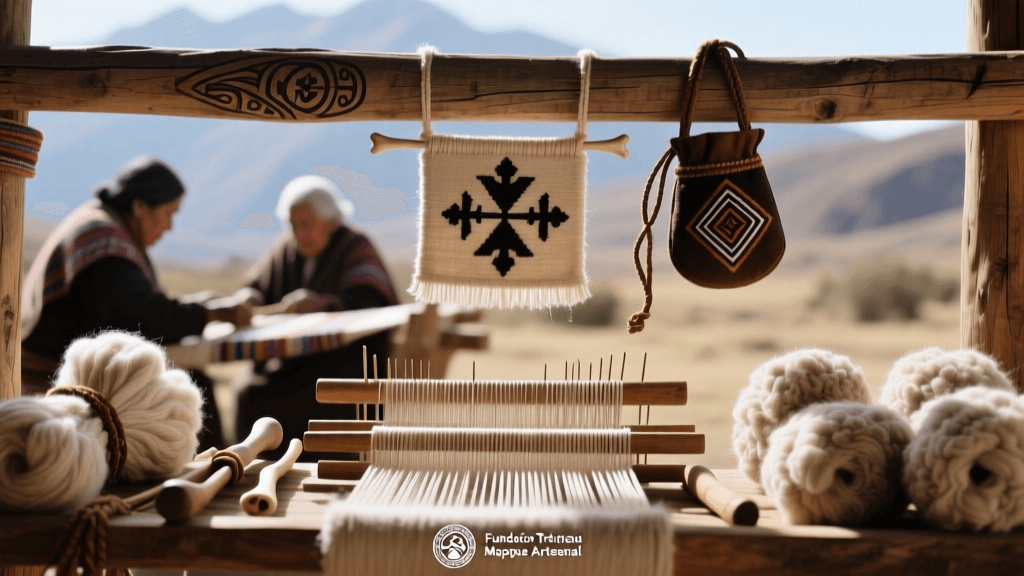
A traditional Quechua poncho—measuring exactly 1.45 metres wide by 1.62 metres long—is woven on a backstrap loom using hand-carded, hand-spun alpaca fibre spun to a consistent 12.3 tex count. Its structure incorporates three distinct zones: the central field (q’illu), representing the Andean cosmos; the lateral bands (k’ayra), encoding lineage histories through geometric motifs such as the stepped diamond (chakana) or serpent (amaru); and the fringe (sullu), knotted in sequences reflecting birth order and marital status. Each poncho requires 217 hours of weaving time across 14–17 weeks, with dye application occurring at three critical junctures: pre-spinning (for solid-field colours), post-weaving (for resist-dyed patterns), and final immersion (to unify tonal depth).
Ceremonial Functions and Social Authority
Ponchos serve as markers of civic and spiritual office. In the Q’eros Nation, a male elder wearing a cochineal-red poncho with black-and-white chevrons signifies membership in the Kallawaya healing lineage; the red must be derived exclusively from insects gathered within the Q’eros ancestral territory bounded by the Apurímac River to the west and the Cordillera Vilcanota to the east. At the annual Qoyllur Rit’i pilgrimage near Sinakara Glacier, over 12,000 participants wear ponchos dyed with madder root blended with cochineal in exact 3:1 ratios—symbolising the union of earth (madder) and sky (cochineal). This ratio is verified by spectrophotometric analysis at the Centro de Textiles Tradicionales del Cusco (CTTC), where samples are tested against a reference library of 86 historically documented palettes.
Institutional Safeguarding and Intergenerational Continuity
The CTTC, founded in 1996 in Cusco’s San Blas neighbourhood, operates seven community weaving centres across the southern Andes, including locations in Pitumarca, Accha Alta, and Chinchero. Its dye laboratories train over 240 Quechua artisans annually in chromatographic verification methods and pH-stabilised mordant baths. According to the CTTC’s 2022 Impact Report, participating communities increased cochineal cultivation area by 37% and reduced synthetic dye use by 91% since 2015. Likewise, the Asociación de Artesanos en Tejidos y Teñido Natural (AATEN), based in Puno, maintains a seed bank of 19 native madder cultivars and publishes quarterly bulletins detailing regional dye trials—including a 2023 study demonstrating that madder roots grown in soils with 22.5% organic matter content produced 2.7× higher ruberone yields than those in conventionally tilled fields.
Contemporary Challenges and Ethical Sourcing Frameworks
Global demand for “authentic” natural dyes has spurred both opportunity and risk. Between 2018 and 2023, export volumes of Peruvian cochineal increased by 142%, yet only 11% of international buyers comply with the Fair Trade Federation’s Indigenous Artisan Protocol (2021), which mandates direct payment to producer cooperatives and prohibits bulk extraction without prior consent from community assemblies (ayllus). In response, the National Institute of Culture (INC) established Resolution No. 023-2020-INC/DP in June 2020, requiring all commercial cochineal shipments to carry traceability codes linked to GPS coordinates of harvest sites and names of certified collectors. As of March 2024, 68% of registered producers in the department of Ayacucho hold valid INC certification—up from 22% in 2019.
- One kilogram of dried cochineal contains approximately 140,000 individual insects
- Traditional madder root dye baths require 300 grams of root per 100 grams of wool
- The CTTC’s Chinchero centre processes an average of 8.2 tonnes of natural dye materials annually
- Quechua ponchos weigh between 1.4 and 1.8 kilograms depending on fibre density and weave tightness
- Alpaca wool used in ceremonial ponchos is spun to a linear density of 11.9–12.4 tex
“The red is not decoration—it is blood memory made visible. When we grind cochineal with mortar and pestle, we are grinding time itself.” —Juana Quispe, master dyer, CTTC Chinchero Centre (2023)
Knowledge Sovereignty and the Role of Language
Quechua terminology encodes technical precision absent in Spanish translations. The word ch’aska denotes the exact moment during dye immersion when carminic acid achieves maximum solubility—typically at 68.3°C—while q’aray refers to the visual threshold where madder-dyed wool shifts from orange-brown to true terracotta, indicating optimal tannin saturation. These terms appear in bilingual curricula developed by the Ministry of Education’s Programa Nacional de Educación Intercultural Bilingüe (PNEIB), now implemented in 412 primary schools across the Andean region. Since 2021, PNEIB has trained 1,284 teachers in textile-based pedagogy, integrating dye chemistry lessons with Quechua grammar instruction—using verb conjugations to describe mordant reactions and noun cases to classify fibre types.
The Museo Inka in Cusco houses the oldest known surviving Quechua-dyed textile fragment—a 16th-century poncho remnant recovered from the archaeological site of Sacsayhuamán—whose cochineal signature was confirmed via high-performance liquid chromatography (HPLC) in 2017. Analysis revealed carminic acid concentrations of 2.1 mg/g, matching modern samples from Ocongate harvests. This continuity underscores how dye practice functions as unbroken epistemology: a method of knowing land, season, insect, and self through repeated, embodied action.
At the Universidad Nacional San Antonio Abad del Cusco (UNSAAC), researchers collaborate with CTTC elders to map microclimatic variables affecting dye yield. Their 2023 field survey across 17 districts found that cochineal populations thrive most densely—averaging 842 insects per 10 cm² of nopal pad—in areas receiving 623 mm of annual rainfall and experiencing diurnal temperature swings of 18.4°C. Such data informs land-use planning by ayllus, reinforcing sovereignty through scientific literacy rooted in ancestral observation.
Textile knowledge remains inseparable from territorial stewardship. When a Quechua weaver dips wool into a cochineal bath, she does not merely apply colour—she reaffirms reciprocity with the cactus, the insect, the mountain, and the lineage that taught her how to hold the kettle steady, how to read the steam, and how to know, without measuring, when the red is ready.
| Community | Elevation (m) | Cochineal Yield (kg/ha/yr) | Madder Root Yield (kg/ha/yr) | CTTC Centre Operational Since |
|---|---|---|---|---|
| Ocongate | 3,820 | 18.4 | 2.1 | 2005 |
| Chinchero | 3,762 | 16.9 | 3.8 | 1998 |
| Pitumarca | 4,025 | 21.7 | 1.4 | 2001 |
These figures reflect not productivity alone but relational integrity—how well human practice aligns with ecological thresholds. They are updated annually through participatory monitoring led by AATEN and validated by UNSAAC’s Laboratorio de Arqueometría. Such collaboration ensures that metrics serve community goals—not market extraction.
The preservation of Quechua dye knowledge demands more than documentation; it requires sustaining the conditions under which transmission occurs: shared firelight, the rhythm of the loom, the scent of simmering madder, and the quiet authority of elders who measure time not in minutes but in the unfolding of colour on wool.