Quechua Poncho Weaving On Backstrap Looms Peruvian Highlands
Backstrap Loom Weaving in the Andean Highlands
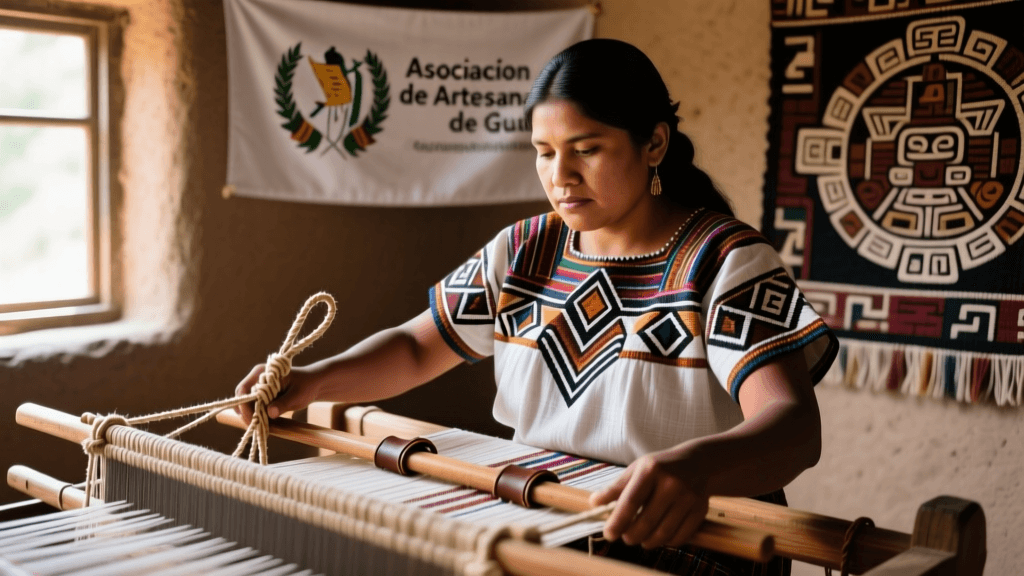
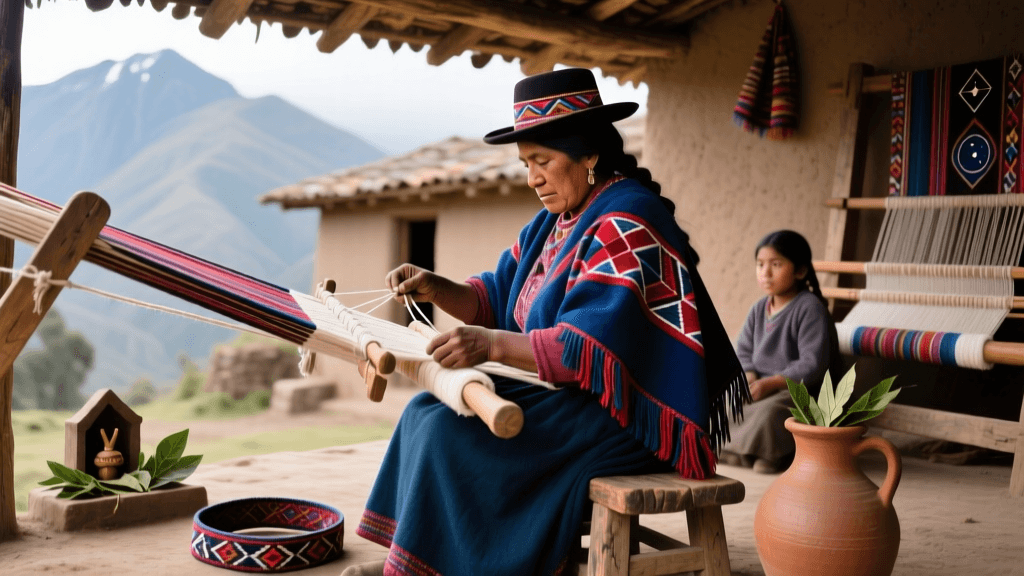
In the high-altitude communities of the Peruvian Andes—particularly across the Cusco, Puno, and Ayacucho regions—backstrap loom weaving remains a living, breathing practice passed down through over twenty generations. This vertical, portable loom system anchors one end to a fixed object (a tree, post, or wall) and the other to the weaver’s waist via a woven strap, enabling precise tension control and intricate patterning. Unlike European horizontal looms, the backstrap method allows for continuous warp length adjustment and unparalleled responsiveness to complex geometric motifs rooted in ancestral cosmology.
Quechua Communities and Regional Distinctions
Weaving is not a monolithic tradition across Quechua-speaking territories. In the district of Chinchero (Cusco Region), women from the Q’eros and Pitumarca communities produce ponchos with distinct iconography: Chinchero weavers use 12–15 natural dyes derived from cochineal insects, walnut husks, and molle berries, while Pitumarca artisans incorporate *q’illu* (Andean lupin) for deep indigo tones. In contrast, the Aymara-Quechua bilingual communities of Taquile Island on Lake Titicaca weave ponchos with symmetrical double-faced techniques—each piece requiring 300–400 hours of labor and measuring precisely 140 cm × 90 cm.
Chinchero’s Living Heritage Center
The Centro de Textiles Tradicionales del Cusco (CTTC), founded in 1996 in Chinchero, operates as a community-led hub supporting over 300 Quechua weavers across ten highland communities. CTTC’s documentation project has cataloged 87 distinct textile patterns, each tied to specific lineages or ecological zones—for example, the *Sallqa* motif represents wild mountain terrain and appears exclusively in garments from the Ocongate province.
Taqile Island’s Intergenerational Transmission
On Taquile Island, boys begin learning basic knotting and dye preparation at age seven; by age twelve, they master the *t’ika* (floral) border pattern used on ceremonial ponchos. UNESCO recognized Taquile’s textile tradition as Intangible Cultural Heritage in 2005, citing its role in sustaining communal governance structures—the island’s *ayllu*-based decision-making council meets weekly in the *kancha*, where elders wear ponchos with stripe sequences indicating their leadership rank.
Materials, Dyeing, and Technical Precision
Traditional Quechua ponchos are woven almost exclusively from hand-spun alpaca and sheep wool. Alpaca fiber ranges from 18 to 25 microns in diameter, offering superior thermal regulation at elevations exceeding 3,800 meters. Weavers prepare warps using a *warping board* that measures exactly 4.2 meters in length—a standard inherited from Inca-era textile production units. Each poncho contains approximately 2,800 warp threads per meter, tensioned to 4.5–5.0 kilograms of force during weaving.
- Coastal cotton (*Gossypium barbadense*) was historically traded inland but is now rarely used due to climate-induced crop failure—only 3% of current ponchos incorporate cotton blends (CTTC Annual Report, 2022)
- Natural dye vats require pH balancing: fermented urine (pH ~9.5) is used for cochineal reds, while wood-ash lye (pH ~12.0) fixes black from alder bark
- A single ceremonial poncho from the Canas Province weighs between 1.2–1.4 kg and contains an average of 17,500 weft passes
Ceremonial Functions and Symbolic Grammar
Ponchos function as semiotic systems rather than mere garments. The central field (*pampa*) symbolizes the cultivated earth, flanked by borders (*t’ika*) representing sacred mountains (*apus*). In the community of Huancarani (Ayacucho), men wear *unku* ponchos during the annual *Qoyllur Rit’i* pilgrimage—these feature 13 alternating bands of red and black, referencing the thirteen Inca lunar months. During marriage ceremonies in Puno, newlyweds exchange ponchos with mirrored designs: the groom’s garment includes a *chakana* (Andean cross) oriented northward, while the bride’s aligns eastward—reflecting complementary cosmic principles.
“The poncho is not worn—it is inhabited. Every thread carries memory, every color holds breath from the mountain.” — Luzmila Quispe, master weaver and CTTC Elder Council member, 2023
Institutional Support and Contemporary Challenges
Despite resilience, Quechua weaving faces acute pressures. Between 2015 and 2023, the number of full-time weavers in the Cusco Region declined by 22%, according to Peru’s National Institute of Culture (INC, 2023). Key threats include synthetic yarn imports priced 60% below hand-spun alpaca, land degradation reducing native dye plant availability by 35% since 2000, and school curricula that omit textile literacy. Yet counter-movements are gaining ground: the Asociación de Artesanas de Pitumarca trains 42 young women annually in natural dye chemistry and pattern mathematics, while the Museo Inka in Cusco houses a permanent collection of 1,200 pre-Hispanic and colonial textiles—including three intact 16th-century *unku* ponchos recovered from the Sacsayhuamán archaeological site.
Technical Specifications Across Regions
| Region | Average Poncho Dimensions (cm) | Warp Density (threads/cm) | Primary Fiber | Dye Sources (per garment) |
|---|---|---|---|---|
| Chinchero | 135 × 85 | 18–20 | Alpaca-sheep blend (70/30) | 9–12 plant/insect sources |
| Taqile Island | 140 × 90 | 22–24 | 100% alpaca | 7–9 sources, including mineral pigments |
| Huancarani | 128 × 82 | 16–18 | Sheep wool (hand-carded) | 5–6 sources, mostly mineral-based |
The Instituto Nacional de Cultura (INC) reports that only 11% of Quechua-speaking youth aged 15–24 can identify more than five traditional dye plants by name—a stark decline from 78% among elders aged 65+. This knowledge erosion underscores why organizations like the CTTC now integrate textile pedagogy into public schools in Urubamba and Calca districts, teaching warp mathematics alongside Quechua language instruction.
In the village of Oropesa (near Cusco), the collective *Warmi Kawsay* (“Women’s Life”) revived the near-extinct *pallay* technique—floating supplementary wefts that create raised geometric figures—after reconstructing methods from two 19th-century fragments held at the Museo de Arte de Lima. Their 2022 exhibition “Threads of Resistance” featured 27 ponchos, each incorporating archival motifs reinterpreted through contemporary political themes, such as water rights and land restitution.
At elevations where oxygen levels drop to 60% of sea-level concentration, the physical act of weaving demands extraordinary stamina. Weavers maintain posture for up to 9 hours daily, adjusting tension incrementally—each centimeter of progress requires 120–150 individual weft insertions. This embodied discipline reflects deeper ontological commitments: time is not linear but cyclical, measured in harvests, solstices, and the life cycles of dye plants.
The Andean concept of *ayni*—reciprocal exchange—structures all aspects of production. When a family commissions a poncho for a son’s coming-of-age rite, they provide raw wool, dyestuffs, and meals for the weaver over the 6–8 weeks of creation. No monetary transaction occurs; instead, the weaver receives future labor assistance during planting season—a practice documented in 94% of households surveyed by the CTTC in 2021.
Modern infrastructure projects pose new dilemmas. The expansion of Route 3S through the Vilcanota Valley disrupted access to *q’olle* (yellow-flowered shrub) stands used for golden-yellow dyes—a loss quantified at 2.3 hectares of habitat between 2018 and 2022 (INC Biodiversity Monitoring Unit, 2023). In response, the community of Checacupe established a 4.7-hectare community dye garden, propagating 1,800 native dye plants including *chilca* (for green) and *chilca panka* (for rust-red).
Unlike mass-produced “Andean-style” textiles sold in tourist markets, authentic Quechua ponchos bear no labels or certifications—they are identified by tactile signatures: the slight irregularity of hand-spun yarn, the subtle sheen of alpaca guard hair, and the precise 3.2 mm width of each stripe in ceremonial *unku* pieces. These markers resist commodification, anchoring value in relationship rather than retail markup.
The preservation of backstrap weaving is inseparable from Quechua language revitalization. Verb tenses in Southern Quechua encode weaving actions: *q’illay* denotes the rhythmic beating of the weft, while *t’ikay* refers specifically to floral border completion. When these terms vanish from daily speech, technical knowledge fractures. That is why the CTTC’s bilingual education program prioritizes textile vocabulary acquisition alongside grammatical instruction.
At the heart of this tradition lies an unwavering principle: cloth is never inert. It breathes with the wearer, absorbs mountain air, remembers the hands that spun its fibers, and carries forward the weight of centuries—not as burden, but as continuity.