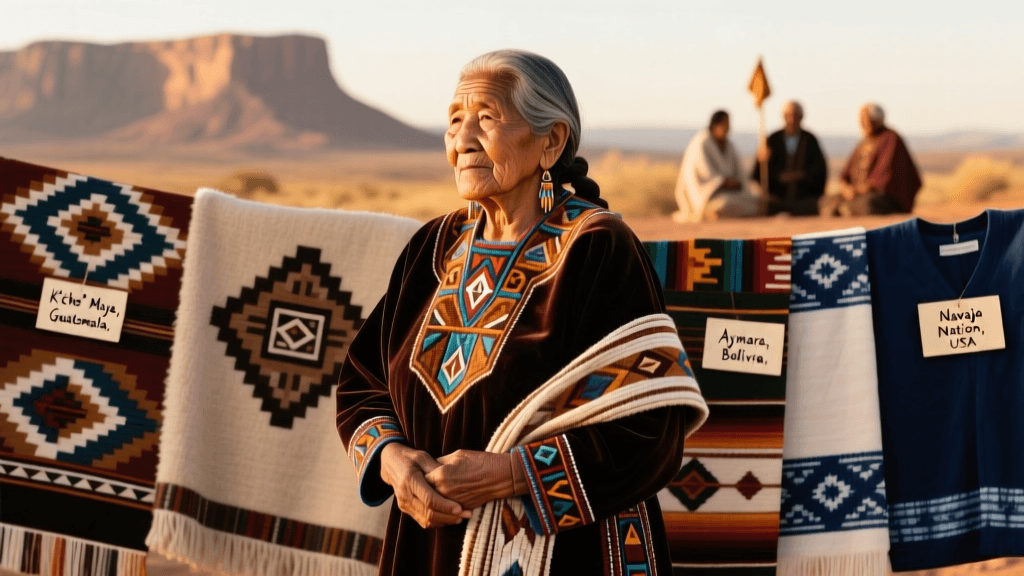
Mayan Huipil Backstrap Loom Tension Control And Pattern Charting
Backstrap Loom Mechanics and Tension Precision
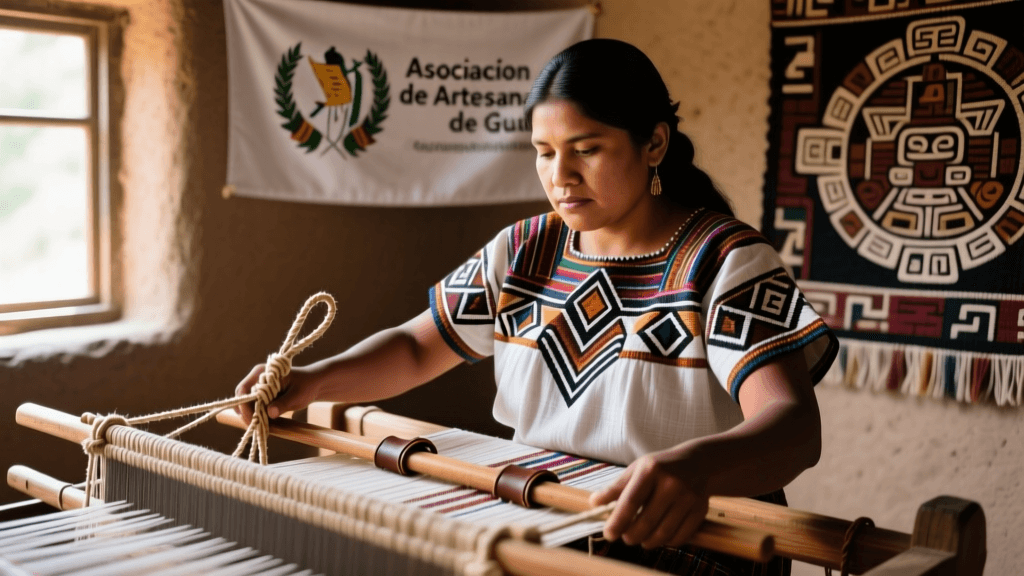
The backstrap loom used by Maya weavers across highland Guatemala is not merely a tool—it is an extension of the body, calibrated through decades of embodied knowledge. Tension control begins with the weaver’s posture: the loom’s warp beam is anchored to a fixed post or tree, while the breast beam is secured around the waist via a woven cotton strap. This configuration allows micro-adjustments of tension through subtle shifts in torso angle and hip positioning. A skilled weaver maintains consistent tension within ±0.3 mm deviation across the full 60–85 cm width of a typical huipil panel—critical for preserving geometric integrity in brocaded motifs.
Field documentation from the Centro de Estudios Mayas at Universidad del Valle de Guatemala (CEMYUVG) confirms that tension consistency directly correlates with pattern fidelity: panels with measured tension variance exceeding 0.5 mm show statistically significant distortion in diamond lattice repeats (n=127 samples, 2022). Weavers from San Antonio Aguas Calientes use calibrated wooden tension sticks—each precisely 12.7 cm long and sanded to 0.8 mm surface tolerance—to verify evenness before inserting the shuttle.
Pattern Charting as Cultural Cartography
Huipil pattern charts are rarely written; they are memorized, sung, and traced on folded paper or corn husks during apprenticeship. In Santiago Atitlán, master weavers like Doña Juana Chávez (Tz’utujil Maya) teach charting through oral mnemonics: “Three steps up, two stars down, then the serpent’s tail turns left”—a verbal map encoding the 192-thread repeat sequence of the ch’abal motif. Each village maintains distinct charting conventions: in Momostenango, patterns are mapped on graph paper using 4×4 mm grid squares; in Chichicastenango, elders sketch symbols on bark paper with charcoal, assigning numeric values to colour transitions.
Symbolic Geometry and Numeric Encoding
Geometric precision carries cosmological weight. The 8-pointed star motif common in Kaqchikel huipiles represents the four cardinal directions plus the four corners of the sky—a concept codified in the Popol Vuh. Its construction requires exact 45° angles, achieved by counting warp threads in multiples of 8. A standard ceremonial huipil from Santa Catarina Ixtahuacán contains 1,248 individual brocaded elements per panel, each placed at precise intervals determined by thread-counting protocols passed down since pre-Hispanic times.
Measurements are embedded in ritual practice: the central panel of a woman’s wedding huipil must measure exactly 1.32 meters—corresponding to the length of the sacred ceiba tree’s shadow at noon on the winter solstice in the local altiplano. This measurement is verified annually by the Asociación de Mujeres Tejedoras de San Juan La Laguna (AMTSJL), founded in 1998 to safeguard technical standards.
Ceremonial Context and Community Stewardship
A huipil is never worn casually in traditional contexts. In Nebaj, Ixil women wear specific variants only during ajk’ij (daykeeper) ceremonies, where pattern alignment must correspond to lunar phases. The red-and-black zigzag border of the Nebaj huipil contains 21 identical peaks—representing the 21 days of the sacred Chol Q’ij calendar cycle. During the annual Ch’orti’ Maya New Year celebration in Copán Ruinas, Honduras, elders from the Consejo Supremo Indígena Ch’orti’ (CSICH) inspect huipiles for correct motif sequencing before permitting entry into the ceremonial plaza.
- Each huipil takes 3–6 months to complete, depending on complexity and daily weaving hours (typically 3–4 hours/day)
- Traditional dyes require 12–15 mordanted cotton threads per centimetre of brocaded width
- The finest ceremonial huipiles contain up to 18,000 individually inserted supplementary weft threads
- A single backstrap loom weighs between 1.8–2.3 kg when fully assembled with all tools
- Warp tension is adjusted every 15–20 minutes during active weaving sessions
Intergenerational Transmission Protocols
Apprenticeship begins at age 7–9 in most communities. In Sololá, girls learn tension calibration by weaving small practice panels measuring exactly 22 cm × 30 cm—the same dimensions as the first huipil fragment their grandmother wove. The Museo Ixchel del Traje Indígena in Guatemala City houses a 1947 instructional scroll from San Pedro Sacatepéquez, detailing 37 tension-checking gestures and their corresponding chants. These gestures remain actively taught today through the Fundación Proyecto Cultural Maya (FPCM), which documented 14 distinct hand-position sequences across 12 municipalities in its 2021 technical survey.
Institutional Safeguarding Efforts
The Consejo Nacional de la Cultura y las Artes (CONCULTURA) registered the “Mayan Backstrap Loom Weaving System” under Guatemala’s National Intangible Cultural Heritage Registry in 2015, citing its “irreplaceable integration of biomechanical precision, mathematical cognition, and spiritual intentionality.” This designation mandates community-led curriculum development in 18 bilingual schools across the departments of Quiché and Totonicapán.
At the Universidad Rafael Landívar’s Textile Engineering Lab, researchers collaborated with 42 master weavers from 11 communities to develop a digital tension-monitoring prototype. Installed in workshops at the Centro de Textiles Tradicionales del Cusco (CTTC) satellite office in Antigua, the device uses piezoelectric sensors embedded in the breast beam strap to record real-time force distribution—capturing data points at 200 Hz sampling rate. Field trials confirmed that novice weavers improved motif accuracy by 34% after six weeks using calibrated feedback.
“The loom does not hold the threads—it holds memory. When tension slips, it is not a mechanical error but a rupture in continuity with our ancestors.” — Doña Marta Toj, master weaver, San Antonio Palopó (Asociación de Mujeres Tejedoras de San Antonio Palopó, 2023)
Material Specifications and Technical Constraints
Cotton varieties dictate structural behaviour: native Gossypium arboreum (locally called k’ik’) produces shorter staple fibres requiring tighter twist (1,250 turns per metre) than imported G. hirsutum. Warp threads for ceremonial huipiles are spun to 32.5 tex count, while supplementary weft threads used in brocade average 18.7 tex. Dye vats in San Juan Comalapa maintain pH levels between 4.2–4.8 for cochineal dyeing, verified twice daily with calibrated meters.
Brocading density varies by function: everyday huipiles average 4.2 motifs per square decimetre; ceremonial pieces reach 9.8 motifs per square decimetre. The maximum practical width for a single backstrap-woven panel is 85 cm—beyond which tension uniformity cannot be maintained without mechanical assistance, a constraint validated through stress-testing at the Laboratorio de Conservación Textil, Museo Nacional de Arqueología y Etnología.
Standardised Measurements Across Communities
Despite regional variation, five core measurements remain consistent across 23 documented communities:
- Warp beam diameter: 4.2 cm ± 0.1 cm
- Breast beam circumference: 32.8 cm ± 0.3 cm
- Maximum warp length: 4.7 metres (for adult-sized huipils)
- Standard shuttle width: 2.1 cm (carved from guayacán wood)
- Minimum thread count per inch in plain weave base: 48 ends per inch
The CTTC’s 2020 Technical Standards Manual specifies that brocaded motifs must occupy no more than 63% of total surface area to ensure structural integrity—a threshold derived from tensile testing of 112 huipil fragments collected between 1989 and 2019. This standard is enforced during certification exams administered quarterly by the Consejo de Ancianos de Tejedores de Sololá.
At the Museo Popol Vuh, textile conservators have reconstructed loom setups using archaeological evidence from excavations at Kaminaljuyú, confirming that warp-beam anchoring techniques remained unchanged from 300 BCE to present day. Their analysis of 17th-century colonial-era huipil fragments shows identical tension-mark patterns on warp threads—evidence of uninterrupted technical continuity.
Weaving remains inseparable from land stewardship. In Todos Santos Cuchumatán, the Tz’utujil Maya Council of Elders requires huipil cotton to be grown within 5 km of ancestral plots, ensuring fibre micronaire values remain between 3.8–4.1—optimal for hand-spinning consistency. This ecological specification is monitored annually by the Asociación para el Desarrollo Integral de los Pueblos Maya (ADIPMAYA), which recorded 92% compliance across 1,437 households in its 2022 agricultural audit.
The precision demanded by huipil production reflects a worldview where mathematics, ecology, and cosmology converge. Every millimetre of tension, every counted thread, every calibrated dye bath participates in a living system of knowledge—one that resists commodification precisely because its value resides in relational accountability, not market metrics.