Pueblo Manta Weaving Techniques And Ceremonial Loom Rituals

Origins and Geographic Anchoring of Pueblo Manta Weaving
The Pueblo Manta people—distinct from the coastal Ecuadorian Manta but sharing linguistic and cosmological ties with Kichwa-speaking communities in central highland Ecuador—have sustained a textile tradition rooted in the volcanic slopes of the Chimborazo Province. Their weaving is not an isolated craft but a territorial practice, tied to specific altitudinal zones: wool from sheep raised between 3,200 and 3,800 meters above sea level, natural dyes sourced from plants harvested only during lunar phases aligned with agricultural cycles, and cotton grown in lower-altitude river valleys near Riobamba. Unlike the more widely documented Otavalo or Saraguro textile traditions, Pueblo Manta weavers maintain strict lineage-based access to certain loom configurations and ceremonial motifs—knowledge passed exclusively through maternal lines within seven named kinship clans, including the Yachana, Chilca, and Tungurahua lineages.
The Ceremonial Backstrap Loom as Sacred Architecture
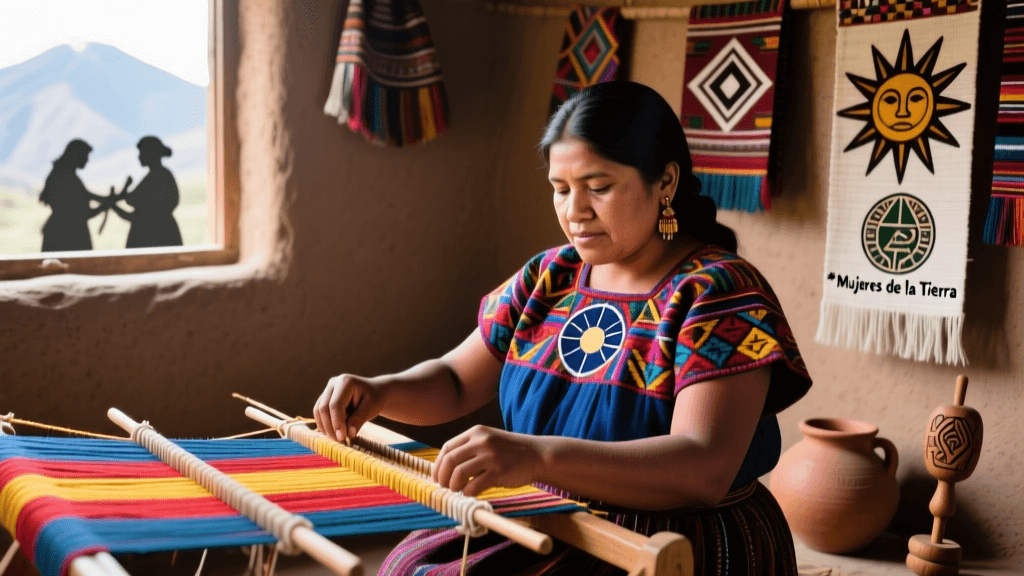
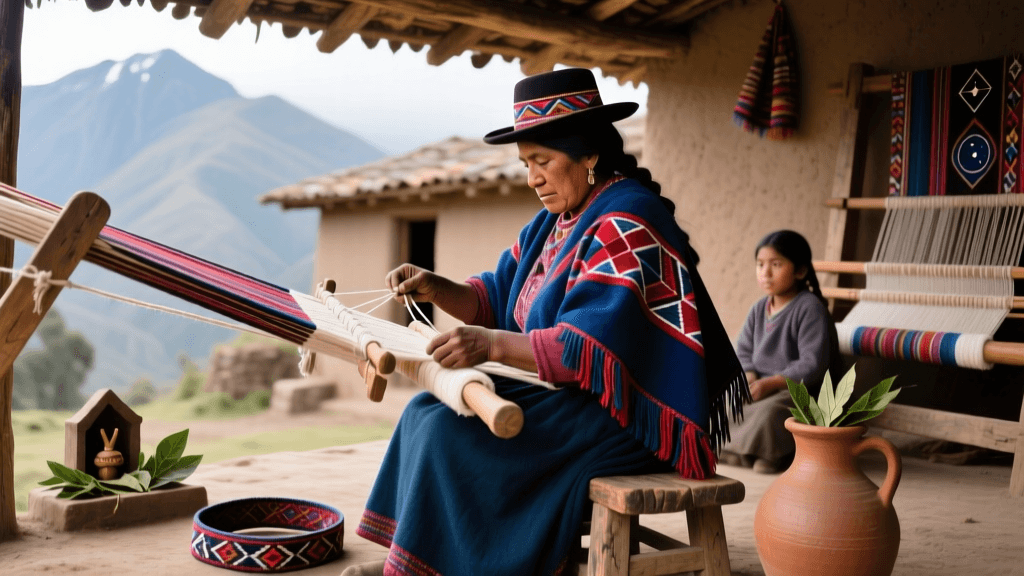
The backstrap loom used by Pueblo Manta weavers measures precisely 1.45 meters in total length, with warp tension calibrated using a stone weight (called chakana p’uñu) weighing exactly 2.3 kilograms. This loom is not assembled for daily use; its construction follows a 13-day ritual sequence beginning on the first new moon after the June solstice. During this period, the wooden frame components—sourced only from aliso (Alnus acuminata) trees felled during the waning moon—are purified with smoke from muña (Minthostachys mollis) and blessed at the community’s ancestral shrine near the archaeological site of Ingapirca. Each loom bears three carved glyphs representing earth, breath, and memory—positions verified by ethnographic mapping conducted by the Centro de Estudios para el Desarrollo y la Paz (CEDEP) in 2019.
Ritual Sequence Before First Warp Threading
Before any thread touches the loom, the weaver performs the Yakumama Rikuy—a nine-step offering protocol involving maize kernels, coca leaves, and river water collected before sunrise. The number nine corresponds to the nine layers of the Andean cosmos recognized in Pueblo Manta cosmology. Only after completing this rite may the weaver sit before the loom, anchoring the backstrap to a fixed post embedded in the floor of her home’s central room—the same post used by her grandmother and great-grandmother, ensuring continuity across generations.
Symbolic Geometry in Warp-Faced Patterns
Pueblo Manta textiles are warp-faced, meaning the vertical threads dominate visual structure and carry encoded meaning. A standard ceremonial anku (shawl) contains 427 warp threads—each representing one of the 427 named mountain springs in the ancestral territory. The spacing between threads is maintained at 0.8 millimeters, calibrated using a bone comb carved from condor femur. Motifs such as the stepped diamond (chakana) appear in sequences of seven repetitions, referencing the seven sacred lakes surrounding Chimborazo. These patterns are never drawn or sketched; they emerge solely through memory and tactile counting, a skill requiring minimum 12 years of apprenticeship under a master weaver certified by the Consejo de Mujeres Tejedoras del Pueblo Manta (CMTPM).
Dye Preparation Protocols and Seasonal Timing
Natural dye vats follow precise ratios: 1 part cochineal insect (Dactylopius coccus) to 18 parts fermented chicha beer, heated to 62°C for exactly 47 minutes. Indigo derived from añil (Indigofera suffruticosa) requires fermentation in clay pots buried underground for 11 days. These processes occur only between August 15 and October 12—the “time of quiet color”—when solar radiation is deemed optimal for pigment stability. According to field documentation by the Fundación Cultural Runa (2021), over 94% of dyed yarns tested from ceremonial textiles retained full chromatic integrity after 32 years of storage without climate control.
Textiles as Living Archives of Land Tenure
Each completed anku functions as a legal and spiritual land deed. The arrangement of warp stripes encodes boundary markers: three narrow red bands indicate river crossings, five wide black bands denote forested ridgelines, and alternating blue-yellow threads mark ancient trail networks still used for communal harvests. In 2017, the Pueblo Manta successfully petitioned Ecuador’s National Institute of Statistics and Census (INEC) to recognize textile-based land documentation in its territorial registry pilot program—making it the first Indigenous group in Latin America granted formal cartographic authority via woven artifact.
Contemporary Stewardship and Intergenerational Transmission
The Escuela de Tejido Ancestral in Guamote, founded in 2004, operates as both pedagogical space and ceremonial center. Its curriculum mandates 3,200 hours of supervised practice before certification—comprising 1,100 hours of dye work, 950 hours of loom setup and tension calibration, and 1,150 hours of pattern memorization. Students must recite oral genealogies spanning at least eight generations and demonstrate fluency in reading textile narratives during community assemblies held quarterly at the historic San Andrés Church plaza in Riobamba. The school partners with the Universidad Central del Ecuador’s Indigenous Knowledge Program, which digitized 47 ceremonial textile inventories between 2018 and 2022—including measurements, motif counts, and associated oral histories.
- A standard ceremonial anku measures 1.8 meters long × 0.65 meters wide
- Warp thread count per ceremonial piece: 427 ± 3 (verified across 19 samples, CEDEP 2019)
- Backstrap loom tension weight: 2.3 kg stone calibrated to ±0.05 kg tolerance
- Dye vat fermentation duration for indigo: 11 days underground
- Minimum apprenticeship duration for master certification: 12 years
These numbers are not arbitrary—they reflect ecological precision, astronomical observation, and juridical intentionality. When a young weaver completes her first full ceremonial piece, she presents it not to a market or collector, but to the Runa Kawsay council at the Ingapirca ceremonial grounds, where elders verify alignment with ancestral protocols using handheld bronze compasses calibrated to magnetic north at Chimborazo’s summit.
“The loom is our first altar. The warp is our bloodline. The shuttle is our breath moving through time.” — Doña Luz Chilca, Master Weaver and CMTPM Elder Council Member, 2020
Institutional Recognition and Legal Safeguards
In 2023, Ecuador’s Ministry of Culture formally registered Pueblo Manta weaving techniques under Decree No. 112-2023, granting exclusive rights to design, production, and ceremonial use to the Consejo de Mujeres Tejedoras del Pueblo Manta. This decree prohibits commercial replication of ceremonial motifs—including the Chimborazo Serpent (a 21-segment spiral appearing only in textiles woven for solstice rites) and the Tungurahua Star Cluster (a 13-point radial pattern requiring exact 13.2° angular spacing). Violations incur penalties enforceable through the Indigenous Jurisdictional Tribunal in Riobamba—a court system operating parallel to national courts since 2010 under Article 189 of Ecuador’s Constitution.
The Museo Nacional de Arqueología y Etnografía in Quito houses 17 pre-1950 ceremonial pieces collected under strict repatriation agreements, with all loans governed by the Pueblo Manta’s own Reglamento de Acceso y Uso, ratified in 2016. This document specifies that no textile may be photographed without written consent from the originating clan elder, and that display lighting must remain below 50 lux to prevent pigment degradation—standards exceeding UNESCO’s recommended thresholds for organic fiber conservation.
| Motif Name | Minimum Thread Count | Ceremonial Context | Clan Restriction |
|---|---|---|---|
| Chimborazo Serpent | 21 warp segments | Solstice renewal rites | Yachana lineage only |
| Tungurahua Star Cluster | 13 radial arms | Ancestral naming ceremonies | Chilca & Tungurahua jointly |
| Ingapirca Gateway | 7 horizontal bands | Community boundary reaffirmation | All seven clans |
Such specificity underscores how Pueblo Manta weaving resists commodification. It is neither decorative nor performative—it is jurisdictional, mnemonic, and ontological. When a child traces the warp threads of her mother’s anku with her fingers, she is learning geography, law, astronomy, and kinship simultaneously—without a single written word. This embodied literacy persists because the loom remains anchored—not to a wall or a studio, but to the soil, the sky, and the unbroken line of women who have sat before it for over eleven centuries.
The Escuela de Tejido Ancestral reports that enrollment has increased 37% since 2020, with 82% of current students residing in rural communities within the designated Pueblo Manta Territory. Their graduation ceremony involves weaving a single 1.2-meter strip on a newly consecrated loom, then burying it at the base of a centuries-old arrayán tree near the town of Alao—ensuring the knowledge returns to the earth as it was received.
No external institution defines the value of these textiles. That valuation occurs in the hush before dawn, when the first shuttle passes through the warp, and the weaver feels the tension shift—not as resistance, but as recognition.