Maya Huipil Backstrap Weaving And Ritual Symbol Patterns
Maya Huipil: A Living Archive of Cosmology and Kinship
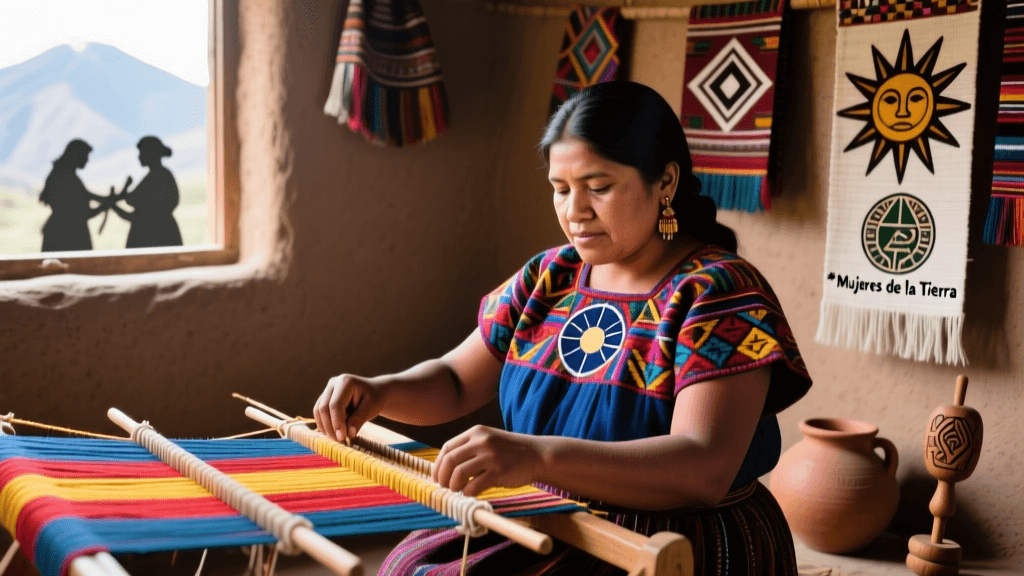
The huipil—a handwoven, rectangular blouse worn by Maya women across highland Guatemala—is neither costume nor garment in the Western sense. It is a three-dimensional codex: each thread encodes lineage, community affiliation, spiritual cosmology, and ecological knowledge. Worn daily by tens of thousands of women in over 22 distinct Maya linguistic groups—including K’iche’, Kaqchikel, Mam, and Q’eqchi’—the huipil functions as both personal identifier and collective memory vessel. In San Antonio Aguas Calientes, a Kaqchikel-speaking village near Antigua, girls begin learning backstrap weaving at age seven, mastering tension control before they can tie their own shoelaces. The loom itself—a portable apparatus anchored to a tree or post and secured around the weaver’s waist with a cotton sash—has remained structurally unchanged for over 1,500 years, confirmed by archaeological textile fragments recovered from the Classic Maya site of Nim Li Punit.
Backstrap Weaving: Technique, Tension, and Time
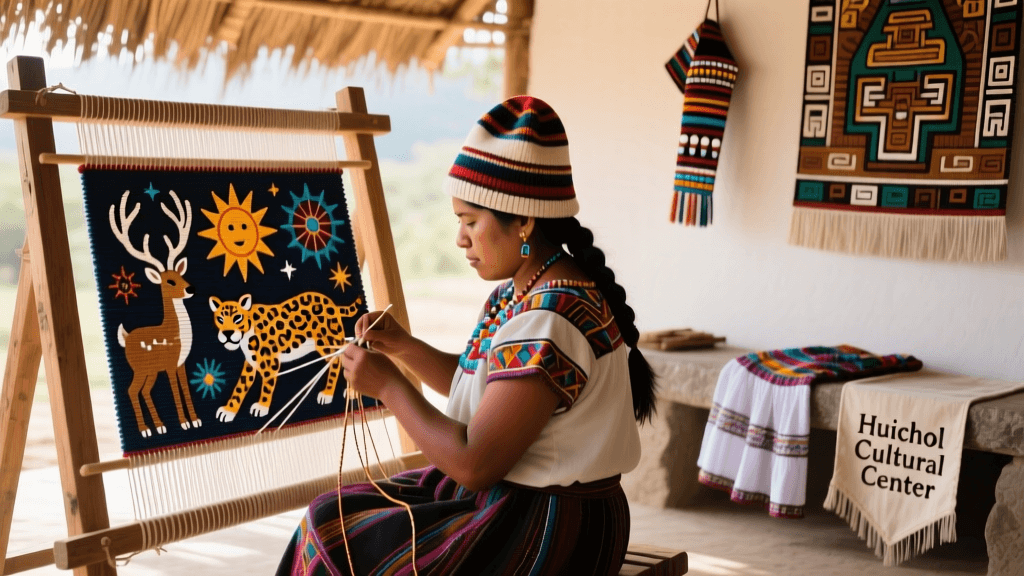
Backstrap weaving demands extraordinary physical coordination. The loom consists of two wooden bars—one fixed, one adjustable—held taut by the weaver’s body weight. A typical adult huipil requires 80–120 hours of continuous work, woven on a warp measuring precisely 1.8 meters long and 0.65 meters wide. The warp threads are traditionally hand-spun from native cotton (Gossypium arboreum), dyed using cochineal insects harvested from nopal cacti (yielding up to 70,000 insects per kilogram of dye) and indigo fermented in ceramic jars for 14 days. Weavers in Sololá Department maintain strict protocols: no weaving occurs during lunar eclipses, and the first shuttle pass must always be made at dawn. This temporal discipline reflects the Maya concept of k’iin, or sacred time cycles embedded in every pattern.
Structural Precision and Symbolic Grammar
Each huipil’s central panel—the huipil q’eq—contains layered symbolic fields. The upper chest band (q’eq) denotes ancestral origin; the midsection (tz’i’b) maps local geography; the lower border (ch’ut) represents the underworld or maize roots. In Nebaj, Ixil weavers incorporate the ch’ul k’u’x (sacred heart) motif: a diamond-shaped figure composed of exactly 36 interlocking triangles, symbolising the 360-day Maya calendar cycle plus the five wayeb days. The number 36 recurs deliberately—not as ornamentation but as calendrical notation.
Community-Specific Pattern Systems
No two Maya communities share identical designs. In Santiago Atitlán, Tz’utujil huipils feature concentric serpent motifs representing the feathered serpent deity K’uk’ulkan, rendered in natural dyes yielding 12 distinct shades of red—from brick to rust—each tied to specific soil types found within 5 km of Lake Atitlán. In contrast, Chichicastenango’s K’iche’ huipils use geometric zigzags measuring precisely 2.3 cm in amplitude to evoke the path of lightning, a direct reference to the Popol Vuh creation narrative where lightning splits the primordial sea.
Ritual Context: When Cloth Becomes Ceremony
Huipils are consecrated objects. Newborns receive their first huipil during the ch’ak’ab’al ceremony at 12 days old—a rite documented by the Maya Association of Women Weavers (Asociación de Mujeres Tejedoras Mayas) in 2019. During weddings in Momostenango, the bride wears a huipil with 13 horizontal bands, corresponding to the 13 levels of the upper world in Maya cosmology. At funerals, elders drape deceased women in huipils woven with undyed cotton threads—symbolising return to the earth’s raw state. These practices are protected under Decree 17-2021 passed by Guatemala’s Ministry of Culture and Sports, which recognises huipil patterns as intangible cultural heritage.
Institutional Stewardship and Contemporary Challenges
Three institutions anchor formal preservation efforts. The Museo Ixchel del Traje Indígena in Guatemala City houses over 4,200 huipils, including a 19th-century K’iche’ example with 217 individually embroidered stars—each representing one of the 217 villages in the historical K’iche’ confederation. The Centro de Documentación e Investigación de la Artesanía (CEDIA) in Quetzaltenango maintains a digital archive mapping 387 distinct pattern variants across 12 departments. Meanwhile, the Maya Textile Council—a coalition of 27 cooperatives headquartered in San Juan La Laguna—has certified 1,842 weavers through its Tz’ib’al Q’ij (Writing of Days) apprenticeship program since 2015.
Economic Realities and Cultural Sovereignty
Despite global demand, fewer than 12% of huipils sold internationally meet authentic production standards. A 2022 audit by the Guatemalan National Institute of Statistics found that only 31% of huipils marketed as “handwoven” in tourist zones used traditional backstrap looms; the rest employed power looms or imported polyester blends. This commercial distortion prompted the formation of the Tz’aq’ik’el Alliance in 2023, comprising 14 cooperatives committed to traceable sourcing. Their certification label guarantees: (1) 100% native cotton or sheep wool, (2) natural dyes processed without synthetic mordants, (3) minimum 60 hours of weaving time per piece, (4) community-specific pattern validation by elder weavers, and (5) fair compensation calculated at 3.2 times Guatemala’s national minimum wage.
- Standard huipil width: 0.65 meters (measured at shoulder seam)
- Average warp thread count: 1,280 threads per meter
- Cochineal yield: 70,000 insects required per kilogram of dye
- Minimum weaving time for ceremonial huipil: 80 hours
- Number of certified Tz’aq’ik’el cooperatives: 14
“The huipil is not worn—it breathes with us. When the pattern shifts, the ancestors speak. When the thread breaks, the land remembers.” —Juana Xol, Master Weaver, San Antonio Aguas Calientes (quoted in Textiles of Resistance, Maya Association of Women Weavers, 2021)
Patterns as Pedagogy: Transmission Beyond the Loom
Weaving instruction extends far beyond technical skill. In the Q’eqchi’ community of Cobán, children learn pattern meanings through oral narratives: the stepped fret motif teaches mountain formation myths; the double-headed eagle signifies dual sovereignty between earthly and celestial realms. Elders recite these stories while guiding hands over the warp, embedding epistemology into muscle memory. The Academia de Lenguas Mayas de Guatemala reports that 63% of youth in weaving communities demonstrate higher retention of ancestral language vocabulary when taught through textile metaphors rather than rote memorisation. This pedagogical model has been adopted by the Universidad Rafael Landívar’s Indigenous Knowledge Program, which integrates huipil analysis into anthropology and environmental science curricula.
Authenticity is measured not in aesthetics but in accountability. Each huipil bears invisible signatures: the rhythm of the shuttle pass, the slight variation in knot tension, the precise placement of a single extra weft thread marking the weaver’s birth year. These micro-decisions resist mass replication. As noted in the 2020 report Woven Sovereignty by the International Council of Thirteen Indigenous Grandmothers, “When a huipil is copied without consent, it is not theft of design—it is severance from the living relationship between maker, land, and lineage.”
Today, young weavers in San Pedro Sacatepéquez are integrating solar-powered dye vats while preserving fermentation timelines calibrated to lunar phases. They digitise pattern archives using QR codes woven directly into hem borders—scanning reveals the weaver’s name, village, and the specific maize variety grown to feed her family during weaving season. These innovations affirm continuity, not compromise.
The huipil remains unbroken—not as relic, but as active syntax in an ongoing conversation between past, present, and future generations. Its patterns do not decorate the body; they reconstitute identity, one warp thread at a time.
| Community | Distinctive Motif | Measurement Standard | Symbolic Reference |
|---|---|---|---|
| Nebaj (Ixil) | Ch’ul k’u’x (Sacred Heart) | 36 interlocking triangles | 360-day calendar + 5 wayeb days |
| Santiago Atitlán (Tz’utujil) | Concentric serpents | 12 red dye shades | Soil types within 5 km radius of lake |
| Chichicastenango (K’iche’) | Zigzag lightning | 2.3 cm amplitude | Popol Vuh creation narrative |
At the heart of this tradition lies an uncompromising principle: cloth cannot be separated from conscience. Every huipil carries the weight of responsibility—to ancestors, to territory, to those yet unborn. That weight is not burdensome. It is the anchor holding culture steady amid erasure.
When you see a huipil, look not at the surface—but at the space between threads. That is where memory lives. That is where resistance is woven.
The Museo Ixchel del Traje Indígena, the Centro de Documentación e Investigación de la Artesanía, and the Maya Textile Council collectively hold over 12,000 documented pattern variations—each verified through community-led validation processes requiring consensus among at least three elder weavers.
Backstrap weaving does not produce fabric. It produces continuity.
It produces kinship.
It produces truth.