Huichol Yarn Painting Textile Connections And Sacred Symbolism Mexico
Roots in the Sierra Madre: Huichol Territory and Ancestral Continuity
The Huichol (Wixáritari) people inhabit the rugged, pine-forested highlands of the Sierra Madre Occidental in western Mexico—spanning parts of Nayarit, Jalisco, Durango, and Zacatecas. Their territory includes sacred sites such as Wirikuta, a 160,000-hectare desert region in San Luis Potosí designated as a UNESCO World Heritage Site in 2000 for its cultural and ecological significance. Unlike many Indigenous groups subjected to forced assimilation, the Huichol maintained linguistic, spiritual, and artistic autonomy through geographic isolation and ritual resilience. Their language, Wixárika, belongs to the Uto-Aztecan family and remains spoken by approximately 50,000 people—95% of whom are bilingual in Spanish, according to the 2020 Mexican National Institute of Statistics and Geography (INEGI) census.
Yarn Painting: Technique, Materials, and Sacred Geometry
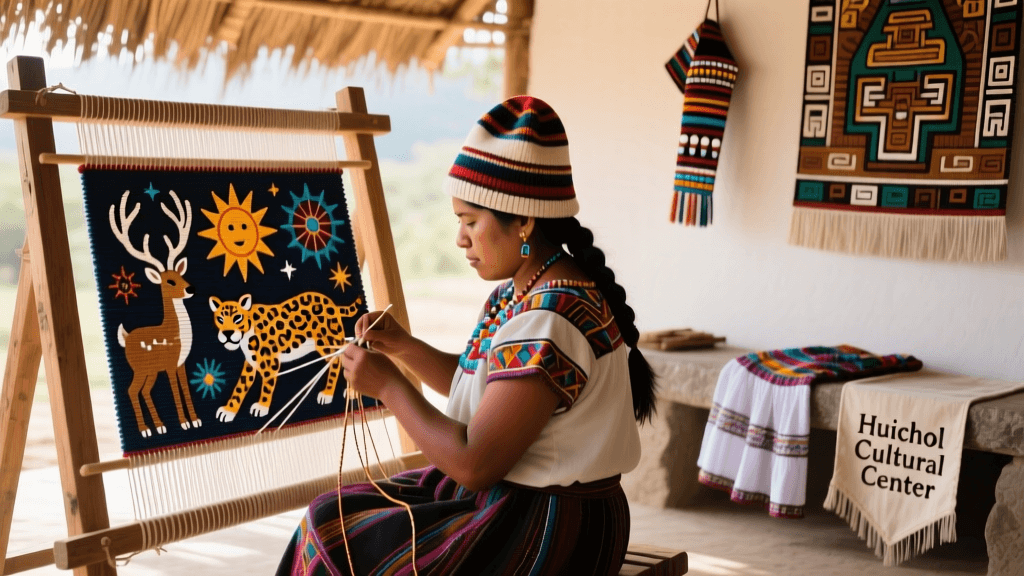
Yarn painting—or nierika—is not merely decorative; it is a devotional act rooted in shamanic vision. Artists press dyed commercial yarn—traditionally wool but now often acrylic—into beeswax-coated wooden boards or cardboard. The wax base must be heated to precisely 45–50°C to maintain tackiness without melting, a temperature calibrated by generations of tactile knowledge. Each piece begins with a central motif representing a deity, ancestor, or sacred place, then expands outward in concentric layers symbolising cosmological hierarchy.
Materials and Preparation Protocols
Before weaving begins, artists undergo ritual fasting and pilgrimage. Beeswax is collected from wild hives in the Sierra, purified over low heat for 4–6 hours, and mixed with pine resin to enhance adhesion. Commercial yarns are selected for symbolic colour resonance: red for life force (kieri), blue for rain and sky (tayau), yellow for maize and sun (neka), and white for purity and the ancestral realm (hikuri). A standard ceremonial nierika measures between 30 × 40 cm and 60 × 90 cm, though large altar pieces reach up to 120 cm in height.
Symbolic Motifs and Their Meanings
Every recurring form carries layered meaning. The deer represents the spirit guide and mediator between humans and deities. The peyote cactus (Lophophora williamsii) appears in stylised, multi-petaled forms—each petal corresponding to one of the four cardinal directions. Corn kernels are rendered as tightly packed hexagons, referencing the plant’s 12–14-row cob structure and its role as physical and spiritual sustenance. Eagles denote celestial vision; serpents embody earth energy and transformation.
Institutional Stewardship and Contemporary Practice
The Centro Huichol de Cultura y Desarrollo, founded in Tepic, Nayarit in 1998, coordinates intergenerational transmission through workshops led by elder marakames (shamans). Since 2012, the centre has trained over 320 youth in traditional design principles and ethical marketing protocols, ensuring that sales revenue directly supports community health clinics and bilingual schools. Similarly, the Museo Nacional de Antropología in Mexico City houses over 1,200 Huichol textile works—including a 1974 nierika measuring 48 × 72 cm depicting the journey to Wirikuta—which serve both archival and pedagogical functions.
Commercial Ethics and Cultural Sovereignty
Unauthorised mass production of Huichol motifs has surged since the 2000s, with an estimated 7,000+ counterfeit pieces sold annually in tourist markets across Guadalajara and Puerto Vallarta. In response, the Consejo Supremo Wixárika filed a formal complaint with Mexico’s National Institute of Copyright in 2019, resulting in the registration of 14 core design families under collective intellectual property rights. As stated by the organisation’s legal coordinator, “A deer motif painted without ritual intent is not art—it is erasure” (Consejo Supremo Wixárika, 2021).
Ceremonial Context: Beyond the Gallery Wall
Authentic nierikas function within ritual frameworks—not as static objects but as activated conduits. During the annual Huiala ceremony in San Sebastián Teponahuaxtlán, elders affix newly completed pieces to the central temazcal (sweat lodge) walls using natural pine pitch. Each board remains in place for exactly 13 days—the sacred number representing lunar cycles—before being ritually burned. This practice underscores a fundamental principle: creation is inseparable from dissolution, and meaning resides in process, not permanence.
Textile offerings accompany pilgrimages to Wirikuta, where participants walk over 800 km from their mountain communities. At the sacred site, they bury small yarn paintings beneath specific rock formations, each burial aligned to a solar azimuth angle measured at sunrise on the winter solstice. These placements are documented using handheld GPS units calibrated to WGS84 coordinates by the Huichol-led project Tekókali, supported since 2015 by the Fundación Friedrich Naumann para la Libertad México.
Interwoven Histories: Huichol Practice in Continental Context
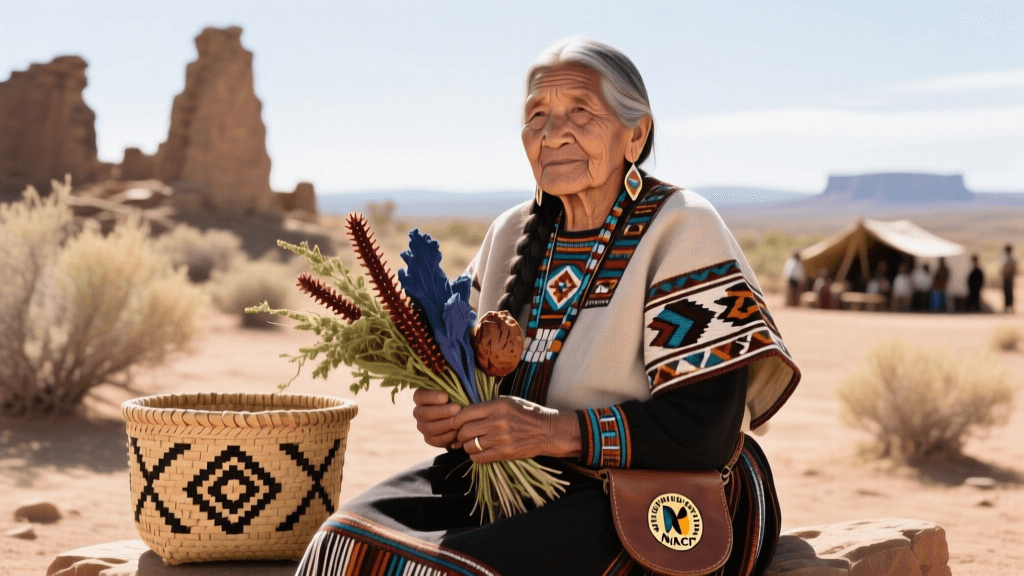
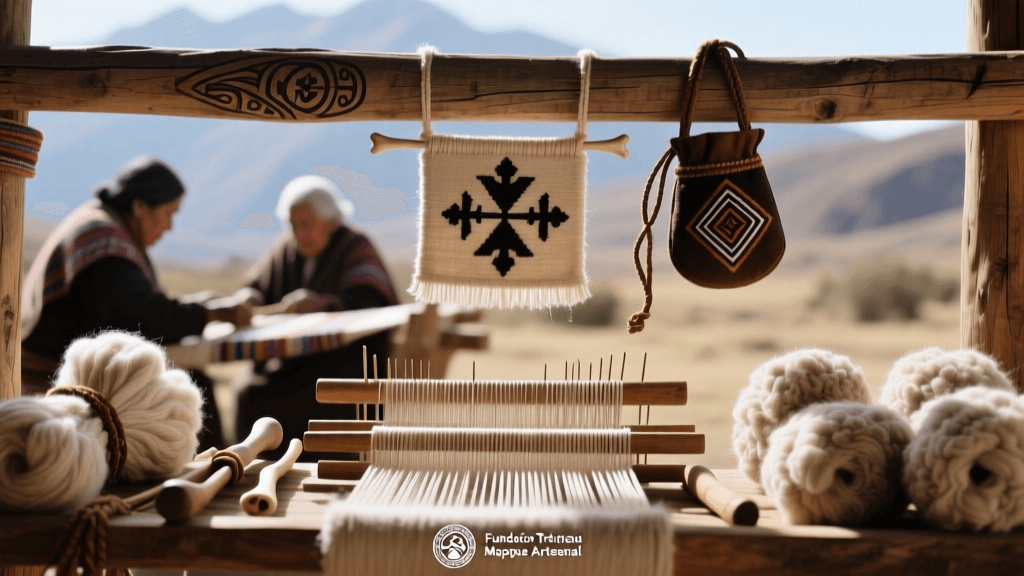
While distinct in technique, Huichol yarn painting shares conceptual ground with other Indigenous textile traditions across the Americas. Like the K’iche’ Maya huipil of Guatemala—where brocaded patterns encode lineage and village identity—the nierika encodes cosmology through repetition and symmetry. Similarly, Andean tocapu designs on Inca tunics used geometric modules to convey administrative and spiritual hierarchies, just as Huichol concentric layouts map tiers of existence. The Navajo yei blankets of the Southwestern U.S., woven after 1890 using Germantown yarns, also translate sacred beings into textile form—but unlike Huichol practice, Navajo weaving traditionally avoids direct depiction of deities out of reverence.
The Aztec tradition of featherwork, documented in the 16th-century Codex Mendoza, employed iridescent hummingbird and quetzal plumes to create ceremonial shields and headdresses. Though materially divergent, both featherwork and yarn painting rely on meticulous hand-labour to transform organic matter into sacred interface. Caribbean Taíno cotton belts, recovered from Dominican Republic cave sites, feature knotting patterns that correlate with lunar calendars—echoing the Huichol use of numerical precision in motif arrangement.
- Standard ceremonial nierika thickness: 1.2–1.8 cm (including wax and yarn layers)
- Minimum pilgrimage distance from San Andrés Cohamiata to Wirikuta: 800 km
- Average time spent creating a mid-size nierika: 120–200 hours
- Number of registered Wixárika design families under Mexican IP law: 14 (2019)
- Altitude range of primary Huichol settlements: 1,500–2,200 metres above sea level
“The yarn does not lie. If your heart is not in the deer, the lines tremble. If your breath is shallow, the wax cracks. Every centimetre holds a prayer—and every prayer must be true.” — Marakame José Luis González, interviewed at the Centro Huichol, Tepic, 2022
Preservation Challenges and Community-Led Solutions
Climate change threatens core materials: bee populations in Nayarit declined by 37% between 2010 and 2022 due to pesticide drift and drought, per data from the Comisión Nacional Forestal (CONAFOR, 2023). Simultaneously, synthetic dyes imported from China have infiltrated local supply chains, compromising ritual integrity—since traditional colour symbolism requires mineral- and plant-based pigments processed according to seasonal lunar phases. To counter this, the Huichol Women’s Weaving Cooperative in Santa Catarina Cuexcomatitlán launched a native indigo and cochineal dye garden in 2020, now supplying 120 artisans across three municipalities.
The cooperative operates a rotating apprenticeship model: each master artisan mentors two youth for 18 months, covering wax preparation, motif sequencing, and ceremonial protocol. Completion requires presenting a full nierika during the Tukipa festival in November—a rite witnessed by elders from all four Huichol autonomous councils. This system ensures continuity while resisting commodification: no piece leaves the community until its ritual purpose is fulfilled, and commercial sales are limited to post-ceremonial surplus approved by the Consejo Supremo Wixárika.
International collaboration remains strictly governed. Since 2017, the Smithsonian Institution’s National Museum of the American Indian has partnered exclusively with the Centro Huichol on exhibition loans, adhering to repatriation guidelines outlined in the Native American Graves Protection and Repatriation Act (NAGPRA) framework—even though Huichol communities fall outside NAGPRA’s jurisdiction, demonstrating institutional respect for self-determined protocols.
| Feature | Huichol Yarn Painting | K’iche’ Huipil (Guatemala) | Quechua Textile (Peru) |
|---|---|---|---|
| Primary Fibre | Wool/acrylic yarn + beeswax | Cotton + silk brocade | Alpaca wool + vicuña fibre |
| Average Creation Time | 120–200 hours | 300–600 hours | 250–500 hours |
| Ritual Use Frequency | Annual pilgrimage cycle | Life-cycle ceremonies (birth, marriage) | Harvest festivals & ancestral rites |
At the Museo Regional de Nayarit in Tepic, a permanent gallery displays 42 historically significant nierikas, including a 1958 piece created by artist Ramón Medina Silva—one of the first Huichol to adapt the tradition for wider audiences without compromising ritual fidelity. His work, acquired directly from family custodians in 2004, remains on view alongside audio recordings of his chants, preserved in collaboration with the Universidad Autónoma de Nayarit’s Ethnographic Archive.
The resilience of Huichol textile practice lies not in stasis but in disciplined adaptation. When commercial acrylic yarn replaced scarce hand-spun wool in the 1970s, elders reinterpreted colour symbolism rather than rejecting the material outright. When digital mapping tools arrived, they were integrated into pilgrimage planning—not as replacements for memory, but as aids to accuracy in sacred geography. This pragmatic reverence defines the living tradition: every thread pulled taut, every hue placed with intention, every board consecrated before display. It is labour as liturgy, geometry as gospel, and pattern as prayer made visible.