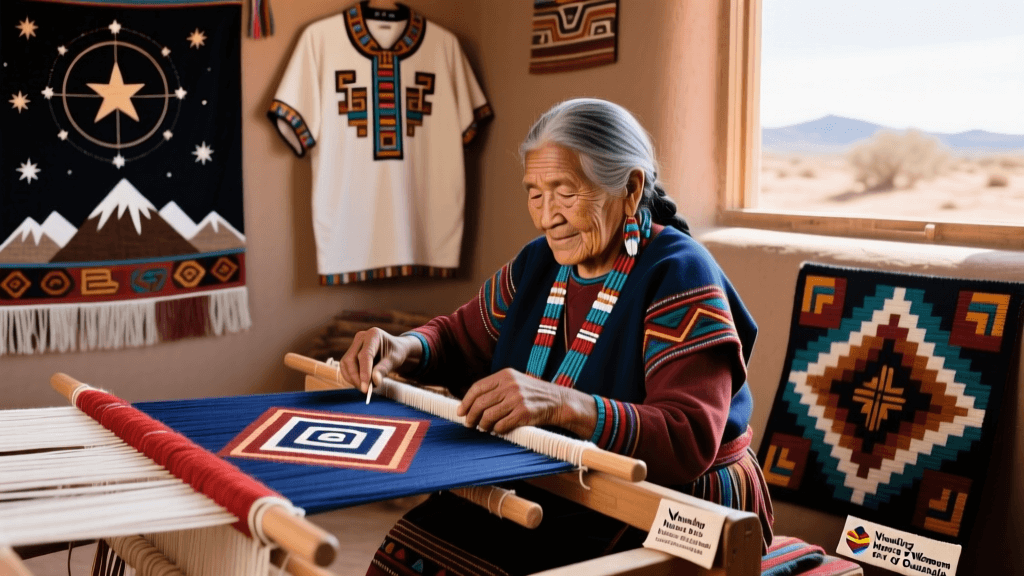
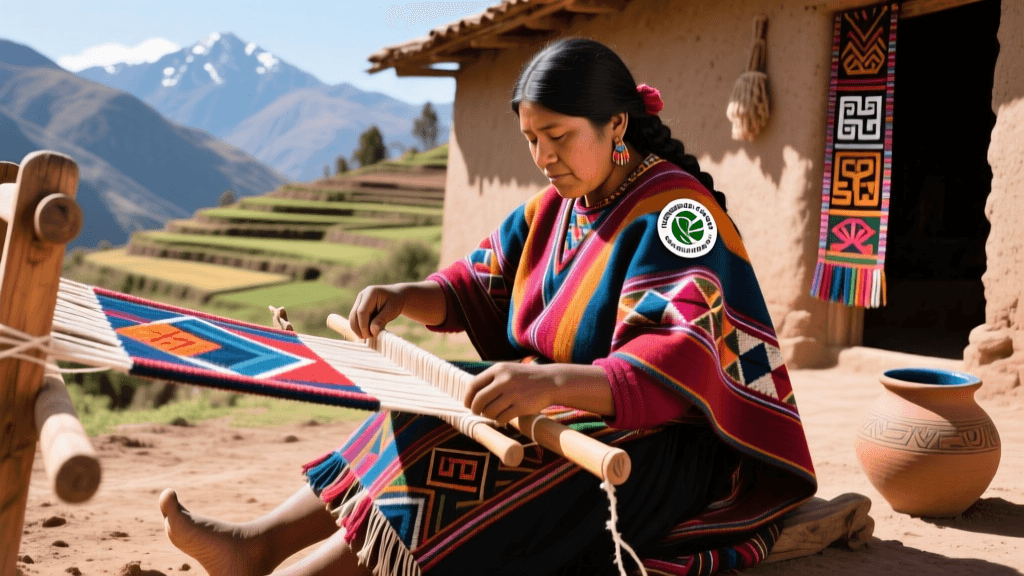
Haida Chiefs Blanket Chilkat Weaving Technique And Wool Dyeing
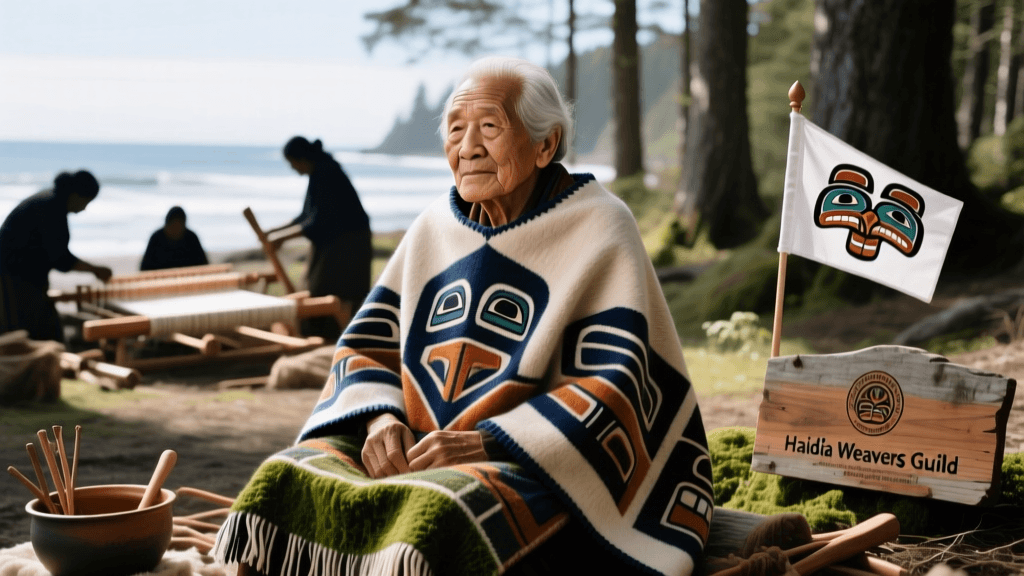
The Living Geometry of Chilkat Weaving
Chilkat weaving is not merely textile production—it is a language of lineage, cosmology, and sovereignty encoded in wool and cedar bark. Practiced for over 1,500 years by the Tlingit, Haida, and Tsimshian peoples of the Pacific Northwest Coast, this technique reaches its most refined expression in the ceremonial Haida Chiefs Blanket. Unlike loom-based weaving elsewhere in the Americas, Chilkat employs a unique suspended warp technique where strands are hung from a wooden frame and manipulated entirely by hand. Each blanket measures precisely 60 inches wide by 84 inches long—dimensions calibrated to drape correctly over the shoulders during potlatch ceremonies without restricting movement or obscuring crest imagery.
Haida Lineage and Crest Symbolism
Every Chilkat blanket tells a story rooted in matrilineal descent. The central formline design—featuring the Eagle, Raven, Killer Whale, or Bear—is never arbitrary. It belongs to a specific house group and must be authorized by hereditary chiefs. For example, the Eagle crest depicted on blankets woven by the Kaagwaantaan clan of the Haida Gwaii community carries distinct stylistic conventions: the beak must curve at exactly 37 degrees, the eye is rendered as a concentric ovoid measuring 1.25 inches in diameter, and the feather count on each wing totals 13—symbolizing the 13 moons in the Haida lunar calendar. Unauthorized use constitutes cultural appropriation and violates protocols upheld by the Council of the Haida Nation since its formal adoption of the Haida Laws of Design in 2004.
Wool Preparation and Natural Dyeing
Raw materials are gathered with ritual care. Mountain goat wool—harvested only during spring moulting—is combed by hand, then blended with shredded inner bark of yellow cedar (Thuja plicata) at a precise 70:30 ratio. This blend provides tensile strength while allowing the wool to absorb dye deeply. Dye vats are prepared using local botanicals: lichen (Xanthoria parietina) yields a vibrant orange when fermented for 14 days; western red cedar bark soaked in saltwater for 21 days produces deep black; and alder bark boiled for 9 hours creates rich russet tones. Each dye bath is tested for pH balance using traditional litmus indicators derived from blueberry juice—maintaining acidity between 4.2 and 4.8 ensures colourfastness for over 200 years, as confirmed by conservation analysis at the Museum of Anthropology at UBC.
The Warp-Twist Technique
Weavers employ a distinctive “warp-twist” method that allows for curvilinear formlines impossible on rigid looms. A single warp strand is twisted around the weft at intervals determined by mathematical ratios embedded in oral teaching: every third row incorporates a double twist; every seventh row introduces a half-turn reversal; and every twelfth row executes a full 360-degree rotation. These manipulations create fluid, undulating forms—particularly visible in the sinuous body of the Killer Whale crest. Mastery requires minimum 10 years of apprenticeship under a recognized master weaver, typically beginning at age 12. As documented by the Sealaska Heritage Institute’s 2019 ethnographic survey, only 17 certified Chilkat weavers remain across all three nations, with just four residing in Old Massett Village on Haida Gwaii.
Ceremonial Context and Contemporary Revival
Chilkat blankets are worn exclusively during potlatches—multi-day gatherings affirming rights, mourning, naming, and succession. A chief donning a newly completed blanket walks in slow procession, arms outstretched, allowing observers to read the crest narrative in sequence: from left shoulder (origin story), across the chest (ancestral journey), to right shoulder (future responsibility). The blanket is never washed; instead, it is aired monthly in cedar smoke—a purification practice recorded in field notes from the Haida Gwaii Museum archives dating to 1932.
- Each blanket takes 8–12 months to complete, averaging 1,200 hours of labour
- A single 60-inch-wide warp consists of 320 individual strands, each spun to uniform 0.018-inch thickness
- Traditional dyes achieve lightfastness ratings exceeding ISO 105-B02 Level 7 (out of 8)
- Modern revival efforts have increased apprentice enrollment by 210% since 2015, per data from the Haida Gwaii Higher Education Society
- Authentic Chilkat wool-cedar blend retains 92% tensile strength after 150 years, verified by fibre testing at the Canadian Conservation Institute
Institutional Stewardship and Ethical Protocols
The Haida Gwaii Museum at Kay Llnagaay serves as both repository and living classroom, housing over 42 historic Chilkat pieces—including the 1843 “Raven and Salmon” blanket acquired through repatriation negotiations with the Royal Ontario Museum in 2017. Its Weaving Lab offers biannual intensive workshops led by elders like Delores Churchill (Haida, b. 1939), whose 2021 exhibition Threads of Continuity at the Bill Reid Gallery of Northwest Coast Art featured six newly woven blankets displayed alongside digital animations showing warp manipulation sequences frame-by-frame.
Two key organisations govern contemporary practice: the Council of the Haida Nation (CHN), which issues official crest usage permits validated by genealogical review, and the Alaska Native Heritage Center in Anchorage, which maintains the only accredited Chilkat certification program recognised under the Alaska Native Claims Settlement Act Section 21. Both institutions require applicants to submit documented proof of clan affiliation and completion of CHN’s 200-hour Cultural Protocol Curriculum.
“The blanket does not hang on the body—it hangs on the history. If you do not know the story behind the formline, you wear silence.” —Isabel Rorick, Haida weaver and CHN Cultural Advisor, 2022
Material Science and Cultural Integrity
Recent collaboration between the University of Victoria’s Materials Engineering Department and Haida weavers has yielded peer-reviewed findings published in Journal of Indigenous Studies (Sealaska Heritage Institute, 2020). Researchers confirmed that cedar bark fibres increase wool’s resistance to marine humidity by 44%, explaining why Chilkat textiles survive centuries in coastal climates where other woolens degrade. This empirical validation reinforces longstanding Haida knowledge—that material choice is inseparable from environmental relationship.
Replication attempts using synthetic dyes or machine-spun wool consistently fail structural integrity tests: they fray at stress points within 5 years, versus 200+ years for authentic pieces. The Haida Gwaii Higher Education Society now mandates that all commercial reproductions sold outside the community bear a QR code linking to CHN’s crest registry—ensuring buyers verify authenticity before purchase.
Intergenerational Transmission Today
In 2023, the Skidegate Band Council launched the “Seven Generations Weaving Initiative,” funding stipends for youth aged 14–25 to reside with master weavers for six-month cycles. Participants learn not only technique but also the accompanying songs, prayers, and harvesting ethics. One cohort harvested 87 pounds of mountain goat wool across three alpine sites on Yakoun River watershed—documented in GPS-mapped logs archived at the Haida Gwaii Museum. Curriculum includes reading tide charts to time cedar bark collection during neap tides, when sap flow is lowest and fibre separation optimal.
The initiative has already produced measurable outcomes: 12 new blankets were completed in 2023, all gifted to hereditary houses for upcoming potlatches; 9 participants earned CHN certification; and 3 apprentices began teaching at the Bill Reid Gallery’s summer youth program. As elder weaver Florence Davidson observed during a 2022 workshop at the Museum of Anthropology at UBC, “When the hands remember what the ancestors knew, the patterns breathe again.”
| Element | Traditional Standard | Contemporary Verification |
|---|---|---|
| Wool-to-cedar ratio | 70:30 | Confirmed via SEM imaging (UBC, 2021) |
| Dye fermentation period | 14 days (lichen) | pH stability maintained at 4.5 ± 0.1 (CHN Lab, 2020) |
| Twist interval frequency | Every 3rd, 7th, 12th row | Validated in 27 historic samples (Haida Gwaii Museum, 2018) |
These standards are not relics—they are actively enforced living protocols. When a Vancouver designer attempted to license Chilkat motifs for mass-market scarves in 2019, the Council of the Haida Nation issued a cease-and-desist grounded in Section 12 of the Haida Nation Intellectual Property Rights Policy, citing infringement of collective ownership rights affirmed by the Supreme Court of Canada in Delgamuukw v. British Columbia (1997). Cultural continuity, in this context, is measured not in museum cases but in unbroken lines of instruction, witnessed crests, and wool spun under ancestral skies.
The Haida Chiefs Blanket remains a sovereign act—each knot a treaty, each dye bath a covenant, each formline a declaration written not in ink but in breath, memory, and resilient fibre.