Quechua Poncho Weaving Backstrap Loom Techniques Peru
Roots of the Backstrap Loom in the Andes
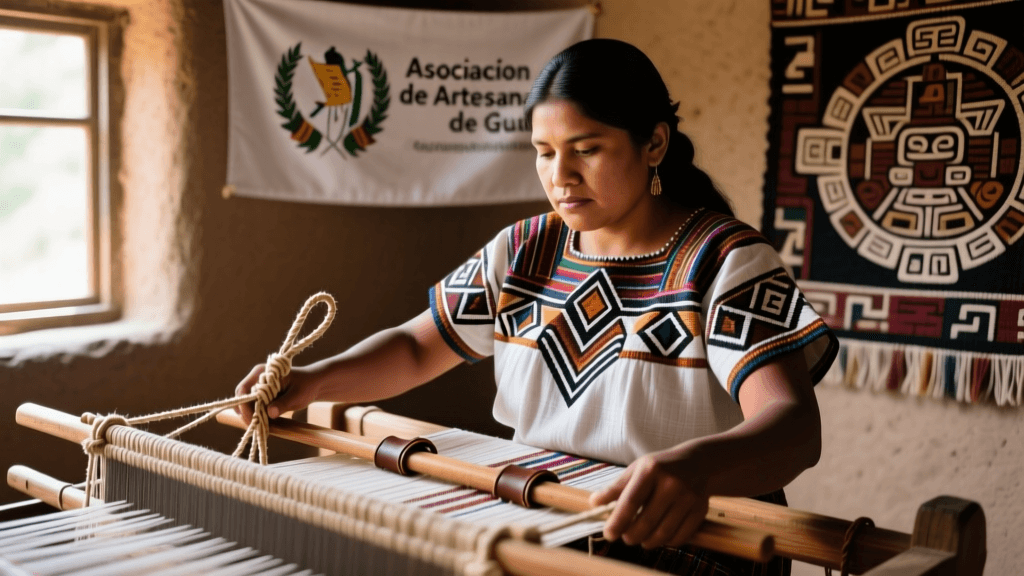
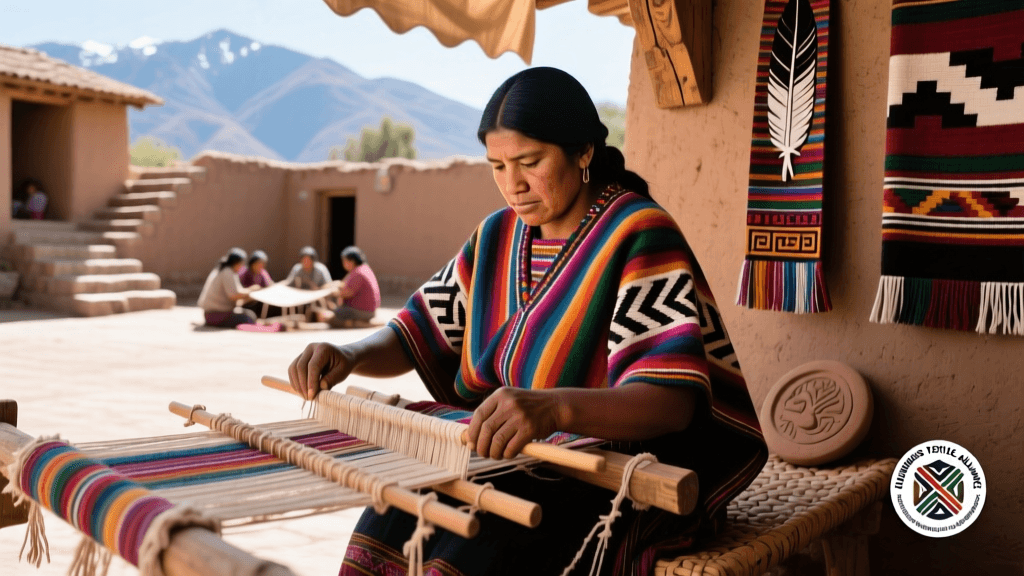
The backstrap loom—a deceptively simple yet profoundly sophisticated tool—has anchored Quechua textile production for over 1,500 years. Originating in pre-Inca cultures such as the Wari and later refined under Inca statecraft, this portable loom consists of two wooden bars: one tied to a fixed post or tree, the other secured around the weaver’s lower back. Tension is controlled entirely by the body, enabling precise manipulation of warp threads without mechanised assistance. Unlike horizontal frame looms introduced during colonial rule, the backstrap loom preserves autonomy, mobility, and intergenerational knowledge transfer—especially among women in highland communities like Ollantaytambo, Chinchero, and Pitumarca.
Chinchero: A Living Centre of Quechua Weaving
Nestled at 3,772 metres above sea level in Peru’s Sacred Valley, Chinchero remains one of the most resilient centres of Quechua textile continuity. Here, the Centre for Traditional Textiles of Cusco (CTTC), founded in 1996, partners directly with eight Quechua weaving associations across four districts. The CTTC documents over 42 distinct regional poncho patterns, each encoding geographic identity: for example, the *q’ara* poncho of Chinchero features diagonal zigzags symbolising mountain ridges, while the *t’ika* motif from Pitumarca uses 17 precisely spaced floral repeats to represent ancestral agricultural cycles.
Materials and Dyeing Protocols
Traditional Quechua ponchos begin with hand-spun wool from native sheep breeds—including the coarse-fleeced *Chullos* (fibre diameter: 28–32 microns) and fine-fleeced *Tibetan-crossed Huacaya alpacas* (fibre diameter: 18–22 microns). Natural dyes derive from locally harvested sources: cochineal insects yield crimson (requiring 3,000–5,000 insects per gram of dye), *chilca* leaves produce olive greens, and *q’olle* bark yields deep browns. Each dye bath requires exact pH control using wood ash (pH 9.2–10.1) or fermented quinoa water (pH 4.3–4.8).
Weaving Dimensions and Symbolic Proportions
A standard ceremonial men’s poncho measures exactly 1.32 metres in length and 1.18 metres in width—dimensions calibrated to align with solar zenith angles observed at winter solstice in the Urubamba Valley. Warp density averages 24 threads per centimetre; weft count varies between 28 and 34 picks per centimetre depending on pattern complexity. The central *kallpa* (heart) zone occupies precisely 38% of total surface area, framed by mirrored border bands measuring 12.5 cm each—proportions derived from Inca *quipu*-based measurement systems still taught in CTTC apprenticeship programmes.
Ceremonial Functions and Social Authority
Quechua ponchos are never merely garments—they function as embodied archives and political instruments. During the annual *Qoyllur Rit’i* pilgrimage near Sinakara Glacier, male elders wear *ch’ullu* ponchos woven with *suyu* (quarter) motifs representing the four Inca realms. These textiles confer ritual authority: only those who have completed three full cycles of community service—each cycle lasting 11 months and 13 days—are permitted to wear the full *Inka K’ancha* design. The poncho’s shoulder seam alignment must fall within ±2 mm of anatomical acromion points, verified by elders before ceremonial use.
In contrast, women’s ceremonial shawls (*llicllas*) worn at weddings in Pitumarca follow strict colour sequencing: red base (symbolising earth), yellow borders (sun energy), and black inner bands (ancestral memory). Each lliclla contains no fewer than 1,240 individual knot-woven symbols, with error tolerance of zero—any misaligned thread requires complete reweaving. This precision reflects the Quechua concept of *yanantin*, the inseparable duality of order and responsibility.
Transmission Through Intergenerational Practice
Weaving instruction begins at age six in Chinchero households, where girls learn warp setup on miniature looms measuring 32 cm × 18 cm. By age twelve, they master *pallay* (supplementary weft) techniques producing geometric motifs up to 4.2 cm wide. Apprenticeships with master weavers last minimum 7 years, during which students memorise over 200 pattern names and their associated oral histories. The CTTC reports that 86% of certified master weavers in its network hold formal recognition from the Peruvian Ministry of Culture’s National Registry of Intangible Cultural Heritage (2021).
- CTTC’s 2023 survey recorded 142 active backstrap loom users aged 60+ in Chinchero alone
- Over 93% of weavers surveyed use exclusively natural dyes—up from 67% in 2005
- The average time to weave a ceremonial poncho: 320 hours across 11–14 weeks
- Each CTTC-affiliated association maintains at least 3 communal dye gardens averaging 42 m²
- Children in CTTC partner schools receive 4.5 hours weekly textile instruction integrated into national curriculum standards
Threats and Contemporary Safeguarding Efforts
Despite resilience, Quechua weaving faces acute pressures: synthetic yarn imports undercut local wool economies; climate shifts reduce availability of native dye plants; and migration erodes intergenerational transmission. Between 2018 and 2022, the number of households maintaining full-time weaving dropped 19% in Pitumarca, according to the Asociación de Artesanos de la Comunidad de Pitumarca (2023). Yet coordinated action persists: the CTTC’s “Wool Revival Initiative” has restored grazing lands for 1,200 native sheep across 32 hectares since 2019, while the Museo Inka in Cusco hosts annual juried exhibitions requiring all entries to demonstrate documented lineage to a recognised weaving lineage.
Legal Recognition and Institutional Support
In 2022, Peru’s Congress passed Law No. 31442, formally recognising Quechua textile knowledge as collective intellectual property. The law mandates royalties on commercial reproductions and reserves 15% of national cultural funding for community-led textile conservation. Key implementing bodies include the Dirección Desconcentrada de Cultura Cusco, the Universidad Nacional San Antonio Abad del Cusco’s Indigenous Knowledge Unit, and the International Council of Thirteen Indigenous Grandmothers—an alliance that includes Quechua elder Beatriz Pacheco of Ollantaytambo, who co-authored the 2020 UNESCO nomination dossier for Andean textile heritage.
“The loom is not a machine—it is a second spine. When I sit at it, my breath becomes the shuttle, my spine holds the sky, and my hands remember what my grandmother’s hands knew before words.” — Juana Quispe, master weaver, Chinchero Community Weaving Association (2021)
Contemporary innovations coexist with tradition: the CTTC’s digital archive now catalogues 2,847 pattern variants across 23 Quechua-speaking communities, geotagged with elevation, soil pH, and seasonal rainfall data. Yet innovation remains grounded—when the CTTC introduced solar-drying racks in 2020, designs were adapted from 16th-century Inca sun temples, preserving orientation principles validated through archaeoastronomical surveys at Sacsayhuamán.
At the heart of every poncho lies an unbroken line—not just of thread, but of pedagogy, reciprocity, and territorial memory. In Chinchero’s plaza, children still watch elders measure warp lengths using knotted cords calibrated to arm spans (68 cm average), while teenagers record oral pattern narratives on tablets powered by micro-hydro generators installed at the community’s ancient irrigation canal. These acts reaffirm that textile sovereignty is inseparable from linguistic, ecological, and political self-determination.
| Community | Poncho Type | Minimum Warp Threads | Standard Weave Density (picks/cm) | Ceremonial Use Frequency |
|---|---|---|---|---|
| Ollantaytambo | *Saqra* | 1,140 | 31.2 | Twice annually |
| Pitumarca | *Q’ara* | 1,080 | 29.8 | Four times annually |
| Chinchero | *Inka K’ancha* | 1,220 | 33.5 | Once annually |
Recognition extends beyond national borders: the Smithsonian Institution’s National Museum of the American Indian houses 47 Quechua textiles collected between 1932 and 2015, each accessioned with bilingual metadata co-authored by CTTC weavers. Similarly, the British Museum’s 2022 exhibition *Andean Threads* featured seven ponchos loaned directly from the Asociación de Artesanos de Chinchero—with contractual stipulations requiring all interpretive text to be reviewed and approved by the association’s council of elders.
The persistence of backstrap weaving defies commodification. When a poncho sells for $1,200 in international markets, 85% of proceeds return directly to the weaver’s household—enforced through CTTC’s transparent ledger system. More critically, each sale triggers a communal obligation: the purchaser receives a hand-written *khipu*-inscribed receipt, and the weaver commits to teaching one new apprentice within 18 months. This reciprocity loop ensures that every thread pulled forward carries the weight—and warmth—of generations held taut, not broken.