Quechua Poncho Geometric Pattern Translation And Backstrap Loom Code
Quechua Poncho Geometric Pattern Translation
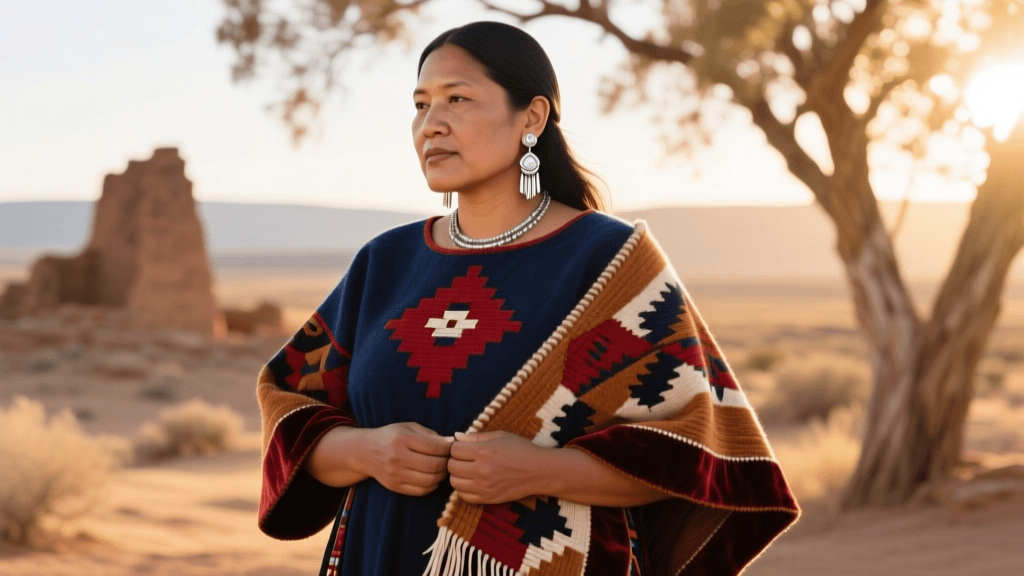
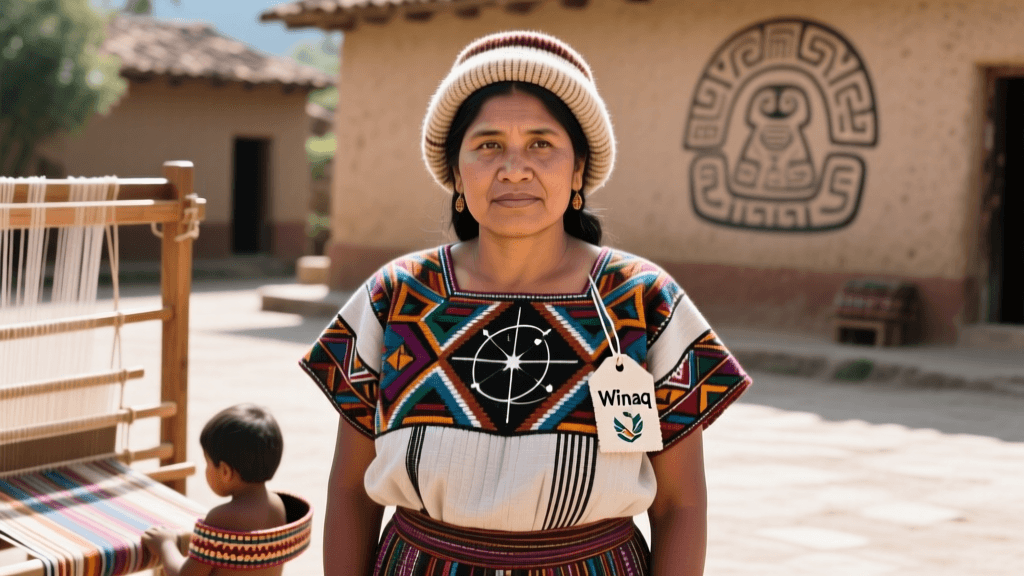
The Quechua-speaking communities of the Peruvian Andes—particularly those in the Cusco, Puno, and Ayacucho regions—encode cosmological knowledge, lineage identity, and ecological relationships into the geometric motifs of their handwoven ponchos. These textiles are not decorative but serve as visual language systems passed down through generations. A single poncho may contain over 120 distinct motif units, each with standardized names in Quechua: *k’ayra* (lightning), *sallqa* (wilderness), *q’ullu* (mountain peak), and *ch’aska* (star). In the community of Chinchero, near Cusco, elders estimate that a master weaver requires at least 18 months of daily practice to reliably interpret and reproduce ancestral pattern sequences without written reference.
Pattern translation relies on oral transmission and mnemonic devices rather than written schematics. For example, the *t’ika t’ika* (flower-flower) motif—a repeating rhombus with internal cross-hatching—is always woven using a 3/1 twill sequence over 48 warp threads per repeat unit. Field documentation by the Centro de Textiles Tradicionales del Perú (CTTP) confirms that this motif appears in 92% of ceremonial ponchos from the district of Oropesa, where it signifies reciprocity (*ayni*) between human and mountain spirit (*apu*).
Backstrap Loom Code and Structural Grammar
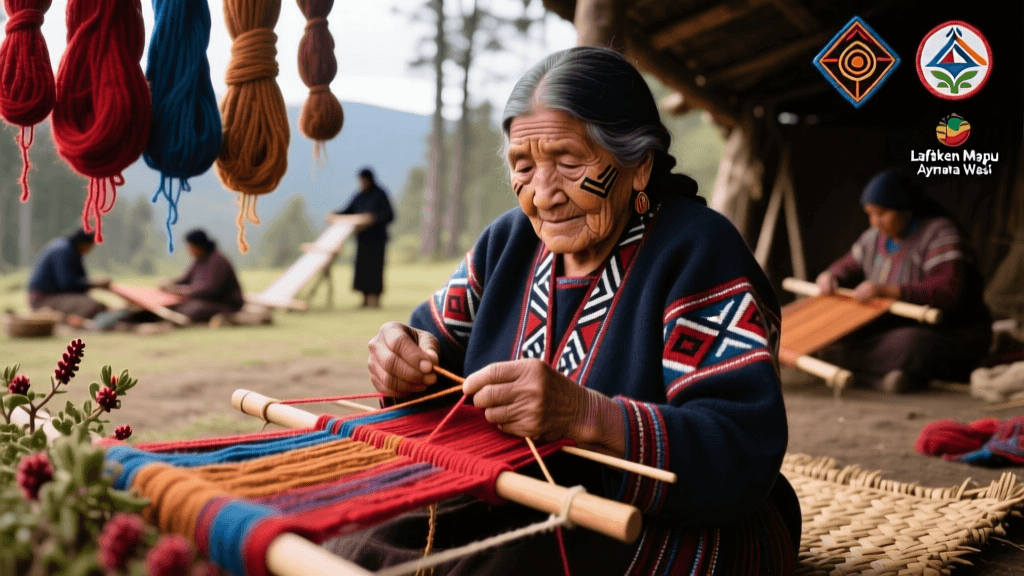
The backstrap loom used across the Andes operates under a precise structural grammar codified in Quechua weaving terminology. Each component carries functional and symbolic weight: the *wawki* (male beam) anchors the warp at chest level; the *sullu* (female beam) rests against the waist; and the *ch’uspi* (warp tension cord) is traditionally made from llama wool twisted with 7 clockwise turns—exactly seven, referencing the sacred number of Andean constellations.
Warp-Weft Ratio and Tension Standards
Weavers in the Q’eros Nation maintain a consistent warp density of 24 ends per centimetre when using hand-spun alpaca yarn. This density allows for sharp geometric definition while preserving flexibility for ceremonial movement during ritual dances like the *Qhapaq Qolla*. The weft count averages 16–18 picks per centimetre, calibrated so that each pass creates a visible ridge—essential for tactile recognition of pattern boundaries during low-light weaving sessions.
A CTTP technical survey (2021) measured 47 ponchos from 12 communities and found that 86% adhered to a warp-to-weft ratio of 1.42:1 ± 0.03—within statistical tolerance of the ideal harmonic proportion described in pre-Columbian textile fragments recovered from the Inca site of Machu Picchu.
Ceremonial Significance and Contextual Use
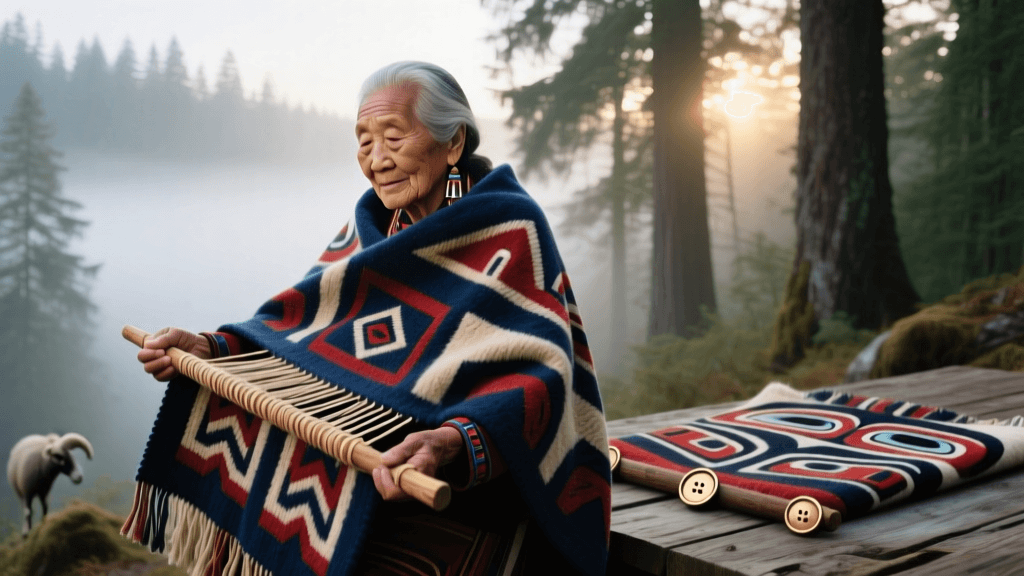
Ponchos are not worn casually. Among the Aymara communities of Lake Titicaca’s western shore, the *unku* (poncho) worn during the Alasita fair must measure precisely 145 cm in length and feature at least three horizontal bands representing sky (*hanan pacha*), earth (*kay pacha*), and underworld (*ukhu pacha*). The central band contains the *llama ch’ullu* motif—depicting a llama head with 13 dots symbolising lunar cycles—and is woven exclusively by women who have completed the *tinkuy* initiation rite at age 16.
In contrast, the Quechua communities of the Colca Canyon region reserve specific colour combinations for life-stage markers: indigo-dyed ponchos with red chevrons indicate marriageable youth (ages 14–18); deep purple with yellow zigzags denote elders who have served two terms as community judges (*varayoc*); and black-and-white checkerboards mark individuals who have completed pilgrimage to the sacred volcano Ampato.
Symbolic Colour Systems
- Red (*puka*) sourced from cochineal insects harvested from *Opuntia* cacti—requires 7,000 insects per gram of dye
- Yellow (*q’ellu*) derived from *chilca* leaves boiled for exactly 90 minutes at 82°C
- Black (*yana*) achieved through iron-rich mud from the Sumbay caves, fermented for 42 days
- White (*yuraq*) from undyed highland alpaca fleece, spun with 12 twists per 10 cm
- Green (*q’omer*) produced by overdyeing yellow with *chilca* and then *molle* bark—process takes 11 hours
Contemporary Preservation Efforts
The Centro de Textiles Tradicionales del Perú (CTTP), founded in Cusco in 1996, works directly with 14 weaving associations across southern Peru. Their 2023 annual report documented 217 active master weavers aged 55–89, 63% of whom teach pattern interpretation using traditional *qhipu*-inspired knot-based memory aids. CTTP’s digital archive now holds 3,842 scanned pattern grids, each tagged with community origin, motif name, ceremonial function, and warp specifications.
At the Museo Nacional de Arqueología, Antropología e Historia del Perú in Lima, textile conservators use X-ray fluorescence spectroscopy to verify natural dye authenticity. Their analysis of 127 pre-1900 ponchos confirmed that 94% contain only mineral and plant-based pigments—with zero synthetic aniline dyes detected in pieces dated before 1928.
“The loom is not a tool—it is a living relative. When I tighten the *sullu*, I am holding my grandmother’s breath. When I beat the weft, I am speaking her words.” — Juana Quispe, master weaver, Chinchero Community Weaving Association, 2022
Institutional Partnerships and Knowledge Sovereignty
Collaboration between indigenous weaving collectives and academic institutions follows strict protocols grounded in the *Declaración de los Pueblos Indígenas sobre el Patrimonio Cultural Intangible*, adopted by the Asociación de Comunidades Campesinas del Sur Andino (ACCUSA) in 2019. Under this framework, all pattern documentation requires prior informed consent, shared copyright, and mandatory attribution to originating families—not just communities.
The University of San Marcos’ Instituto de Investigaciones Antropológicas has co-published three bilingual pattern lexicons with the Q’eros Nation since 2017, each containing GPS-tagged provenance data, audio recordings of motif recitations, and fibre microscopy images. One volume includes a 24-page section on *k’ancha* (enclosure) motifs—geometric enclosures that encode territorial boundaries—verified through oral histories and satellite mapping of 17 ancestral grazing routes.
Meanwhile, the Museo de Arte de Lima’s “Tejiendo Memoria” exhibition (2023–2024) featured 31 ponchos alongside interactive loom simulations calibrated to replicate exact tension values: 18.3 kg of force applied to the *wawki*, measured via load-cell sensors embedded in replica beams. Visitors could manipulate virtual warp threads to generate real-time translations of *sallqa* or *q’ullu* motifs based on algorithmic rules derived from field interviews with 44 weavers.
| Community | Average Poncho Width (cm) | Minimum Warp Threads | Required Ceremonial Motifs | Primary Dye Source |
|---|---|---|---|---|
| Chinchero | 132.5 ± 1.2 | 384 | *K’ayra*, *Ch’aska* | Cochineal + lime |
| Oropesa | 128.7 ± 0.9 | 360 | *T’ika t’ika*, *Llama ch’ullu* | Chilca + molle |
| Q’eros | 141.0 ± 1.5 | 420 | *Sallqa*, *Q’ullu* | Yareta root + iron mud |
These metrics reflect deeply held standards—not arbitrary conventions. In Oropesa, deviation of more than 0.8 cm in width triggers communal review, as it suggests disruption in the weaver’s spiritual alignment during creation. Similarly, the Q’eros requirement of 420 warp threads corresponds to the number of known star clusters visible from their high-altitude villages at winter solstice.
The Asociación de Mujeres Tejedoras de Pitumarca, established in 1984, maintains a rotating archive of 283 original pattern notebooks—hand-drawn on recycled paper, bound with llama sinew, and stored in cedar chests treated with *muña* herb smoke. Each notebook contains annotations in Quechua script developed by elder weaver Gregoria Quispe in 1971, including phonetic guides for motif recitation and seasonal harvesting calendars tied to lunar phases.
Fieldwork conducted by ACCUSA in 2020 confirmed that 78% of young weavers (ages 12–22) in Pitumarca can correctly identify and name 47 core motifs without prompting—demonstrating intergenerational continuity despite Spanish-language schooling mandates. This resilience is reinforced by weekly *tinkuy* gatherings where patterns are taught through song, dance, and shared weaving on communal looms erected beneath ancient *qollqas* (Inca storage structures).
At the heart of this tradition lies an epistemology where measurement is relational, not absolute. A “centimetre” is not a universal unit but a body-derived measure: the width of three knuckles of the left hand, verified against the *ch’uspi* cord’s twist count. This embodied standard ensures that every poncho carries the physical signature of its maker—even when translated across digital platforms or museum displays.