Diné Traditional Dress & Weaving: Southwest Styles 2026
The Enduring Legacy of Diné Textile Arts and Dress
The traditional clothing of the Diné (Navajo) people represents one of the most dynamic and recognizable textile traditions in North America. Rooted in the sweeping landscapes of the Southwest, Diné dress is not merely a matter of historical costume; it is a living, breathing expression of cultural resilience, spiritual philosophy, and artistic mastery. As we navigate the cultural landscape of 2026, the revitalization of Indigenous North American dress traditions has reached a remarkable zenith, with Diné weavers, silversmiths, and fashion artisans leading a powerful movement that honors ancestral techniques while engaging with contemporary realities.
Unlike many Indigenous traditions that were entirely suppressed or lost, the Diné weaving tradition has maintained an unbroken lineage. According to the Smithsonian National Museum of the American Indian, the integration of weaving into daily life and spiritual practice has allowed Diné garments to evolve while retaining their core cultural DNA. Today, understanding the nuances of Diné dress—from the ancient biil (rug dress) to the iconic velvet and silver ensembles—requires a deep dive into the region's history, material culture, and the 2026 marketplace for authentic Indigenous art.
The Biil: Anatomy of the Two-Piece Rug Dress
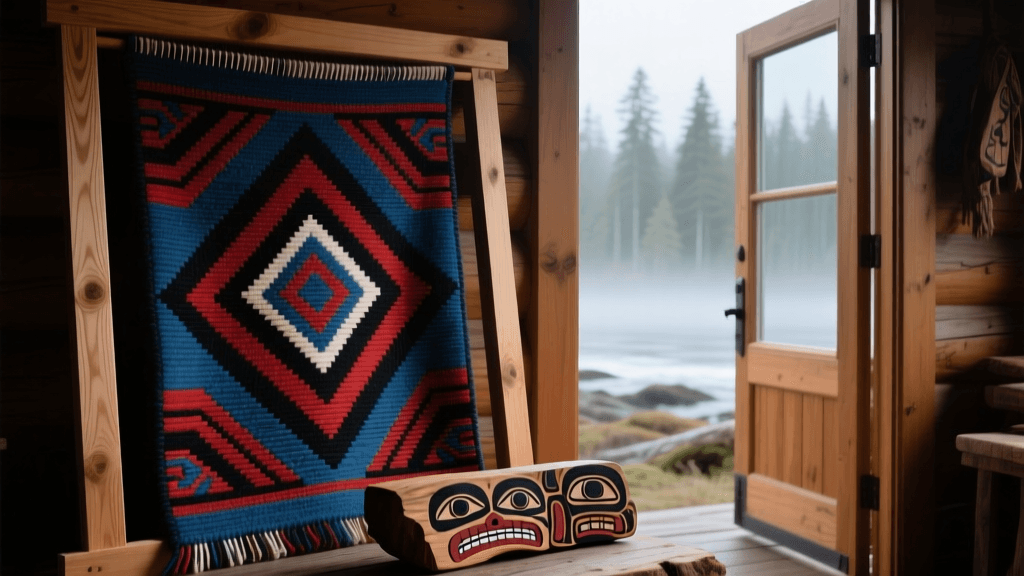
Long before the introduction of European trade goods, Diné women wove the biil, a traditional two-piece rug dress. The biil is constructed on an upright Pueblo-style loom, a technology adapted and perfected by the Diné after their interactions with Pueblo neighbors in the 17th century. The dress consists of two identical rectangular panels of hand-woven wool, tied together at the shoulders and belted at the waist, leaving the sides open.
Materials and the Churro Sheep Revival
The soul of the biil lies in its material: the wool of the Navajo-Churro sheep. This heritage breed, brought to the Americas by Spanish colonizers in the 1500s, possesses a unique double-coated fleece that is exceptionally durable, long-stapled, and naturally lanolin-rich. Following the devastating livestock reductions of the 1930s, the Churro sheep nearly faced extinction. However, thanks to the tireless efforts of the Navajo-Churro Sheep Association, 2026 has seen a thriving resurgence of these flocks across the reservation. Artisans today prioritize Churro wool for its historical accuracy and its ability to take natural dyes—such as wild walnut hulls, sagebrush, and juniper bark—with unparalleled vibrancy.
The Spirit Line (Ch'ihónít'i')
A defining characteristic of traditional Diné weaving, often incorporated into the biil and other textile garments, is the ch'ihónít'i', or 'spirit line.' This is a deliberate, contrasting line of yarn that weaves from the center of the design out to the edge of the textile. It serves a profound spiritual purpose: it provides a pathway for the weaver's spirit to exit the garment, ensuring that their creative energy is not trapped within the tight warp and weft, and allowing them to approach their next project with a clear mind and renewed vitality.
The Shift to Velvet, Silver, and Turquoise
The mid-to-late 19th century marked a dramatic shift in Diné dress, catalyzed by the tragic history of the Long Walk (1864) and the subsequent establishment of trading posts. As Diné people were introduced to new trade goods, they masterfully adapted them into a new sartorial vocabulary that remains the standard for formal and ceremonial Southwest wear in 2026.
Velvet Blouses and Tiered Skirts
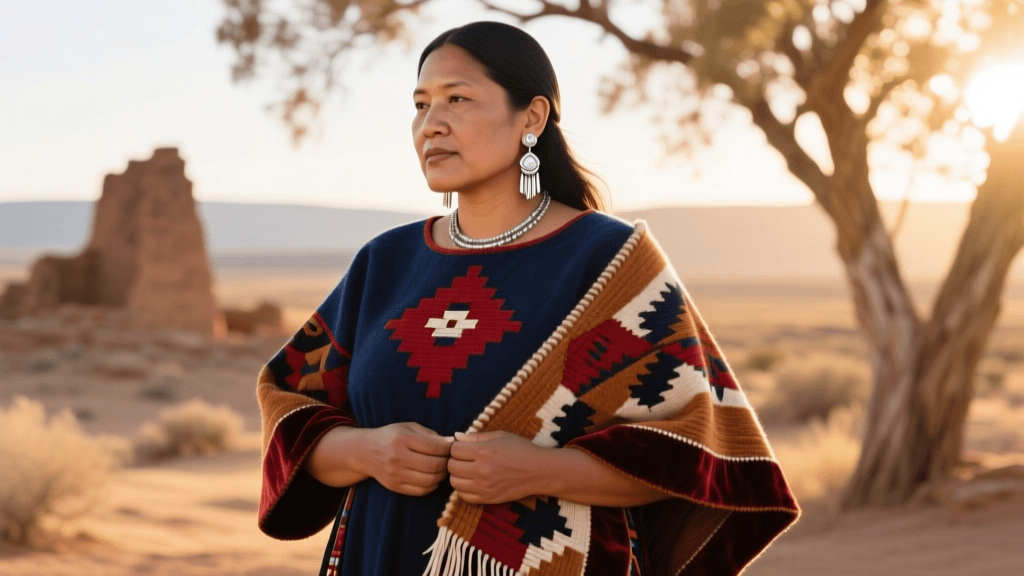
Trade cloth, particularly cotton velveteen, became highly prized. Diné women transformed this heavy, lustrous fabric into the iconic high-necked, long-sleeved velvet blouses and sweeping, multi-tiered skirts that define modern traditional Diné womenswear. The velvet is often adorned with delicate ribbon work, silver pins, and turquoise buttons. In 2026, the color palette for these garments has expanded beyond the traditional deep blacks, navies, and purples to include rich jewel tones like emerald and burgundy, though the cut and modest, elegant drape remain strictly traditional.
The Squash Blossom and Concho Belt
No discussion of Southwest Indigenous dress is complete without addressing the silverwork. The Diné learned silversmithing from Mexican plateros in the mid-1800s and rapidly elevated it to a high art form. The squash blossom necklace—featuring the central naja (crescent pendant) and triple-bead silver blossoms—is a cornerstone of Diné regalia. Paired with a heavy, sandcast or stamped silver concho belt worn over the velvet skirt, these pieces are not just jewelry; they are wearable wealth and profound markers of status, family lineage, and cultural pride.
Southwest Indigenous Dress: A Regional Comparison
While the Diné are the most prolific weavers in the Southwest, neighboring tribes possess distinct dress traditions that reflect their unique environments and histories. Understanding these regional variations is crucial for collectors, historians, and enthusiasts of Indigenous fashion.
| Tribe / Nation | Primary Garment Materials | Distinctive Features & Motifs | 2026 Market Availability |
|---|---|---|---|
| Diné (Navajo) | Churro wool, velveteen, sterling silver | Biil rug dress, geometric weaving, squash blossom necklaces, concho belts. | High; widely available via trading posts and direct artisan commissions. |
| Hopi | Cotton, yucca fiber, wool | White cotton mantas worn off one shoulder, woven sashes with fringe, kilt tassels. | Moderate; primarily made for ceremonial use, limited public retail. |
| Apache (Western) | Buckskin, glass beads, trade cloth | Fringed buckskin dresses, elaborate beadwork on yokes, high-crowned moccasins. | Low to Moderate; highly specialized beadwork requires direct artisan contact. |
Sourcing Authentic Diné Garments in 2026
As the demand for authentic Indigenous fashion continues to grow in 2026, so does the proliferation of mass-produced, culturally appropriated imitations. Sourcing genuine Diné garments requires diligence, respect, and an understanding of the current market landscape. The Indian Arts and Crafts Act strictly prohibits the misrepresentation of Native American art, but buyers must still know where to look to ensure their investments directly support Diné communities.
Trading Posts and Direct Artisan Networks
The most reliable method for acquiring authentic textiles and traditional garments is through established, tribally connected trading posts and cooperatives. Locations such as the Toadlena Trading Post and the Two Grey Hills region remain the epicenter for high-quality, natural-dye wool garments and textiles. For velvet skirts and blouses, local seamstresses on the reservation often take commissions through regional chapters or Indigenous fashion collectives based in Window Rock and Gallup.
Furthermore, the Wheelwright Museum of the American Indian in Santa Fe continues to be an invaluable resource, not only for viewing historical masterpieces but also for connecting with contemporary weavers and silversmiths through their annual markets and curated shop, which strictly vet the provenance of every piece.
2026 Pricing and Investment Guide
Authentic, handcrafted Diné garments represent a significant financial investment, reflecting the hundreds of hours of labor involved in shearing, carding, spinning, dyeing, weaving, and sewing. Below is a general pricing guide for authentic pieces in the 2026 market:
- Hand-Woven Biil (Rug Dress): $3,500 – $8,000+ (Depends on the fineness of the weave, the use of natural dyes, and the reputation of the weaver).
- Velvet Blouse and Skirt Set: $600 – $1,500 (Custom tailoring, quality of the velveteen, and inclusion of ribbon work).
- Sterling Silver & Turquoise Squash Blossom: $2,500 – $15,000+ (Varies wildly based on the age of the piece, the silversmith, and the quality/origin of the turquoise, such as Number 8 or Sleeping Beauty).
- Sandcast Concho Belt: $1,800 – $5,000 (Heavy gauge sterling silver with intricate stamp work or overlay).
Caring for and Maintaining Southwest Garments
Preserving these garments requires specific care protocols, especially given the natural materials used. Churro wool textiles should never be dry-cleaned with harsh chemicals, as this strips the natural lanolin and degrades the fibers. Instead, they should be gently vacuumed through a fiberglass screen and stored in acid-free tissue paper within cedar chests to deter moths. Velvet garments must be steamed rather than ironed to prevent crushing the pile, and heavy silver jewelry should be stored in anti-tarnish cloth bags, away from direct sunlight and extreme temperature fluctuations, to preserve the integrity of the turquoise matrix.
Conclusion: A Living Tradition
The traditional dress of the Diné and the broader Southwest Indigenous communities is a testament to survival and adaptation. In 2026, wearing a hand-woven biil or a velvet blouse adorned with ancestral silverwork is a profound act of cultural continuity. By understanding the deep history, the regional variations, and the ethical sourcing practices required to support these artisans, collectors and enthusiasts can participate in the preservation of one of North America's most spectacular textile and sartorial traditions.