Pacific Northwest Chilkat & Button Blankets: 2026 Weaver Guide
The Living Legacy of Northwest Coast Textile Arts
The Indigenous peoples of the Pacific Northwest Coast possess some of the most complex and visually striking textile traditions in the world. Far more than mere clothing, these garments serve as legal documents, historical archives, and spiritual armor. As we navigate the cultural landscape of 2026, we are witnessing an unprecedented renaissance in Indigenous North American dress traditions by tribe and region. Driven by youth-led apprenticeships, museum repatriations, and a fierce dedication to ancestral protocols, the creation and wearing of traditional regalia has moved from the brink of historical endangerment to the vibrant center of contemporary Indigenous life.
For the Tlingit, Haida, Tsimshian, Kwakwaka'wakw, Nuu-chah-nulth, and Coast Salish nations, textiles are deeply intertwined with the potlatch system—the complex economic and legal framework of the Northwest Coast. In 2026, university graduations, political summits, and seasonal potlatches are increasingly graced by the presence of masterfully woven robes. Understanding the regional variations, material sourcing, and cultural protocols of these garments is essential for anyone studying or participating in the Americas and Indigenous textile arts today.
Chilkat Weaving: The Tlingit, Haida, and Tsimshian Masterpieces
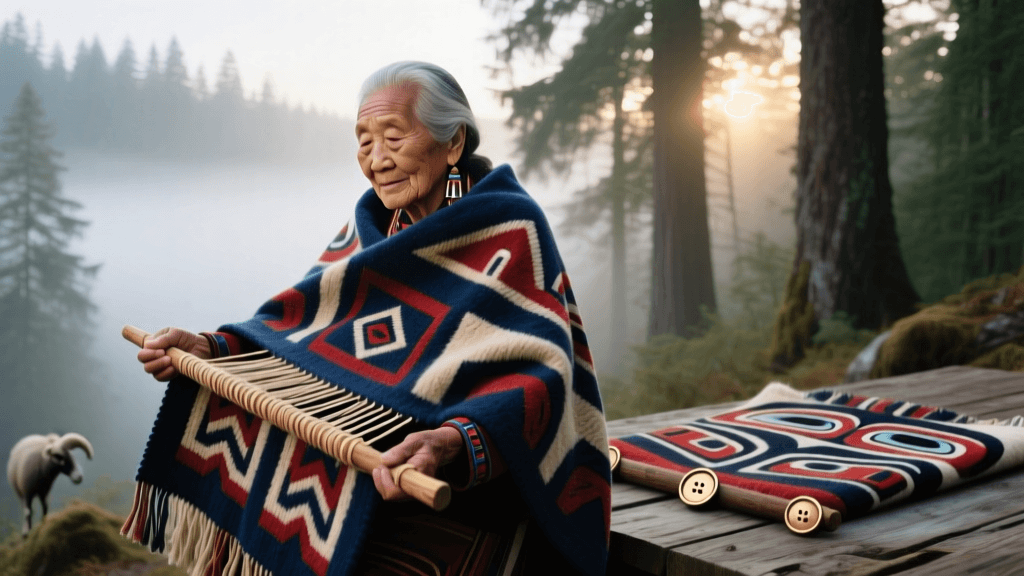
The Chilkat blanket, known in the Tlingit language as naaxein, is widely considered the pinnacle of Northwest Coast weaving. Originating with the Tsimshian and Chilkat Tlingit peoples of what is now southeastern Alaska and northern British Columbia, this technique is unique globally because it is woven without a loom. Instead, the weaver uses a complex finger-twining method, suspending the warp threads from a simple wooden crossbar and working from the top down.
Chilkat weaving is an exercise in extreme patience and mathematical precision. The designs are based on the region's iconic formline art system, featuring ovoids, U-shapes, and flowing lines that depict clan crests such as the Raven, Eagle, Bear, or Killer Whale. Historically, male artists would paint the pattern board, and female weavers would execute the design. Today, in 2026, these gender roles are increasingly fluid, with master weavers of all genders passing down the intricate knowledge of twining.
The creation of a single naaxein can take anywhere from 1,500 to 2,500 hours, often spanning over a year of dedicated work. The fringe at the bottom of the blanket is not an afterthought; it is a crucial design element that animates the crest figures when the wearer dances, making the animals appear to breathe and move. According to the Sealaska Heritage Institute, the preservation of these specific weaving mathematics is a primary focus of current 2026 cultural grants, ensuring that the next generation of weavers can read and execute ancestral pattern boards.
Button Blankets: The Kwakwaka'wakw and Coastal Salish Dance Robes
While Chilkat weaving represents ancient, pre-contact technologies, the button blanket is a brilliant example of Indigenous adaptation and innovation. Emerging in the mid-19th century following contact with European and American traders, the button blanket was rapidly adopted and indigenized by the Kwakwaka'wakw, Nuu-chah-nulth, Haida, and Coast Salish peoples.
A traditional button blanket is constructed from heavy, dark Melton wool broadcloth, typically in black, navy, or deep red. The artist cuts the clan crest from a contrasting color of felt or broadcloth and appliqués it onto the main body of the robe. The outline of the crest, as well as the borders of the blanket, are then meticulously hand-sewn with hundreds—sometimes thousands—of pearl, abalone, or glass buttons.
In 2026, the button blanket has evolved into a dynamic canvas for contemporary Indigenous expression. While traditional pearl buttons remain popular, many modern artists are incorporating laser-cut copper accents, 3D-printed biodegradable adornments, and hand-carved abalone inlays. The acoustic properties of the blanket are just as important as its visual impact; during a potlatch dance, the rhythmic clacking of the buttons and copper cones attached to the fringe creates a percussive soundtrack that connects the dancer to the spirit world.
2026 Material Sourcing and Sustainable Harvesting
One of the most pressing challenges for Northwest Coast weavers in 2026 is the ethical and sustainable sourcing of traditional materials. Climate change and habitat loss have severely impacted the populations of mountain goats and the old-growth forests required for yellow cedar bark.
- Mountain Goat Wool: Authentic Chilkat blankets require the ultra-soft undercoat of the mountain goat. In 2026, weavers rarely hunt goats solely for wool. Instead, they collaborate with regional wildlife management agencies to collect wool from naturally shed tufts found on alpine brush, or they partner with indigenous hunters who utilize the entire animal for subsistence, ensuring zero waste.
- Yellow Cedar Bark: The inner bark of the yellow cedar provides the strong, flexible core for the warp threads. Harvesting is strictly governed by traditional ecological knowledge. Weavers only harvest from specific trees during a narrow window in late spring when the sap is running, taking only a single, narrow vertical strip to ensure the tree survives and continues to sequester carbon.
- Melton Wool and Buttons: For button blankets, sourcing high-quality, dense Melton wool that does not fray when cut is essential. Contemporary artists are increasingly sourcing from indigenous-owned textile mills and utilizing vintage, deadstock buttons to reduce the environmental footprint of their regalia.
Comparative Breakdown: Chilkat vs. Button Blankets
To understand the regional and technical distinctions between these two monumental garment traditions, refer to the comparison table below:
| Feature | Chilkat Blanket (Naaxein) | Button Blanket |
|---|---|---|
| Primary Regions | Northern Northwest Coast (SE Alaska, Northern BC) | Central & Southern Coast (Vancouver Island, WA State) |
| Key Tribes | Tlingit, Haida, Tsimshian | Kwakwaka'wakw, Nuu-chah-nulth, Coast Salish |
| Primary Materials | Mountain goat wool, yellow cedar bark | Melton wool broadcloth, felt, pearl/abalone buttons |
| Construction Method | Finger-twining (no loom), top-down | Cutting, appliqué, hand-sewing buttons |
| Time to Complete | 1,500 - 2,500+ hours (1-2 years) | 150 - 400 hours (1-3 months) |
| Design System | Formline (ovoids, U-shapes, flowing lines) | Formline & Coast Salish geometric/animal motifs |
Cultural Protocols and the Modern Potlatch
It is vital for non-Indigenous observers, collectors, and fashion enthusiasts to understand that these garments are not mere costumes or commercial fashion items. In the Tlingit concept of at.oow, a Chilkat blanket is considered sacred clan property. It holds the spiritual weight of the ancestors and the legal authority of the clan's history.
When a naaxein or a button blanket is worn, the wearer is not just representing themselves; they are embodying their entire lineage. The Smithsonian National Museum of the American Indian (NMAI) highlights in its 2026 educational initiatives that the right to wear a specific crest is strictly inherited or granted through marriage and potlatch validation. Wearing a blanket bearing a crest that does not belong to your clan is considered a severe breach of Indigenous law and cultural respect.
Today, these robes are brought out for moments of immense cultural weight: the naming of a child, the mourning of a loved one, the transfer of leadership, and the celebration of academic achievements. It is increasingly common in 2026 to see Indigenous valedictorians wearing custom button blankets over their graduation gowns, a powerful assertion of survivance and academic excellence intertwined with ancestral pride.
Pathways for Aspiring Weavers in 2026
For Indigenous youth and community members looking to reconnect with these textile traditions, the landscape of learning has never been more accessible, yet it remains deeply rooted in mentorship. The transmission of knowledge is not just about technique; it is about learning the songs, the stories, and the spiritual protocols that accompany the preparation of the materials.
Institutions like the Freda Diesing School of Northwest Coast Art and various tribal cultural centers offer immersive programs. Furthermore, the Burke Museum and similar regional repositories are actively working with tribal weavers in 2026 to provide access to historical blankets, allowing apprentices to study the tension, spin, and twining techniques of their great-grandparents up close.
'When I sit at the weaving frame and twine the cedar and goat wool, I am not just making a blanket. I am having a conversation with the women who sat in this exact same posture thousands of years ago. The blanket is the physical manifestation of our continuity.' — Master Weaver, Tlingit Nation, 2026.
Whether studying the intricate, loom-less mathematics of the Tlingit naaxein or the bold, rhythmic appliqué of a Kwakwaka'wakw button blanket, the dress traditions of the Pacific Northwest Coast remain a testament to Indigenous resilience. By honoring the protocols, supporting sustainable material harvesting, and respecting the sacred nature of the crests, we ensure that these magnificent garments will continue to dance, speak, and protect their people for generations to come.