NYC vs LA Garment Districts 2026: Sourcing Traditional Textiles
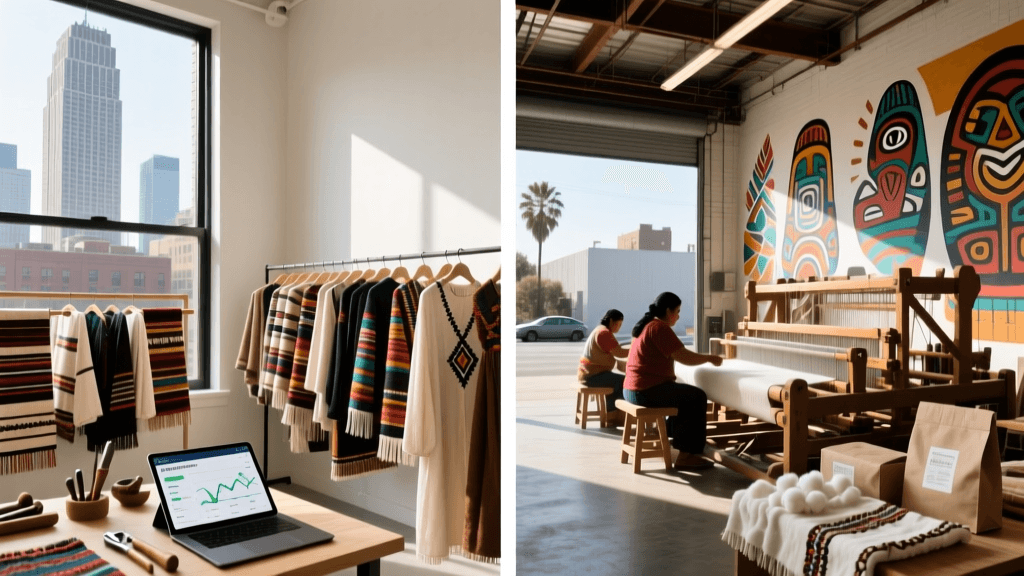
The landscape of American fashion manufacturing and textile sourcing has evolved significantly by 2026. For designers, historians, and Indigenous artisans creating traditional garments, regalia, and heritage-inspired apparel, the physical act of sourcing materials remains irreplaceable. While digital supply chains have expanded, the tactile nature of traditional textiles—heavy melton wools, intricate ribbon work supplies, selvedge denims, and natural fiber broadcloths—demands in-person evaluation. The two undisputed titans of American apparel sourcing are the New York City Garment District and the Los Angeles Fashion District. However, navigating these hubs in 2026 requires distinct strategies, especially for makers focused on Indigenous and traditional American clothing.
The NYC Garment District in 2026: Heritage Wools and High-End Trims
Spanning roughly 1.1 square miles in Midtown Manhattan, the NYC Garment District remains the historic heart of American fashion. In 2026, despite ongoing commercial real estate shifts, the district has successfully preserved its dense ecosystem of niche fabric stores, trim suppliers, and specialized tailors. For makers of traditional Native American regalia, historical reenactment garments, and heritage workwear, NYC is unparalleled in its depth of high-end trims and heavy-weight natural fibers.
According to the Garment District Alliance, recent zoning protections and heritage manufacturing grants have stabilized the presence of multi-generational textile vendors. If you are sourcing materials for traditional ribbon shirts, jingle dresses, or heavy winter trade-blanket-style coats, the side streets of the 30s offer incredible resources. Stores along 38th Street specialize in trims, offering vast inventories of cotton bias tape, metallic threads, glass beads, and specialized fringes that are essential for powwow regalia and traditional folk costumes. Furthermore, specialty wool vendors in the district stock authentic melton wool, Hudson Bay-style blanket cloth, and heavy felt necessary for constructing traditional capotes, Métis sashes, and Indigenous winterwear.
One major advantage of NYC in 2026 is the prevalence of low Minimum Order Quantities (MOQs). Many family-owned fabric houses still cater to independent designers and Broadway costume departments, allowing you to purchase cut-yardage of premium, hard-to-find textiles without committing to commercial wholesale rolls. This makes NYC ideal for bespoke traditional garment makers and Indigenous artists producing small-batch, high-value cultural apparel.
The LA Fashion District: Volume, Denim, and Southwestern Textiles
Over 2,400 miles away, the Los Angeles Fashion District operates on an entirely different frequency. Encompassing a massive 90-block radius in Downtown LA, this hub is the epicenter of high-volume manufacturing, fast fashion, and casual wear. However, for the traditional and Indigenous maker, LA offers unique advantages, particularly in denim, lightweight cottons, and Southwestern-inspired textiles.
The LA Fashion District BID reports that 2026 has seen a massive surge in sustainable and deadstock fabric vendors, a response to California's strict new environmental manufacturing mandates. For Indigenous designers incorporating modern streetwear into traditional motifs, or those creating contemporary adaptations of historical garments, LA's denim mills and deadstock warehouses are goldmines. You can source premium selvedge denim, heavy canvas, and durable twills perfect for modern workwear infused with traditional beadwork or embroidery.
Additionally, the district is famous for its vast selection of printed cottons and calicos. Historically, calico and floral prints were introduced to Native American communities through trade, eventually becoming foundational to traditional garments like the Navajo biil (rug dress) and various ribbon shirts. While LA offers these prints in massive volumes at Santee Alley and the California Market Center, buyers must exercise extreme caution regarding cultural appropriation, which brings us to a critical ethical consideration for 2026.
Ethical Sourcing: Navigating Cultural Appreciation in 2026
When sourcing textiles that feature Indigenous motifs, Southwestern geometric patterns, or traditional beadwork designs, ethical boundaries must be strictly observed. In 2026, consumers and cultural watchdogs are more vigilant than ever about the exploitation of Indigenous intellectual property. Mass-produced fabrics featuring faux-Native prints or counterfeit tribal patterns are not only culturally offensive but can also violate federal law.
The Indian Arts and Crafts Board enforces the Indian Arts and Crafts Act, which prohibits misrepresenting goods as being Native American-made when they are not. While this primarily applies to finished goods and artisans, ethical fashion brands in 2026 extend this philosophy to their supply chains. Instead of buying mass-produced 'Southwestern' prints in LA, forward-thinking designers are using the garment districts to source raw, unbranded natural materials (like plain linen, raw denim, and undyed wool) and then partnering directly with certified Indigenous weavers, beadworkers, and dyers to apply traditional techniques. Sourcing blank, high-quality canvases in NYC or LA and collaborating with Native artisans for the embellishment is the gold standard for ethical traditional apparel in 2026.
NYC vs. LA: A Sourcing Comparison for Traditional Makers
To help you plan your 2026 sourcing trips, here is a direct comparison of how these two hubs serve the traditional and Indigenous apparel market.
| Feature | NYC Garment District | LA Fashion District |
|---|---|---|
| Primary Textile Focus | Heavy wools, silks, high-end tailoring fabrics, specialized trims. | Denim, cottons, knits, deadstock synthetics, Southwestern prints. |
| Best For Indigenous Makers | Ribbon work supplies, beadwork trims, melton wool for regalia. | Contemporary streetwear bases, denim, lightweight calico and floral cottons. |
| Average MOQs | Low (Cut-yardage friendly, ideal for bespoke/small batch). | High (Wholesale rolls, though deadstock vendors offer lower minimums). |
| Price Point | Premium to High (Reflects quality and real estate costs). | Low to Moderate (Volume-based pricing). |
| Navigation & Vibe | Vertical (Multi-story buildings, elevators, curated showrooms). | Horizontal (Sprawling streets, alleyways, massive warehouse floors). |
Your 2026 Sourcing Itinerary: Best Practices
Whether you are flying into JFK or LAX, preparation is the key to a successful sourcing trip for traditional garments. The post-pandemic supply chain realities of 2026 mean that walk-in traffic is heavily managed, and appointment-only policies are standard for the best wholesale vendors.
Preparing for NYC
- Map the Side Streets: While Broadway houses the famous tourist-friendly fabric stores, the true heritage materials are found on 38th and 39th Streets between 7th and 8th Avenues.
- Bring Physical References: When looking for specific historical shades of broadcloth or exact widths of silk ribbon for traditional appliqué, digital photos on a phone are insufficient. Bring physical swatches or Pantone chips.
- Utilize the Alliance App: The NYC Garment District digital directory is updated weekly in 2026, helping you locate niche trim suppliers that have recently relocated within the zone.
Preparing for LA
- Secure a Wholesale Badge: Many of the best deadstock and denim warehouses in LA require a business license and a wholesale badge for entry. Apply online through the district's portal at least two weeks before your trip.
- Hire a Local Sourcing Agent: The LA district is overwhelmingly large. For makers looking for specific sustainable cottons to serve as a base for traditional embroidery, a local agent can save you days of walking.
- Verify Print Origins: If you encounter fabrics featuring Indigenous-looking geometric or turquoise-motif prints, demand to see the mill certificates. Avoid purchasing fabrics that appropriate sacred patterns, opting instead for solid dyes to be embellished ethically later.
Conclusion
The NYC and LA garment districts remain vital, beating hearts of the American textile industry in 2026. For those dedicated to the creation, preservation, and ethical evolution of Indigenous and traditional American garments, these hubs offer the raw materials necessary to bring cultural visions to life. By understanding the distinct personalities of each district—NYC's vertical, high-end trim and wool heritage versus LA's sprawling, volume-driven denim and cotton markets—makers can source responsibly and effectively. Ultimately, the true magic of traditional American apparel lies not just in the fabric, but in the hands that cut, sew, and embellish it, honoring the deep ancestral roots of the Americas.