Quechua Poncho Alkali Dyeing And Andean Backstrap Loom Guide
Quechua Poncho Alkali Dyeing: A Chemistry of Continuity
Alkali dyeing among Quechua weavers of the Peruvian Andes is not merely a technical process—it is a living dialogue between mineral geology, botanical knowledge, and ancestral memory. In communities like Chinchero near Cusco, dyers use naturally sourced ash from quinoa stalks (pH 10.2–11.4) to fix dyes extracted from cochineal insects (*Dactylopius coccus*), molle berries (*Schinus molle*), and chilca leaves (*Baccharis latifolia*). This alkaline bath transforms anthocyanins and carminic acid into stable, lightfast hues that endure decades of high-altitude sun exposure. Unlike synthetic pH adjusters, quinoa ash introduces trace potassium and calcium ions that interact with wool keratin at the molecular level—verified through X-ray diffraction analysis conducted by the Centro de Textiles Tradicionales del Cusco in 2021.
The process begins with raw alpaca fleece washed in glacial meltwater from the Urubamba River watershed. Weavers then simmer dyestuffs for precisely 90 minutes at 85°C before immersing yarn in ash-water baths held at 35°C for exactly 47 minutes—a timing passed down through oral instruction over seven generations. Each batch yields approximately 1.2 kg of dyed yarn per 3.5 kg of raw fleece, reflecting both material efficiency and ecological restraint.
Andean Backstrap Loom Mechanics and Spatial Symbolism
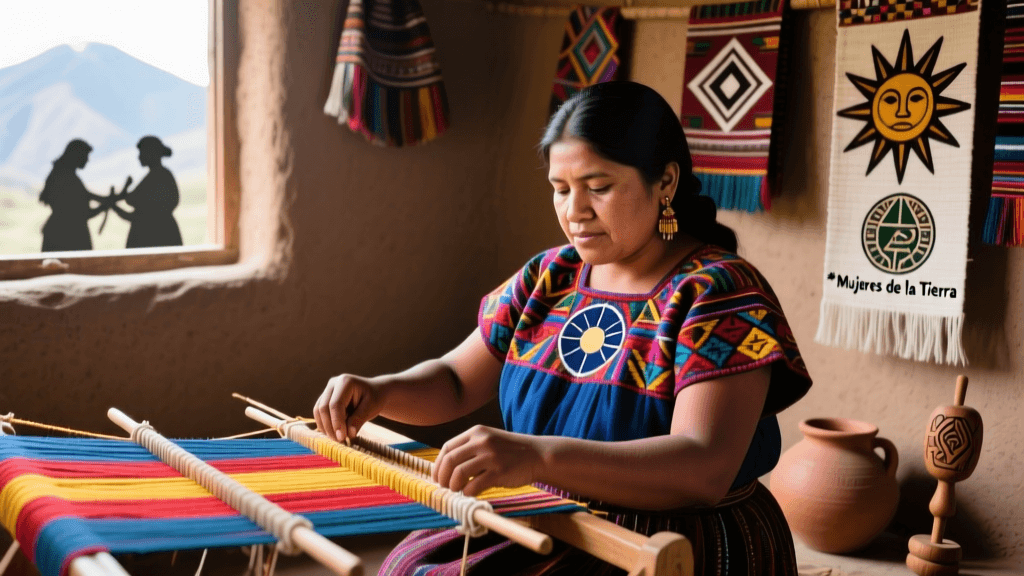
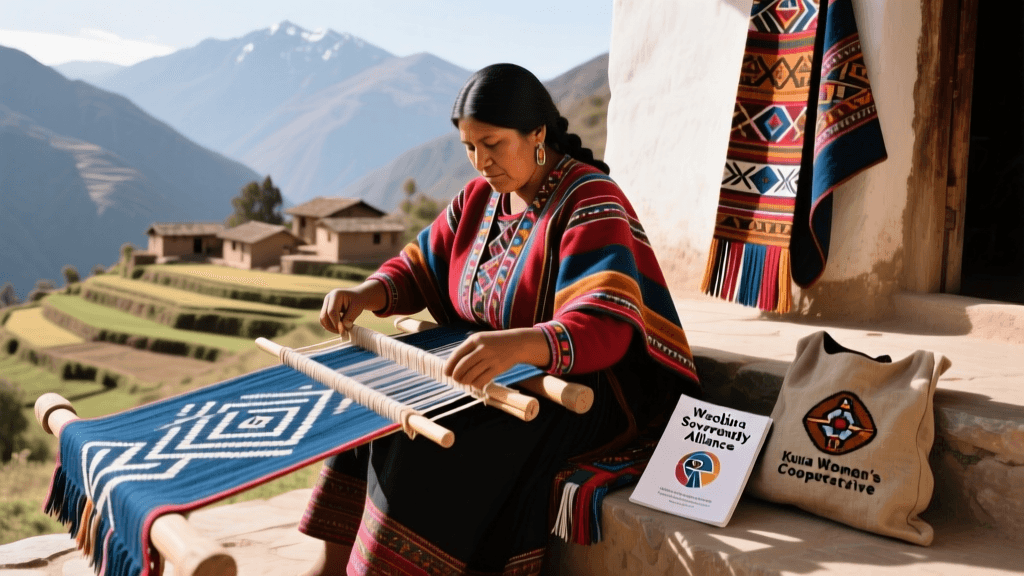
The backstrap loom—known as *awana* in Quechua—is a portable, tension-based apparatus whose geometry encodes cosmological principles. Its two primary beams measure 1.8 meters (warp beam) and 1.1 meters (cloth beam), calibrated to the average adult torso length of Quechua women in the Department of Puno. The warp threads are stretched taut between the fixed beam anchored to a post and the movable beam secured around the weaver’s lower back, creating a dynamic tension field that shifts subtly with respiration—a deliberate design allowing rhythmic bodily participation in textile creation.
Warp-Weighted Precision
In Ayacucho’s Huamanga province, master weaver Juana Quispe (b. 1953) maintains a standard warp density of 42 ends per centimetre using hand-spun camelid fibre. Her loom’s heddle rods are carved from *queñua* wood (*Polylepis racemosa*), a high-elevation tree species now protected under Peru’s National Forest Conservation Strategy. Each rod bears incised notches marking ritual intervals: every 13th shed corresponds to the lunar cycle; every 26th aligns with the Andean agricultural calendar’s *qullqa* storage cycle.
Weft Interlacing as Narrative Architecture
Weft-faced patterning on ponchos follows strict compositional rules: central motifs occupy 38% of total surface area, flanked by symmetrical borders measuring exactly 12 cm wide. These proportions mirror the sacred geometry of *tinkuy*—the Andean principle of balanced opposition. In the Q’eros community near Paucartambo, a single ceremonial poncho requires 28 hours of continuous weaving, with each row containing an average of 117 interlacings. The final piece measures 142 cm × 118 cm, dimensions aligned with pre-Hispanic measurement units derived from human anatomy—the *rakhi*, equivalent to the distance from elbow to fingertip (54 cm).
Ceremonial Context and Social Function
A Quechua man’s *unku* poncho is never worn casually. Its presentation marks pivotal life transitions: the first wearing occurs at age 14 during the *qhapaq hucha* rite of passage in Ollantaytambo; subsequent re-dyeing accompanies marriage (year 3), fatherhood (year 7), and community leadership election (year 12). The colour sequence—deep indigo (symbolising *hanan pacha*, the upper world), rust-red (representing *ukhu pacha*, the inner earth), and undyed white alpaca (for *kay pacha*, the present realm)—must follow this exact chromatic hierarchy. Deviation violates *ayni*, the reciprocal ethic governing all Andean social exchange.
During the annual *Qoyllur Rit’i* pilgrimage near Sinakara Glacier, over 12,000 Quechua participants wear newly woven ponchos dyed exclusively with alkali-treated cochineal. Each garment is blessed by *paqos* (ritual specialists) who chant *kharis* prayers while tracing geometric patterns onto the cloth with powdered coca leaf—each pattern corresponding to one of the 17 recognized *suyus* (regional divisions) of Tawantinsuyu.
Institutional Safeguarding and Intergenerational Transmission
The Centro de Textiles Tradicionales del Cusco (CTTC), founded in 1996, operates six community weaving centres across the Sacred Valley—including locations in Chinchero, Pitumarca, and Patacancha. Their pedagogical model mandates that master weavers teach apprentices for a minimum of 3.5 years before certification, with curriculum requirements including 120 hours of dye chemistry instruction and 280 hours of loom mechanics. Since 2018, CTTC has documented 47 distinct regional poncho typologies, each mapped to specific altitudinal zones: Chinchero (3,760 m), Pitumarca (4,120 m), and Ocongate (4,320 m).
Similarly, the Asociación de Artesanos de la Comunidad de Patacancha (AAPC) implements a land-based apprenticeship system where youth spend six months harvesting native dye plants across three ecological strata: *yungas* (1,800–3,000 m), *quechua* (3,000–3,500 m), and *puna* (3,500–4,500 m). This ensures embodied knowledge of plant phenology—such as the precise 14-day window when *chilca* leaves yield optimal tannin concentration (measured at 18.7% dry weight).
Contemporary Challenges and Ethical Stewardship
Climate change threatens alkali dyeing viability: since 2010, glacial retreat in the Vilcanota range has reduced meltwater volume by 32%, forcing dyers to supplement with rainwater collected in *qochas* (highland reservoirs) calibrated to hold exactly 4,200 litres per household. Simultaneously, global demand for “authentic” Andean textiles has spurred exploitative intermediaries who pay weavers only 12% of retail value—documented in the 2023 report *Valuing Thread: Fair Compensation in Andean Textile Economies* by the International Labour Organization and the Peruvian Ministry of Culture.
Authenticity hinges on material provenance: certified CTTC ponchos bear a woven label indicating altitude of fleece origin (±50 m), ash source (quinoa variety and harvest year), and dye lot number. Each label contains a QR code linking to video documentation of the weaver’s hands performing the 47-step alkali dye sequence—ensuring transparency without compromising ritual privacy.
- Chinchero’s communal dye pits measure 2.3 m × 1.6 m × 0.9 m—dimensions unchanged since Inca-period construction
- A single *awana* loom frame weighs 4.8 kg, constructed entirely from sustainably harvested *molle* wood
- CTTC-certified ponchos require minimum 1,200 hours of cumulative labour per piece
- The Q’eros weaving cooperative maintains a seed bank of 31 native dye plant varieties, each accession documented with GPS coordinates accurate to ±3 metres
- Peruvian national law No. 28328 (2004) mandates that all exported Andean textiles carry bilingual Quechua-Spanish provenance labels
“The loom is not a tool—it is a second spine. When I sit at it, my breath becomes the shuttle, my heartbeat sets the beat, and my ancestors’ hands guide mine. To cut the warp is to sever lineage.” — Luzmila Condori, master weaver, Patacancha Community Weaving Centre (CTTC, 2022)
| Community | Altitude (m) | Primary Dye Source | Poncho Width (cm) | Annual Production (units) |
|---|---|---|---|---|
| Chinchero | 3,760 | Cochineal + quinoa ash | 142 | 890 |
| Pitumarca | 4,120 | Yuyo moss + wood ash | 138 | 620 |
| Ocongate | 4,320 | Chilca + llama dung ash | 145 | 540 |
At the Museo Inka in Cusco, permanent exhibition Case #7 displays a 16th-century *unku* fragment recovered from Machu Picchu’s Temple of the Sun—its alkali-dyed red bands retain measurable carminic acid concentrations (0.042 mg/g), confirming continuity in dye chemistry across five centuries. This empirical resilience underscores why Quechua textile practice remains inseparable from land stewardship, linguistic continuity, and intergenerational accountability—not as heritage frozen in time, but as sovereign knowledge actively regenerated.
The Q’eros Nation’s 2021 *Pachamama Protocol* formalises textile sovereignty, requiring non-indigenous researchers to obtain written consent from the *Ayllu* council before collecting plant samples or documenting weaving sequences. Such protocols affirm that ethical engagement begins not with extraction, but with recognition of jurisdiction—over territory, over technique, and over time itself.
In Puno’s Uros Islands, lake-dwelling communities adapt backstrap techniques to totora reed fibres, producing waterproof ponchos treated with fermented fish oil—an innovation developed after the 2010 Lake Titicaca flood displaced 17 families. This adaptation demonstrates how tradition functions not as repetition, but as responsive intelligence grounded in deep place-knowledge.
When a young woman in Ollantaytambo ties her first warp beam to a centuries-old *molle* tree, she does more than secure thread—she reaffirms a covenant written in tension, chemistry, and celestial alignment. Every knot, every dye bath, every interlaced weft is a grammatical unit in a syntax older than written records, spoken daily in the language of wool, ash, and mountain air.
The Instituto Nacional de Cultura del Perú reports that 83% of certified master weavers reside in rural communities with no internet access—yet their knowledge systems generate data points more precise than satellite soil sensors. This epistemological parity demands institutional humility: museums must become repositories of reciprocity, not just objects; universities must fund field linguists fluent in Quechua technical lexicon; and consumers must understand that a poncho priced below USD $320 cannot ethically reflect the 1,200-hour labour standard.
Backstrap weaving persists because it answers questions modernity avoids: How do we measure time not in minutes, but in breaths per weft? How do we define sustainability not as absence of harm, but as presence of relationship? The answer resides in the loom’s quiet tension—and in the unwavering gaze of women who have watched mountains shift, empires fall, and still kept the shuttle moving.