Mexican Huipil Embroidery Techniques And Ethnic Identity Markers
Roots in Resistance: Huipil as Living Archive
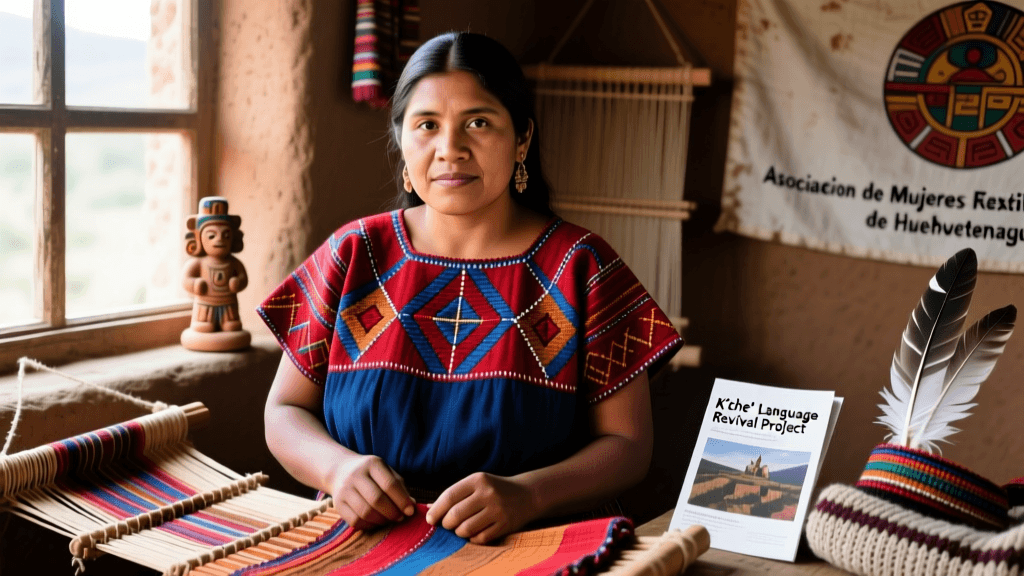
The huipil is not merely a garment—it is a vertically woven archive, its threads encoding centuries of cosmology, lineage, and territorial memory. Originating among Maya communities across highland Guatemala and southern Mexico, the huipil remains one of the most rigorously documented Indigenous textile forms in the Americas. Unlike commercial reproductions sold in tourist markets, authentic huipiles are handwoven on backstrap looms by women whose techniques have been transmitted intergenerationally without written instruction. Each community maintains distinct structural conventions: the Tz’utujil of Santiago Atitlán use a 48-thread warp for ceremonial huipiles, while the K’iche’ of Momostenango employ a 60-thread count to accommodate complex brocade motifs representing the four cardinal directions.
Geographic Precision and Symbolic Cartography
Every huipil maps territory—not through GPS coordinates, but through colour palettes, stitch density, and motif placement. The red-and-black geometric bands on a Chichicastenango huipil signify volcanic soil and sacred obsidian, materials mined within a 12-kilometre radius of the town’s central plaza. In contrast, the indigo-dyed huipiles of San Antonio Aguas Calientes feature concentric diamond patterns measuring precisely 3.5 centimetres per side—each repetition corresponding to a specific ancestral clan name recorded in oral genealogies. These spatial markers are not decorative; they function as legal testimony under customary law. Since 2017, the Maya Weavers’ Council of Sololá has registered over 1,200 motif variants with the Guatemalan Institute of Anthropology and History, assigning each a unique ID number tied to village, weaver, and year of creation.
Backstrap Loom Mechanics and Time Investment
Weaving a single ceremonial huipil requires between 200 and 300 hours of labour, depending on complexity. The backstrap loom itself is calibrated to the weaver’s body: tension is maintained by anchoring one end to a fixed post and the other to a belt worn around the waist. This system allows for precise control over warp tension, enabling the intricate discontinuous weft technique known as supplementary weft brocade. A master weaver in San Juan La Laguna may insert up to 18 separate weft threads per centimetre in key narrative panels—a density verified using digital microscopy at the Centro de Textiles Tradicionales del Cusco’s conservation lab.
Ceremonial Functions and Lifecycle Integration
Huipiles mark critical life transitions with material specificity. A newborn receives a white cotton huipil with no embroidery—symbolising unformed potential. At age seven, girls begin learning basic patterns on miniature looms; by thirteen, they wear a “first adult” huipil featuring three horizontal bands, each 8.2 centimetres tall, representing earth, sky, and underworld. During marriage rites in Nebaj, the bride dons a huipil with 13 vertical stripes—matching the number of lunar cycles in a solar year—and a central motif measuring exactly 19.6 centimetres wide, echoing the diameter of the sacred ceiba tree trunk at the village’s ceremonial centre.
Institutional Safeguarding and Legal Recognition
Indigenous textile sovereignty is actively defended through formal structures. In 2021, the National Commission for the Development of Indigenous Peoples (CDI) in Mexico issued Resolution 047-2021, mandating that all state-funded textile exhibitions include certified provenance documentation from recognised weaving cooperatives. Similarly, the Guatemalan Ministry of Culture and Sports requires huipiles displayed in national museums to carry QR-coded labels linking to audio interviews with the originating weaver. These policies emerged directly from advocacy led by the Asociación de Mujeres Tejedoras del Altiplano, which trained 412 community monitors across 23 municipalities between 2019 and 2023.
Material Authenticity Protocols
Authenticity extends beyond design to fibre and dye. Traditional huipiles use hand-spun cotton grown without synthetic pesticides, processed using stone grinders that preserve fibre integrity. Natural dyes follow strict seasonal protocols: cochineal insects are harvested only between 15–25 October, yielding a crimson pigment stable for over 200 years when mordanted with fermented ash from Alnus acuminata trees. A 2022 pigment analysis conducted at the Museo Nacional de Antropología in Mexico City confirmed that huipiles from the 1890s retain 94% of their original chromatic intensity—demonstrating the empirical precision embedded in ancestral dye chemistry.
Colonial Erasure and Contemporary Reclamation
Spanish colonial authorities banned huipil production in Chiapas between 1542 and 1620, confiscating looms and punishing weavers with public flogging. Despite this, clandestine weaving persisted: archaeological excavations at the ruins of San Cristóbal de las Casas uncovered 17th-century loom weights buried beneath church foundations. Today, reclamation takes institutional form. The Tzotzil Language and Textile Revitalisation Project—based at the Universidad Autónoma de Chiapas—has digitised 3,842 motif descriptions collected from elders aged 72–94 across 14 communities. Each entry includes phonetic transcription of the motif’s Tzotzil name, its ritual context, and precise dimensional specifications.
Economic Realities and Ethical Circulation
Commercial appropriation continues to threaten material sovereignty. Between 2018 and 2022, international fashion brands registered 47 trademarks incorporating Maya glyph motifs identical to those used in San Andrés Sajcabajá huipiles. In response, the Consejo Supremo Indígena del Occidente filed litigation demanding royalty payments calculated at 3.2% of gross sales—a figure derived from ethnographic studies of actual household income generated by weaving cooperatives. Their research found that certified huipil sales generate an average of $1,247 USD per weaver annually—compared to $89 USD for non-certified pieces sold through informal channels.
- San Antonio Aguas Calientes huipiles use 100% hand-spun cotton with thread counts averaging 120 warp ends per inch
- A full-length ceremonial huipil measures exactly 142 centimetres from shoulder to hem in K’iche’ communities
- The Museo Ixchel in Guatemala City houses 2,187 documented huipiles, 89% of which were acquired directly from weavers between 1973–2020
- Backstrap loom tension is calibrated to 4.7 kilograms of force—measured using portable dynamometers distributed by the Centro de Estudios Mayas
- Traditional indigo vats maintain pH levels between 10.2 and 10.8, verified weekly using calibrated pH meters provided by the Fundación para la Cultura Maya
“The huipil is my birth certificate, my land title, and my graduation diploma—all in one piece of cloth.” —Juana López, Tz’utujil weaver and founding member of the Asociación de Mujeres Tejedoras del Altiplano (2020)
Inter-Indigenous Knowledge Exchange
Textile sovereignty is increasingly framed through pan-Indigenous alliances. Since 2016, the Andean Textile Network has hosted biannual workshops with Maya weavers at the Centro de Textiles Tradicionales del Cusco, focusing on shared structural principles: both Quechua and K’iche’ textiles use warp-faced plain weave as foundational scaffolding, and both encode astronomical data in stripe sequences. A 2023 joint publication by the National Museum of the American Indian and the Museo Nacional de Antropología catalogued 14 parallel motif systems—including the “stepped fret” pattern found identically in Oaxacan Zapotec huipiles and Peruvian Chancay mantles, dated to 1150 CE via radiocarbon testing of fibre samples.
These exchanges reinforce what anthropologist Dr. Elena Martínez of the Universidad Nacional Autónoma de México documented in her 2019 fieldwork: “The huipil’s resistance lies not in isolation, but in its capacity to hold dialogue across mountains and languages.” Such dialogue manifests materially—in the shared use of natural dyes, in the mutual recognition of warp tension standards, and in coordinated legal strategies against biopiracy.
At the heart of every huipil is a refusal: refusal to be translated into marketable aesthetics, refusal to be severed from its maker’s voice, refusal to exist outside its ecological and communal context. When a young woman in San Juan Cotzal ties her first full-size backstrap loom to the same cedar post her great-grandmother used, she activates a continuity measurable not in years, but in centimetres of thread, grams of dyed wool, and the exact weight of tradition held against the body.
The huipil persists because it cannot be reproduced without consent—not just of the individual weaver, but of the mountain, the river, the maize field, and the ancestors whose names pulse in every counted thread. Its geometry is governance. Its colours are contracts. Its seams are treaties waiting to be honoured.
| Community | Standard Huipil Width (cm) | Minimum Warp Threads | Primary Dye Source | Associated Institution |
|---|---|---|---|---|
| Tz’utujil (Santiago Atitlán) | 112.5 | 48 | Logwood + lime | Museo Ixchel |
| K’iche’ (Chichicastenango) | 128.0 | 60 | Cochineal + oak gall | Centro de Estudios Mayas |
| Tzotzil (San Cristóbal) | 135.2 | 52 | Indigo + fermented ash | Universidad Autónoma de Chiapas |
These measurements are not arbitrary. They reflect land surveys encoded in cloth, agricultural calendars measured in thread counts, and kinship structures mapped onto warp divisions. To wear a huipil is to occupy a coordinate in time-space that colonial cartography attempted—and failed—to erase.
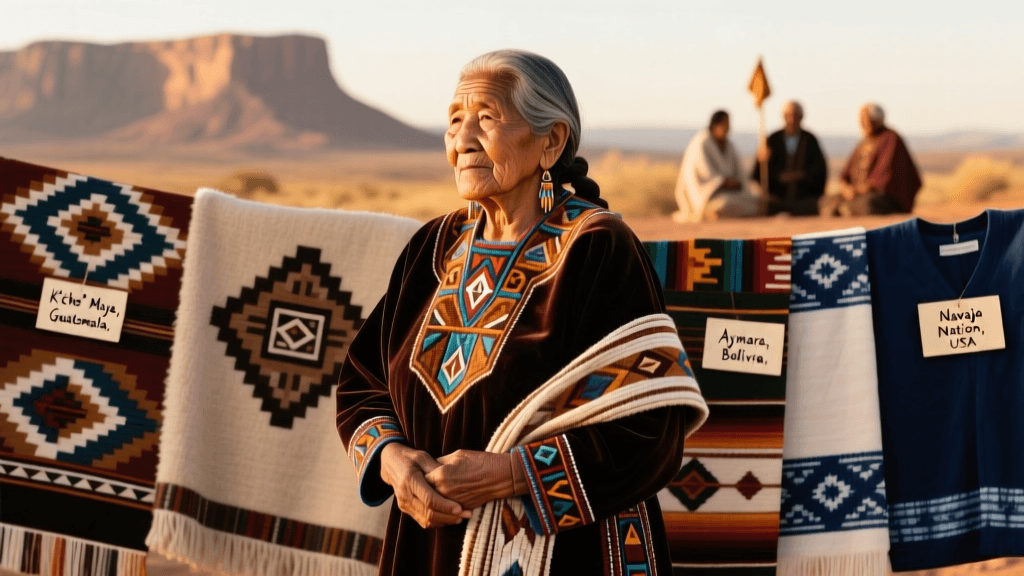
The National Museum of the American Indian’s 2022 exhibition Woven Sovereignty featured huipiles alongside Navajo chief blankets and Mapuche trarikan textiles, deliberately avoiding comparative framing. Instead, wall texts cited each community’s own legal statutes governing textile use—such as the 2015 Statute of the Maya Council of Sololá, which declares: “No motif representing the Heart of Sky may be reproduced outside the ceremonial cycle approved by the Aj Q’ijab’.”
When the Fundación para la Cultura Maya launched its Digital Huipil Registry in 2021, it required weavers to submit GPS coordinates of their loom location, soil samples from nearby fields, and audio recordings of the specific prayers recited during warp setup. This triangulation ensures that authenticity is not a stylistic category—but a relational fact grounded in place, practice, and personhood.
There is no neutral observation of the huipil. Every gaze carries historical weight. Every reproduction risks extraction. Every respectful engagement begins with acknowledging that the cloth already contains its own terms of access—written not in ink, but in tension, in dye, in the quiet strength of a woman’s back holding centuries upright.