Qipao Pankou Frog Button Construction Techniques for 2026
The Anatomy of the Pankou: Beyond Simple Fasteners
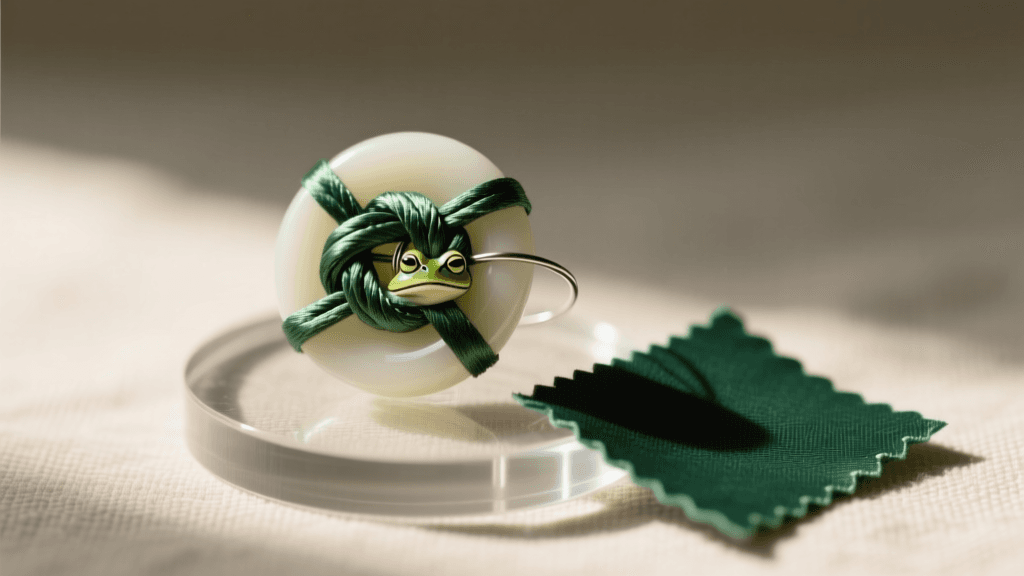
In the intricate world of Asian dress traditions, few construction elements bridge the gap between structural necessity and high art as seamlessly as the Pankou (frog button). Originating in Manchu clothing during the Qing Dynasty and later becoming the defining closure of the modern Qipao (cheongsam), the Pankou is far more than a decorative afterthought. As bespoke tailoring experiences a massive renaissance in 2026, master tailors are returning to heritage construction techniques to create garments that honor traditional Asian silhouettes while meeting modern sustainability standards.
A traditional Pankou consists of two main components: the pan (the loop or eye) and the kou (the knot or ball). According to the Metropolitan Museum of Art's Heilbrunn Timeline of Art History, the evolution of Manchu dress heavily influenced the structural closures seen in 20th and 21st-century Chinese fashion. In 2026, constructing a Pankou by hand remains a hallmark of true couture Qipao tailoring, with bespoke sets commanding premium prices in the slow-fashion market.
Essential Tools and Materials for 2026 Tailors
Creating authentic, durable Pankou requires specific materials that allow the silk to manipulate into tight, lasting knots without fraying or snapping. The modern 2026 tailor's toolkit blends heritage textiles with advanced structural cores.
- Fabric: 100% Mulberry silk charmeuse or crepe de chine (19mm to 22mm weight). As recognized by UNESCO's Intangible Cultural Heritage registry, traditional Chinese sericulture produces the long-fiber silk necessary for extreme bias manipulation.
- Core Wire: 0.8mm titanium memory wire. While traditional tailors used soft copper wire, 2026 innovations favor titanium memory wire for its rust-proof properties and ability to withstand modern gentle machine-wash cycles without losing its shape.
- Bias Tape Makers: 6mm and 10mm metal folding tools.
- Thread: 100% silk thread, heavily waxed with vegan synthetic beeswax to prevent tangling during the tight knotting process.
- Needles: Milliners (straw) needles, which have a uniform shaft and eye, essential for passing through tightly wound silk tubes.
Preparing the Bias Strips (Gun Bian)
The foundation of any Pankou is the Gun Bian (bias binding). You must cut the silk at a precise 45-degree angle to the selvage. This true bias cut provides the maximum stretch required to wrap tightly around the wire core without puckering. For a standard 6mm finished cord, cut your silk strips 3.5 cm wide. Join the strips using a narrow diagonal seam, press the seams open, and fold the edges inward using a 6mm bias tape maker. Apply high-heat steam to permanently set the folds before inserting your wire core.
Step-by-Step Construction: The Basic Pipa Knot
The Pipa (lute) knot is the most classic and widely used Pankou design, named for its resemblance to the traditional Chinese stringed instrument. Constructing it requires patience, precise tension control, and an understanding of structural geometry.
Step 1: Wiring the Core for Structural Integrity
Lay your pressed bias strip flat, wrong side up. Place the 0.8mm titanium memory wire along the center fold. Fold the strip over the wire, enclosing it completely. Using a microscopic slip stitch (blind stitch) and your waxed silk thread, sew the raw edges together. The stitch must be nearly invisible and tight enough to prevent the wire from shifting, but loose enough to allow the fabric to glide slightly as you form the curves. The resulting cord should be firm, smooth, and highly malleable.
Step 2: Forming the Knot Head (Kou)
Leave approximately 4 cm of unwired cord at one end to form the soft loop that will catch the button. With the wired section, begin forming a tight, concentric spiral. 1. Create a small loop, leaving a 2mm gap in the center—this gap is crucial, as it must perfectly accommodate the fabric loop from the opposite side. 2. Wrap the wire cord around this center gap three times, stacking each wrap perfectly beside the last. 3. Pass the tail of the cord through the center hole and pull it down to the underside of the knot. 4. Tack the tail securely to the base of the knot using a hidden catch-stitch.
Step 3: Shaping the Loop (Pan)
The pan (loop) side requires creating a teardrop shape that mirrors the Pipa instrument. Bend the wired cord into a elongated teardrop, crossing the ends at the narrow tip. Use tiny, hidden stitches to secure the wire intersections so the teardrop maintains its exact geometry when subjected to the horizontal tension of a fitted Qipao bodice.
2026 Innovations: Material Comparisons
While heritage techniques remain the gold standard, the materials used inside the Pankou have evolved to meet the demands of modern garment care and sustainable fashion. Below is a comparison of core materials used in contemporary Asian dress construction.
| Core Material | Drape & Stiffness | Washability (2026 Standards) | Best Use Case |
|---|---|---|---|
| Traditional Copper Wire | Very stiff, holds sharp angles | Poor (tarnishes, snaps over time) | Museum replicas, rigid ceremonial collars |
| Titanium Memory Wire | Firm but flexible, retains shape | Excellent (rust-proof, machine-safe) | Modern bespoke Qipao, daily wear |
| Cotton Yarn Cord | Soft, rounded, fluid drape | Good, but may shrink if unprepped | Floral Pankou, lightweight summer Yukata/Hanfu |
Attaching the Pankou to the Cheongsam
The most common point of failure in Qipao construction is the attachment of the Pankou to the garment. Because the Qipao is often cut from delicate silks and fits closely to the body, the horizontal tension placed on the frog buttons can easily tear the fabric. In 2026, master tailors employ a hidden reinforcement technique. Before attaching the Pankou, a piece of silk organza is hand-basted to the wrong side of the fabric along the center front edge. When sewing the Pankou to the garment, the tailor uses a prick stitch, catching only a single thread of the face fabric while anchoring the bulk of the stitch into the silk organza underlay and the seam allowance. This distributes the tension across a wider area, ensuring the delicate silk face remains unmarred and tear-free.
Common Construction Mistakes and How to Avoid Them
- Cutting on the Straight Grain: Attempting to make Pankou cords from straight-grain fabric will result in snapping when bent into tight knot radii. Always use a true 45-degree bias cut.
- Over-tightening the Knot: Pulling the silk too tightly around the wire core will cause the fabric to pucker and the wire to show through. The fabric must glide smoothly over the wire.
- Ignoring the 2mm Gap: If the center hole of the kou is pulled completely shut, the pan loop will not pass through, rendering the fastener useless. Always use a steel awl to maintain the gap while stitching.
'The Pankou is the eye of the Qipao. It must be strong enough to hold the garment together, yet delicate enough to look as though it was spun by a spider. The tension in your hands dictates the soul of the dress.'
— Traditional Shanghai Tailoring Maxim
Conclusion
Mastering the construction of the Qipao Pankou is a rigorous exercise in patience, precision, and material science. As the global fashion industry in 2026 continues to pivot toward sustainable, slow-fashion practices, the demand for artisans who can execute these zero-waste, hand-crafted closures is at an all-time high. By combining heritage silk manipulation with modern structural cores like titanium memory wire, today's tailors are ensuring that the elegant frog button remains a functional, breathtaking staple of Asian dress traditions for generations to come.