Best Hanfu Styling & Draping Certification Programs 2026
The Rise of Professional Hanfu Education in 2026
The global appreciation for traditional Chinese clothing has evolved significantly over the last decade. As we navigate 2026, the Hanfu movement is no longer just a grassroots hobby or a niche internet subculture; it is a robust, multi-billion-dollar industry demanding rigorous professional expertise. From high-end bridal salons in Shanghai to historical film sets and international cultural exhibitions, the need for certified Hanfu stylists and draping experts has never been higher. This surge in demand has led to the development of specialized education workshops and certification programs designed to transform enthusiasts into accredited professionals.
These programs align closely with global efforts to preserve traditional crafts. According to UNESCO's framework for Intangible Cultural Heritage, the safeguarding of traditional craftsmanship and the knowledge required to create and wear historical garments is vital for cultural continuity. Modern certification programs in 2026 take this mandate seriously, blending historical textile research with practical, hands-on styling techniques.
Top Hanfu Certification Programs and Workshops
Choosing the right educational pathway depends on your career goals, whether you aim to work in bridal styling, film and television wardrobe, or cultural education. Below are the premier certification programs available in 2026.
1. Beijing Institute of Fashion Technology (BIFT) Continuing Education
The Beijing Institute of Fashion Technology (BIFT) remains the gold standard for fashion education in China. In 2026, their continuing education department offers an intensive 8-week 'Historical Garment Draping and Styling' certificate. Priced at approximately $1,200 USD, this on-campus program provides unparalleled access to university archives and textile labs. Students learn the exact pattern-cutting mathematics of the Tang, Song, and Ming dynasties, focusing on how traditional 60cm loom widths dictate the structural integrity of historical pleats and seams.
2. The Global Hanfu Cultural Ambassador Certificate
For international stylists and educators, the Global Hanfu Cultural Ambassador Certificate is a fully virtual, 12-week hybrid program costing around $650 USD. This workshop is specifically designed to teach professionals how to drape and style traditional garments for diverse, non-East Asian body types while maintaining strict historical accuracy. The curriculum includes modules on adapting the fit of the aoqun (jacket and skirt) and properly securing the yunjan (cloud shoulder) without relying on modern, hidden safety pins, which are strictly forbidden in advanced certification exams.
3. Mastering the Ming Dynasty Mamianqun Intensive Workshop
The Mamianqun, or horse-face skirt, has become a staple in both modern Hanfu fashion and contemporary global runways. This specialized 4-week masterclass focuses exclusively on the pleating, weighting, and styling of the Ming Dynasty skirt. Students learn how to calculate the precise fabric yardage required for the traditional side-pleats and how to pair the skirt with appropriate pipa-sleeved tops for 2026 bridal and formal wear markets.
Curriculum Comparison: What to Expect
To help you decide which educational track suits your professional needs, here is a comparison of the standard certification tiers available this year.
| Certification Tier | Duration | Core Focus Areas | Final Assessment |
|---|---|---|---|
| Foundation Stylist | 4 Weeks | Basic silhouettes, garment care, modern accessorizing, client consultation. | Written exam and basic draping practical. |
| Advanced Draping Expert | 8 Weeks | Dynasty-specific proportions, historical hair styling, textile conservation. | Live model styling portfolio and historical defense. |
| Master Cultural Educator | 12 Weeks | Curriculum design, public speaking, museum curation, bespoke pattern drafting. | Teaching practicum and published research paper. |
Core Competencies Taught in Certification Programs
A professional Hanfu stylist must possess a deep understanding of history, textiles, and aesthetics. The 2026 certification curricula are rigorous, ensuring that graduates can confidently consult for museums, film studios, and high-end clientele.
Dynasty-Specific Silhouettes and Proportions
One of the most critical skills taught is the ability to differentiate and accurately recreate dynasty-specific silhouettes. For instance, the Tang Dynasty is celebrated for its ruqun (chest-high skirts) and banbi (half-sleeved jackets), which require a specific draping technique to achieve the era's signature voluminous and romantic silhouette. In contrast, the Song Dynasty favors a more slender, understated aesthetic, heavily utilizing the beizi (a long, open-front overcoat) which requires precise layering to ensure the collar lays flat against the collarbone. Certification exams require students to identify and correct intentional historical inaccuracies in a provided garment set within a strict time limit.
Fabric Behavior and Textile Conservation
Understanding how different fabrics behave is paramount. As detailed in The Metropolitan Museum of Art's extensive archives on Chinese silk, historical weaving techniques produced textiles with distinct weights, drapes, and structural properties. Modern stylists must understand the 'momme' weight of silk and how it affects the fall of a sleeve or the stiffness of a pleat. Certification programs teach students how to steam, press, and store delicate brocades and gauzes without damaging the fibers, a skill highly sought after by film and television wardrobe departments.
Accessory Pairing and Hair Styling
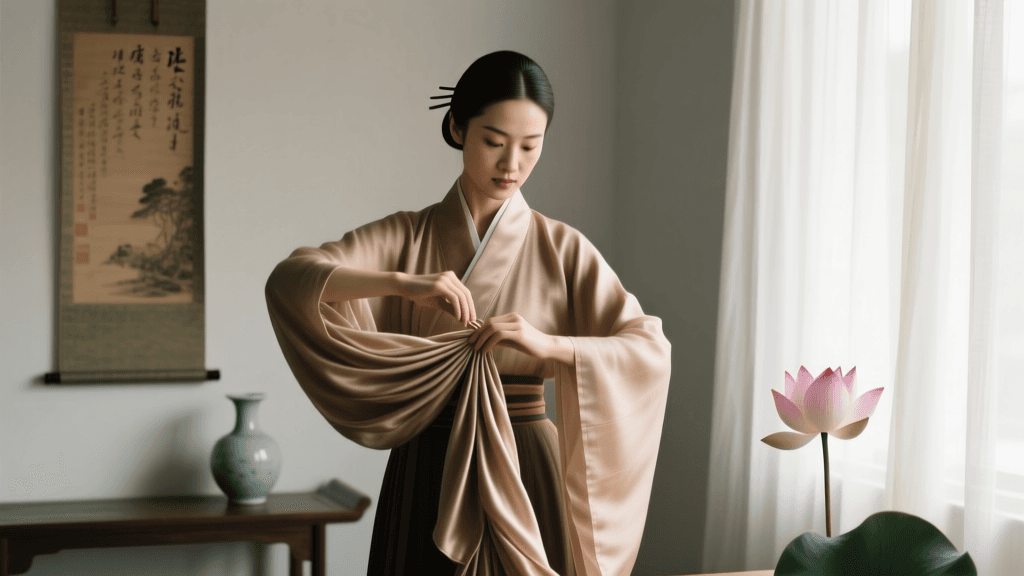
Hanfu styling extends far beyond the garments themselves. A complete look requires historically appropriate hair styling and accessories. Workshops teach the structural engineering of traditional updos, utilizing wooden or bone hairpins rather than modern elastic bands. Students learn the specific placement of the buyao (dangling hairpins) and how to balance the visual weight of a guan (crown or hair ornament) with the neckline of the robe.
Career Pathways for Certified Hanfu Stylists
Obtaining a professional certification in 2026 opens doors to a variety of lucrative and culturally significant career paths:
- Bridal and Formal Styling: With traditional Chinese weddings increasingly incorporating authentic Hanfu ceremonies, certified stylists are hired to drape, fit, and style brides and grooms, ensuring every layer is historically respectful and photogenic.
- Film, Television, and Theater: Production companies rely on certified experts to audit wardrobe departments, ensuring that historical dramas maintain accuracy in collars, closures, and fabric choices.
- Cultural Tourism and Museums: Heritage sites and museums employ certified educators to design interactive workshops, curate exhibitions, and train tour guides on the historical context of the garments on display.
- Editorial and Fashion Consulting: As global fashion houses continue to draw inspiration from Asian traditions, certified consultants are hired to ensure cultural appreciation rather than appropriation, guiding design teams on the proper use of traditional motifs and silhouettes.
How to Enroll and Prepare for Your Certification
Preparing for a Hanfu certification program requires both academic and practical groundwork. Before enrolling, it is highly recommended to build a foundational wardrobe of basic, historically accurate pieces to practice draping on yourself or a dress form. Invest in professional styling tools, including variable-pressure steam irons, traditional silk pins, and soft measuring tapes.
Furthermore, begin studying historical texts and analyzing museum artifacts online. Familiarize yourself with the terminology of traditional Chinese garment construction, such as the jiaoling youren (intersecting collars, right over left) rule, which is a fundamental baseline tested in every certification exam. By dedicating time to these preparatory steps, you will be fully equipped to excel in your 2026 certification program and contribute meaningfully to the preservation and global appreciation of traditional Chinese dress.