Extreme Climate Hanfu 2026: Tropical, Desert & Cold Regions
The Global Hanfu Movement Meets Extreme Weather
As the global Hanfu revival continues to accelerate in 2026, enthusiasts are no longer confined to the temperate spring festivals of East Asia. Today, the Hanfu community spans the globe, with dedicated practitioners navigating the sweltering humidity of Southeast Asia, the arid, sun-baked expanses of the Middle East and the American Southwest, and the biting, sub-zero winters of Northern Europe and Canada. Wearing traditional garments in these extreme environments requires more than just passion; it demands a deep understanding of historical textile engineering combined with modern 2026 fabric innovations.
Hanfu, by its very nature, is a highly adaptable system of dress. The traditional layering concepts—comprising inner garments (zhongyi), outer robes, and structural skirts—were originally designed to handle the distinct four seasons of the Yellow River basin. However, adapting these silhouettes for tropical monsoons, desert heatwaves, and arctic winds requires strategic choices in fabric weight, weave density, and garment architecture. In this comprehensive 2026 guide, we explore how to authentically and comfortably wear Hanfu in the world's most unforgiving climates.
Tropical Climates: Beating Humidity with Ramie and Banbi
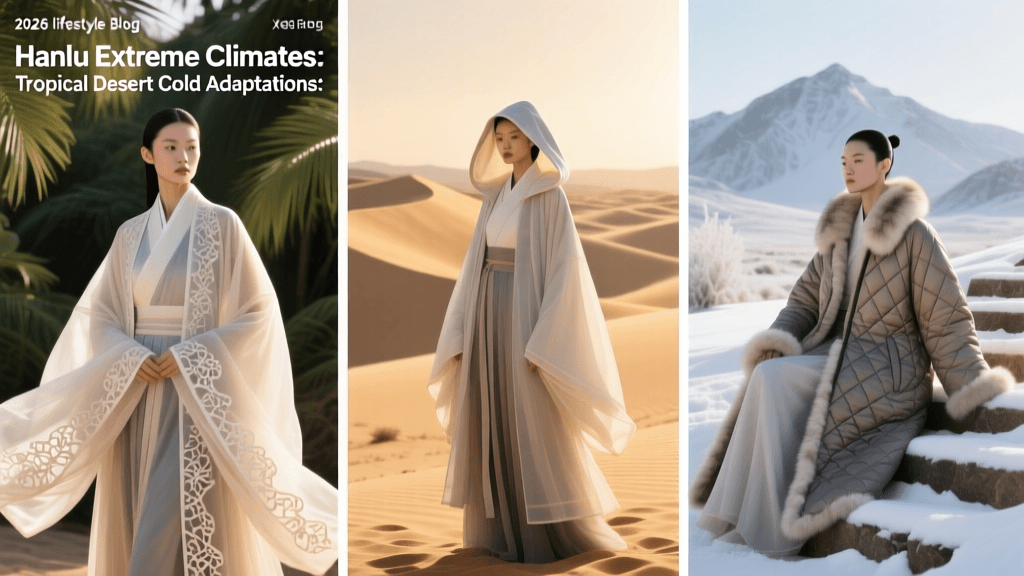
In tropical regions like Singapore, Malaysia, and the southern United States, the primary adversary is not just heat, but oppressive humidity. Sweat evaporation is severely hindered, meaning heavy silks and synthetic blends quickly become unbearable. The historical solution to tropical heat lies in Ramie (often referred to as 'China grass') and lightweight linen, materials that have been utilized in southern Chinese provinces for millennia.
For 2026, the ideal tropical Hanfu ensemble centers around the Banbi (half-sleeve jacket) paired with a Qixiong Shanqun (chest-high pleated skirt). The Banbi allows for maximum airflow to the underarms and torso, while the chest-high skirt eliminates the need for a restrictive waistband, promoting better circulation and ventilation. Modern textile mills have recently introduced nano-treated ramie blends that retain the crisp, breathable structure of traditional ramie but resist the severe wrinkling that historically plagued the fabric.
When selecting tropical Hanfu, avoid dense satin weaves or heavily embroidered Qungua styles. Instead, opt for plain-weave (pingwen) ramie or bamboo-charcoal-infused cottons. These materials possess natural moisture-wicking properties and dry rapidly. Furthermore, light colors such as celadon, lotus pink, and unbleached ivory not only reflect sunlight but also align with the historical summer aesthetics of the Tang and Song dynasties. To combat intense UV exposure during outdoor tropical excursions, pair your ensemble with a wide-brimmed bamboo hat and a lightweight, sheer Pibo (stole) made from open-weave gauze to shield the shoulders without trapping heat.
Desert Climates: UV Protection and Airflow in Arid Zones
Desert environments present a unique paradox: blistering daytime solar radiation followed by rapid, drastic temperature drops after sunset. In regions like Dubai, Arizona, or the Australian Outback, the goal is to create a microclimate between the skin and the garment. Tight-fitting modern clothing often fails in the desert, whereas the voluminous, flowing silhouettes of traditional Hanfu excel.
The Yuanlingpao (round-collar robe) and the Dahu (a sleeveless or short-sleeved vest-like overlay) are exceptional choices for arid zones. According to the Victoria and Albert Museum, historical Chinese dress frequently utilized layering systems that allowed for rapid adjustment to shifting environmental conditions. In the desert, a wide-sleeved Shenyi (deep robe) acts as a portable shade structure. The wide sleeves create a bellows effect when walking, actively pumping cool air across the body while blocking direct UV rays from reaching the skin.
For desert wear in 2026, Tussah silk (wild silk) is the undisputed champion. Unlike cultivated mulberry silk, which can feel clammy and degrade under intense, direct ultraviolet light, Tussah silk is naturally textured, highly breathable, and possesses a subtle, matte finish that diffuses harsh desert glare. Its inherent thermal regulation properties keep the wearer cool at high noon and insulated when the desert floor rapidly loses heat at midnight. Pair your Tussah robe with a tightly woven cotton Zhongyi (inner layer) to absorb perspiration and protect the delicate outer silk from body oils and desert dust.
Cold Regions: Insulation and Windproofing with Doupeng
Wearing Hanfu in freezing climates—such as Harbin, Moscow, or Toronto—requires a mastery of thermal trapping and wind deflection. The historical Metropolitan Museum of Art archives highlight that ancient elites relied heavily on animal pelts, padded silks, and complex cloaks to survive northern winters. Today, we can achieve the same monumental silhouettes using advanced, sustainable 2026 insulating materials.
The cornerstone of winter Hanfu is the Doupeng (hooded cloak). Unlike tailored coats, the Doupeng drapes over the entire body, trapping a massive column of warm air while completely shielding the inner garments from biting winds and snow. Modern winter Doupeng designs frequently feature outer shells of windproof, water-resistant Tencel-wool blends, lined with sustainable alpaca fleece or advanced aerogel quilting for maximum warmth without excessive weight.
Beneath the cloak, the Mamianqun (horse-face skirt) is highly functional for winter. The deep, overlapping pleats of the Mamianqun create dead-air spaces that act as natural insulation for the legs. When worn over 2026's ultra-thin merino wool thermal leggings, the skirt provides warmth comparable to heavy snow pants while maintaining an elegant, sweeping drape. For the upper body, layer a Bijia (sleeveless padded vest) over a thick, high-collared Ao (jacket). The vest protects the vital organs from the cold without restricting arm movement, allowing you to comfortably manage winter accessories like fur-lined hand muffs and insulated cloud-toe shoes.
2026 Extreme Climate Hanfu Fabric & Style Matrix
To help you quickly identify the best configurations for your local environment, refer to the matrix below detailing the optimal pairings of climate, garment style, and textile technology.
| Climate Zone | Recommended Style | Ideal Fabric (2026 Standards) | Key Accessory |
|---|---|---|---|
| Tropical (High Humidity) | Banbi & Qixiong Shanqun | Nano-treated Ramie, Bamboo-charcoal Cotton | Open-weave Gauze Pibo (Stole) |
| Desert (Dry Heat & UV) | Yuanlingpao & Dahu | Tussah Silk, Tight-weave Linen | Wide-brimmed Bamboo Hat & Veil |
| Cold (Freezing & Wind) | Doupeng & Mamianqun | Wool-Tencel Blends, Aerogel Quilting | Fur-lined Hand Muffs & Cloud Shoes |
| Temperate (Variable) | Ruqun & Beizi | Mulberry Silk, Medium-weight Cotton | Embroidered Belt & Jade Pendants |
Practical Care and Maintenance in Harsh Environments
Extreme climates do not just test the wearer; they test the garments. Proper maintenance is crucial to preserving the integrity of your Hanfu collection.
- Tropical Mold Prevention: In high-humidity zones, natural fibers like silk and cotton are highly susceptible to mildew. Never store worn Hanfu in sealed plastic bins. Instead, use breathable cotton garment bags and store them in climate-controlled closets with silica gel desiccant packs or electronic dehumidifiers.
- Desert Dust and Sun Fading: Fine desert sand can become embedded in the weave of Tussah silk, acting like sandpaper and degrading the fibers over time. After desert wear, gently brush the garment with a soft-bristled clothes brush. Additionally, always store desert-worn silks in dark, UV-blocking garment bags to prevent the harsh sun from bleaching the natural dyes.
- Cold Weather Storage: Winter garments like padded Bijia and heavy Doupeng cloaks must be thoroughly aired out and dried before seasonal storage. Any trapped moisture from snow or condensation will lead to fabric rot. Use cedarwood blocks in your storage chests to naturally repel moths, which are attracted to the keratin in wool and alpaca linings.
Conclusion
As documented by Encyclopedia Britannica, the evolution of traditional Asian dress has always been a dialogue between cultural aesthetics and environmental necessity. In 2026, wearing Hanfu in extreme climates is no longer an exercise in endurance, but a celebration of intelligent design. By respecting the historical function of garments like the Doupeng and the Banbi, and pairing them with cutting-edge modern textiles, you can carry the elegance of traditional Asian fashion into any environment on Earth.