2026 Kyoto Kimono & Seoul Hanbok Tailoring Workshops Guide
The Renaissance of Traditional Asian Garment Making in 2026
The global fascination with traditional Asian garments has reached a pivotal moment in 2026. As the fashion industry pivots toward slow fashion, sustainability, and deep cultural appreciation, an increasing number of textile artists, fashion students, and dedicated hobbyists are seeking out authentic, immersive workshops in traditional garment making. Rather than merely purchasing a finished piece, artisans now want to understand the profound architectural and philosophical foundations of garments like the Japanese kimono and the Korean hanbok. This comprehensive guide explores the premier tailoring and dyeing workshops available in Kyoto and Seoul for 2026, providing actionable insights for those looking to master these ancient crafts.
According to the Ministry of Economy, Trade and Industry (METI), the designation and preservation of traditional crafts have seen a renewed push in 2026, with government-backed subsidies making master-apprentice workshops more accessible to international students than ever before. Similarly, global heritage organizations are emphasizing the safeguarding of these techniques, as highlighted by the UNESCO Intangible Cultural Heritage initiatives, which continue to champion the transmission of traditional textile knowledge to younger generations.
Kyoto Immersive Kimono and Yuzen Dyeing Workshops
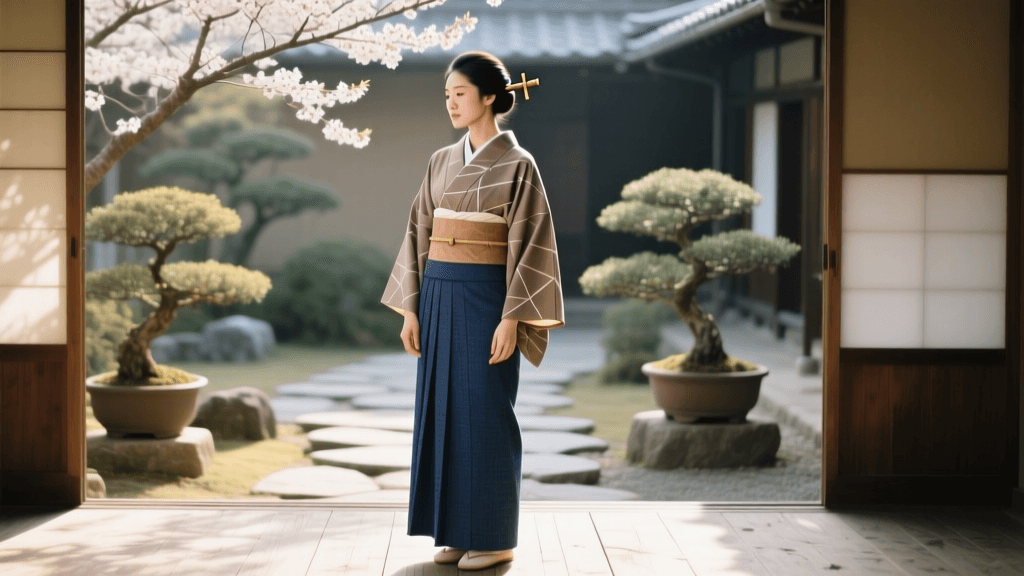
Kyoto remains the undisputed epicenter of kimono craftsmanship. In 2026, the city offers a spectrum of seminars ranging from weekend introductory courses to intensive six-month apprenticeships. The most sought-after workshops focus on the dual disciplines of fabric creation and garment construction.
Mastering Kyo-Yuzen and Nishijin-Ori
The Kyo-Yuzen resist dyeing technique is a cornerstone of Kyoto textile art. In 2026 masterclasses, students learn the meticulous process of applying itome-nori (rice paste resist) to outline intricate designs before hand-painting with natural and synthetic dyes. Modern 2026 seminars have also introduced eco-friendly, cruelty-free peace silk options alongside traditional tanmono (fabric bolts), which strictly measure 36 to 40 centimeters in width and 12 meters in length. Understanding how to cut and sew without wasting a single thread of this precious bolt is a primary focus of the construction seminars.
Beyond dyeing, Nishijin-ori weaving workshops offer a glimpse into the creation of the kimono's most luxurious obi sashes. These seminars are highly technical, requiring students to operate traditional jacquard looms. While a full mastery takes years, 2026 intensive retreats allow students to weave a complete obi age (sash scarf) over a two-week period, guided by third-generation weavers.
Top Kyoto Workshop Profiles for 2026
- The Kyoto Kimono Tailoring Academy: Offers a 14-day intensive focusing on the wasai (Japanese sewing) technique. Students learn the straight-line cutting method and the specific running stitches that allow a kimono to be entirely disassembled, washed, and resewn. Cost for 2026: $3,200 USD, including materials.
- Nishijin Textile Center Masterclasses: While primarily a museum, their 2026 private seminar schedule includes three-day obi-weaving intensives for advanced textile students. Cost: $850 USD.
- Yuzen Craft Studio Immersions: Located in the Higashiyama district, this studio offers month-long apprenticeships in rice-paste resist dyeing, culminating in a finished custom yukata. Cost: $4,500 USD.
Seoul Hanbok Construction and Draping Masterclasses
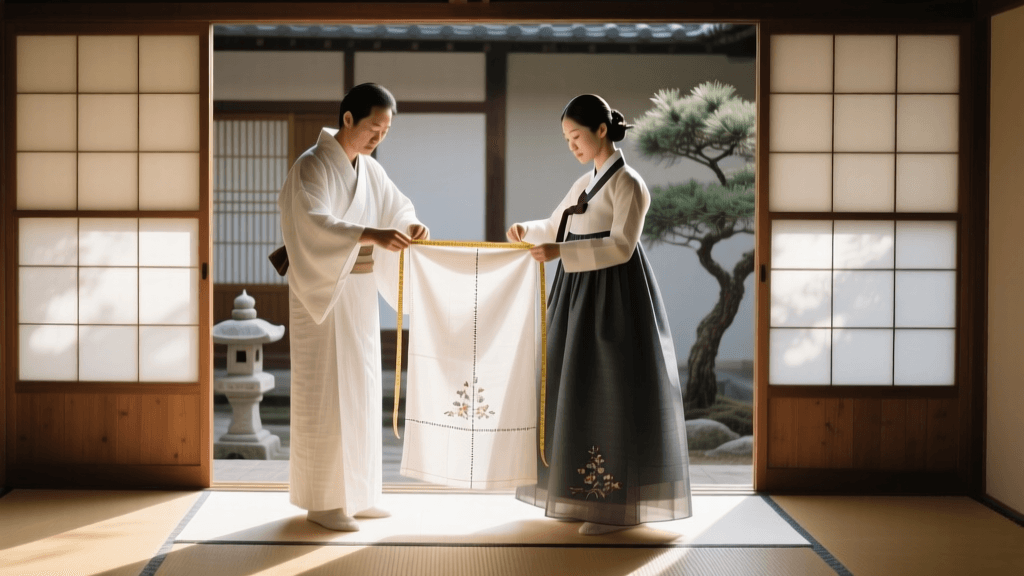
Transitioning to the Korean peninsula, Seoul’s hanbok masterclasses offer a distinctly different approach to traditional garment making. Unlike the straight-line, flat-pattern cutting of the kimono, the hanbok relies on complex curves, volumetric draping, and the harmonious balance between the upper and lower garments.
The Architecture of the Chima and Jeogori
The traditional hanbok consists of the chima (voluminous wrap-around skirt) and the jeogorigoreum (the long, flowing chest ties) and the crisp, pristine construction of the dongjeong (the removable white paper-stiffened collar). Mastering the dongjeong is often considered the ultimate test of a hanbok tailor, as it requires precise tension to ensure the collar sits perfectly against the neck without buckling.
A fascinating development in 2026 Seoul seminars is the integration of non-invasive 3D body scanning to assist in traditional draping. While the cutting remains entirely manual and rooted in heritage techniques, masters now use 3D scans to help international students visualize how the flat, linear pieces of silk organza and ramie will translate into the three-dimensional, bell-shaped silhouette of the chima when gathered at the chest.
Premier Seoul Seminars for 2026
- The Hanbok Advancement Center (Seoul): Their 2026 'Global Artisan' program offers a three-week deep dive into historical Joseon-era court garment replication. Students work with heavyweight silk brocades and learn traditional gold-leaf imprinting (geumbak). Cost: $2,800 USD.
- Intangible Cultural Heritage Studios (Bukchon): Guided by designated cultural treasures, these intimate, four-person seminars focus on the creation of saekdong (colorful striped sleeves) and the precise color theory of the Obangsaek (five traditional colors). Cost: $1,500 USD for a 5-day course.
Comparative Analysis: Kyoto vs. Seoul Retreats
Choosing between a Kyoto kimono workshop and a Seoul hanbok masterclass depends heavily on your specific textile interests, budget, and time commitments. Below is a structured comparison of the 2026 offerings.
| Feature | Kyoto Kimono Workshops | Seoul Hanbok Masterclasses |
|---|---|---|
| Primary Focus | Flat-pattern cutting, resist dyeing, weaving | Volumetric draping, curved seams, color theory |
| Standard Duration | 14 to 30 days | 5 to 21 days |
| Average 2026 Cost | $3,200 - $4,500 USD | $1,500 - $2,800 USD |
| Key Materials Used | Silk crepe (chirimen), brocade, rice paste | Silk organza (sa), ramie, cotton, stiff paper |
| Sewing Technique | Wasai (straight running stitches, fully reversible) | Curved seaming, hidden stitches, structural gathering |
| Language Support | High (English translators widely available) | Moderate (Growing English support in 2026) |
Essential Tools and Materials for the 2026 Artisan
Whether you are heading to Japan or South Korea, arriving at your 2026 workshop with the proper foundational tools is crucial. While master studios provide heavy machinery and specialized looms, students are expected to bring personal hand tools.
For Kyoto workshops, invest in a high-quality pair of Japanese hasami (traditional tailor's shears). Brands like Shozaburo remain the gold standard in 2026, offering carbon-steel shears that provide the razor-sharp precision needed to cut slippery silk chirimen without fraying. Additionally, bring a set of traditional silk weights and a bamboo ruler (monosashi), as Japanese measurements are still frequently taught using the shaku system (where 1 shaku is approximately 30.3 centimeters).
For Seoul workshops, the tool kit shifts slightly. Traditional Korean tailoring often utilizes a specialized sickle-shaped cutting knife for slicing through multiple layers of stiff ramie and hemp, though modern heavy-duty shears are acceptable for beginners. You will also need a hwagak (polished horn) or smooth agate burnishing tool, which is essential for pressing seams flat without the use of modern steam irons, preserving the natural crispness of the organic fibers.
Hybrid and Virtual Learning Opportunities
For textile enthusiasts unable to commit to international travel in 2026, the landscape of virtual and hybrid learning has expanded dramatically. Institutions recognized by the Victoria and Albert Museum's Asian textile conservation departments have partnered with master artisans to offer high-definition, multi-camera live-streamed workshops.
These virtual seminars provide students with pre-shipped material kits—including pre-measured tanmono cotton for kimono practice or pre-dyed ramie for hanbok ties. Instructors utilize overhead cameras to demonstrate the exact tension required for traditional running stitches and the precise folding techniques for the dongjeong collar. While virtual classes lack the tactile correction of an in-person master, they offer a highly accessible entry point, typically costing between $300 and $600 USD, and serve as an excellent prerequisite before booking a full immersive retreat.
Conclusion
The year 2026 represents an unprecedented opportunity to engage with the living history of Asian traditional garments. Whether you are meticulously applying rice paste in a Kyoto dyeing studio or gathering the voluminous folds of a Seoul hanbok skirt, these workshops offer more than just sewing skills; they provide a profound connection to the cultural heritage and philosophical aesthetics of East Asia. By investing in these masterclasses, artisans ensure that these magnificent, time-honored techniques continue to thrive in the modern era.