Indigenous Ribbon Skirt Traditions: 2026 Regional Guide
The Resurgence of Indigenous Ribbon Skirts in 2026
The ribbon skirt is far more than a garment; it is a profound symbol of Indigenous resilience, cultural continuity, and spiritual grounding. Across North America, the ribbon skirt has experienced a monumental revitalization. As we navigate 2026, these garments are worn not only at powwows and ceremonies but also in corporate boardrooms, university graduations, and political advocacy spaces. The modern ribbon skirt movement is deeply intertwined with the Missing and Murdered Indigenous Women (MMIW) awareness campaigns, serving as a visual reclamation of Indigenous womanhood, Two-Spirit identity, and community strength.
While the basic silhouette—a gathered or pleated skirt adorned with horizontal rows of silk or satin ribbon—is recognizable across many tribes, the construction techniques, color palettes, and appliqué methods vary wildly by region. According to the Smithsonian National Museum of the American Indian, understanding these regional distinctions is vital for anyone studying Indigenous textile arts, as the garments serve as geographic and genealogical markers.
In 2026, the intersection of traditional hand-sewing techniques and sustainable material sourcing has created a vibrant ecosystem for Indigenous makers. Artisans are increasingly prioritizing eco-friendly, naturally dyed silks and ethically sourced wool broadcloths, ensuring that the creation of the garment honors the earth just as much as the ancestors.
Historical Roots: From Quillwork to Trade Silk
To understand contemporary ribbon work, one must look at the historical transition of materials. Prior to European contact, Indigenous women across the Plains and Woodlands adorned their hide garments with intricate porcupine quillwork, natural dyes, and later, moose hair embroidery. The introduction of European trade goods in the 18th and 19th centuries brought silk ribbons, wool broadcloth, and cotton calico.
Rather than abandoning their traditional aesthetic, Indigenous artisans brilliantly adapted. Silk ribbons were layered, cut, and folded to mimic the geometric and floral patterns previously achieved through quillwork. By the late 19th century, ribbon appliqué had become a defining textile art form among the Great Lakes tribes, eventually spreading to the Plains and Subarctic regions through intermarriage, trade networks, and forced relocations.
Regional Variations in Construction and Design
The beauty of the ribbon skirt lies in its regional diversity. In 2026, master seamstresses continue to pass down highly specific, localized techniques that distinguish a Woodlands skirt from a Plains skirt.
Great Lakes & Woodlands (Ojibwe/Anishinaabe)
Among the Ojibwe (Anishinaabe) and other Woodlands tribes, ribbon work is heavily characterized by intricate floral motifs and complex reverse-appliqué techniques. Unlike the straightforward horizontal banding seen in other regions, Woodlands skirts often feature elaborate, curving floral patterns that climb the hemline or cascade down the sides.
The appliqué process involves layering multiple colors of silk ribbon, cutting away the top layer to reveal the contrasting color beneath, and stitching the edges down with meticulous hand-sewing or machine zigzag stitches. In 2026, many Anishinaabe makers are reviving pre-contact botanical dyes to color their own silk ribbons, creating a deeply localized color palette of forest greens, berry reds, and birch-bark yellows that reflect the Great Lakes ecosystem.
The Great Plains (Lakota/Dakota/Nakota)
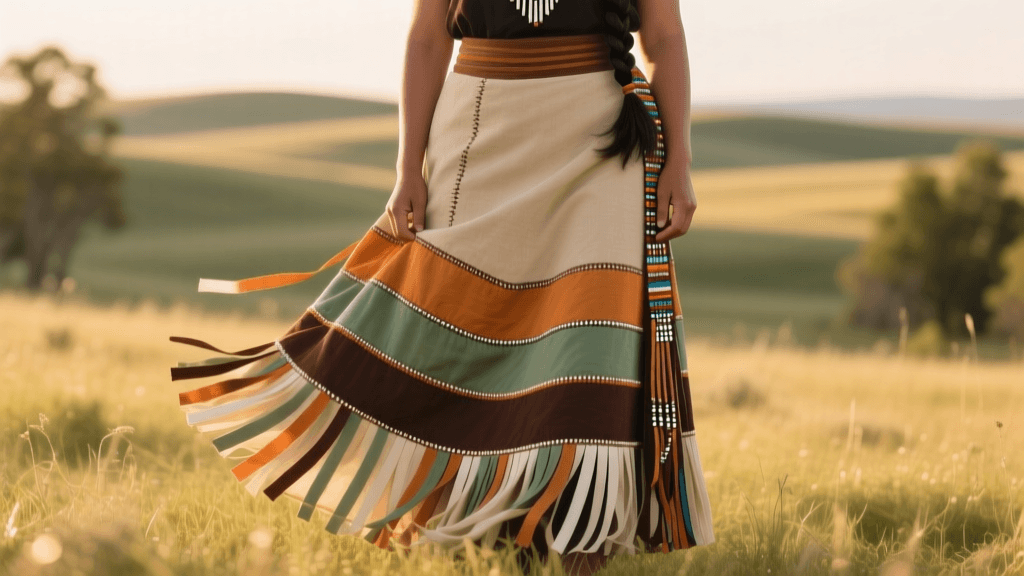
In the Great Plains, the ribbon skirt takes on a more geometric, tiered, and structured form. Lakota and Dakota skirts are traditionally constructed from heavy wool broadcloth or trade cloth, featuring bold, horizontal bands of solid-colored silk or satin ribbons. The colors are rarely accidental; they often represent specific familial ties, spiritual visions, or societal roles.
The construction of a Plains skirt requires precise mathematical gathering to ensure the heavy wool drapes correctly and the horizontal ribbons remain perfectly parallel to the ground when worn. In 2026, it is common to see Plains skirts incorporating contemporary elements, such as 3D-printed beadwork accents or laser-cut leather details, seamlessly blended with traditional broadcloth and silk ribbon tiers.
Northern Plains & Subarctic (Cree/Métis)
The Cree and Métis peoples of the Northern Plains and Subarctic regions blend the floral aesthetics of the Woodlands with the heavier, climate-appropriate materials of the North. Métis ribbon skirts and dresses are famous for their vibrant, highly contrasting floral appliqué, often executed on dark velvet or heavy wool.
Because of the harsher northern climates, Cree and Métis skirts are often lined with insulating fabrics and feature wider, more substantial ribbon trims. The 'flower beadwork' aesthetic translates directly into their ribbon work, with large, symmetrical floral medallions often placed at the center front or along the bottom hem, framed by delicate white or gold piping.
Sourcing Authentic Materials in 2026
For emerging Indigenous makers and textile students, sourcing high-quality, authentic materials is a critical step. The market in 2026 offers a mix of traditional trade suppliers and new, Indigenous-owned textile cooperatives. The Indian Arts and Crafts Board continually emphasizes the importance of supporting authentic Native businesses when procuring materials for regalia.
Below is a comprehensive guide to the primary materials used in regional ribbon skirt construction, along with 2026 market estimates and sourcing advice.
| Material | Best Regional Application | 2026 Avg Cost/Yard | Sourcing Tip |
|---|---|---|---|
| 100% Silk Double-Faced Ribbon | Ojibwe Floral Appliqué | $18.00 - $24.00 | Seek out Indigenous-owned beadwork and ribbon supply co-ops online for ethically sourced silk. |
| Wool Broadcloth (Melton) | Lakota/Dakota Tiered Skirts | $35.00 - $50.00 | Ensure it is 100% wool with a tight weave to prevent fraying when cutting geometric ribbon tiers. |
| Cotton Calico | Everyday Wear / Historical Reenactment | $8.00 - $14.00 | Look for small-scale, vintage-style floral prints that mimic 19th-century trade cloth patterns. |
| Crushed Velvet | Cree/Métis Appliqué Bases | $22.00 - $30.00 | Use a walking foot on your sewing machine to prevent the velvet pile from shifting during appliqué. |
Protocol, MMIW Advocacy, and Contemporary Wear
The protocol surrounding the ribbon skirt is deeply rooted in respect. While the garment has become a mainstream symbol of Indigenous pride, it is essential to understand its spiritual weight. In many traditions, the skirt is considered sacred medicine. The fringes and ribbons are said to sweep the earth, offering prayers to the ancestors and the land with every step the wearer takes.
In 2026, the ribbon skirt is a central uniform for MMIW advocacy. Red skirts, often featuring black or white ribbon tiers and the red handprint symbol, are worn at marches, legislative hearings, and community vigils. Advocacy organizations like the National Congress of American Indians frequently highlight the role of traditional regalia in modern political visibility, noting that wearing the skirt in government spaces is a powerful act of sovereignty and remembrance.
Furthermore, the annual observance of Ribbon Skirt Day on January 4th has grown exponentially since its federal recognition. In 2026, schools, municipal governments, and corporate entities across North America actively encourage Indigenous staff and students to wear their skirts, fostering a broader cultural understanding and dismantling outdated, assimilationist dress codes.
Caring for Heirloom Regalia
A well-made ribbon skirt is an heirloom, often passed down through generations. Proper care is essential to preserve both the structural integrity of the wool and the vibrant dyes of the silk ribbons.
- Storage: Never hang a heavy wool broadcloth skirt on a wire hanger, as the weight will distort the waistband and gathering. Store the skirt flat in an acid-free archival textile box, or roll it gently around an acid-free tube with the ribbons facing outward to prevent permanent creasing.
- Cleaning: Avoid dry cleaning, as the harsh chemicals can dissolve the natural lanolin in the wool and cause silk ribbons to bleed or become brittle. Instead, spot clean with a damp cloth and a pH-neutral textile detergent. For smoke or environmental odors, air the skirt outside in a shaded, well-ventilated area, or use traditional smoke cleansing (smudging) with cedar or sweetgrass.
- Repairs: If a silk ribbon begins to fray or pull away from the broadcloth, repair it immediately using a blind stitch and silk thread. Do not use iron-on fusible webbing, as the heat and adhesives will permanently damage the historical integrity of the fibers.
Conclusion
The Indigenous ribbon skirt is a living, breathing testament to survival and artistic brilliance. Whether it is the intricate floral reverse-appliqué of the Ojibwe, the bold geometric tiers of the Lakota, or the velvet-lined warmth of the Cree, these garments map the history and future of North American Indigenous peoples. As we move through 2026, the continued creation, wearing, and honoring of the ribbon skirt ensures that the footsteps of the ancestors remain visible, vibrant, and deeply respected on the earth today.