Mormon Temple Garments 2026: Sacred Meaning & Fabric Guide

The Sacred Origins and Theological Meaning
For members of The Church of Jesus Christ of Latter-day Saints, the temple garment is far more than a simple piece of clothing or a cultural artifact. It is a profound, sacred reminder of covenants made with God within the walls of the temple. Often referred to respectfully by members as the 'garment of the holy priesthood,' this traditional American religious textile traces its origins back to the 19th century during the Nauvoo era. Today, in 2026, millions of Latter-day Saints across the globe wear these garments daily as a personal, hidden expression of their faith and devotion.
The theological foundation of the garment is deeply rooted in the biblical concept of spiritual armor. In the Book of Ephesians, the Apostle Paul counsels early Christians to 'put on the whole armor of God,' including the breastplate of righteousness and the shield of faith. For modern Latter-day Saints, the temple garment serves as a literal and symbolic fulfillment of this counsel. It is not believed to possess magical or mystical protective properties; rather, it acts as a constant, tactile reminder of the wearer's promises to God, which in turn invites divine protection and spiritual strength.
According to the Church's General Handbook, the garment represents the wearer's commitment to live by the principles of the gospel. It is a private matter, a sacred boundary between the individual and the secular world, and a daily source of spiritual grounding in an increasingly complex modern society.
Decoding the Symbolism of the Garment Marks
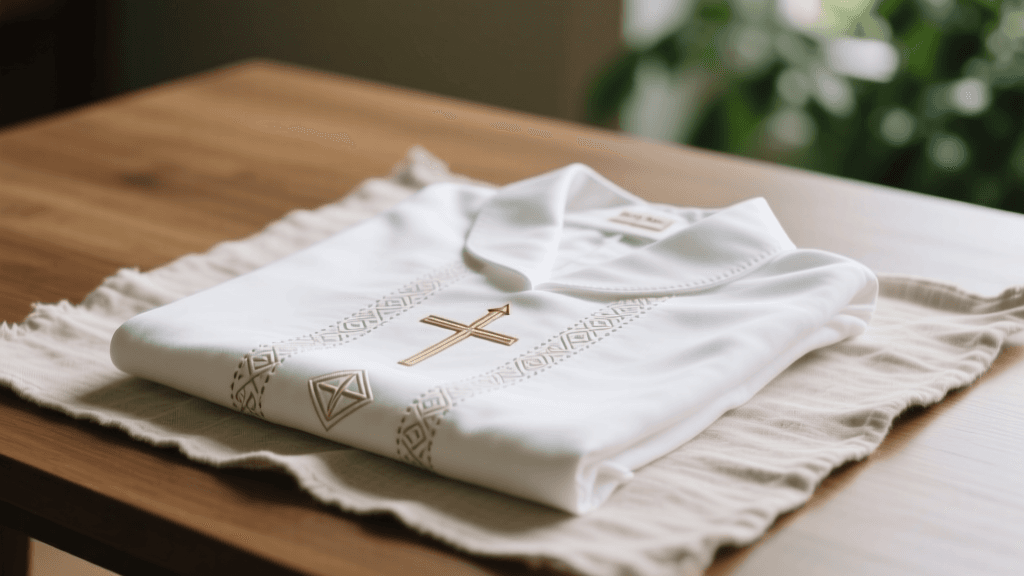
One of the most distinctive features of the temple garment is the presence of specific symbolic marks. Historically, these marks were woven or sewn directly into the heavy cotton and linen fabrics of the 19th century. Today, they are carefully embroidered or screen-printed onto modern, breathable textiles to ensure comfort while preserving their sacred meaning. Each mark corresponds to a specific spiritual principle:
- The Compass: Located on the left breast, the compass represents the desire to keep one's life aligned with the teachings of Jesus Christ. It symbolizes the importance of maintaining a true spiritual course and keeping one's desires pure and focused on eternal goals.
- The Square: Positioned on the right breast, the square stands for integrity, moral rectitude, and exactness in one's actions. It is a reminder to act with honesty and fairness in all dealings with others, ensuring that one's outward behavior matches their inward covenants.
- The Navel: Situated near the center of the garment, this mark represents the navel string of spiritual sustenance. It reminds the wearer that just as a physical body relies on the mother for life, the spirit relies on continuous connection with God for spiritual nourishment and life.
- The Knee: Located on the lower leg portion of the garment, the knee symbolizes the act of prayer, worship, and submission to the will of God. It is a reminder to bow the knee in reverence and to seek divine guidance through consistent, humble prayer.
These symbols transform a simple undergarment into a wearable sanctuary, allowing the wearer to carry the sanctity of the temple with them into their everyday lives.
Navigating Secular Spaces in 2026
Wearing a religious garment in the hyper-visible, fast-paced world of 2026 presents unique cultural and practical challenges. Modern fashion trends often emphasize revealing cuts, sheer fabrics, and form-fitting silhouettes, which can conflict with the modesty standards associated with wearing the garment. For Latter-day Saint women and men, navigating secular workplaces, university campuses, and athletic environments requires intentionality and a strong sense of personal identity.
Sociologically, the garment acts as a boundary-setting mechanism. It serves as a physical filter that influences the wearer's choices regarding modesty, media consumption, and personal conduct. In a digital age where personal beliefs are often broadcasted on social media, the garment remains one of the few deeply held religious practices that is entirely private, known only to the wearer, their spouse, and God. This privacy fosters a quiet, internal resilience that many members cite as a crucial anchor in their mental and spiritual well-being.
2026 Fabric Innovations and Style Expansions
As the global membership of the Church has expanded into tropical, humid, and diverse climates, the need for adaptable, comfortable fabrics has never been greater. The Church's distribution centers have continually refined their textile offerings, and the 2026 catalog reflects the most advanced, breathable, and inclusive options to date. Recent years have seen significant expansions in women's styles, offering a wider variety of necklines (including scoop, v-neck, and rounded) and sleeve lengths (cap, short, and long) to accommodate diverse body types and modern outerwear fashions while maintaining the required coverage.
Furthermore, the introduction of specialized youth sizing and ultra-lightweight synthetic blends has made the garment more accessible for younger members and those living in extreme heat. The focus in 2026 is on moisture-wicking technology, anti-microbial treatments, and seamless construction to prevent chafing during high-activity lifestyles.
Comprehensive Fabric Comparison Guide
Choosing the right fabric is essential for daily comfort. Below is a detailed comparison of the primary garment fabrics available through the official Church distribution store in 2026:
| Fabric Blend | Best For | Climate / Activity Level | 2026 Price Range (Top/Bottom) |
|---|---|---|---|
| 100% Cotton | Everyday wear, sensitive skin | Moderate climates, low sweat | $9.00 - $11.00 |
| Cotton/Modacrylic Blend | Durability, flame resistance | Military, industrial work, moderate | $10.00 - $12.50 |
| Nylon/Spandex (Stretch) | Form-fitting outerwear, athletics | Active lifestyles, all climates | $11.00 - $13.50 |
| Desert Tech / Coolmax | Extreme heat, high humidity | Tropical climates, heavy sweating | $12.00 - $14.50 |
| Performance Mesh | Maximum breathability, sports | High-intensity cardio, summer | $11.50 - $14.00 |
Note: Prices are approximate and subject to regional distribution center adjustments and shipping costs in 2026.
Practical Purchasing, Sizing, and Care Instructions
For endowed members looking to purchase garments, the process is streamlined through the Church's online portal and local distribution centers. Members must have an active temple recommend to access the purchasing portal. In 2026, the sizing algorithm on the website has been improved, utilizing detailed chest, waist, and inseam measurements to ensure a custom-like fit without the need for in-person alterations, which are generally discouraged as they can compromise the integrity of the symbolic marks.
Best Practices for Garment Care
To preserve the elasticity of modern synthetic blends and the visibility of the sacred marks, proper laundering is essential. Members are counseled to treat the garments with respect, washing them separately from heavily soiled outer clothing when possible.
- Washing: Use cold or warm water with a mild detergent. Avoid hot water, which can degrade spandex and elastane fibers over time.
- Bleaching: Never use chlorine bleach. Bleach will rapidly degrade the fabric and cause the embroidered or screen-printed marks to fade or dissolve entirely.
- Drying: Tumble dry on low heat or hang dry. High heat settings will melt synthetic fibers and cause severe shrinkage in cotton blends.
- Ironing: If ironing is necessary, use a low heat setting and avoid ironing directly over the symbolic marks to prevent scorching or melting the embroidery threads.
Conclusion: An Enduring Symbol of Faith
As we move through 2026, the temple garment remains a vital, living tradition within the Latter-day Saint faith. While the textiles have evolved from heavy 19th-century linens to advanced, moisture-wicking synthetics, the core religious meaning remains entirely unchanged. It continues to serve as a sacred shield, a private reminder of divine covenants, and a unifying cultural thread that connects millions of members across the Americas and the globe. For those who wear it, the garment is not merely a piece of clothing; it is a daily, physical manifestation of a lifelong promise to follow Jesus Christ.
For more information on temple preparation and the significance of sacred clothing, members and interested individuals can visit the official Temple Preparation resources provided by the Church.