Anishinaabe Ribbonwork 2026: Sourcing Silk Appliqué Guide
The Living Tradition of Great Lakes Ribbonwork
Anishinaabe ribbonwork, known in the Ojibwe language as bazhikinigan, is one of the most visually striking and culturally significant textile arts to emerge from the Great Lakes region. Originating in the late 18th century when European traders introduced silk ribbons to Native American communities, Indigenous artisans rapidly transformed this imported material into a distinct, complex appliqué art form. Today, in 2026, ribbonwork is experiencing a profound renaissance. It is no longer confined to historical museum archives; it is a living, breathing practice seen on powwow dance grounds, at graduations, and in contemporary Indigenous high fashion.
For both emerging Native artists and seasoned regalia makers, mastering the fold-and-cut appliqué technique requires not only patience and precision but also a deep understanding of material sourcing. The textile landscape has shifted dramatically over the past few years, making it essential to know where to find high-quality, colorfast silks and appropriate backing fabrics. This comprehensive guide explores the modern realities of sourcing materials, the essential tools required for precision work, and the step-by-step methodology of traditional Anishinaabe ribbon appliqué.
Navigating the 2026 Silk and Textile Market
Historically, many Native crafters relied on specific heritage brands for their silk taffeta and satin ribbons. However, the closure of major domestic ribbon manufacturers in the early 2020s forced a market shift. As of 2026, the most successful regalia makers have pivoted toward a combination of specialized importers, Indigenous-owned textile cooperatives, and high-end European mill imports. The key to authentic ribbonwork lies in using 100% silk taffeta or silk satin. Synthetic polyesters, while cheaper, do not hold the crisp folds required for the traditional cut-and-sew appliqué method, and they lack the historical accuracy and natural drape of genuine silk.
Trusted Suppliers for Authentic Materials
When sourcing ribbons, it is crucial to support ethical businesses and verify the authenticity of Native-made goods. The Indian Arts and Crafts Board provides excellent resources for understanding the legal and cultural frameworks surrounding Indigenous art, ensuring that your purchases support legitimate Native economies. For the ribbons themselves, artisans in 2026 are turning to specialty sewing importers that stock French and Italian silk taffeta ribbons in widths ranging from 1/4 inch to 2 inches. Additionally, several Native-owned beadwork and textile supply shops have emerged in the Great Lakes and Plains regions, offering pre-dyed, colorfast silk ribbons specifically curated for powwow regalia.
For the backing fabric, Melton wool broadcloth remains the gold standard. In 2026, pure wool broadcloth can be sourced from specialized historical reenactment suppliers and high-end upholstery fabric houses. A 20-ounce to 24-ounce Melton wool provides the necessary weight and structure to support the heavy layers of silk appliqué without puckering or warping.
Essential Tools for Precision Appliqué
The physical act of creating ribbonwork is deeply meditative, but it demands sharp, reliable tools. To achieve the razor-sharp points and smooth curves characteristic of Anishinaabe designs, your toolkit must be meticulously maintained.
- Micro-Serrated Appliqué Scissors: Standard fabric shears are too bulky. Micro-serrated 5-inch or 6-inch scissors grip the slippery silk taffeta, preventing fraying and allowing for intricate interior cutouts.
- Silk Pins and Glass Head Pins: Plastic-headed pins will melt if you use an iron to press your folds. Fine, sharp glass-head pins are essential for securing the delicate silk layers to the wool backing without leaving permanent holes.
- Needles: Size 9 or 10 sharps (betweens) are ideal for hand-appliqué. They are thin enough to pass through multiple layers of silk and heavy wool without bending.
- Thread: 100% silk thread or high-quality polyester core-spun thread in colors that match the top ribbon layer. Invisible nylon thread is generally discouraged in traditional circles, as it lacks the historical authenticity and can degrade under UV light.
- Template Materials: Heavyweight cardstock or thin, flexible plastic sheets for drafting and preserving your geometric and floral patterns.
Mastering the Fold-and-Cut Appliqué Technique
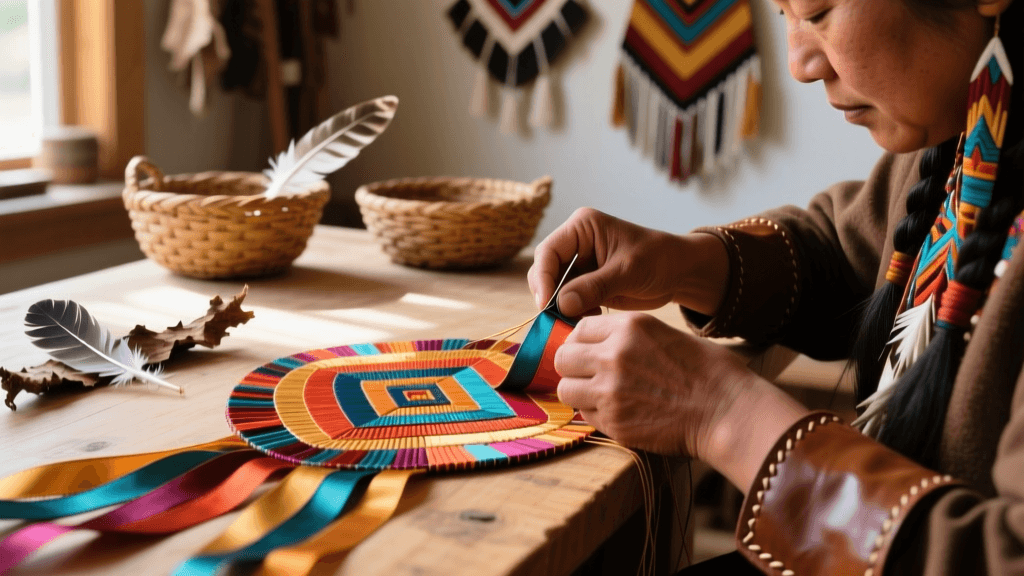
Unlike standard appliqué, where shapes are cut out and sewn down, traditional Anishinaabe ribbonwork relies on a negative-space folding technique. The design is created by folding the edges of the top ribbon layer under itself, revealing the contrasting ribbon layer beneath it. This creates the signature multi-colored, stepped, or curved borders that define the art form.
Step-by-Step Execution
- Drafting the Pattern: Begin by drawing your design on cardstock. Traditional Great Lakes motifs often feature symmetrical floral patterns, double-curve motifs, and geometric medallions. Cut the cardstock template out precisely.
- Preparing the Base Layers: Lay your wool broadcloth flat. If you are doing a multi-layer design, baste your bottom-most contrasting silk ribbon directly onto the wool. This bottom ribbon will act as the "outline" or secondary color of your design.
- Folding the Top Ribbon: Take your top-layer silk ribbon and place your cardstock template on the wrong side. Using a low-heat iron and a silk press cloth, carefully fold the edges of the ribbon over the template. The serrated scissors are used to clip the inner curves and trim excess bulk at sharp corners so the folds lie perfectly flat.
- Basting and Stitching: Remove the template and pin the folded top ribbon onto the base layer. Using a blind stitch or a very fine running stitch, secure the folded edges. The stitch should be nearly invisible on the top side, catching only a thread or two of the folded silk.
- Layering: For complex designs, this process is repeated with three or four layers of progressively smaller ribbons, creating a vibrant, stepped, three-dimensional effect.
2026 Cost Breakdown: Constructing a Traditional Ribbon Shirt
Creating a full ribbon shirt is a significant investment of both time and capital. Below is a realistic cost breakdown for sourcing materials in 2026 to construct a standard men's or women's traditional ribbon shirt, featuring chest, shoulder, and sleeve appliqué.
| Material / Supply | Quantity Needed | Estimated 2026 Cost (USD) |
|---|---|---|
| Melton Wool Broadcloth (Navy or Black) | 2.5 Yards | $110.00 - $145.00 |
| 100% Silk Taffeta Ribbon (Assorted Colors, 1" width) | 25 Yards total | $85.00 - $120.00 |
| 100% Silk Taffeta Ribbon (Assorted Colors, 1/2" width) | 15 Yards total | $45.00 - $60.00 |
| Cotton Broadcloth (for shirt lining and base) | 3 Yards | $35.00 - $50.00 |
| Silk Thread & Glass Head Pins | Assorted | $25.00 |
| Total Estimated Material Cost | $300.00 - $400.00 |
Note: This table reflects material costs only. A high-quality, hand-stitched ribbon shirt can take anywhere from 60 to 120 hours to complete. When purchasing finished regalia from an established artisan, prices typically range from $1,200 to over $3,500, reflecting the immense skill and labor involved.
Protocol, Care, and Storage of Sacred Regalia
Regalia is not merely a "costume"; it is a sacred extension of the dancer's spirit, history, and community ties. Proper care of ribbonwork is essential to preserve the integrity of the silk and the spiritual weight of the garments. Silk taffeta is highly susceptible to water spotting and UV degradation. Therefore, ribbon shirts and skirts should never be machine washed or dry-cleaned using harsh chemicals.
Spot cleaning with a barely damp microfiber cloth and a specialized silk detergent is the recommended method for minor stains. When storing regalia between powwow seasons, avoid plastic bins, which can trap moisture and cause the wool to mildew or the silk to rot. Instead, wrap the garments in unbleached, acid-free cotton muslin and store them in a cool, dark, and climate-controlled environment. Cedar blocks can be placed in the storage area to deter moths, but they should never directly touch the silk ribbons, as the natural oils can cause permanent staining.
Supporting Indigenous Artisans and Cultural Revitalization
As interest in Indigenous textile arts continues to grow globally, it is vital to approach ribbonwork with respect and cultural humility. For non-Native individuals interested in the technique, it is highly encouraged to study the history and support Native artists by purchasing directly from them, rather than attempting to mass-produce or appropriate sacred designs for commercial gain. Organizations like the Native Arts and Cultures Foundation provide vital grants and support systems that allow Indigenous knowledge-keepers to teach these techniques to the next generation.
Furthermore, the National Museum of the American Indian offers extensive digital archives and physical exhibitions that document the evolution of Great Lakes clothing, providing endless inspiration and historical context for modern makers. By honoring the origins of the art form, sourcing materials ethically, and dedicating the necessary hours to master the fold-and-cut technique, artisans in 2026 ensure that the vibrant, snapping sound of silk ribbons will continue to echo across powwow grounds for centuries to come.