Peking Opera Costumes: Sourcing Mang Robes and Kao Armor Guide
Peking Opera, or Jingju, is a spectacular synthesis of music, vocal performance, mime, dance, and acrobatics. Central to this art form is the wardrobe, known as Xingtou. Unlike Western theater where costumes often aim for strict historical accuracy, Peking Opera costumes are highly symbolic, indicating a character's social status, personality, and role type through color and motif. For modern performers, cultural festival organizers, and traditional arts enthusiasts, acquiring and wearing authentic pieces like the Mang (python robe) and Kao (armor) requires a deep understanding of both traditional craftsmanship and practical stagecraft.
According to the UNESCO Intangible Cultural Heritage registry, Peking Opera is a cornerstone of Chinese cultural identity, and its visual elements are strictly codified to communicate narrative instantly. This guide provides actionable advice on sourcing, sizing, and performing in these magnificent garments, whether for a professional stage production or a vibrant outdoor cultural parade.
The Mang (Python Robe): Elegance and Authority
The Mang is the formal court dress worn by emperors, high-ranking officials, and noblewomen. Despite its name, the python motif (typically featuring four claws) is visually almost identical to the five-clawed dragon reserved historically for the emperor. The robe is characterized by its sweeping silhouette, intricate embroidery, and the iconic water sleeves (shuixiu). The color of the Mang strictly dictates the character's rank: bright yellow is reserved for the emperor, red for high-ranking civil officials, and black for fierce, rough, or martial officials.
Sizing and Measurements for the Mang
When ordering a Mang, standard Western sizing does not apply. The garment is designed to be loose, flowing, and layered over thick undergarments to give the actor a more imposing presence. You must provide the tailor with specific measurements:
- Chest and Waist: Measured at the widest points. The Mang is wrapped and tied, so a 4-6 inch (10-15 cm) overlap is required to ensure the front panels drape correctly without exposing the underlayers.
- Shoulder Width: Crucial for ensuring the heavy embroidery sits correctly without drooping, which can ruin the authoritative silhouette.
- Sleeve Length: The base silk sleeve should reach the wrist. The white silk water sleeves (shuixiu) are attached separately. For beginners and festival wearers, a water sleeve length of 1.5 feet (45 cm) is manageable. Professional stage performers utilize sleeves ranging from 2 to 3 feet (60-90 cm) to execute complex flicking, trembling, and folding techniques that convey emotion.
Sourcing, Materials, and Costs
The cost of a Mang varies wildly based on materials and embroidery techniques, largely dependent on whether you are buying from mass-market suppliers or traditional artisans.
- Mass-Produced Synthetic (Polyester/Satin): Priced between $150 and $400 USD. These are machine-embroidered, relatively heavy, and lack breathability. They are suitable for amateur festival parades, school productions, or budget theater troupes. Sourcing is easily done via Alibaba or Taobao with a 2-3 week lead time.
- Hand-Embroidered Silk (Suzhou Embroidery): Priced from $3,000 to over $15,000 USD. Authentic Mang robes use pure silk crepe and real gold and silver threads wrapped around silk cores. The embroidery alone takes hundreds of hours. Lead time for custom orders from specialized workshops in Suzhou or Beijing's historic Xuanwu district tailors is typically 4 to 8 months.
The Kao (Armor): Martial Arts and Stage Combat
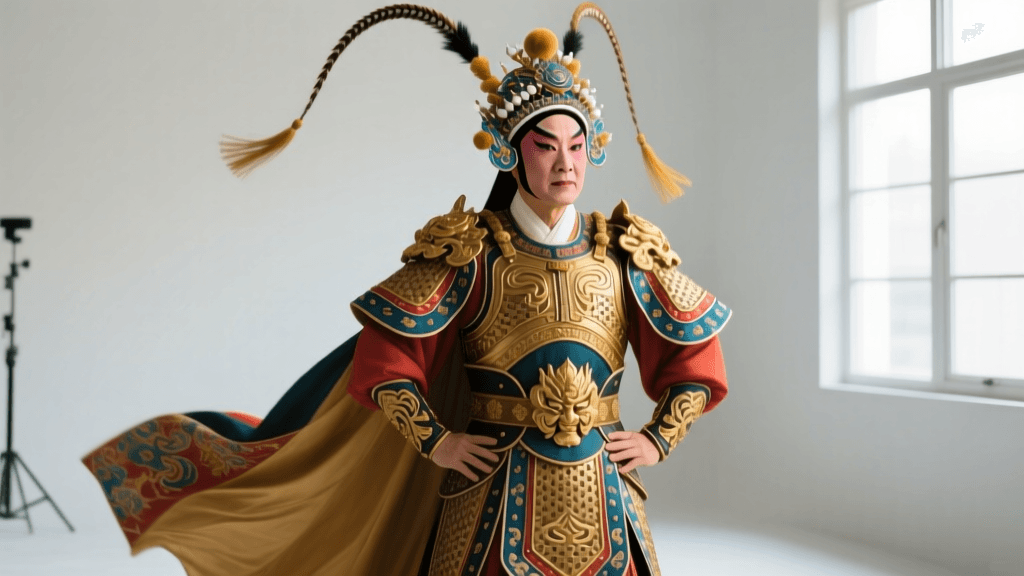
The Kao is the armor worn by generals and martial characters (Wusheng and Wudan). It is a highly stylized representation of military armor, designed not for actual battlefield protection, but to amplify the actor's movements during acrobatic combat sequences. The visual impact of a general in full Kao is meant to strike awe into the audience.
Components of the Kao
A full Kao set is heavy, complex, and requires a dedicated dresser to assemble. It consists of:
- Front and Back Pieces: Heavily embroidered with tiger, lion, or dragon motifs, featuring stiffened collars and elaborate borders.
- Shoulder Pads (Sanjian): Stiffened, wing-like extensions that broaden the performer's silhouette, making them look larger than life.
- The Kaoqi (Flags): Four triangular flags attached to a leather harness on the back. These represent the commander's absolute authority and the sweeping winds of the battlefield.
- Kao Legs: Separate apron-like pieces worn over the trousers to protect the legs and add visual flair during high kicks and leaps.
Practical Advice for Movement and Wear
Performing in a Kao requires immense physical conditioning and spatial awareness. The four back flags act like sails; even a slight breeze outdoors or stage ventilation indoors creates significant drag.
- Core and Neck Strength: Performers must engage their core to counterbalance the flags during spins. Neck strength is vital to maintain the heavy headdress (Taozi) and keep the flags aligned symmetrically.
- Undergarments and Padding: Never wear a Kao directly over bare skin or thin cotton. Use a thick, quilted cotton vest with padded shoulders to absorb sweat and prevent the stiff, metallic embroidery from bruising the collarbones and shoulders.
- Securing the Harness: The flag harness must be tied tightly across the chest and waist using long cotton binding cloths. If tied too loosely, the flags will wobble independently during flips (fanteng) and ruin the illusion of martial prowess.
As noted by theater historians and documented in Encyclopedia Britannica's comprehensive guide to Peking Opera, the costumes serve as a primary storytelling device. The physical manipulation of elements like the Kao flags and Mang water sleeves communicates the character's internal emotional state and martial skill to the audience without a single word being spoken.
Comparison Chart: Mang vs. Kao for Festival vs. Stage
| Feature | Mang (Python Robe) | Kao (Armor) |
|---|---|---|
| Primary Use | Court scenes, dignified roles, formal festival parades | Battle scenes, martial roles, dynamic stage combat |
| Average Weight | 4 - 8 lbs (1.8 - 3.6 kg) | 12 - 20 lbs (5.4 - 9 kg) including harness and flags |
| Setup Time | 15 - 20 minutes (requires assistance for tying) | 40 - 60 minutes (complex harness and flag rigging) |
| Outdoor Festival Viability | High (manageable, though long hems require care) | Low to Moderate (wind catches flags, risk of toppling) |
| Skill Level Required | Intermediate (water sleeve manipulation) | Advanced (acrobatics, flag management, stamina) |
Adapting Opera Costumes for Modern Cultural Festivals
While traditional Xingtou is designed for the controlled, flat environment of a theater stage, the modern Hanfu movement and international cultural parades often bring these garments outdoors into unpredictable environments.
Weather and Terrain Considerations
If you are wearing a Mang or Kao at an outdoor festival, you must adapt your wardrobe strategy. For the Mang, use hidden heavy-duty snaps or safety pins to temporarily hitch the back hem, preventing it from dragging through mud, wet grass, or crowded pedestrian areas. For the Kao, consider removing the Kaoqi (flags) if wind speeds exceed 10 mph (16 km/h). The flags are attached via leather loops and can be detached without dismantling the entire armor, preserving the performer's safety and mobility in high winds.
Footwear Modifications
Traditional opera boots (Xuezi) have thick, white rubber or wooden soles that elevate the performer by 2 to 4 inches. While visually striking and essential for stage proportions, they are incredibly dangerous on uneven festival terrain, cobblestones, or grass. For outdoor events, swap the traditional boots for custom-painted, flat-soled martial arts shoes or character shoes that match the costume's color palette. You will lose some height, but you will prevent severe ankle sprains and ensure you can navigate crowds safely.
Maintenance and Storage of Xingtou
Proper care ensures these expensive, historically significant garments last for generations and retain their vibrant stage presence.
- Cleaning: Never machine wash or dry clean authentic silk Mang or Kao. The metallic threads (often real gold leaf wrapped around silk cores) will tarnish, oxidize, or strip entirely in chemical baths. Use specialized textile conservation sponges for spot cleaning. For deep cleaning, consult a professional textile conservator who specializes in theatrical or historical garments.
- Storage: Store garments flat in acid-free tissue paper inside archival boxes. Never hang a heavy Kao or silk Mang on a standard hanger; the immense weight of the embroidery will distort the silk weave, stretch the fabric, and tear the shoulders over time.
- Pest Control: Pure silk is highly susceptible to moth and silverfish damage. Store with natural camphor balls or cedar blocks, but ensure they are wrapped in breathable cloth and do not directly touch the fabric to avoid oil stains and chemical degradation of the dyes.
Conclusion
Investing in Peking Opera costumes is an investment in living history and masterful craftsmanship. Whether you are staging a traditional Jingju performance, competing in a theatrical showcase, or leading a vibrant parade at a cultural festival, understanding the mechanics, sourcing, and maintenance of the Mang and Kao ensures that the legacy of Chinese theatrical arts continues to shine with dignity, authenticity, and spectacular flair. By respecting the traditional dimensions and adapting intelligently for modern environments, performers can keep the vibrant spirit of the Xingtou alive for future generations.