Peking Opera and Kunqu Hanfu Costumes: 2026 Stage Guide
The Intersection of Hanfu and Traditional Chinese Theater
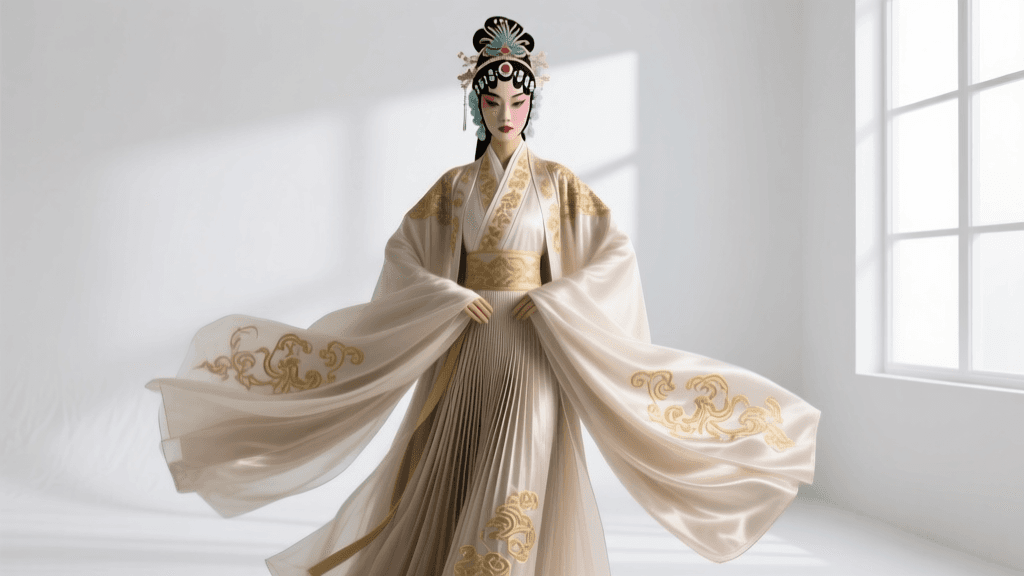
The visual splendor of traditional Chinese performing arts is inextricably linked to the garments worn on stage. For enthusiasts of the modern Hanfu movement and scholars of Asian traditions alike, understanding theatrical costumes—known as Xifu—offers a fascinating window into historical fashion. While contemporary Hanfu revivalists focus heavily on historical accuracy from the Tang, Song, and Ming dynasties, traditional theater forms like Peking Opera (Jingju) and Kunqu Opera have preserved a stylized, amplified version of Ming dynasty clothing for centuries. In 2026, the intersection of the mainstream Hanfu revival and traditional theater has led to a renaissance in bespoke stage wear, with modern performers and troupes seeking garments that honor historical roots while incorporating advanced performance textiles.
Unlike everyday historical Hanfu, theatrical Xifu is designed for the stage. It prioritizes bold visual impact, exaggerated silhouettes, and dynamic movement over strict historical replication. However, the foundational structures of these garments—the wrap closures, the wide sleeves, and the layered skirts—are deeply rooted in authentic Hanfu traditions. According to UNESCO's Intangible Cultural Heritage registry, Peking Opera is a comprehensive art form where costume and makeup are just as critical as the vocal performance, serving as an immediate visual code to the audience regarding a character's status, personality, and age.
The Historical Bridge: Ming Dynasty Hanfu and Theatrical Xifu
To understand stage Hanfu, one must look to the Ming Dynasty (1368–1644). When Peking Opera began to coalesce in the late 18th and early 19th centuries, costume designers used the clothing of the preceding Ming dynasty as their primary template, largely due to the Qing dynasty's strict sartorial laws which mandated Manchu dress for daily life but allowed Han Chinese theatrical costumes on stage. This created a unique sartorial time capsule. Theatrical troupes preserved Ming-style round-collar robes, pleated skirts, and scholar's hats, gradually stylizing them for dramatic effect.
Kunqu Opera, which predates Peking Opera and is celebrated for its elegant, refined aesthetics, utilizes a softer, more historically grounded approach to its Hanfu-inspired costumes. As noted by UNESCO's recognition of Kunqu, the art form relies on subtle gestures and poetic grace, which is reflected in the flowing, understated silk robes and delicate embroidery of its stage wear. In 2026, Kunqu troupes are increasingly collaborating with historical Hanfu researchers to ensure their stage garments reflect the precise drape and fabric weight of authentic Ming-era scholar and noblewoman attire, while still accommodating the rigorous physical demands of the stage.
Key Theatrical Garments: From Hanfu Roots to the Stage
The wardrobe of a traditional Chinese opera troupe is highly codified. Below is a breakdown of the primary garments that bridge the gap between historical Hanfu and theatrical Xifu, along with their 2026 market specifications for professional and semi-professional performers.
| Garment Name | Hanfu Origin / Inspiration | Theatrical Role & Function | 2026 Material & Trend | Avg. Bespoke Cost (USD) |
|---|---|---|---|---|
| Mang (Python Robe) | Ming Dynasty court round-collar robes with rank badges. | Emperors, generals, and high-ranking officials. Features water sleeves and heavy embroidery. | Heavyweight silk satin with 3D gold-couching (panjin) and breathable bamboo-charcoal linings. | $2,500 - $6,000 |
| Xuezi (Informal Robe) | Ming Dynasty scholar's casual Dao robe (Daopao) with side slits. | Scholars, minor officials, and everyday characters. Cross-collar or round-collar with water sleeves. | Lightweight crepe de chine or matte silk, featuring subtle tone-on-tone Su Xiu (Suzhou embroidery). | $800 - $1,800 |
| Pei (Ceremonial Coat) | Ming Dynasty women's formal outerwear (Pifeng/Beizi) elongated for stage. | Noblewomen and high-status female characters. Worn over a pleated skirt (Mamianqun). | Silk organza overlays with hand-stitched seed-stitch floral motifs and weighted hems for dramatic turns. | $1,200 - $3,500 |
| Kao (Armor) | Ming Dynasty military brigandine and ceremonial armor. | Generals and warriors in battle scenes. Features flags on the back and padded shoulders. | Faux-leather and high-tensile silk blends with lightweight carbon-fiber internal structuring. | $3,000 - $8,000 |
2026 Sourcing Trends: Modern Ateliers and Performance Silks
Sourcing authentic, high-quality theatrical Hanfu in 2026 requires navigating a specialized network of ateliers, primarily located in Suzhou and Hangzhou. The modern Hanfu boom has heavily influenced the theatrical costume industry, leading to significant upgrades in fabric technology. Historically, stage garments were incredibly heavy, leading to heat exhaustion under hot stage lights. Today, top-tier theatrical tailors utilize advanced temperature-regulating silk blends. For instance, the inner linings of a Mang robe now frequently feature moisture-wicking cupro or bamboo-silk blends, allowing performers to execute acrobatic routines without the garment becoming waterlogged with sweat.
Furthermore, the customization process has been revolutionized. While traditional tailoring relied on manual measurements, leading 2026 theatrical ateliers now employ 3D body scanning to map a performer's exact range of motion. This ensures that the armholes of a Xuezi are gusseted perfectly for the high-arm extensions required in Kunqu dance routines, preventing the silk from tearing at the seams. When commissioning a piece, performers should expect a lead time of four to six months for hand-embroidered garments, as the intricate Su Xiu (Suzhou embroidery) techniques cannot be rushed without sacrificing the luster and durability of the silk threads.
Mastering the Water Sleeves: Movement and Sizing
No discussion of theatrical Hanfu is complete without addressing Shuixiu, or water sleeves. These elongated white silk cuffs, attached to the wrists of garments like the Mang, Xuezi, and Pei, are an extension of the actor's emotional expression. Originating from the extended cuffs of historical Hanfu, water sleeves in theater are exaggerated to create fluid, rippling motions that mimic the flow of water or the swirling of clouds.
For performers and advanced enthusiasts practicing in 2026, selecting the correct length and weight of the water sleeve is paramount. Beginners should start with sleeves measuring 40 to 50 centimeters beyond the wrist, made from a medium-weight silk crepe that provides enough structure to hold a shape when flicked. Advanced Kunqu and Peking Opera performers utilize sleeves extending 80 to 120 centimeters, crafted from ultra-lightweight silk chiffon. The technique requires immense wrist strength and precise shoulder isolation. Practitioners must ensure that the base garment's sleeve is tightly fitted at the forearm to support the weight of the extended water sleeve, preventing the entire robe from shifting during vigorous choreography.
Preservation and Care for Embroidered Stage Hanfu
The financial and cultural investment in a bespoke theatrical Hanfu garment necessitates rigorous care protocols. The heavy metallic threads used in gold-couching embroidery are highly susceptible to tarnishing and oxidation, especially in humid climates. In 2026, professional troupes utilize climate-controlled storage units set to exactly 45% relative humidity and 18°C (64°F) to preserve the integrity of the silk and metallic threads.
When cleaning is required, dry cleaning is almost universally forbidden for high-end Xifu, as the harsh chemicals strip the natural sericin from the silk and dull the metallic threads. Instead, specialized conservation cleaning is employed. Spot cleaning with distilled water and mild, pH-neutral silk detergents is the standard for minor stage makeup stains. For the pleated skirts (Mamianqun) worn beneath the Pei coats, performers must re-pleat the garments using specialized wooden clamps and steam after every performance to maintain the razor-sharp lines that are essential for the garment's silhouette. Storing these garments flat, layered with acid-free tissue paper, prevents the heavy embroidery from pulling and distorting the delicate silk base fabric over time.
Conclusion: A Living Sartorial Heritage
The costumes of Peking Opera and Kunqu are not merely theatrical props; they are living, breathing extensions of the Hanfu tradition. By freezing the elegance of Ming dynasty fashion and amplifying it for the stage, these performing arts have safeguarded a vital piece of Asian sartorial history. As we move through 2026, the synergy between historical Hanfu researchers, modern textile innovators, and master theatrical tailors ensures that these magnificent garments will continue to captivate audiences, honoring the past while embracing the technological advancements of the present.