Hanfu Stage Costumes for Peking Opera & Kunqu: 2026 Guide
The Intersection of Hanfu and Traditional Chinese Theatre
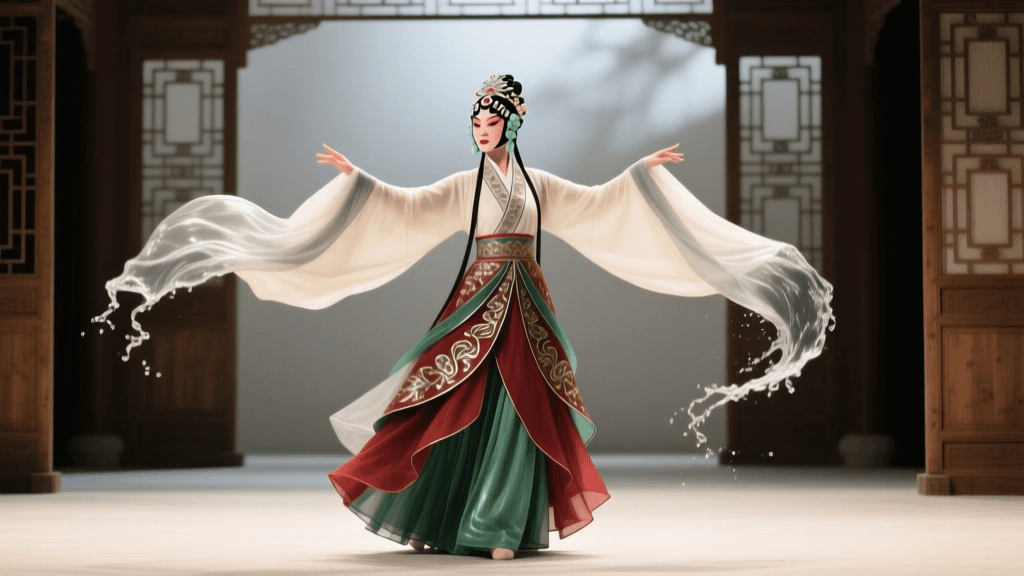
When audiences attend a Peking Opera or Kunqu performance in 2026, they are immediately captivated by the vibrant, sweeping garments worn by the performers. While these costumes are broadly categorized under the theatrical term Xifu (stage clothing), their foundational silhouettes, motifs, and construction techniques are deeply rooted in historical Hanfu. Unlike everyday historical clothing, theatrical Hanfu adaptations prioritize visual impact from a distance, exaggerated movement, and symbolic storytelling. As the global revival of Hanfu continues to influence mainstream fashion, traditional performing arts troupes in 2026 are finding a renewed interest in the historical accuracy and textile craftsmanship of their stage wardrobes.
According to UNESCO's Intangible Cultural Heritage registry, Kunqu opera is one of the oldest and most refined forms of Chinese theatre, and its costume design remains a vital vessel for preserving Ming and Qing dynasty sartorial aesthetics. This guide explores how historical Hanfu translates to the modern stage, the technical requirements for performers, and the 2026 innovations in theatrical textiles.
From Historical Hanfu to Theatrical Xifu
The golden rule of traditional Chinese opera costume design is 'clothing from the Ming, customs from the Qing.' This means that the core silhouettes of Peking Opera and Kunqu garments are heavily based on the Hanfu styles of the Ming Dynasty (1368–1644), even though the art forms crystallized later. However, stage costumes are not strict historical replicas. They are stylized, exaggerated, and standardized to communicate a character's age, gender, social status, and moral alignment instantly.
In 2026, costume historians and theatrical tailors are collaborating more closely than ever. While historical Hanfu enthusiasts focus on the precise drape of a cross-collar robe or the exact weave of a Song dynasty damask, stage tailors focus on structural reinforcement. A stage robe must withstand rigorous acrobatic movements, rapid costume changes, and the intense heat of modern theatrical lighting, all while maintaining the elegant, flowing lines of traditional Hanfu.
Core Stage Garments and Their Hanfu Origins
The Mang (Python Robe)
The Mang is the most formal stage garment, worn by emperors, high-ranking officials, and generals. Its origins lie in the Ming Dynasty Yuanlingpao (round-collar robe) and the exclusive python-embroidered robes granted by the emperor to favored ministers. In a 2026 Kunqu production, a Mang features a round collar, side slits for mobility, and water sleeves. The embroidery utilizes the Guangxian (gold-wrapped thread) technique, though modern troupes often use synthetic metallic threads to reduce the garment's weight from over 10 kilograms to a more manageable 4 kilograms.
The Pei (Informal Robe)
Derived from the Ming Dynasty Dao袍 (Taoist robe) and everyday cross-collar Hanfu, the Pei is worn by scholars, noblewomen, and officials in casual settings. It features a cross-collar (jiaoling) that closes to the right, adhering to the strict Hanfu rule of youren. For female roles (Dan), the Pei is often heavily embroidered with floral motifs like peonies or plum blossoms, utilizing traditional Suzhou embroidery techniques that remain highly sought after in 2026.
The Xuezi (Scholar's Robe)
The Xuezi is the most common garment for male scholarly roles (Sheng). It is a direct theatrical descendant of the Ming dynasty scholar's casual robe. It is characterized by its cross-collar, wide sleeves, and side slits. In contemporary 2026 productions, the Xuezi is often made from high-grade matte silk to absorb stage lighting beautifully without creating distracting glares, a significant upgrade from the highly reflective synthetic satins used in the late 20th century.
The Kao (Armor)
For martial roles (Wusheng and Wudan), the Kao represents traditional Hanfu military armor. Historically, Chinese armor was made of metal plates, leather, or heavy padded cotton. The theatrical Kao translates this into a highly stylized, four-panel garment made of stiff satin or velvet, heavily embroidered with tiger or dragon motifs. The back of the Kao features four triangular flags (kaoqi), which historically represented military command but on stage serve to exaggerate the actor's movements and make them appear larger and more imposing. In 2026, lightweight carbon-fiber rods are often used inside the flag casings to prevent them from snapping during intense acrobatic combat sequences.
The Mechanics of Water Sleeves (Shuixiu) in 2026
No discussion of Hanfu in traditional performing arts is complete without the Shuixiu, or water sleeves. These are the long, flowing white silk extensions attached to the cuffs of stage robes. While historical Hanfu sleeves were wide and long, they did not feature these detachable, exaggerated extensions. Water sleeves were developed specifically for the stage to externalize a character's internal emotions—trembling to show fear, throwing outward to show anger, or gently folding to show shyness.
In 2026, the standard length for professional Kunqu water sleeves ranges from 60 to 90 centimeters, depending on the actor's height and the specific role. Peking Opera sleeves tend to be slightly shorter to accommodate faster, more acrobatic movements. The fabric of choice has shifted. While pure heavy silk was the historical standard, it wrinkles easily and loses its shape under stage sweat. Today's top-tier troupes use a specialized silk-chiffon blend or a high-density matte polyester that mimics the drape of silk but offers superior moisture-wicking and snap-back memory.
Maintenance and Care for Performers
- Washing: Never machine wash water sleeves. Hand wash in cold water with a pH-neutral silk detergent.
- Drying: Lay flat on a mesh drying rack away from direct sunlight to prevent the white fabric from yellowing.
- Ironing: Use a low-heat steam iron. The sleeves must be perfectly crisp at the cuff but fluid at the extension.
- Storage: Roll the sleeves rather than folding them to avoid permanent crease lines that disrupt the visual flow during performance.
2026 Textile Innovations: Traditional vs. Performance Fabrics
The year 2026 has seen a massive leap in textile engineering for traditional performing arts. Troupes no longer have to choose between historical authenticity and performer comfort. Below is a comparison of the primary fabrics used in modern Hanfu stage costuming.
| Fabric Type | Composition | Weight (per sq meter) | Breathability | Avg. Cost (2026) | Best Use Case |
|---|---|---|---|---|---|
| Traditional Silk Brocade (Zhuanghua) | 100% Mulberry Silk, Gold Thread | 350g | Low | $450 / meter | Lead roles, VIP exhibitions, close-up film |
| Performance Jacquard Silk | 70% Silk, 30% High-Tenacity Rayon | 180g | Medium | $120 / meter | Mainstage Kunqu and Peking Opera Mang robes |
| Matte Theatrical Crepe | 100% Polyester Microfiber | 120g | High | $35 / meter | Xuezi (scholar robes), ensemble cast, acrobatic roles |
| Water Sleeve Chiffon Blend | 60% Silk, 40% Nylon | 45g | Very High | $80 / meter | Shuixiu (water sleeves) for Dan and Sheng roles |
Sourcing and Commissioning Stage Hanfu Today
For theatre companies, independent performers, or serious collectors looking to acquire authentic stage Hanfu in 2026, the epicenter of production remains Suzhou and Beijing. Suzhou is globally renowned for its Suzhou Embroidery (Su Xiu), a technique recognized for its delicate, photorealistic stitching. According to cultural heritage advocates, preserving traditional sericulture and silk craftsmanship is vital for the survival of high-end theatrical wardrobes.
When commissioning a custom Mang or Pei, expect a lead time of three to six months. The process begins with precise measurements—not just chest and waist, but shoulder slope, arm span, and neck circumference, as the rigid collars of opera robes require a flawless fit to prevent choking or chafing during long performances. In Beijing, the Liulichang cultural street district remains a hub for specialized theatrical tailors who understand the unique structural requirements of Peking Opera costuming, including the internal padding used to create the exaggerated, heroic silhouettes of martial roles.
A fully bespoke, hand-embroidered Mang robe from a master tailor in Suzhou can cost upwards of $8,000 to $15,000 USD in 2026, reflecting the hundreds of hours of skilled labor required. For regional troupes or university performing arts programs, semi-custom options using machine-assisted embroidery combined with hand-finished details offer a practical alternative, typically ranging from $1,500 to $3,000 USD. It is crucial to factor in the cost of undergarments; the structural integrity of a stage Hanfu relies heavily on the inner padding, specialized trousers, and thick-soled boots that elevate the performer and alter their center of gravity.
Conclusion
The presence of Hanfu in Peking Opera and Kunqu is a living, breathing testament to the endurance of Chinese sartorial culture. While the garments have been adapted for the rigorous demands of the stage, they retain the philosophical and aesthetic core of historical Hanfu. As we move through 2026, the synergy between historical textile revivalists and theatrical performers ensures that these magnificent robes will continue to sweep across stages, captivating audiences with every flick of a water sleeve and every gleam of silk brocade.