2026 Guide to Preserving Vintage Silk Kimonos & Hanboks
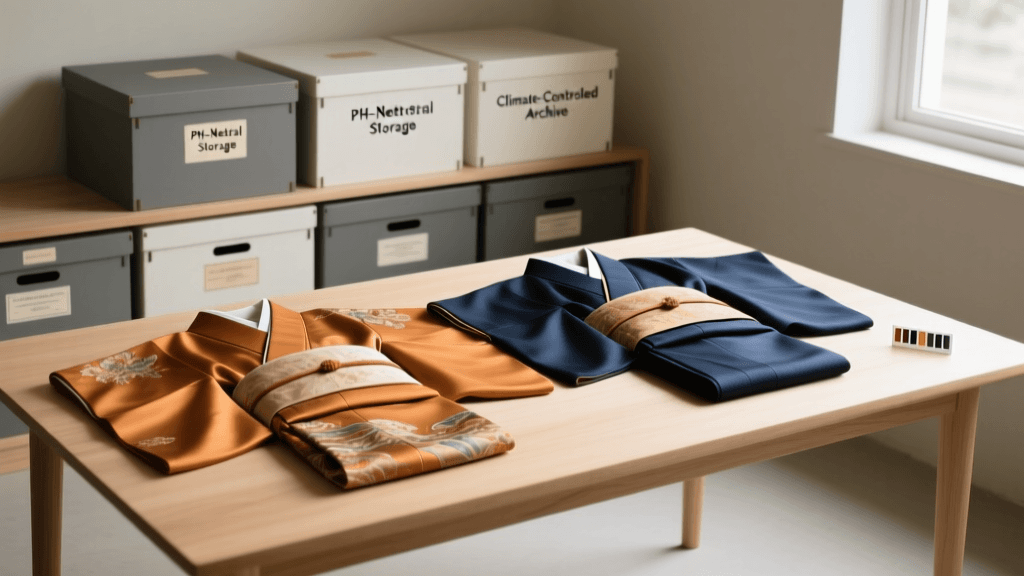
The preservation of traditional East Asian garments, particularly vintage silk kimonos from Japan and hanboks from Korea, requires a meticulous approach that bridges historical appreciation with modern textile science. As we navigate the conservation landscape of 2026, collectors, curators, and heritage enthusiasts have access to advanced archival materials and smart environmental monitoring systems. However, the fundamental vulnerability of silk demands strict adherence to time-tested, museum-grade protocols. Whether you are safeguarding a Meiji-era chirimen silk kimono or a mid-century voluminous hanbok chima (skirt), understanding the chemistry of protein fibers is the first step toward ensuring these masterpieces survive for future generations.
The Delicate Science of East Asian Silk Garments
Silk is a natural protein fiber composed primarily of fibroin, which is held together by a gummy outer layer called sericin. In traditional East Asian textile production, the sericin is often boiled off in a process called degumming, leaving behind the lustrous, soft fibroin threads used for weaving. While incredibly strong for its diameter, silk is highly sensitive to environmental stressors, particularly ultraviolet (UV) light, fluctuating humidity, and alkaline substances.
One of the most pressing issues in preserving vintage kimonos from the late 19th and early 20th centuries is the phenomenon known as silk shattering. During this era, it was common practice to 'weight' silk using metallic salts (like iron or tin) to give the fabric a heavier, more luxurious drape. Over decades, these metallic salts catalyze oxidative degradation, causing the silk to become brittle and literally shatter along fold lines. According to the American Institute for Conservation's Textile Wiki, weighted silk requires highly specialized, low-tension storage environments to prevent irreversible structural failure.
2026 Cleaning Protocols: What Works and What Destroys
When addressing localized staining or overall soil on vintage Asian garments, the instinct to use modern commercial laundry detergents must be entirely suppressed. Many contemporary 'delicate' washes contain protease enzymes designed to break down protein-based stains like blood or sweat. Because silk itself is a protein, enzymatic cleaners will actively digest and dissolve the fibers of your kimono or hanbok.
Furthermore, traditional dry cleaning using perchloroethylene (perc) is strongly discouraged for vintage East Asian garments. Perc can strip natural oils, stiffen the silk, and dissolve the metallic threads (koma-embroidery) often found in ceremonial hanboks and formal kimonos.
The Conservation-Grade Cleaning Method
For water-safe silks, the gold standard in 2026 remains the use of pure, non-ionic, or mild anionic conservation detergents. Orvus WA Paste (pure sodium lauryl sulfate) is a staple in museum conservation labs. It is completely free of enzymes, optical brighteners, perfumes, and dyes.
- Testing: Always perform a spot test on an inconspicuous area, such as an inner seam allowance, using a cotton swab dampened with distilled water to check for dye bleeding. Traditional Japanese and Korean dyes, especially natural indigo and safflower red, are notoriously fugitive and may run.
- Solution Preparation: Mix a 1% solution of Orvus WA Paste in distilled or deionized water. Tap water contains chlorine and dissolved minerals that can leave permanent deposits on silk.
- Application: Use a soft, natural sponge to gently apply the suds to the garment. Never twist, wring, or aggressively scrub the silk. Rinse thoroughly with distilled water until no suds remain, and roll the garment in a clean, unbleached cotton towel to gently extract excess moisture before laying it flat to dry on a padded screen.
The Golden Rule of Archival Storage: Unbuffered Tissue
Perhaps the most common mistake made by amateur collectors is using the wrong type of acid-free tissue paper. In the archival supply market, tissue is sold in two varieties: buffered and unbuffered. Buffered tissue contains a 3% calcium carbonate reserve, giving it an alkaline pH of around 8.5. This alkalinity is excellent for neutralizing acids in cellulosic fibers like cotton, linen, and paper.
However, protein fibers like silk and wool are highly sensitive to alkaline environments. Storing a silk kimono in buffered tissue will cause alkaline hydrolysis, weakening the fiber structure and accelerating yellowing. As detailed in the National Park Service Museum Handbook on Textiles, all protein-based historical garments must be stored using strictly unbuffered, acid-free, neutral-pH (7.0) tissue paper.
Comparison Chart: Archival Storage Materials for Asian Textiles
| Material Characteristic | Buffered Archival Tissue | Unbuffered Archival Tissue |
|---|---|---|
| pH Level | Alkaline (approx. 8.5) | Neutral (approx. 7.0) |
| Chemical Additive | 3% Calcium Carbonate Reserve | None |
| Ideal For (Cellulosic) | Cotton, Linen, Ramie, Hemp | Safe, but buffered is preferred |
| Ideal For (Protein) | NEVER USE (Causes hydrolysis) | Silk, Wool, Hanbok/Kimono |
| Metallic Threads | Can cause tarnishing | Safe for gold/silver embroidery |
Rolling vs. Folding: Structural Preservation Techniques
Traditionally, Japanese kimonos are folded into a neat, rectangular package known as tatoushi. While this is culturally authentic and space-efficient for short-term storage, long-term archival preservation in 2026 dictates that fragile, vintage silks should be rolled rather than folded. Sharp, permanent folds place immense mechanical stress on the fibroin structure, leading to crease-line shattering over time.
To properly roll a vintage kimono or a voluminous hanbok chima, conservators use an archival-grade, acid-free polyethylene or polypropylene tube. The tube is first wrapped in washed, unbleached cotton muslin or unbuffered archival tissue. The garment is then carefully rolled around the tube, interleaving layers of unbuffered tissue to prevent friction between the silk layers. The rolled textile is finally wrapped in a clean muslin shroud and tied loosely with unbleached cotton twill tape. Never use plastic bags, which can trap off-gassing chemicals and moisture, leading to mold growth.
Handling and Display: Modern Best Practices
When it comes to handling vintage Asian garments, the conservation community has seen a shift in recent years. While white cotton gloves were once mandatory, they reduce tactile sensitivity, increasing the risk of catching and tearing fragile silk. Today, the American Institute for Conservation (AIC) recommends handling clean, dry textiles with freshly washed, bare hands to maintain dexterity. However, if the garment features metallic embroidery, suspected mold, or hazardous historical pesticides (like mothballs or arsenic-based dyes), powder-free nitrile gloves are required to protect both the artifact and the handler.
For display, never hang a vintage silk kimono or heavy hanbok jacket on a standard wire or wooden hanger. The sheer weight of the garment will distort the shoulders and cause irreversible tearing. Instead, use custom-carved Ethafoam mounts padded with polyester batting and covered in a neutral cotton knit fabric to support the garment's natural silhouette without placing stress on the seams.
Environmental Controls: Smart Monitoring in 2026
The final pillar of preservation is environmental stability. Silk is highly hygroscopic, meaning it absorbs and releases moisture from the air. Fluctuations in relative humidity (RH) cause the fibers to expand and contract, leading to mechanical fatigue. In 2026, the integration of IoT-enabled wireless dataloggers (such as those from Conserv or Eltek) allows collectors to monitor microclimates inside storage cabinets in real-time via smartphone applications.
The ideal storage environment for vintage silk East Asian garments is a dark, climate-controlled space maintained at a stable temperature of 65°F to 70°F (18°C to 21°C) and a relative humidity of 45% to 55%. Light exposure must be strictly limited; when on display, illumination should not exceed 50 lux, and UV radiation must be filtered out entirely using UV-blocking window films or LED lighting that emits zero ultraviolet spectrum. By combining these rigorous 2026 environmental controls with meticulous pH-neutral cleaning and unbuffered storage, the vibrant legacy of Asian textile artistry can be preserved in pristine condition for centuries to come.