Peking Opera Costumes: A Guide to Jingju Xifu Sourcing
The Art and Engineering of Jingju Xifu
Peking Opera, or Jingju, is a magnificent synthesis of music, vocal performance, mime, dance, and acrobatics. Recognized by UNESCO as an Intangible Cultural Heritage of Humanity, its visual impact relies heavily on Xifu (opera costumes). Unlike Western theatrical costuming, which often aims for strict historical realism, Jingju Xifu is deeply symbolic, transcending specific dynasties to create a timeless, stylized aesthetic that prioritizes movement and character archetypes over historical accuracy.
According to Encyclopædia Britannica, the costumes are designed to immediately communicate a character's social status, personality, and moral alignment to the audience before a single word is sung. For modern performers, cultural festival organizers, and costume collectors, understanding the mechanics, symbolism, and sourcing of these garments is essential for authentic representation.
Decoding the Wardrobe: The Five Core Garments
The traditional Peking Opera wardrobe is vast, containing hundreds of specific items, but it is built upon a foundational system of five main garment categories.
1. Mang (Python Robe)
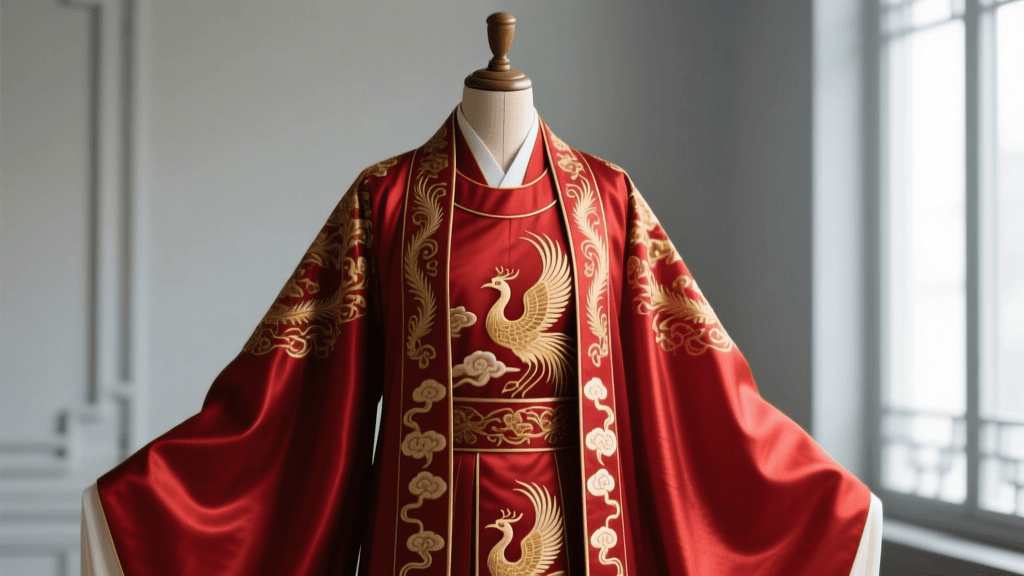
The Mang is the most formal garment in the opera wardrobe, worn exclusively by emperors, kings, and high-ranking officials. It features a round collar, a wrap-around front, and wide sleeves equipped with shuixiu (water sleeves). The python embroidery (a four-clawed dragon) denotes supreme authority and imperial proximity. The robe is heavily structured and requires a specific, gliding walk to maintain its regal drape.
2. Pei (Ceremonial Robe)
Worn by nobles and high officials in less formal settings, or by high-ranking scholars, the Pei features a center-front opening and a straight hem with deep side slits. This construction allows for greater mobility during complex dance sequences and martial arts displays while maintaining an air of aristocracy.
3. Kao (Armor)
The Kao is the elaborate, highly stylized armor worn by generals and warriors. It consists of a heavily embroidered front and back panel, ornate shoulder pads, and tiger-head motifs on the belly. There are two main types: Ying Kao (hard armor), which features four triangular flags (kaoqi) attached to the back to magnify the actor's movements and signify command over troops, and Ruan Kao (soft armor), which lacks the flags and is worn for stealth scenes or lighter combat choreography.
4. Xuezi (Informal Robe)
A versatile, cross-collared robe worn by a wide range of characters, from scholars to commoners. The color and embroidery density dictate the wearer's exact status. A plain black Xuezi often denotes poverty, a tragic figure, or a character in mourning, while brightly colored versions with floral embroidery indicate wealthy scholars or young nobles.
5. Yi (Undergarments and Utility Wear)
This category includes trousers, skirts, and base layers that provide the structural volume necessary for the outer robes to drape correctly. It also includes the specialized thick-soled boots (Houdi Xue) that add height and force the actor to adopt the distinctive, grounded stance of Peking Opera.
Color Symbolism and Embroidery Techniques
In Peking Opera, color is a strict visual shorthand. As detailed in analyses of Asian theatrical textiles at the Victoria and Albert Museum, the palette is rigidly codified to ensure instant audience recognition:
- Yellow: Reserved exclusively for the Imperial family and the highest echelons of power.
- Red: Signifies loyalty, courage, nobility, and righteousness.
- Black: Denotes a rough, bold, impartial, or fierce character (e.g., the famous judge Bao Zheng).
- White: Often associated with youth and beauty, but also used to denote treachery, cunning, or mourning.
- Blue and Green: Typically worn by outlaws, bandits, martial heroes of the forests, and supernatural beings.
The embroidery is traditionally executed using Suzhou embroidery (Su Xiu), characterized by flat, dense stitching and metallic gold couching. For stage purposes, the motifs must be bold, high-contrast, and large enough to be read from the back row of a grand theater.
The Crucial Element: Shuixiu (Water Sleeves)
No discussion of Jingju Xifu is complete without addressing the shuixiu. These are long, white silk extensions attached to the cuffs of the Mang, Pei, and Xuezi. They are not merely decorative; they are extensions of the actor's emotional state. The weight of the silk must be perfectly calibrated. If the fabric is too light, it will not snap or ripple correctly during choreography; if it is too heavy, it will exhaust the performer and fail to achieve the ethereal, floating effect required for tragic or romantic scenes.
Practical Sourcing Guide for Performers and Festivals
Whether you are outfitting a university theater production, a cultural heritage festival, or building a personal collection, sourcing authentic Jingju Xifu requires navigating specialized markets and understanding manufacturing timelines.
Where to Source
The epicenter of Chinese opera costume manufacturing is Suzhou, specifically the Zhenhu Embroidery Town. While Beijing is the spiritual and historical home of Peking Opera, the textile and embroidery workshops of Suzhou produce the vast majority of the world's authentic opera costumes. For international buyers, working with sourcing agents or contacting Suzhou-based ateliers directly is necessary for custom, hand-embroidered pieces. For off-the-rack festival wear, specialized theatrical supply shops in Beijing's Liulichang district or online global theatrical retailers are viable options.
Material Choices: Authentic Silk vs. Festival Synthetics
- Heavy Silk Satin (Authentic Stage Wear): Traditional costumes use heavy silk satin backed with cotton lining. This provides the necessary weight for the water sleeves to flow correctly and allows the garment to withstand the intense heat of stage lighting. Cost: High.
- Polyester Brocade (Festival/Budget Wear): For outdoor cultural festivals where garments may face wind, rain, and heavy wear, high-density polyester brocade is often substituted. It mimics the sheen of silk and is machine-washable, but it lacks the fluid drape of silk, requiring actors to adjust their sleeve techniques to compensate for the stiffer fabric.
Measurements and Fitting for the Stage
Opera costumes do not follow standard Western retail sizing. They are traditionally tailored to the actor's height and the specific requirements of their role's choreography. When ordering from an atelier, you must provide the following specific measurements:
- Total Height: Determines the hemline to ensure the actor can perform deep martial stances (Ma Bu) without tripping over the robe.
- Shoulder Width: Crucial for the structural integrity of the Kao (armor) shoulder pads and the hang of the Mang robe.
- Arm Length (to wrist): Dictates the base sleeve length before the water sleeve is attached.
- Water Sleeve Length: Standard is 50-60cm for scholars, but martial roles may require shorter sleeves (30cm) or none at all to prevent tangling during acrobatics.
- Head Circumference & Neck Strength: Essential for fitting the Toudian (headdresses), which can be incredibly heavy and require a secure, custom-fitted base to prevent injury during head-whipping (Shuai Fa) techniques.
Pro-Tip: Always order the peitao (matching accessories) such as the jade belts (Yudai) and thick-soled boots simultaneously. The boot height directly affects the required hem length of the Mang or Pei robes, and altering the hem later can ruin the embroidery balance.
Cost Breakdown and Lead Times
The investment in authentic Peking Opera costumes is significant, reflecting hundreds of hours of hand-embroidery. Below is a comparative guide for budgeting a production or festival wardrobe.
| Garment Type | Material Grade | Estimated Cost (USD) | Lead Time |
|---|---|---|---|
| Mang (Python Robe) | 100% Silk, Hand-Embroidered | $1,200 - $2,500 | 3 - 5 Months |
| Mang (Python Robe) | Poly-Silk Blend, Machine Emb. | $250 - $450 | 4 - 6 Weeks |
| Kao (Full Armor w/ Flags) | Heavy Silk & Velvet | $1,800 - $3,500 | 4 - 6 Months |
| Xuezi (Scholar's Robe) | Raw Silk, Minimal Embroidery | $300 - $600 | 6 - 8 Weeks |
| Xuezi (Scholar's Robe) | Synthetic Satin | $80 - $150 | 2 - 3 Weeks |
Caring for Your Opera Wardrobe
Maintaining Jingju Xifu requires meticulous care and an understanding of traditional textile preservation. The metallic threads used in gold couching are highly susceptible to tarnishing, moisture, and friction.
- Airing Out: After performances, costumes must be hung in a well-ventilated, climate-controlled room for at least 24 hours to allow sweat and stage makeup residues to dry before storage. Never store a damp costume.
- Storage: Never fold a heavily embroidered Mang or Kao. Folding breaks the metallic threads and crushes the velvet elements. Store them flat in acid-free tissue paper, or on specialized wide-shoulder wooden hangers covered in cotton cloth.
- Cleaning: Dry cleaning is generally forbidden for authentic silk opera costumes, as the harsh chemicals strip the natural sericin from the silk and dull the metallic threads. Spot cleaning with specialized textile sponges and gentle brushing is the industry standard.
- Repairs: If metallic threads become loose, they must be re-couched using specialized silk thread by a trained conservator; attempting to glue or machine-stitch the repairs will cause irreversible damage to the base fabric.
Conclusion
Peking Opera costumes are not merely clothing; they are wearable architecture and a vital thread connecting modern audiences to centuries of Chinese aesthetic philosophy. Whether you are a performer mastering the flick of a water sleeve, or a festival director aiming to present an authentic cultural showcase, respecting the structure, symbolism, and craftsmanship of Jingju Xifu ensures this magnificent tradition continues to captivate the world stage.