Douyin Street Style: Styling the Viral Mamianqun Skirt
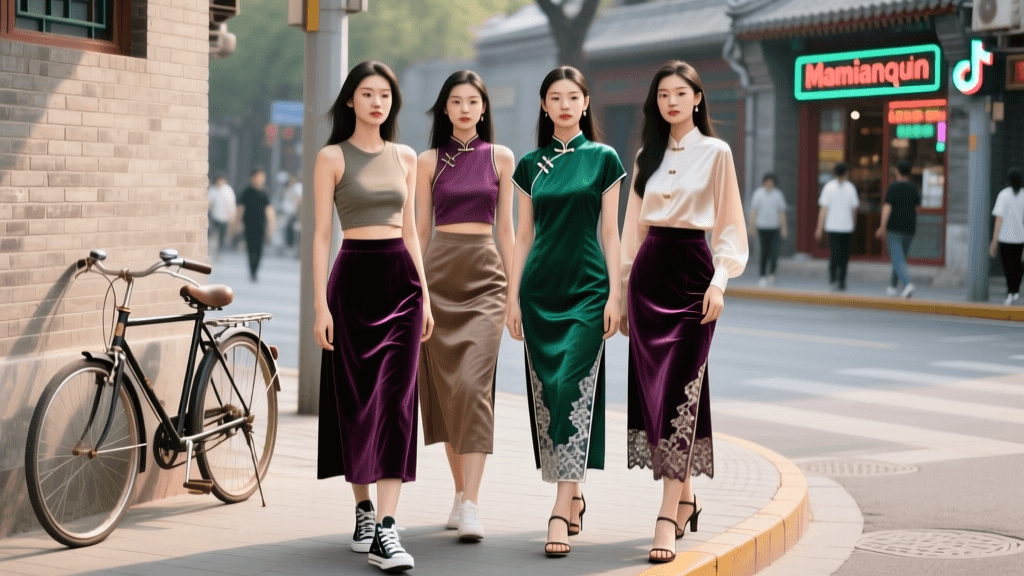
The Intersection of Ancient Elegance and Modern Streetwear
If you have spent any time on Douyin (the Chinese counterpart to TikTok) or scrolling through street-style photography from Chengdu and Shanghai, you have undoubtedly witnessed the Hanfu revival. However, this is no longer just about historical reenactment or cosplay. Today, traditional Chinese garments are being aggressively remixed into everyday streetwear, driven by a new generation of fashion influencers who treat ancient silhouettes as modern statement pieces. At the absolute epicenter of this viral movement is the Mamianqun, or horse-face skirt.
The Mamianqun has transcended its Ming Dynasty origins to become a staple in the wardrobes of young Chinese urbanites. According to reports on the cultural shift, the Hanfu market has exploded into a multi-billion dollar industry, heavily propelled by social media algorithms that favor the striking visual contrast of traditional textiles against modern concrete backdrops. As noted by BBC News in their coverage of the Hanfu revival, young Chinese consumers are increasingly using traditional dress not just as a nod to history, but as a powerful tool for contemporary self-expression and street-style branding.
This guide will deconstruct the viral Douyin Mamianqun trends, providing you with actionable advice on measurements, styling formulas, and sourcing, so you can authentically replicate these looks for your own wardrobe.
Deconstructing the Mamianqun: Anatomy and Fit
Before you can style the skirt, you must understand its architecture. The Mamianqun is a wrap skirt characterized by flat, unpleated front and back panels (the 'horse faces') flanked by heavily pleated side panels. Historically, this design allowed for ease of movement, particularly when riding horses or navigating stairs, making it incredibly practical for modern street navigation.
As detailed in historical garment archives like the Mamianqun historical documentation, the skirt relies on a system of overlapping fabric and waist ties rather than zippers or buttons. This presents a unique challenge for modern streetwear enthusiasts: keeping the heavy, layered skirt secure during dynamic street photography or long days of shopping.
Critical Measurements for Streetwear
When ordering a Mamianqun from Taobao or independent designers, getting the measurements right is crucial for achieving that effortless Douyin influencer drape.
- Waist Measurement: Measure your natural waist. For the traditional tie closure, you must add at least 4 to 6 centimeters to your exact waist measurement to account for the overlap and the knot. If your waist is 70cm, order a skirt with a minimum waistband length of 76cm.
- Skirt Length: Douyin influencers typically favor two distinct lengths for streetwear. The Midi (80cm - 85cm) hits just below the calf, perfect for pairing with chunky sneakers or combat boots. The Maxi (100cm - 105cm) grazes the ankle, offering a more dramatic, elegant sweep that pairs beautifully with heeled boots or platform loafers.
- Hem Width: A standard modern Mamianqun has a hem circumference of about 4.5 to 6 meters. For a voluminous, photogenic spin (a staple of Douyin transitions), opt for the 6-meter hem.
The Influencer Hack: Securing the Skirt
Traditional silk ties can slip when subjected to the friction of modern crossbody bags or belts. The most closely guarded secret among Douyin street-style influencers is the use of a hidden 'Hanfu anti-slip clip' or a small, heavy-duty snap button sewn into the inner waistband overlap. Alternatively, many influencers use a slim, decorative leather belt looped through the inner ties and fastened at the hip to anchor the skirt without ruining the traditional exterior aesthetic.
Three Viral Douyin Mamianqun Outfit Formulas
The genius of the Douyin Hanfu movement lies in 'Ronghe' (fusion) styling. Influencers deliberately clash the historical weight of the Mamianqun with sharp, modern, or even subversive contemporary pieces. Here are the top three viral formulas dominating the streets of Chengdu's Taikoo Li and Shanghai's Xintiandi.
1. The Taikoo Li Street Snap (Edgy Contrast)
This look relies on the juxtaposition of delicate traditional jacquard against harsh, modern materials. It is the most photographed Mamianqun outfit on Chinese social media.
- The Skirt: A dark, metallic-threaded Mamianqun (navy, black, or deep emerald) with subtle dragon or cloud motifs.
- The Top: A fitted, black ribbed turtleneck tucked tightly into the waistband to emphasize the high waist.
- The Outerwear: An oversized, distressed vintage leather bomber jacket or a cropped moto jacket.
- Footwear: Chunky platform combat boots (like Dr. Martens) with visible silver hardware.
- Accessories: A modern silver chain necklace layered over the turtleneck, and a sleek leather crossbody bag.
2. The Campus Commuter (Smart Casual Fusion)
Popularized by university students, this formula tones down the formality of the skirt, making it appropriate for cafes, libraries, and casual daytime strolls.
- The Skirt: A pastel or neutral-toned Mamianqun (cream, soft pink, or sage green) made from lightweight cotton-linen blends or matte polyester.
- The Top: A crisp, oversized white button-down shirt, left slightly unbuttoned at the collar, with the front hem tucked in and the back hem left loose.
- The Outerwear: A structured, oversized tweed or wool blazer in a complementary neutral tone.
- Footwear: Classic white leather sneakers or retro runners (like New Balance 990s).
- Accessories: A canvas tote bag, minimalist gold hoop earrings, and a modern smartwatch.
3. The Summer Breeze (Neo-Traditional)
For warmer months, influencers swap modern tops for modified historical garments, creating a cohesive but highly wearable summer silhouette.
- The Skirt: A lightweight, breathable Mamianqun featuring floral or botanical woven patterns.
- The Top: A modified Song Dynasty 'Beizi' (a long, open-front cardigan-like top) cropped to the waist, or a fitted 'Guan' (tube top) with delicate lace trim.
- Footwear: Strappy leather sandals or woven flats.
- Accessories: A bamboo or rattan handbag, jade bead bracelets, and hair secured with a minimalist metal hair stick rather than a full traditional updo.
Outfit Formula Comparison Chart
| Style Formula | Best Occasion | Key Texture Contrast | Est. Total Cost (USD) | Styling Difficulty |
|---|---|---|---|---|
| Taikoo Li Edgy | Nightlife, Street Photography | Silk/Metallic vs. Leather | $120 - $250 | Medium |
| Campus Commuter | Daytime, Cafes, Casual | Matte Cotton vs. Tweed/Wool | $80 - $150 | Easy |
| Summer Breeze | Festivals, Parks, Travel | Light Linen vs. Rattan/Bamboo | $90 - $180 | Hard (Requires Hanfu knowledge) |
Sourcing Your Mamianqun: Brands and Costs
The barrier to entry for Hanfu has never been lower, thanks to China's robust e-commerce ecosystem. When sourcing your first Mamianqun, you will generally encounter three tiers of quality and pricing on platforms like Taobao or specialized global Hanfu retailers.
Budget Tier (100 - 250 RMB / $15 - $35 USD)
At this price point, skirts are typically made from woven polyester jacquard. While they lack the breathability of natural fibers, they are incredibly durable, hold their pleats well after washing, and feature vibrant, metallic-printed patterns. Brands in this tier are perfect for testing out the streetwear silhouette without a massive financial commitment.
Mid-Tier (300 - 800 RMB / $45 - $115 USD)
This is the sweet spot for most Douyin influencers. Mid-tier skirts often utilize higher-quality synthetic blends, silk-cotton mixes, or advanced weaving techniques that give the fabric a beautiful, heavy drape. The metallic threads (often used for cloud and dragon motifs) are woven into the fabric rather than printed, catching the light beautifully during video transitions. Brands like Shisanyu often operate in the upper end of this bracket, offering historically inspired but modernized cuts.
Premium and Couture Tier (1500+ RMB / $200+ USD)
For the purist or the high-fashion street-style enthusiast, premium brands like Minghuatang offer museum-quality reproductions. These skirts use genuine silk, real gold-leaf threads, and meticulous hand-finishing. While breathtaking, they require extreme care and are usually reserved for high-end editorial street photography rather than daily wear.
Care and Maintenance for Streetwear Hanfu
Wearing a Mamianqun on the street means exposing it to urban environments, pollution, and accidental spills. Proper maintenance is vital to preserve the structural integrity of the pleats and the sheen of the metallic threads.
- Washing: Never machine wash a Mamianqun, especially those with metallic woven threads, as the agitation will destroy the pleats and tarnish the metallic yarns. Hand wash in cold water using a pH-neutral silk detergent.
- Drying: Do not wring the fabric. Gently press out excess water and lay the skirt flat on a drying rack. Hang-drying a wet Mamianqun can cause the heavy water weight to pull the pleats out of alignment.
- Pleat Maintenance: If the side pleats begin to lose their sharpness after a few wears, lay the skirt flat on an ironing board. Use a low-heat steam iron, placing a damp cotton pressing cloth between the iron and the skirt. Gently press the pleats, following the original fold lines. Many dedicated Hanfu wearers use specialized 'pleat clips' to hold the folds in place while steaming.
Conclusion: The Future of Traditional Streetwear
The Mamianqun's journey from the Ming Dynasty courts to the neon-lit streets of modern Chengdu is a testament to the timelessness of functional, beautiful design. By following the styling formulas and practical fit guides popularized by Douyin influencers, you can seamlessly integrate this piece of Asian heritage into your daily rotation. The Hanfu streetwear movement proves that traditional garments do not belong behind museum glass; they belong in motion, on the streets, and in the vibrant, evolving narrative of global fashion.