Peking Opera Costumes: Decoding Jingju Fuzhuang Art
The Theatrical Brilliance of Jingju Fuzhuang
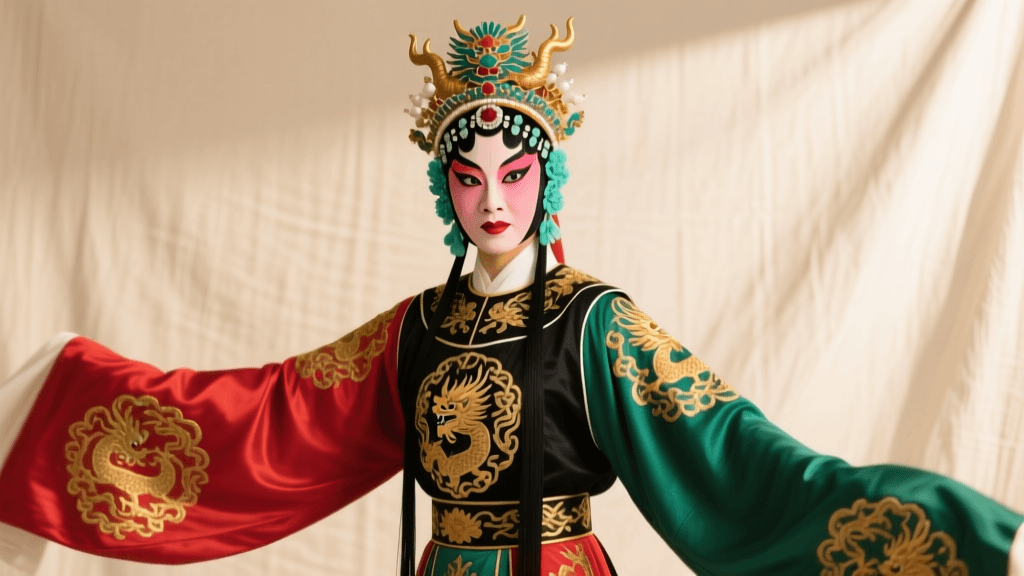
Peking Opera, known in Chinese as Jingju, is one of the most magnificent and enduring cultural treasures of China. Recognized globally for its stylized movements, piercing vocal techniques, and elaborate visual aesthetics, the art form relies heavily on its spectacular wardrobe. The traditional clothing of Peking Opera, referred to as Jingju Fuzhuang, is not merely a collection of historical garments; it is a complex, highly codified visual language. According to the UNESCO Intangible Cultural Heritage registry, Peking Opera is a profound expression of Chinese aesthetic ideals, with its costumes serving as the primary medium for conveying character, status, and narrative context to the audience.
Unlike everyday historical Hanfu or Qing dynasty court dress, Peking Opera costumes are theatrical exaggerations. They blend elements from the Ming and Qing dynasties, prioritizing stage presence, kinetic movement, and immediate character recognition over strict historical accuracy. For performers, festival organizers, and cultural historians, understanding the anatomy of these garments is essential to appreciating the depth of Asian performance traditions.
The Four Core Categories of the Opera Wardrobe
The traditional Peking Opera wardrobe is meticulously organized into four main trunks or categories. This system allows traveling troupes to efficiently pack, transport, and dress actors for hundreds of different plays using a modular approach to costuming.
| Category (Chinese) | English Translation | Description & Usage | Key Garments |
|---|---|---|---|
| Da Yi (大衣) | Large Clothes | Formal wear for high-status civil officials, scholars, and nobility. Emphasizes dignity and grace. | Mang (Python robe), Pei (Formal cape), Xuezi (Informal scholar robe) |
| Er Yi (二衣) | Secondary Clothes | Military and martial arts attire designed for agility, combat, and acrobatics. | Kao (Armor with flags), Jianyi (Arrow shirt), Bao Yikuai (Fast-moving garments) |
| San Yi (三衣) | Third Clothes | Undergarments, padding, and basic trousers used to shape the body and absorb sweat. | Shuiyi (Water shirt), Caiku (Colorful trousers), Xue (Boots) |
| Toumian (头面) | Headwear & Accessories | Headdresses, wigs, beards, and hair ornaments that define age, gender, and status. | Fengguan (Phoenix crown), Shui Fa (Long hair), Ran Kou (Artificial beards) |
Decoding Color Symbolism and Character Roles
In Peking Opera, the audience can instantly identify a character's personality, moral alignment, and social standing through the color of their costume and facial makeup. As noted by the Asia Society, the visual codes of Chinese opera are deeply rooted in traditional folklore and physiognomy. The four main role types—Sheng (male), Dan (female), Jing (painted face male), and Chou (clown)—each have specific color palettes.
- Red: Symbolizes loyalty, bravery, and uprightness. Often worn by revered generals and righteous officials, such as the legendary Guan Yu.
- Black: Represents impartiality, roughness, or a fierce but honest temperament. Frequently used for judges like Bao Zheng or fierce warriors like Zhang Fei.
- White: Indicates treachery, cunning, or a suspicious, calculating nature. Usurpers and manipulative politicians, such as Cao Cao, are draped in white.
- Yellow: Reserved exclusively for royalty, nobility, and divine beings, reflecting the imperial color of the Chinese emperor.
- Blue and Green: Associated with vigor, rebellion, supernatural beings, and outlaw bandits. These colors are common in the Wu Sheng (martial male) and Wu Dan (martial female) roles.
Exquisite Craftsmanship: Embroidery and Textiles
The creation of a single, high-quality Peking Opera costume is a monumental task that can take several months of continuous labor. The garments are predominantly crafted from heavy silk satin, chosen for its ability to catch the stage lights and reflect vibrant colors. The embroidery is where the true artistry lies, often utilizing the renowned Suzhou embroidery (Su Xiu) techniques.
Artisans employ gold and silver couching, where metallic threads are laid flat on the fabric and stitched down with fine silk. This creates a raised, three-dimensional effect that makes dragons, phoenixes, peonies, and ocean wave motifs literally pop off the garment. The Metropolitan Museum of Art highlights that the intricate textile work in Chinese opera costumes represents some of the finest examples of late imperial and early republican needlework, preserving techniques that might otherwise have been lost to industrialization.
The motifs chosen for these garments are never arbitrary. A five-clawed dragon is strictly reserved for emperors and the highest-ranking nobles, while four-clawed dragons and pythons adorn senior officials. Phoenixes represent the empress or high-ranking noblewomen, while peonies symbolize wealth and honor. Bats, often stylized in geometric patterns, are embroidered to invite good fortune, as the Chinese word for bat (fu) is a homophone for good luck. This dense layering of symbolism means that an educated audience can read a character's destiny and social rank the moment they step onto the stage.
A defining feature of the Dan (female) and Sheng (scholar male) roles is the Shuixiu, or water sleeve. These are extensions of pure white silk attached to the cuffs of the robe, ranging from 1.5 to 3 feet in length. Performers use these sleeves to express a vast vocabulary of emotions—from weeping and shyness to fury and dismissal—through highly choreographed flicks, folds, and ripples.
Practical Guide: Commissioning and Sourcing Opera Costumes
For theater companies, cultural festival organizers, and serious collectors, acquiring authentic Jingju Fuzhuang requires navigating a specialized market. Here is actionable advice for sourcing, measuring, and maintaining these intricate garments.
Measurements and Fitting
Unlike Western bespoke tailoring, traditional Peking Opera costumes utilize a "one-size-fits-most" philosophy for the main body. The fit is adjusted internally using the San Yi undergarments, cotton padding, and wide silk sashes. However, specific elements require precise measurement:
- Water Sleeves (Shuixiu): Must be measured from the wrist to the floor, plus an additional 18 to 24 inches to allow for the dramatic folding techniques required in performance.
- Armor Flags (Kaoqi): The triangular flags on a general's back must be calibrated to the performer's height and shoulder width to prevent them from tangling during acrobatic flips.
- Headdresses: The base caps must be measured to the exact circumference of the performer's head, as heavy phoenix crowns can weigh over 10 pounds and must be secured tightly with leather straps.
Costs and Timing
Budgeting for opera costumes varies wildly based on materials and craftsmanship. A mass-produced, polyester practice Mang (python robe) sourced from theatrical suppliers in Beijing or Shanghai will cost between $150 and $350. However, a bespoke, hand-embroidered silk robe crafted by master artisans in Suzhou can range from $4,000 to over $20,000. Commissioning a fully embroidered, custom set takes anywhere from 3 to 8 months. Festival directors must plan their wardrobe acquisitions nearly a year in advance to account for embroidery lead times and international shipping.
When sourcing from international theatrical suppliers, always request detailed macro-photographs of the embroidery knots and the reverse side of the fabric. High-quality Suzhou embroidery will look nearly as neat on the back as it does on the front, with minimal loose threads. Beware of machine-embroidered imitations that use synthetic metallic yarns, which lack the luster and flexibility of genuine gold-wrapped silk threads and will severely restrict a performer's range of motion.
Maintenance and Preservation
Silk opera costumes must never be washed with water or subjected to dry cleaning chemicals, which can tarnish the gold threads and bleed the vibrant dyes. Spot clean stains using specialized silk solvents. After performances, garments must be aired out to remove sweat, then stored flat in climate-controlled environments. Always interleave the folds with acid-free tissue paper to prevent the metallic embroidery from oxidizing or snagging on the silk satin.
The Role of Costumes in Modern Festivals and Revivals
Today, the influence of Jingju Fuzhuang extends far beyond the traditional theater stage. During major Asian cultural festivals, Lunar New Year parades, and global heritage showcases, elements of Peking Opera dress are frequently integrated into Lion and Dragon dance troupes, marching bands, and contemporary Hanfu revivalist fashion. The bold silhouettes, striking color palettes, and masterful embroidery of Peking Opera costumes continue to captivate global audiences, ensuring that this dynamic sartorial tradition remains a vibrant, living cornerstone of Asian cultural heritage.