Peking Opera Costumes: Guide to Jingju Stage & Festival Wear
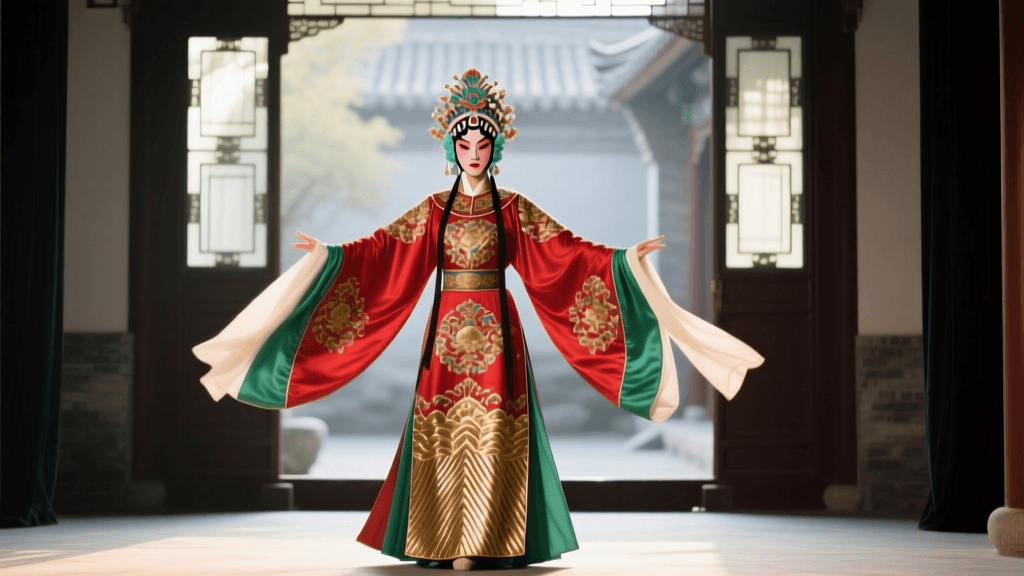
The Visual Language of Jingju Fuzhuang
Peking Opera, known in Chinese as Jingju, is one of the most profound and visually striking theatrical traditions in the world. Recognized globally for its unique synthesis of music, vocal performance, mime, dance, and acrobatics, the art form relies heavily on its elaborate costumes, known as Xingtou or Fuzhuang. According to the UNESCO Intangible Cultural Heritage registry, Peking Opera is a cornerstone of Chinese cultural identity, and its wardrobe is a masterclass in symbolic storytelling. Unlike Western historical dramas that strive for period-accurate clothing, Jingju costumes are deliberately anachronistic. They blend the aesthetics of the Ming and Qing dynasties into a stylized, programmatic visual language that instantly communicates a character's social status, personality, and moral alignment to the audience.
Color Symbolism and Character Alignment
Before exploring the physical garments, one must understand the strict color coding inherent in Peking Opera costumes and face paint. The colors are not merely decorative; they are narrative devices. When adapting these garments for modern cultural festivals, maintaining this color integrity is crucial for authentic representation.
- Yellow: Reserved exclusively for the Emperor, Empress, and high-ranking royal family members. It symbolizes supreme power and divine right.
- Red: Represents loyalty, bravery, and uprightness. Generals and noble officials often wear red蟒 (Mang) robes.
- Black: Denotes a rough, fierce, or highly impartial character. It is often worn by warriors or incorruptible judges.
- White: Frequently associated with treachery, cunning, or suspicion, though in some martial contexts, it can denote a heroic, youthful warrior.
- Blue and Green: Typically worn by outlaws, bandits, spirits, or non-Han ethnic leaders, representing wildness or supernatural origins.
The Four Core Garments of the Jingju Wardrobe
The traditional Peking Opera wardrobe is vast, but it is fundamentally categorized into four main types of garments. As noted in Britannica's comprehensive guide to Peking Opera, these garments are designed to exaggerate movement and enhance the actor's physical presence on stage. Below is a structured comparison of the core garments and how they are adapted for festival environments.
| Garment Name | Chinese Character | Role Type | Key Features | Festival Adaptation |
|---|---|---|---|---|
| Mang | 蟒 (Python Robe) | Emperors, High Officials | Round collar, python embroidery, water sleeves, worn with a jade belt. | Use lighter polyester-silk blends; reduce water sleeve length to prevent tripping in crowds. |
| Pei | 帔 (Casual Cape) | Nobles, Scholars, Ladies | Center-front opening, flowing sleeves, elegant floral or bird embroidery. | Ideal for indoor festival showcases; pair with modern thermal underlayers for winter events. |
| Kao | 靠 (Armor) | Generals, Martial Warriors | Elaborate armor with flags (Kaoqi) on the back, heavy embroidery, tiger motifs. | Remove back flags for crowded parades; use EVA foam or lightweight plastic for armor scales. |
| Xuezi | 褶子 (Informal Robe) | Commoners, Scholars, Servants | Cross-collar or center-front, relatively plain, versatile for many minor roles. | Perfect for large ensemble festival dances; highly breathable and easy to mass-produce. |
Adapting Opera Costumes for Modern Cultural Festivals
While traditional Jingju costumes are engineered for the controlled environment of a theater stage, cultural festivals—such as Lunar New Year parades, Mid-Autumn street fairs, and university cultural showcases—present entirely different physical challenges. Stage garments are notoriously heavy, restrictive, and fragile. To successfully transition these garments from the stage to the street, several practical modifications are necessary.
1. Managing Water Sleeves (Shuixiu)
The iconic white silk extensions attached to the cuffs of Mang and Pei robes, known as Shuixiu (water sleeves), are used by actors to express complex emotions through fluid, sweeping gestures. On stage, these sleeves can measure up to 24 inches in length. In a crowded festival parade, however, long water sleeves are a severe tripping hazard and are easily trampled or stained. Actionable Advice: For outdoor festivals, commission or alter the water sleeves to a maximum length of 6 to 8 inches. This retains the visual flutter of the silk during dance routines while ensuring the safety and mobility of the performer.
2. Headdresses (Koutou) and Weight Distribution
Traditional Peking Opera headdresses, particularly the Phoenix Crowns (Fengguan) worn by noblewomen and the elaborate warrior helmets, can weigh between 3 to 5 kilograms. They are traditionally secured using tight leather straps and cloth bindings that can cause severe headaches during long, 4-hour festival shifts. Actionable Advice: Modern festival performers should utilize lightweight resin or 3D-printed PLA replicas for the main structural elements of the headdress. Furthermore, replace traditional leather straps with modern, padded elastic bands and secure the base with U-shaped hairpins and a breathable mesh wig cap to distribute the weight evenly across the scalp.
3. Fabric Substitutions for Weather Resistance
Authentic Jingju costumes are heavily embroidered with real silk threads and metallic gold couching. Exposing these masterpieces to outdoor humidity, sudden rain, or the sweat of a vigorous parade dance can cause irreversible damage and tarnishing. Actionable Advice: For outdoor festival wear, invest in 'Theatrical Grade' high-density polyester-silk blends. These modern textiles mimic the lustrous sheen of Hangzhou silk but are water-resistant, machine-washable on gentle cycles, and resist the tarnishing of metallic embroidery threads.
Commissioning and Buying: A Practical Guide
Whether you are outfitting a professional theater troupe, a university cultural society, or a community parade, understanding the economics and logistics of acquiring Peking Opera costumes is vital. The majority of authentic Jingju garments are still handcrafted in Suzhou and Hangzhou, utilizing centuries-old Su Xiu (Suzhou embroidery) techniques.
Cost Breakdown
- Festival/Student Grade ($80 - $250): Mass-produced using synthetic fabrics, digital printing instead of embroidery, and basic stitching. Suitable for large ensemble groups, school plays, and casual parade walking.
- Theatrical Grade ($400 - $1,200): Features genuine silk-satin blends, hand-embroidered motifs (often a mix of machine and hand-stitching), and proper structural lining. Ideal for lead performers in community festivals and regional stage competitions.
- Masterpiece/Heritage Grade ($2,500 - $10,000+): Fully hand-embroidered by master artisans using pure silk and real gold/silver threads. These are museum-quality pieces intended strictly for professional stage performances or archival collections, not for outdoor festivals.
Essential Measurements for Commissioning
Unlike Western tailoring, which focuses on form-fitting silhouettes, Jingju costumes are designed to be voluminous and are often layered. However, precise measurements are still required for the under-structures and sleeve placements. When ordering from a tailor or workshop, provide the following:
- Total Height: Crucial for determining the hemline of the Xuezi and Pei robes, which must hover exactly 2 inches above the stage/floor.
- Shoulder Width: Measured from the edge of one shoulder bone to the other, ensuring the heavy embroidery sits correctly without collapsing.
- Sleeve Length to Wrist: Measured from the shoulder seam to the wrist bone. The tailor will add the water sleeve extension to this exact measurement.
- Chest and Waist: Used primarily for fitting the inner padding and the jade belts (Yudai) that secure the Mang robes.
Timing and Lead Times
If you are commissioning custom Theatrical Grade garments, expect a lead time of 3 to 6 months. The embroidery process alone for a single Mang robe can take a master artisan over 400 hours. For festival organizers, it is highly recommended to finalize designs and submit measurements no later than early autumn if the garments are required for Lunar New Year celebrations in late January or February.
Care, Storage, and Maintenance
Proper maintenance of Peking Opera costumes ensures their longevity, preserving the vibrant dyes and delicate embroidery. Never fold a Mang or Kao robe, as folding will permanently crease the metallic threads and crack the stiffened embroidery backing.
Garments must be hung on wide, padded wooden hangers to support the weight of the shoulders. Store them in breathable, acid-free cotton garment bags in a climate-controlled environment with a relative humidity of around 45-55%. If a garment becomes soiled during a festival, never use harsh chemical dry cleaning. Instead, gently spot-clean the unembroidered silk linings with distilled water and a mild, pH-neutral silk detergent, and allow the garment to air dry flat in the shade.
Conclusion
Peking Opera costumes are far more than mere theatrical props; they are wearable archives of Chinese philosophy, social hierarchy, and aesthetic brilliance. By understanding the foundational rules of Jingju Fuzhuang and making intelligent, practical adaptations for modern festival environments, cultural practitioners can honor this magnificent tradition while ensuring the safety, comfort, and mobility of today's performers. Whether you are stepping onto a grand stage or marching through a vibrant street parade, the visual poetry of the Mang, Pei, Kao, and Xuezi continues to captivate audiences worldwide.