Eco-Friendly Peace Silk for Bespoke Cheongsam & Hanbok: 2026 Guide
The 2026 Shift Toward Ethical Asian Couture
As we navigate the fashion landscape of 2026, the demand for sustainable luxury has profoundly influenced the creation of traditional Asian garments. Discerning clients and modern couturiers are increasingly moving away from conventional, resource-intensive textiles in favor of ethical alternatives. When commissioning a bespoke Chinese cheongsam (qipao) or a modern Korean hanbok, the choice of fabric dictates not only the silhouette and drape but also the environmental footprint of the garment. Among the most celebrated innovations in this space is Ahimsa silk, commonly known as peace silk. This guide explores how to select, source, and tailor eco-friendly peace silk for traditional Asian garments in 2026, ensuring your wardrobe honors both cultural heritage and modern ethical standards.
Understanding Ahimsa (Peace) Silk vs. Traditional Mulberry
Traditional mulberry silk production involves boiling the silkworm cocoons with the pupae inside to preserve a single, continuous filament. While this yields a highly uniform and lustrous fabric, it raises significant ethical concerns. Ahimsa silk, pioneered on the principles of non-violence, allows the moth to naturally emerge from the cocoon before the fibers are harvested. Because the emerging moth breaks the continuous filament, peace silk must be spun rather than reeled, resulting in a yarn that possesses a slightly nubby, textured hand-feel, reminiscent of a fine cotton-linen blend but with the thermoregulatory benefits of silk.
According to the Food and Agriculture Organization (FAO), sustainable sericulture practices are becoming vital to reducing the ecological impact of global silk production. Peace silk aligns perfectly with the 2026 consumer mandate for cruelty-free luxury. Furthermore, the Textile Exchange's Preferred Fiber and Materials Report highlights that ethically sourced, non-violent animal fibers are seeing double-digit growth in the luxury Asian couture market, driven by younger demographics who refuse to compromise on animal welfare.
The 'Momme' Metric: Weight, Drape, and Structure
When shopping for silk in 2026, the momme (mm) weight remains the gold standard for measuring fabric density. One momme equals 4.340 grams per square meter. The structural requirements of a cheongsam differ vastly from those of a hanbok, making the momme weight a critical decision point.
- Cheongsam (Qipao): This garment requires a fabric with enough body to hold its structured, form-fitting silhouette and support heavy embellishments like traditional pankou (knotted buttons). A 19mm to 22mm peace silk is ideal. Because spun peace silk lacks the slippery glide of reeled mulberry, it actually grips the body better, making it an exceptional choice for the tailored darts and side slits of a modern cheongsam.
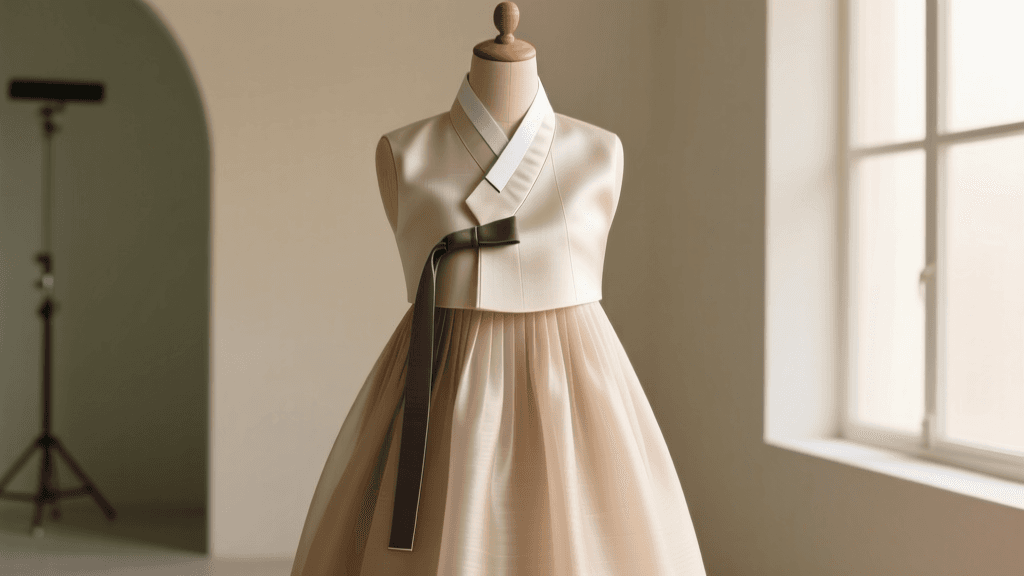
- Hanbok: The traditional hanbok relies on voluminous, architectural draping, particularly in the chima (skirt) and the flowing sleeves of the jeogori (jacket). A lighter 14mm to 16mm peace silk chiffon or habotai is preferred here. The slight texture of spun peace silk gives the hanbok skirt a beautiful, matte volume that catches the light differently than high-gloss mulberry, offering a more subdued, historically grounded aesthetic.
2026 Sustainable Textile Comparison Chart
To help you make an informed decision for your next bespoke commission, below is a comparison of the top sustainable silk alternatives available in the 2026 textile market.
| Fabric Type | Filament Type | Typical Momme | Drape Quality | Best Application | 2026 Avg Cost/Yard |
|---|---|---|---|---|---|
| Mulberry Silk (Conventional) | Continuous Reeled | 16mm - 22mm | Fluid, high-gloss | Linings, lightweight blouses | $35 - $50 |
| Ahimsa Peace Silk (Eri) | Spun (Broken) | 18mm - 24mm | Matte, structured, warm | Structured Cheongsam, winter Hanbok | $65 - $85 |
| Lotus Silk (Vegan Alternative) | Plant-based Spun | 10mm - 14mm | Breathable, linen-like | Summer Cheongsam, modern Hanbok tops | $140 - $180 |
Sourcing, Pricing, and Yardage Requirements
In 2026, sourcing authentic peace silk requires navigating a specialized market. The premier regions for Ahimsa silk remain Assam and Bihar in India, where Eri and Tussar silkworms are raised on castor and arjun leaves without lethal intervention. When ordering online or through bespoke textile importers, expect to pay between $65 and $85 per yard for high-grade, 19mm Eri peace silk. While this is a premium over conventional silk, the durability and ethical provenance justify the investment for heirloom garments.
Yardage Guide for 2026 Bespoke Commissions:
- Standard Cheongsam (Knee-length, sleeveless or short sleeve): 3.5 to 4.5 yards (assuming a 45-inch fabric width). If your peace silk features a directional print or requires pattern matching at the center front seam, add an additional 1 yard.
- Traditional Hanbok Set (Jeogori and Chima): 5 to 7 yards total. The chima requires significant width to achieve the traditional bell shape, often necessitating 3 to 4 panels of 45-inch fabric. The jeogori requires roughly 1.5 yards.
Tailoring and Construction Best Practices
Tailoring peace silk requires specific adjustments compared to slippery mulberry silk. Because spun peace silk has a higher friction coefficient and a more porous surface, it behaves somewhat like a lightweight wool or dense cotton during construction.
Needles and Thread
Abandon universal needles. For 19mm peace silk, use a Schmetz Microtex (Sharp) 60/8 or 70/10 needle. The sharp point pierces the spun fibers cleanly without snagging the nubby texture. For thread, avoid standard cotton, which can rot over time and lacks the necessary tensile strength. Opt for Gutermann Silk or a high-quality, fine polyester like A&E Mara 100. Polyester thread provides the slight stretch needed to accommodate the natural give of the spun silk seams.
Interfacing and Structure
The mandarin collar and front flaps of a cheongsam require interfacing. Do not use heavy synthetic fusibles, which will suffocate the breathability of the peace silk and create a stiff, artificial bubble. Instead, use fusible silk organza or hand-baste a layer of traditional cotton batiste. For the hem of a hanbok chima, a lightweight cotton hem tape applied with a catch-stitch will preserve the fluid swing of the skirt without adding rigid bulk.
Seam Finishes
Peace silk frays less aggressively than reeled silk due to the interlocking nature of the spun fibers, but it still requires clean finishes. French seams are the gold standard for the unlined portions of a hanbok jacket. For the curved side seams of a cheongsam, a narrow serged edge (using a 3-thread overlock) pressed flat and edge-stitched provides a clean, historically appropriate interior finish that lies flat against the body.
Caring for Peace Silk Garments
The maintenance of peace silk in 2026 has been simplified by advancements in eco-friendly textile care. Unlike delicate mulberry silk, which often requires dry cleaning, high-quality Ahimsa silk can be gently hand-washed. Use a pH-neutral, enzymatic cleaner specifically formulated for protein fibers. Submerge the garment in cool water (below 30°C or 86°F) for no more than five minutes. Never wring or twist the fabric; instead, roll it in a clean, dry microfiber towel to press out excess moisture, then lay it flat on a drying rack away from direct sunlight. Iron on the 'silk' setting using a pressing cloth and a burst of steam to relax the spun fibers and restore the garment's natural luster.
Conclusion
Choosing eco-friendly peace silk for a bespoke cheongsam or hanbok in 2026 is a profound way to connect with Asian sartorial traditions while honoring contemporary ethical values. By understanding the nuances of momme weights, mastering the specific tailoring requirements of spun fibers, and investing in high-quality, cruelty-free textiles, you ensure that your traditional garments are not only breathtakingly beautiful but also sustainably crafted for generations to come.