Geta & Zori Craft: Traditional Japanese Footwear Guide 2026
The Resurgence of Heritage Footwear in 2026
As the global fashion landscape in 2026 continues to embrace slow fashion and heritage craftsmanship, traditional Japanese footwear has experienced a remarkable renaissance. No longer confined to summer festivals or historical reenactments, geta (wooden clogs) and zori (flat sandals) are being integrated into contemporary wardrobes by designers and enthusiasts who value artisanal integrity. At The Garment Atlas, we believe that understanding the meticulous craft behind these garments is essential to appreciating their cultural weight. This comprehensive guide explores the anatomy, craftsmanship, and modern styling of traditional Japanese footwear, offering actionable insights for collectors and wearers alike.
The Anatomy of Traditional Japanese Footwear
To truly appreciate the craft, one must first understand the structural components that differentiate Japanese footwear from Western counterparts. Unlike Western shoes that enclose the foot, geta and zori are designed to be gripped by the toes, promoting a unique posture and gait.
Geta: The Wooden Clog
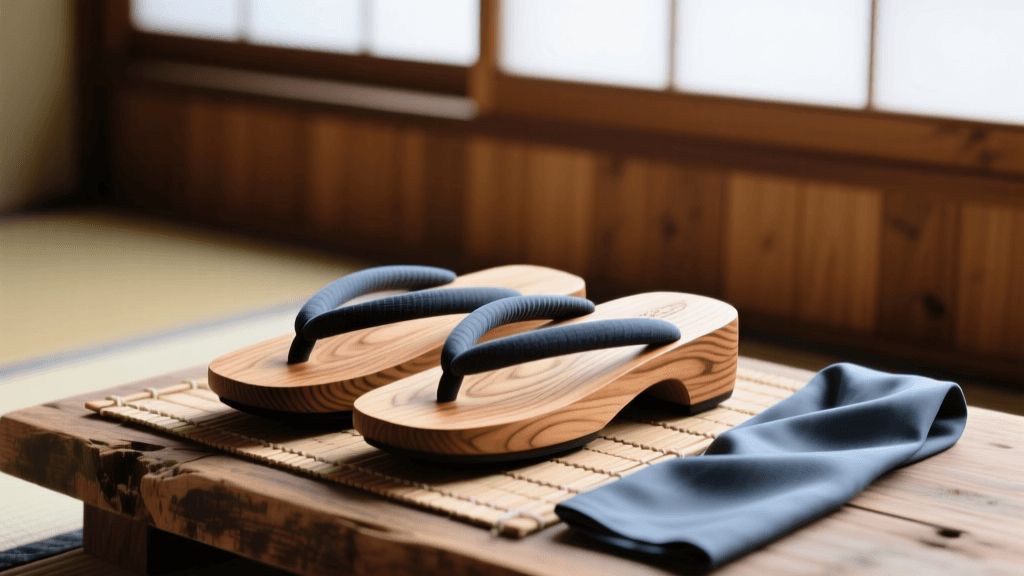
- Dai (Base): The main wooden board that supports the foot. Its shape varies from rectangular (typically for men) to softly rounded (typically for women).
- Ha (Teeth): The wooden supports underneath the dai. Standard geta feature two teeth, though specialized styles like tengu-geta have a single centered tooth, and pokkuri-geta feature a hollowed, slanted block.
- Hanao (Thong): The braided cord that passes through three holes in the dai, securing the foot. The hanao is a highly customizable element, often featuring intricate kumihimo (braiding) techniques.
Zori: The Flat Sandal
While geta are defined by their elevated wooden teeth, zori are flat and historically constructed from a variety of materials. The base, or kagami-ita, is often covered in tatami-omote (woven rush grass), leather, brocade, or modern vinyl. Zori are generally considered more formal than geta and are the standard footwear paired with high-end silk kimono for tea ceremonies, weddings, and official gatherings.
The Art of Paulownia Wood Carving
The soul of a premium geta lies in its wood. In 2026, the most prized material remains Kiri, or Paulownia (Paulownia tomentosa). Artisans favor Paulownia for its exceptional properties: it is incredibly lightweight, highly resistant to moisture and rot, and possesses a natural thermal insulation that keeps the foot cool in summer and warm in winter.
The crafting process begins long before the carving. According to guidelines supported by the Food and Agriculture Organization (FAO), sustainable forestry practices are paramount in modern Paulownia harvesting. Once harvested, the timber is air-dried for up to two years to stabilize its moisture content. Master craftsmen then use specialized hand planes (kanna) to shape the dai. The angle of the heel and the placement of the ha are calculated to the millimeter to ensure the wearer's weight is distributed perfectly, preventing joint strain during long periods of walking.
"The sound of a well-crafted geta striking the pavement—a sharp, resonant 'clack' known as karankoron—is considered an auditory hallmark of Japanese summer. Achieving this specific acoustic resonance requires precise density control during the wood-drying phase."
2026 Market Guide: Sourcing and Pricing
Navigating the market for authentic Japanese footwear requires an understanding of current pricing tiers and material grades. Mass-produced, imported alternatives flood the market, but true artisanal pieces command a premium. The Ministry of Economy, Trade and Industry (METI) strictly regulates the designation of "Traditional Craft Products" in Japan, ensuring that footwear bearing this mark meets rigorous historical and material standards.
| Footwear Type | Primary Material | Best Use Case | 2026 Average Price (USD) |
|---|---|---|---|
| Kiri Geta (Standard) | Unlacquered Paulownia | Casual wear, Summer Festivals (Matsuri) | $85 - $160 |
| Lacquered Zori | Woven Rush / Leather | Formal Ceremonies, Weddings | $220 - $480 |
| Pokkuri Geta | Hollowed Paulownia / Lacquer | Coming-of-Age Day, Maiko Apprentices | $350 - $650 |
| Setta Zori | Leather Base / Iron Heel Cap | Traditional Artisans, Men's Formalwear | $180 - $390 |
When sourcing authentic pieces in 2026, buyers should look for the stamp of the maker on the bottom of the wooden base or request a certificate of authenticity for high-end brocade zori. Artisans in regions like Matsunaga (Hiroshima Prefecture) and Oita Prefecture remain the gold standard for wooden geta production.
The Hanao: Braiding and Customization
The hanao is where the footwear transitions from a functional object to a personalized fashion statement. Traditional hanao are constructed using a core of hemp or cotton, wrapped in velvet, silk, or leather. In recent years, there has been a surge in demand for bespoke hanao braided using kumihimo silk threads, allowing wearers to match their footwear precisely to the intricate patterns of their kimono or yukata.
Replacing a hanao is a standard maintenance task. The thong is pulled through the front hole (the mae-ana) and the two side holes, secured underneath the dai with a specialized knot or, in modern iterations, a plastic clip and washer system for added durability. A well-fitted hanao should allow the wearer's heel to sit flush on the back edge of the dai without the foot sliding forward.
Sizing and the Mechanics of Walking
The most common mistake Westerners make when purchasing geta or zori in 2026 is applying Western sizing logic. In Western shoemaking, the toe should gently touch the front of the shoe. In Japanese footwear, the opposite is true.
The Sizing Rule
Your geta or zori should be 1 to 2 centimeters smaller than your actual foot length. When standing, your heel should slightly overhang the back edge of the wooden base. This overhang prevents the back of your kimono or yukata from catching on the heel of the footwear, which can cause tripping and damage expensive silk garments. Furthermore, it shifts the center of gravity forward, which is essential for the proper walking mechanic.
The Geta Gait
Walking in geta requires a fundamental shift in biomechanics. You do not roll from heel to toe as you would in sneakers. Instead, the foot should be lifted and placed down relatively flat, utilizing a slight forward lean. The grip of the toes on the hanao acts as a stabilizer. Mastering this gait not only produces the coveted karankoron sound but also engages the calf muscles and promotes an upright, elegant posture.
Preservation of the Artisan Legacy
The survival of traditional footwear crafting is intrinsically linked to the broader preservation of Japanese sartorial arts. Historical artifacts preserved at institutions like the Kyoto National Museum reveal that the elevated geta originated not purely from fashion, but from practicality—keeping the hemlines of precious garments above the mud and rain of unpaved Edo-period streets. Today, the challenge is maintaining these practical arts in a world of paved roads and rubber soles.
In 2026, a new generation of craftspeople is bridging the gap between tradition and modernity. Workshops in Tokyo and Kyoto now offer hybrid designs, pairing traditional Paulownia bases with ergonomic, shock-absorbing rubber caps on the ha, making them viable for daily commuting on concrete and asphalt. Additionally, collaborations between heritage footwear makers and contemporary streetwear brands have introduced geta silhouettes to global audiences, ensuring that the craft remains economically viable for the next generation of artisans.
Conclusion
Geta and zori are far more than mere accessories; they are the foundational pillars of Japanese traditional dress, dictating the posture, gait, and presentation of the wearer. Whether you are investing in a pair of formal brocade zori for a tea ceremony or a pair of unvarnished Paulownia geta for a summer evening, understanding the craftsmanship elevates the experience. By supporting authentic artisans and adhering to traditional sizing and wearing mechanics, you participate in the living history of Asian textile and garment traditions.