Kimono Travel Essentials 2026: What to Pack & Where to Wear
The 2026 Shift: Travel-Friendly Kimono Innovations
Traveling to Japan with your own traditional garments has never been more accessible, thanks to a wave of textile innovations and sustainable travel trends dominating 2026. While renting a kimono in Kyoto or Tokyo remains a popular tourist activity, seasoned enthusiasts and cultural travelers are increasingly bringing their own pieces. The modern traveler demands versatility, leading to a surge in high-grade washable silks, two-piece kimono separates, and lightweight travel accessories. Whether you are attending a summer matsuri, visiting a historic tea house, or simply enjoying a stroll through a botanical garden, packing the right kimono essentials ensures you can dress elegantly without sacrificing luggage space or comfort.
In this comprehensive 2026 guide, we break down exactly what to pack, how to protect your garments in transit, and the most culturally appropriate and scenic locations to wear your kimono across Japan.
The Ultimate Kimono Packing Checklist
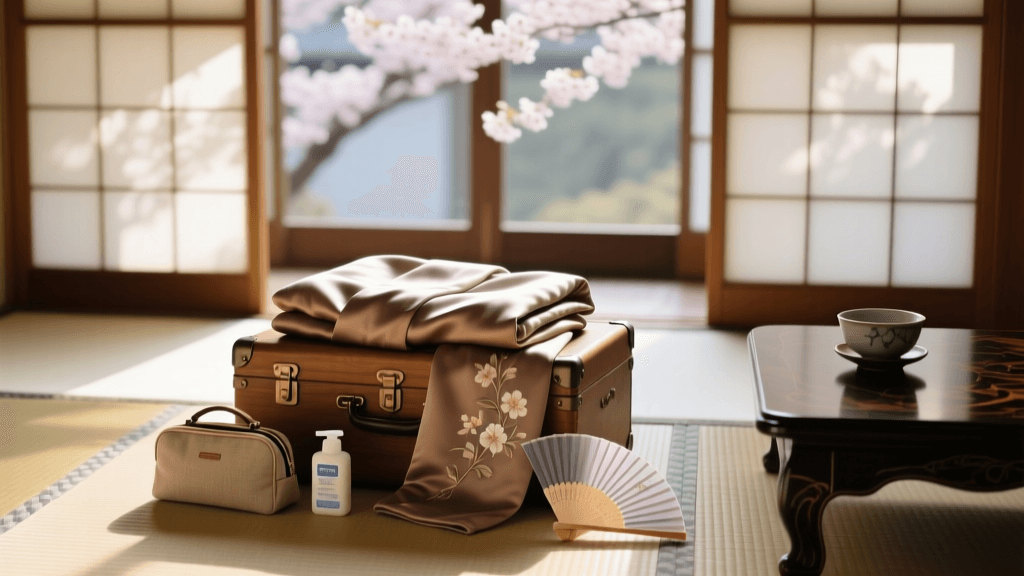
A common misconception is that wearing a kimono requires a massive suitcase filled with heavy, fragile silks. By leveraging modern travel-friendly alternatives, you can pack a complete kimono kit in a standard carry-on. Here is your essential checklist for 2026.
1. The Garments
For travel, leave the heavy, formal homongi or vintage silk komon at home. Instead, pack garments made from modern, crush-resistant fabrics.
- Washable Silk or High-Grade Polyester: Look for Tango crepe polyester or modern washable silk blends. These fabrics mimic the drape and texture of traditional silk but can withstand the rigors of travel and even be hand-washed in a hotel sink if necessary.
- Two-Piece Kimono (Separates): A massive trend in 2026, two-piece kimono feature a pre-pleated skirt-like bottom and a wrap top. They offer the exact silhouette of a traditional kimono but are significantly easier to pack, put on, and adjust for varying body shapes.
- Yukata (For Summer Travel): If traveling between June and September, a lightweight cotton yukata is mandatory. Opt for modern, quick-dry cotton blends that resist wrinkling.
2. Undergarments and Slips
The foundation of a beautiful kimono silhouette lies in the undergarments. Traditional layers can be bulky, so opt for modern travel alternatives.
- Kimono Slip (One-Piece Juban): Instead of packing a separate hadajuban (undershirt) and nagajuban (inner robe), bring a modern one-piece kimono slip. These are typically made from breathable, moisture-wicking synthetics that keep you cool in humid Japanese summers.
- Susoyoke (Wrap Skirt): A lightweight cotton or silk blend wrap skirt protects your legs from the kimono fabric and provides a smooth base.
- Padded Towel or Corset Belt: To achieve the traditional cylindrical silhouette, a small microfiber travel towel or a modern velcro-closure corset belt is essential for wrapping around the waist to hide natural curves.
3. Tying and Securing Accessories
The hardware of kimono dressing has seen incredible ergonomic upgrades in recent years.
- Koshihimo (Waist Ties): Pack at least three. In 2026, elastic koshihimo with velcro or silicone-grip closures are the gold standard for travelers, eliminating the need for complex knotting and reducing dressing time by half.
- Datejime (Wide Belt): One or two wide belts to secure the under-robe. Stretchy, velcro-fastening datejime are highly recommended for travel.
- Obi and Obi Accessories: Pack a versatile, semi-formal Nagoya obi in a neutral color that matches multiple kimono. Don't forget the obiage (sash scarf), obijime (decorative cord), and an obi-ita (obi board) to keep the sash perfectly flat.
4. Footwear
- Stretch Tabi Socks: Traditional cotton tabi with metal fasteners (kohaze) are difficult to pack and wash. Modern stretch tabi socks with rubber soles or soft elastic cuffs are much more comfortable for walking on paved tourist streets.
- Zori or Setta Sandals: Pack a pair of lightweight, synthetic leather zori. Avoid heavy, vintage wooden geta unless you are specifically attending a festival, as they add unnecessary weight to your luggage.
How to Pack a Kimono for Wrinkle-Free Travel
The secret to packing a kimono without arriving to a suitcase full of deep creases is the 'tissue-roll' method. Never fold a kimono into a tight square for air travel.
- Lay the kimono flat on a clean surface, folding the sleeves back according to traditional tatou folding methods.
- Place sheets of acid-free tissue paper along the natural fold lines to prevent hard creases from setting in.
- Starting from the bottom hem, loosely roll the kimono upward into a cylinder, keeping the tissue paper inside the roll.
- Place the rolled kimono into a dedicated garment compression cube or a silk drawstring bag. This prevents the roll from unraveling while protecting the fabric from friction against other luggage items.
Upon arrival at your hotel, immediately unroll the garment and hang it on a wide, padded hanger. The ambient humidity in most Japanese hotels will help any minor travel wrinkles fall out naturally within a few hours.
Comparison: Traditional vs. 2026 Travel Kimono Gear
| Item Category | Traditional Gear | 2026 Travel-Friendly Alternative | Travel Advantage |
|---|---|---|---|
| Fabric | 100% Mulberry Silk | Washable Silk / Tango Crepe Poly | Crush-resistant, stain-repellent, washable |
| Undergarments | Multi-layer cotton/silk Juban | One-piece moisture-wicking slip | Saves space, cooler in summer humidity |
| Waist Ties (Koshihimo) | Long cotton or silk strips | Elastic velcro-closure ties | Fast dressing, no complex knots required |
| Footwear | Stiff cotton Tabi with metal Kohaze | Stretch-jersey Tabi socks | Easy to pack, machine washable, comfortable |
| Obi Board (Obi-ita) | Rigid plastic or cardboard | Foldable mesh or felt board | Bends to fit inside small carry-on bags |
Where to Wear Your Kimono in Japan (2026 Guide)
Knowing where to wear your kimono is just as important as knowing how to pack it. Japan's tourism landscape has evolved significantly, with new regulations and shifting crowd dynamics dictating where traditional dress is most enjoyed and respected.
Kyoto: Navigating the New Etiquette Rules
Kyoto remains the spiritual home of the kimono, but travelers in 2026 must be acutely aware of local regulations. Due to ongoing issues with overtourism, Kyoto has strictly enforced bans on photography in the private alleys of the Gion district to protect the privacy of geisha and maiko. When wearing a kimono in Kyoto, stick to public, kimono-friendly thoroughfares like the main streets of Higashiyama, the paths around Kiyomizu-dera, or the Arashiyama bamboo grove. For a more serene experience, visit the lesser-known temples of the Ohara region or the Daigo-ji gardens, where your traditional attire will blend beautifully with the natural scenery without contributing to central city congestion. Always consult Kyoto's official tourism etiquette guidelines before your trip to ensure respectful behavior in historic districts.
Kanazawa: The Elegant Alternative
Often dubbed 'Little Kyoto', Kanazawa is the premier destination for kimono wearers seeking elegance without the overwhelming crowds. The meticulously preserved Higashi Chaya District offers stunning wooden tea houses that serve as perfect backdrops for a semi-formal kimono. Furthermore, strolling through the Kenrokuen Garden—one of Japan's three great landscape gardens—while dressed in a seasonal komon is a profoundly moving cultural experience. Kanazawa's local government actively promotes traditional crafts, making it a highly welcoming environment for travelers showcasing Japanese textiles.
Tokyo: Urban Contrast and Modern Styling
Tokyo offers a striking juxtaposition of ultra-modern architecture and historic enclaves, making it an ideal playground for contemporary kimono styling. In 2026, mixing vintage kimono with modern accessories (like leather boots or minimalist obi belts) is highly popular in neighborhoods like Harajuku and Daikanyama. For a more traditional aesthetic, the Yanaka Ginza district retains a distinct shitamachi (old town) charm, while the forested paths of Meiji Jingu provide a tranquil, sacred setting for formal wear. The Japan National Tourism Organization (JNTO) frequently highlights Tokyo's diverse neighborhoods as prime spots for cultural immersion and traditional dress.
Essential Kimono Etiquette for Travelers
Wearing a kimono is a beautiful way to show respect for Japanese culture, provided it is worn correctly. The most critical rule, deeply rooted in cultural and historical significance, is to always wrap the left side of the kimono over the right. The reverse (right over left) is strictly reserved for dressing the deceased for burial.
Additionally, ensure your collar is pulled snug and neat at the back of the neck, exposing the nape—a traditional focal point of elegance in Japanese aesthetics. When sitting, gently gather the sleeves and place them on your lap to avoid dragging them on the floor or table. As noted by the Victoria and Albert Museum's comprehensive guide to kimono history, the garment is not merely clothing but a reflection of social harmony, seasonal awareness, and respect for one's surroundings.
Finally, be mindful of the season. In 2026, the concept of kisetsukan (seasonal feeling) remains paramount. Wear lined kimono (awase) from October to May, unlined kimono (hitoe) in June and September, and sheer, breathable fabrics (usumono) during the peak heat of July and August. By packing thoughtfully and dressing respectfully, your 2026 Japanese journey will be a seamless blend of cultural appreciation and modern travel convenience.