Japanese Martial Arts and Tea Ceremony Uniform Guide
The Philosophy of Movement: Budo and Sado
Traditional Japanese culture places a profound emphasis on the intersection of physical movement, spiritual discipline, and the garments worn during practice. Whether stepping onto the tatami mats for martial arts (Budo) or entering the serene confines of a tea room for the tea ceremony (Sado), the uniform is never merely clothing. It is a tool for focus, a marker of respect, and a physical extension of the practitioner's intent. Understanding the nuances between a martial arts dogi and tea ceremony chafuku requires a deep dive into fabric weights, seasonal rules, and the biomechanics of traditional Japanese movement.
The Martial Arts Uniform: Anatomy of the Dogi and Hakama
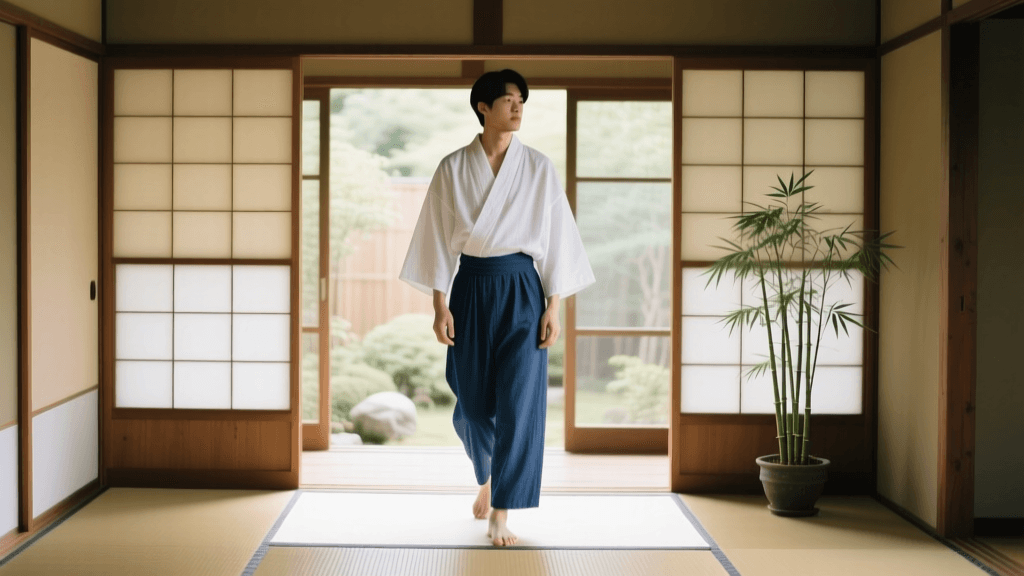
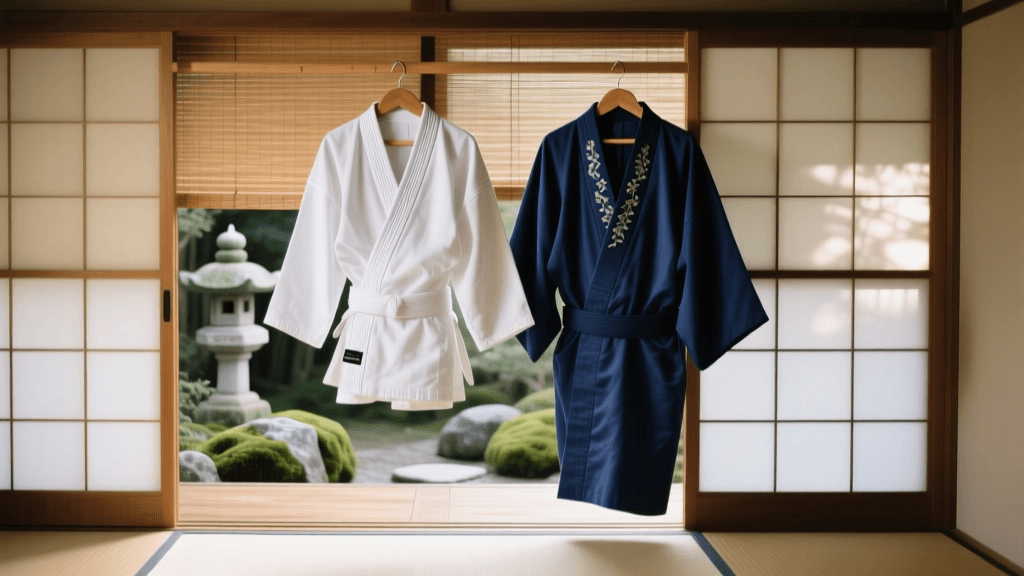
In disciplines such as Judo, Aikido, and Kendo, the uniform—collectively referred to as keikogi or dogi—is engineered for extreme physical stress, gripping, and dynamic mobility. The standard dogi consists of the uwagi (jacket) and shitabaki (drawstring trousers), often paired with a hakama (pleated skirt-like trousers) in weapons-based or traditional arts.
Fabric Weights, Weaves, and Regulations
Martial arts jackets are categorized by fabric weight and weave. Judo practitioners rely on heavy, tightly woven cotton to withstand aggressive grappling. According to the International Judo Federation, competition judogi must adhere to strict thickness and weight regulations, typically utilizing a sashiko (rice-grain) weave on the upper body for grip resistance and a hishisashi (diamond) weave on the lower half for mobility. These jackets are measured in grams per square meter (gsm), ranging from 400 gsm for beginners to over 750 gsm for heavy-duty competition gear.
Conversely, Aikido and Iaido practitioners favor lighter, softer cotton or blended fabrics that allow for fluid, sweeping movements and the graceful folding of the hakama. The hakama itself traditionally features five front pleats and two back pleats, symbolizing the five Confucian virtues, and is tied with a rigid koshi-ita (back plate) to support the lower spine during seiza (kneeling) and tatehiza (half-kneeling).
Tea Ceremony Attire: Elegance and Restraint in Chafuku
While Budo uniforms prioritize durability and biomechanical freedom, tea ceremony attire (chafuku) prioritizes harmony, respect, purity, and tranquility. The garments must allow the host and guests to perform highly choreographed, kneeling movements without the fabric rustling loudly or restricting blood flow to the legs.
Seasonal Rules and Kimono Types
The Urasenke Foundation, one of the most prominent tea schools in Japan, emphasizes that tea ceremony attire must strictly reflect the seasons. From October through May, practitioners wear awase (lined) kimono. In June and September, the transition calls for hitoe (unlined) kimono. During the peak heat of July and August, breathable, sheer fabrics like ro and sha are worn to provide visual and physical coolness to the guests.
For formal tea gatherings (chaji), hosts typically wear iromuji (solid-colored kimono with a single crest) or edo komon (kimono with micro-patterns that appear solid from a distance). These subdued patterns ensure that the host's attire does not distract from the aesthetics of the tea bowl, the scroll, or the seasonal flowers. The physical cut of a tea ceremony kimono is tailored slightly looser around the hips and knees compared to standard formal wear, accommodating the deep kneeling and sliding movements required to navigate the small, low doors (nijiriguchi) of the tea room.
The Role of Accessories: Belts, Obi, and Footwear
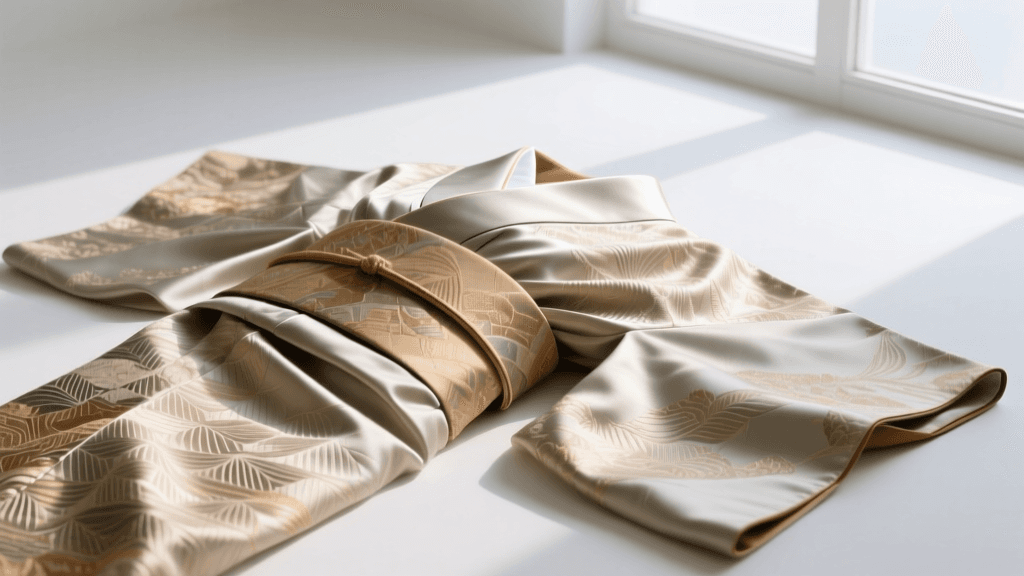
Accessories bridge the gap between function and form in both traditions. In martial arts, the obi (belt) denotes rank and keeps the heavy jacket secured during combat. In the tea room, the obi is an art piece itself, often featuring subtle, seasonal motifs woven into silk brocade. Footwear also diverges sharply: martial artists train barefoot to maximize grip and tactile feedback on the tatami, while tea practitioners wear white tabi (split-toe socks) to maintain purity and cleanliness within the sacred space of the tea room.
Comparative Analysis: Dogi vs. Chafuku
| Feature | Martial Arts Dogi / Hakama | Tea Ceremony Chafuku (Kimono) |
|---|---|---|
| Primary Material | Heavy cotton, canvas, or polyester blends | Silk, ro/sha (summer), or high-quality rayon |
| Movement Focus | High-impact, grappling, sweeping strikes | Gliding steps, deep kneeling (seiza), bowing |
| Maintenance | Frequent machine or heavy hand washing | Dry cleaning, careful spot-treatment, airing |
| Cost Range (Entry) | $40 - $120 USD | $200 - $500 USD (plus tailoring) |
| Color Palette | White, black, indigo, navy | Seasonal pastels, subdued earth tones, crests |
Practical Guide: Sizing, Measurements, and Costs
Measuring for Authentic Fit
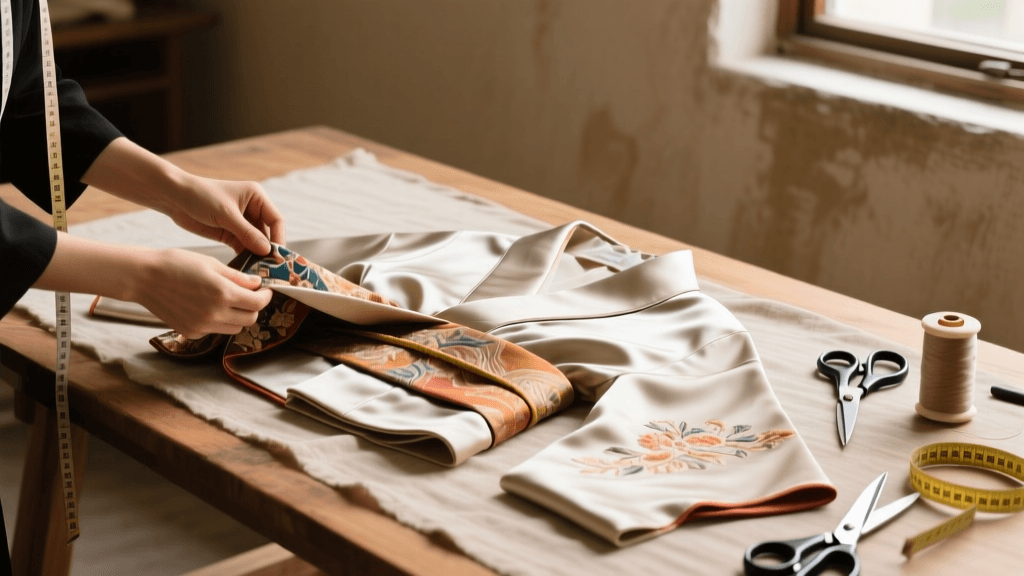
Ill-fitting traditional garments can hinder practice and show disrespect to the art. When purchasing a martial arts hakama, the critical measurement is the distance from the navel (or slightly below, depending on the specific ryu or school) down to the ankle bone. A standard size 24 hakama fits a person roughly 160 cm tall, while a size 30 fits someone over 185 cm. The hem should hover exactly one inch above the floor to prevent tripping during rapid footwork (suri-ashi).
For tea ceremony kimono, the yuki (sleeve length from the center back of the neck to the wrist) is paramount. When the arms are extended forward to whisk the tea, the sleeve should drape elegantly without exposing the forearms, yet it must not touch the tea bowl. Standard yuki measurements range from 60 cm to 70 cm, but bespoke tailoring is highly recommended for serious practitioners.
Budgeting for Traditional Garments
- Beginner Martial Arts Dogi: $40 to $80 for standard single-weave cotton.
- Advanced Hakama: $120 to $250 for premium tetron (polyester-rayon) blends that hold pleats permanently without ironing.
- Entry-Level Tea Kimono: $200 to $400 for synthetic washable silks or high-grade rayon, ideal for students.
- Master-Level Chafuku: $800 to $3,000+ for hand-dyed, bespoke silk kimono with family crests (kamon).
Care, Maintenance, and Storage
Caring for these garments requires an understanding of their materials. Indigo-dyed cotton dogi and hakama must be washed separately in cold water with a mild, pH-neutral detergent. Adding a cup of white vinegar to the first few washes helps set the indigo dye and prevents bleeding. Never use a tumble dryer, as the intense heat will warp the koshi-ita (back plate) of the hakama and cause severe cotton shrinkage.
Tea ceremony kimono demand meticulous care. Silk garments should be professionally dry-cleaned only when absolutely necessary. Between wearings, they should be hung on a specialized kimono hanger (emono-kake) in a well-ventilated, shaded area to allow odors and moisture to dissipate. When storing for the season, the kimono must be folded along its original seams and wrapped in acid-free tatou-shi paper to prevent yellowing and moisture damage.
Proper folding of a hakama is considered a meditative practice in itself. The All Japan Kendo Federation emphasizes that the meticulous folding and tying of the himo (cords) after practice is the final act of respect toward one's training, partners, and the dojo.
Conclusion
Whether you are gripping the lapels of a heavy judogi or smoothing the silk of an iromuji before entering a tea room, the garments of Budo and Sado demand respect, understanding, and careful maintenance. By selecting the correct fabrics, adhering to traditional measurements, and committing to proper care, practitioners honor the centuries of history woven into every thread of their uniforms. Investing in high-quality, authentic attire not only elevates your physical practice but deepens your spiritual connection to Japan's most revered traditional arts.