Silk Weaves of the Kimono: Nishijin-ori, Chirimen & Rinzu Guide
The Soul of the Silhouette: Introduction to Kimono Silk Craftsmanship
The artistry of the Japanese kimono extends far beyond its iconic T-shaped silhouette; the true soul of the garment lies in its textiles. For centuries, Japanese weavers, dyers, and embroiderers have elevated silk production into a highly disciplined art form, governed by strict seasonal rules, regional pride, and complex hierarchies of formality. When examining traditional Japanese clothing, understanding the fabric is just as crucial as understanding the garment's shape. The choice of silk weave dictates how a kimono drapes, how it absorbs dye, and ultimately, where and when it can be worn. From the heavy, opulent brocades of Kyoto to the lightweight, breathable crepes of summer, the craftsmanship of kimono silk represents a pinnacle of Asian textile traditions. In this comprehensive guide, we will explore the three most significant silk weaves used in kimono craftsmanship: Nishijin-ori, Chirimen, and Rinzu, while providing actionable advice on measuring, sourcing, and caring for these exquisite fabrics.
The Foundation: Understanding the Tan Measurement System
Before delving into specific weaves, collectors, tailors, and enthusiasts must understand the foundational measurement system of Japanese textiles: the tan (反物). Unlike Western tailoring, where fabric is cut from wide bolts and discarded scraps are thrown away, a kimono is constructed from a single, continuous bolt of silk. A standard women's tan measures approximately 36 to 38 centimeters (about 14 to 15 inches) in width and 11.5 to 12.5 meters (roughly 38 to 41 feet) in length. This specific dimension is not arbitrary; it is precisely calculated to yield the exact panels needed for a standard kimono (two body panels, two sleeve panels, and overlapping collars) with zero waste. When purchasing new or vintage silk, you will almost exclusively encounter pricing and inventory listed by the tan. A standard bolt is sufficient for one adult garment. If you are sourcing fabric for modern Western sewing projects or upcycling, be mindful that the narrow 36-centimeter width requires creative pattern placement and panel piecing.
Nishijin-ori: The Opulence of Kyoto Brocade
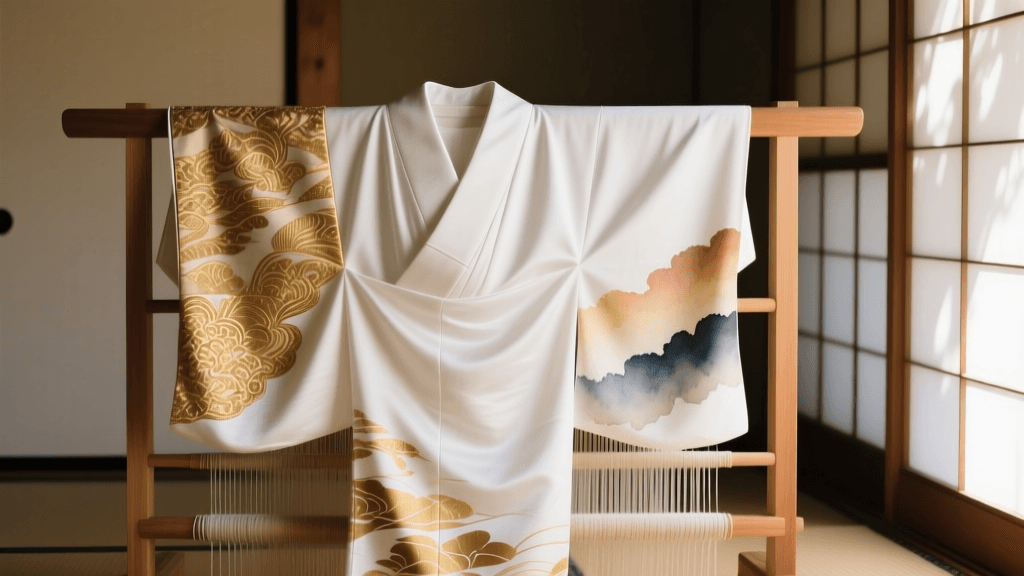
Hailing from the historic Nishijin district of Kyoto, Nishijin-ori is Japan's most prestigious brocade. Recognized by the Nishijin Textile Center as a pinnacle of Japanese weaving, this technique utilizes saki-zome (pre-dyed threads). Unlike fabrics that are woven plain and dyed later, the silk threads for Nishijin-ori are meticulously dyed before they ever touch the loom. This allows weavers to create incredibly complex, multi-colored patterns directly into the fabric structure, often utilizing gold and silver leaf wrapped around silk cores. The introduction of the Jacquard loom in the late 19th century revolutionized Nishijin-ori, allowing for the mass production of intricate motifs that previously required draw-looms operated by multiple artisans.
Because of its dense, heavy structure and lavish materials, Nishijin-ori is primarily used for obi (the sash tied around the kimono) and highly formal outer garments like the uchikake (wedding overcoat). Practical Advice: A high-quality, hand-woven Nishijin fukuro obi can cost anywhere from $1,500 to over $10,000 USD. When shopping, check the reverse side of the fabric; authentic, high-end Nishijin brocade will have a relatively clean back, whereas cheaper, mass-produced jacquard imitations will show messy, floating threads.
Chirimen: The Textured Elegance of Silk Crepe
In stark contrast to the stiff, heavy brocade of Nishijin is Chirimen, a luxurious silk crepe prized for its soft drape and textured surface. The magic of Chirimen lies in the preparation of the weft threads. Artisans twist the raw silk weft threads tightly—often up to 3,000 twists per meter—alternating the direction of the twist (S-twist and Z-twist) row by row. When the woven fabric is boiled and degummed, the tension in the twisted threads causes the silk to shrink and buckle, creating a distinct, pebbled micro-texture known as shibo.
This textured surface is not merely aesthetic; it is highly functional. The shibo texture scatters light, giving dyed colors a deep, rich, and matte appearance. Furthermore, the microscopic ridges make the fabric highly breathable and resistant to wrinkling, making Chirimen the premier choice for everyday and semi-formal kimono, as well as the canvas for elaborate Yuzen and Katazome resist-dyeing techniques. According to the Victoria and Albert Museum, the evolution of Chirimen allowed for the explosion of pictorial dyeing in the Edo period, as the fabric's matte surface absorbed pigments beautifully without the glare of a satin weave.
Rinzu: The Subtlety of Silk Damask
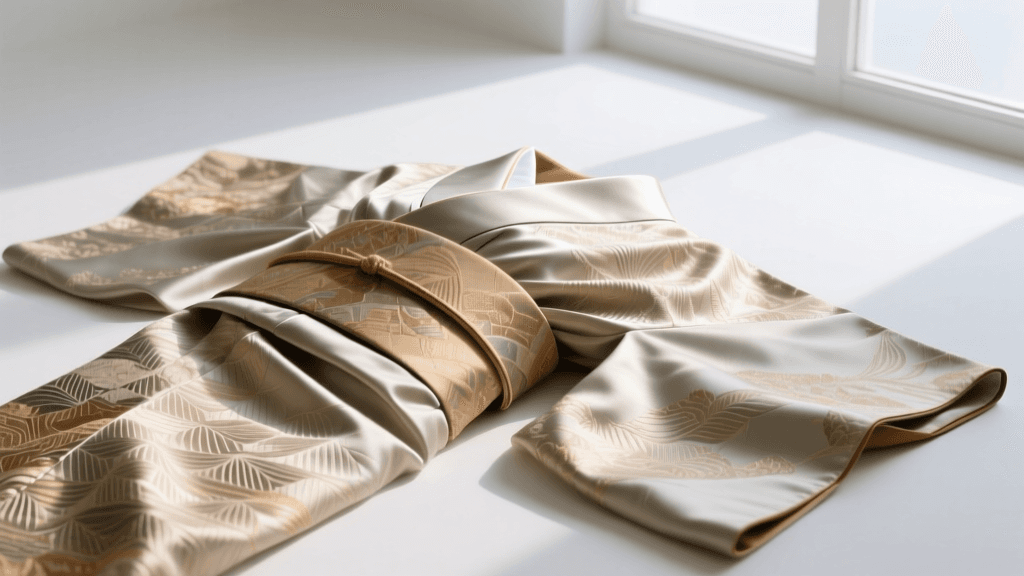
Rinzu is the Japanese equivalent of silk damask. It is characterized by a subtle, glossy pattern woven into a matte satin background, or vice versa. Unlike Nishijin-ori, which relies on contrasting colored threads to build a picture, Rinzu relies on the interplay of light and shadow across different weave structures (typically a satin weave for the pattern and a twill or plain weave for the background). Because the pattern is tonal and monochromatic, Rinzu is considered the epitome of understated elegance and refined taste.
It is heavily utilized in formal kimono, such as the furisode (long-sleeved kimono for unmarried women) and houmongi (visiting wear). The subtle background motifs—often featuring auspicious symbols like cranes, pine trees, or flowing water—provide a sophisticated canvas that is later enhanced by hand-painted dyeing or delicate embroidery. Practical Advice: When tailoring Rinzu, the fabric can be slippery due to the long floats of the satin weave. Tailors must use fine needles (size 9 or 11) and silk thread to prevent snagging the delicate floating threads.
Comparison Chart: Kimono Fabric Types
| Fabric Type | Weave Technique | Texture & Drape | Formality Level | Primary Use | Avg. Cost per Tan (USD) |
|---|---|---|---|---|---|
| Nishijin-ori | Jacquard Brocade (Pre-dyed) | Stiff, Heavy, Glossy | Highest (Ceremonial) | Obi, Uchikake | $800 - $3,000+ |
| Chirimen | Crepe (Twisted Weft) | Matte, Pebbled, Soft Drape | Medium to High | Everyday, Yuzen Dyed Kimono | $150 - $600 |
| Rinzu | Damask (Satin/Twill) | Smooth, Tonal Patterns | High (Formal) | Furisode, Houmongi | $300 - $1,200 |
| Ro / Sha | Leno / Gauze Weave | Sheer, Breathable, Crisp | Summer Semi-Formal | July/August Kimono | $100 - $400 |
Sourcing Authentic Kimono Silk: A Buyer's Guide
Sourcing authentic kimono silk requires knowing where to look and understanding the difference between vintage and newly woven textiles. For those visiting Japan, the Kyoto Traditional Industries Center (Densanchi) is an invaluable resource, offering verified, locally produced textiles directly from artisan guilds. Here, you can purchase brand-new tan bolts with full provenance, though prices will reflect the premium nature of modern artisanal labor.
For vintage collectors, the Toji Temple flea market in Kyoto (held on the 21st of every month) is a treasure trove of antique Chirimen and Rinzu bolts. Vintage silk can be remarkably affordable, with uncut vintage bolts often selling for $50 to $150 USD. However, buyers must inspect vintage silk for shimi (age spots), dry rot, and weakened fibers. A simple test is to gently crush a small corner of the fabric; if it sounds like crushing dry leaves or leaves permanent creases, the silk has degraded and will not withstand the tension of being sewn or worn.
Caring for Hand-Woven and Dyed Silk
Proper maintenance of kimono silk is a specialized craft in itself. Unlike Western garments, a kimono is rarely dry-cleaned using harsh modern chemicals. Instead, traditionalists rely on Maruarai, a meticulous process where the kimono is completely unstitched into its original flat panels, washed gently with specialized natural soaps, stretched to dry, and then entirely restitched by a tailor. This process, which costs roughly $200 to $400 USD and takes several weeks, preserves the integrity of the silk fibers and the vibrancy of the dyes.
For storage, never hang a silk kimono on standard Western hangers for long periods, as the weight of the fabric will distort the shoulders and stretch the delicate weaves. Kimono should be folded along their natural seam lines and wrapped in tatou (specialty acid-free paper). To protect against humidity and insects, store the wrapped garments in a shallow wooden drawer alongside tamamushi (natural camphor) or specialized Japanese anti-moth papers, avoiding direct contact between the chemical protectants and the silk itself. By respecting the craftsmanship and adhering to these traditional care methods, collectors and wearers ensure that these magnificent Asian textiles survive for generations to come.