Kimono Travel Packing Guide 2026: Transport & On-The-Go Care
The Renaissance of Kimono Travel in 2026
As global cultural tourism reaches new heights in 2026, an increasing number of travelers are choosing to bring their own traditional garments on international trips. Whether you are a dedicated kitsuke (kimono dressing) practitioner heading to Kyoto for a tea ceremony, or a vintage textile enthusiast planning to hunt for rare Taisho-era pieces at Tokyo’s antique markets, traveling with a kimono presents unique logistical challenges. Unlike Western garments that can be rolled or hung, the kimono is a complex, multi-layered textile that requires meticulous care to preserve its structural integrity, delicate dyes, and intricate embroidery.
In 2026, airlines have become even stricter with carry-on dimensions, and the shift toward sustainable, slow travel means travelers are investing heavily in the proper preservation of their heritage wardrobes. This comprehensive guide will walk you through the exact methods, modern gear, and on-the-go care techniques required to transport your kimono safely across the globe, ensuring it arrives in pristine, wearable condition.
Understanding Your Silk: Chirimen vs. Habutai vs. Tsumugi
Before packing, it is crucial to understand how different kimono fabrics react to compression and transit. Not all silks are created equal, and their resilience to wrinkling will dictate your packing strategy.
- Chirimen (Crepe Silk): Known for its bumpy texture and elegant drape, chirimen is highly prone to deep, stubborn creases if folded improperly. It requires the most careful padding during transit.
- Habutai (Plain Weave Silk): Smooth and lightweight, habutai wrinkles easily but responds exceptionally well to steam once you reach your destination.
- Tsumugi (Pongee): Woven from spun silk threads, tsumugi has a rustic, textured feel. It is incredibly resilient, naturally wrinkle-resistant, and the most forgiving fabric for long-haul flights.
- Synthetic Blends: Modern 2026 washable kimono made from advanced polyester blends are virtually wrinkle-proof and can withstand slightly more aggressive packing methods.
The Traditional Tatou Folding Method
The gold standard for kimono storage and transport is the tatou fold. This rectangular folding technique ensures that the garment’s seams align perfectly, preventing stress on the threads. When traveling, the tatou fold must be combined with tatou-shi (acid-free folding paper) or clean, unbleached cotton muslin to buffer the folds and prevent hard creases from setting into the silk.
According to textile conservation guidelines from the Victoria and Albert Museum (V&A), buffering folds with acid-free tissue is essential for preventing permanent crease damage and fiber degradation in historic and delicate textiles. In 2026, many specialty kimono shops offer pre-cut, reusable tatou-shi made from eco-friendly, pH-neutral washi paper, which is ideal for frequent travelers.
Table: 2026 Packing Methods Compared
| Packing Method | Pros | Cons | Best For |
|---|---|---|---|
| Traditional Tatou + Washi Paper | Prevents hard creases; respects garment structure; breathable. | Requires practice to fold correctly; takes up more lateral space. | Vintage silk, embroidered pieces, chirimen. |
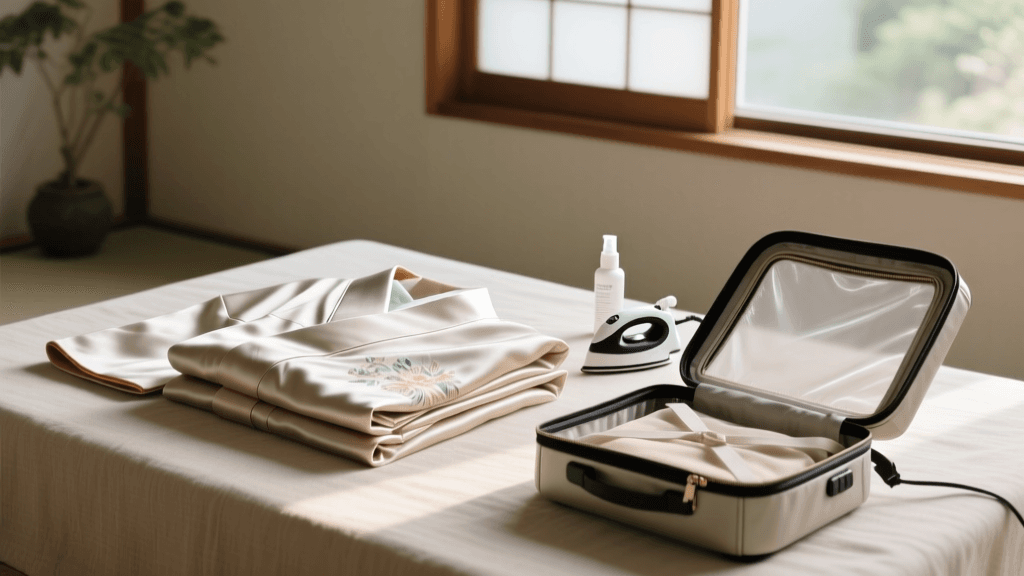
| Hard-Shell Garment Cube | Crush-proof; water-resistant; fits in overhead bins. | Bulky; rigid edges can cause friction if the kimono shifts. | Multiple kimono sets, international checked luggage. |
| Vacuum Compression Bags | Saves massive amounts of space; waterproof. | Causes severe, sometimes permanent, micro-creases in silk. | Synthetic yukata, cotton haneri, undergarments only. |
Step-by-Step: Packing for the Flight
To safely pack your kimono in a standard 2026 carry-on suitcase (typically 55cm x 40cm x 20cm), follow these precise steps:
- Air and Inspect: Lay the kimono flat on a clean surface for 12 hours before packing to allow any ambient moisture to evaporate.
- Pad the Folds: Place rolled tubes of acid-free tissue paper or tatou-shi inside the major folds (sleeves, body panels, and collar) to create soft, rounded edges rather than sharp creases.
- Execute the Tatou: Fold the kimono into its standard rectangular shape (approximately 33cm x 25cm).
- Wrap in Muslin: Wrap the folded bundle in a clean cotton muslin cloth (known as a tatou-bukuro). This protects the silk from friction against your suitcase lining and absorbs minor humidity fluctuations.
- Strategic Placement: Place the wrapped kimono at the very top of your carry-on suitcase. Never place heavy items like shoes or toiletry bags on top of the silk.
Transit Protection and Luggage Forwarding (Takkyubin)
Navigating crowded train stations with a delicate garment bag is a recipe for disaster. In Japan, the most trusted method for transporting delicate items is Takkyubin (luggage forwarding). Services like Yamato Transport allow you to send your luggage directly from the airport to your ryokan or hotel. The Japan National Tourism Organization (JNTO) highly recommends utilizing these forwarding services to travel hands-free on the Shinkansen and local transit.
When using Takkyubin for kimono, ensure the garment is inside a rigid, hard-shell suitcase rather than a soft garment bag. Courier networks handle millions of bags daily, and a hard-shell case guarantees that your silk will not be crushed by heavier parcels in the delivery truck. Always affix a "Fragile" and "This Side Up" sticker, and inform the counter clerk that the bag contains delicate textiles.
On-the-Go Care: Wrinkle Release and Steaming Hacks
Even with perfect packing, minor creases may appear upon arrival. Ironing a kimono with a traditional flat iron is strictly forbidden, as direct heat will scorch the silk and flatten the delicate 3D texture of chirimen. Instead, rely on these 2026-approved on-the-go care methods:
The Hotel Bathroom Steam Protocol
If you do not have a portable steamer, the bathroom steam method is highly effective for habutai and tsumugi silks.
- Hang the kimono on a specialized, wide-shouldered kimono hanger (emono) in the bathroom.
- Run the shower on the hottest setting for 10 minutes to fill the room with steam, ensuring the garment is at least three feet away from direct water spray.
- Leave the kimono in the steamy room for 20 minutes.
- Move the garment to a well-ventilated, dry area of the hotel room and let it air dry completely before wearing. Never put a damp kimono away, as silk is highly susceptible to mildew.
Portable Steamers and Safe Sprays
For frequent travelers, investing in a 2026-model dual-voltage micro-steamer is essential. Look for models that offer a continuous, gentle mist rather than aggressive, spitting bursts of water. When using a steamer, always hover the nozzle at least two inches away from the fabric and steam from the inside lining outward. For minor touch-ups on the collar (eri), use a silk-safe, water-based wrinkle release spray, lightly misting the air above the garment and letting the mist settle onto the fabric.
Transporting Vintage Finds from Kyoto Flea Markets
Many travelers visit Japan specifically to acquire vintage kimono from famous flea markets like Kobo-san at Toji Temple or Tenjin-san at Kitano Tenmangu. When purchasing vintage textiles, you are often dealing with garments that have been stored in cedar chests for decades. These pieces may carry hidden moisture or the scent of camphor.
Before packing a newly acquired vintage kimono for your flight home, air it out in your hotel room for 24 hours. Include a few silica gel desiccant packets inside the muslin wrap to control humidity during the flight. The Metropolitan Museum of Art Textile Conservation department notes that controlling relative humidity is the single most important factor in preventing mold growth and dye bleeding in historic silk textiles during transit.
Conclusion
Traveling with a kimono in 2026 requires a harmonious blend of traditional wisdom and modern travel gear. By mastering the tatou fold, utilizing acid-free buffering, and leveraging Japan’s incredible luggage forwarding infrastructure, you can transport your garments across the world without compromising their beauty. Treat your silk with the respect it demands, and your kimono will remain a vibrant, wearable piece of art for generations to come.