Hanfu Travel Guide 2026: Packing Tips & Best Photo Destinations
The Renaissance of Hanfu Travel in 2026
The global resurgence of traditional Chinese clothing has transformed how enthusiasts approach travel. In 2026, journeying across Asia with a suitcase full of Hanfu is no longer a niche hobby; it is a vibrant cultural movement. From the bustling high-speed rail hubs of Shanghai to the ancient, lantern-lit streets of Xi'an, travelers are proudly wearing Ming Dynasty horse-face skirts and Song Dynasty slip dresses. However, traveling with garments made from delicate silks, intricate brocades, and fragile pleats requires meticulous preparation. Whether you are planning a dedicated photography tour or simply wish to wear your favorite traditional garments on vacation, mastering the art of packing and selecting the right destinations is crucial for a seamless experience.
Essential Gear for Packing Delicate Hanfu
Standard suitcases are often the enemy of traditional textiles. The friction of transit can ruin delicate embroidery, while improper folding can permanently crease structured fabrics like Xiangyunsha (gambiered Canton gauze) or crush the knife pleats of a Mamianqun. To protect your investments in 2026, you need specialized travel gear designed for archival-level textile care. According to guidelines from The Metropolitan Museum of Art's Textile Conservation Department, minimizing sharp folds and reducing friction are the primary rules for transporting historic and delicate fabrics.
| Packing Item | Best Used For | 2026 Recommended Model | Estimated Cost (USD) |
|---|---|---|---|
| Hard-Shell Garment Case | Heavy Brocade, Zhuanghua, Outerwear | Tumi V3 Expandable Garment Bag | $550 - $650 |
| Portable Smart Steamer | Chiffon, Silk, Crepe De Chine | Panasonic NI-GSD090 Travel Steamer | $85 - $110 |
| Acid-Free Tissue Paper | Pleat preservation, Embroidery buffering | Archival Methods Buffered Tissue | $15 - $25 |
| Silk Sleep Sack / Bag | Friction reduction for soft silks | Lilysilk Travel Envelope | $60 - $90 |
Step-by-Step Hanfu Packing Techniques
Packing Hanfu is fundamentally different from packing modern Western clothing. The structural elements, such as the wide sleeves of a Daxiushan or the dense pleats of a Mamianqun, dictate how the garment must be stowed.
The Roll-and-Tuck Method for Mamianqun
The Mamianqun, or horse-face skirt, is a staple of Ming Dynasty fashion and a favorite for modern travelers due to its striking silhouette. The front and back panels feature deep knife pleats that can easily become misaligned in a standard suitcase.
- Step 1: Lay the skirt completely flat on a clean surface. Ensure the waistband is aligned and the pleats are naturally resting in their heat-set positions.
- Step 2: Place a sheet of acid-free buffered tissue paper over the pleated sections. This prevents the fabric from catching on itself and reduces friction.
- Step 3: Instead of folding the skirt in half, gently roll it from the bottom hem upward toward the waistband. Rolling prevents sharp creases from forming across the pleats.
- Step 4: Secure the rolled skirt with a soft, wide silk ribbon or place it inside a dedicated cylindrical garment tube to maintain its shape during transit.
Protecting Delicate Silk and Chiffon Daxiushan
Large-sleeved robes (Daxiushan) made from sheer chiffon or lightweight silk are highly prone to snagging. Never fold these garments at the shoulder or elbow joints. Instead, use the 'burrito' method with a cotton sheet. Lay a clean, white cotton sheet flat, place the robe face down on the sheet, and roll the sheet and robe together. The cotton acts as a buffer, absorbing any ambient moisture in the luggage and protecting the delicate silk threads from catching on zippers or hardware.
Top 2026 Destinations for Hanfu Photography
China's infrastructure in 2026 makes multi-city Hanfu tours more accessible than ever. The expansion of the high-speed rail network allows travelers to move between distinct historical eras and architectural backdrops in a matter of hours. Here are the premier destinations for traditional garment photography this year.
Xi'an: The Tang Dynasty Dream
Formerly known as Chang'an, Xi'an is the undisputed capital of Tang Dynasty aesthetics. The city has fully embraced the Hanfu movement, with dedicated dressing rooms, professional makeup studios, and rental shops lining the streets near the Bell Tower. The Datang Everbright City offers a spectacular, immersive nighttime backdrop. The vibrant, high-collared Qixiong Shanqun (chest-high skirts) and elaborate floral hairpins look stunning against the illuminated, sweeping eaves of the Tang-style architecture. In 2026, the newly opened direct rail corridors from eastern China have cut travel times significantly, making weekend trips to Xi'an highly feasible for international and domestic tourists alike.
Luoyang: Peonies and Wei-Jin Elegance
Luoyang, another ancient capital, offers a different flavor of history. It is the perfect backdrop for the flowing, ethereal styles of the Wei-Jin Southern and Northern Dynasties, as well as the Sui and early Tang periods. The Longmen Grottoes provide a monumental, spiritual backdrop for photography, though travelers must adhere to strict 2026 preservation guidelines regarding flash photography and physical contact with the stone carvings. For those interested in the cultural exchanges of antiquity, Luoyang was a critical eastern terminus of the Silk Road, a fact extensively documented by the UNESCO Silk Roads Programme. Wearing garments that incorporate Central Asian motifs or woven gold threads here creates a profound historical resonance.
Suzhou: Song Dynasty Minimalism in the Gardens
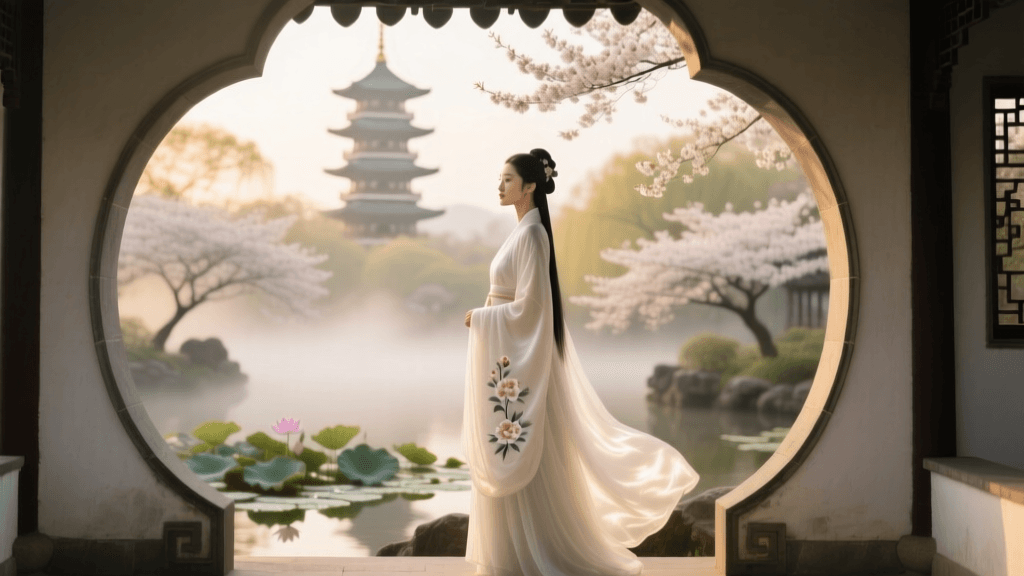
If Xi'an is about maximalist Tang grandeur, Suzhou is the home of Song Dynasty restraint and elegance. The classical gardens of Suzhou, recognized globally by the UNESCO World Heritage Centre, offer intimate, meticulously landscaped settings. The narrow, winding corridors, moon gates, and lotus ponds are perfectly suited for the slender, understated silhouettes of Song Dynasty fashion, such as the Beizi (long parallel-collar overcoat) and pleated skirts. Photography in these gardens requires patience and an understanding of natural light, as the interplay of shadows through the bamboo groves creates a moody, cinematic atmosphere that highlights the subtle textures of high-quality silk.
'Traveling in Hanfu is not just about taking beautiful photos; it is about physically inhabiting the spaces our ancestors walked. When you wear a Song Dynasty Beizi in the Humble Administrator's Garden, the architecture suddenly makes sense—the proportions, the movement, the way the fabric catches the breeze off the pond.' — Dr. Lin Yao, Textile Historian and Travel Curator, 2026.
Navigating Transit and Climate in Traditional Garments
Wearing Hanfu while navigating modern transit and varying climates presents unique challenges. The layered nature of traditional dress, which often includes inner garments (Zhongyi), skirts, and outer robes, can lead to overheating in the humid summers of southern China or the crowded carriages of the Beijing Subway.
Climate Adaptation: For summer travel to destinations like Hangzhou or Suzhou, opt for Hanfu made from ramie, linen, or lightweight crepe de chine. Avoid heavy brocades or lined garments. Many modern Hanfu brands in 2026 offer 'commuter' adaptations, featuring hidden moisture-wicking panels in the underarms and waistbands that remain invisible beneath the traditional exterior.
Transit Etiquette and Safety: When wearing floor-length skirts or wide sleeves on escalators, high-speed trains, or near revolving doors, extreme caution is required. Always gather your sleeves using traditional sleeve-ties (Panbo) or modern magnetic clips when moving through crowded transit hubs. When sitting on trains, gently drape the back panels of your skirt over your lap or the side of the seat to prevent the fabric from dragging on the floor or getting caught in the seat reclining mechanisms.
Conclusion
Traveling with Hanfu in 2026 is a deeply rewarding endeavor that bridges the gap between ancient artistry and modern exploration. By investing in the proper archival packing materials, mastering specialized folding techniques, and choosing destinations that complement the historical context of your garments, you ensure that your traditional wardrobe remains pristine. Whether you are capturing the golden hour light in a Suzhou garden or walking the ancient walls of Xi'an, your journey will be a testament to the enduring beauty and living legacy of Asian textile traditions.