Traveling With Hanfu In 2026: Packing Tips & Top Destinations
The 2026 Hanfu Travel Boom: Why Preparation is Key
The renaissance of traditional Chinese clothing has profoundly transformed tourism across Asia. In 2026, traveling with Hanfu is no longer a niche hobby reserved for historical reenactors; it is a mainstream cultural movement embraced by millions. From the bustling streets of Xi'an to the serene classical gardens of Suzhou, travelers are donning exquisite silk, brocade, and linen garments to connect with their heritage. However, taking these voluminous, delicate, and intricately pleated outfits on the road presents a unique logistical challenge.
Unlike modern Western fashion, which often prioritizes wrinkle-resistant synthetics and minimalist packing, traditional Hanfu features complex layering, delicate embroidery, and structured pleats that demand meticulous care. Whether you are embarking on a weekend high-speed rail getaway or a two-week immersive photography tour, mastering the art of Hanfu packing is essential. This comprehensive 2026 guide covers everything from preserving the crisp pleats of a Mamianqun to selecting the most breathtaking destinations for your traditional wardrobe.
Building Your 2026 Hanfu Travel Capsule Wardrobe
Before you begin folding, you must curate a travel-friendly Hanfu capsule. The key to a successful trip is versatility. Instead of packing five complete, heavy sets, pack modular pieces that can be mixed, matched, and layered according to the 2026 weather forecasts.
- Base Layers (Zhongyi): Pack three lightweight, breathable cotton or linen inner garments. These protect your expensive outer silks from sweat and body oils, meaning you only need to wash the base layers during your trip.
- Bottoms: Two Mamianqun (horse-face skirts) in neutral tones like black, navy, or cream, and one pair of flowing Songku (wide-leg trousers) for active travel days or hiking.
- Tops: Three upper garments, such as a Duanru (short jacket) and a Changao (long jacket), featuring complementary embroidery or woven patterns.
- Outerwear: One lightweight Pifeng (cape or cloak) that can serve as a sunshield during the day and an elegant evening layer.
- Accessories: A compact travel kit including a detachable cloud shoulder (Yunjian), two versatile hairpieces with secure metal clasps, and a pair of traditional cloth boots with modern rubberized, slip-resistant soles for navigating cobblestones.
The Ultimate Hanfu Packing Masterclass
The most daunting task for any Hanfu enthusiast is packing the Mamianqun. Known for its striking front and back panels and intricate side pleats, a crushed Mamianqun can ruin a photoshoot. Here is how professionals pack these garments in 2026.
1. The Accordion Fold for Mamianqun (Pleated Skirts)
Never roll a pleated skirt, and never fold it haphazardly. To maintain the sharp, knife-like pleats of your Mamianqun:
- Lay the skirt completely flat on a clean, large surface.
- Align the front and back panels perfectly, ensuring the pleats are resting in their natural folded state.
- Cut sheets of acid-free tissue paper to the width of the skirt. Place a sheet of tissue paper inside every major pleat. This prevents the fabric from shifting and stops hard creases from forming during transit.
- Fold the skirt in thirds using the accordion method, keeping the folds parallel to the pleat lines.
- Place the folded skirt into a rigid, water-resistant garment folder or a specialized hard-shell skirt box to prevent crushing in your luggage.
2. The Roll-and-Tuck Method for Ruqun and Songku
For waist-high skirts (Qun) and wide-leg trousers (Songku), rolling is the most space-efficient method. Fold the garment in half vertically to align the seams, then roll tightly from the hem up to the waistband. Secure the roll with a silk ribbon or place it inside a velvet drawstring bag. This method minimizes surface area and prevents deep, set-in wrinkles.
3. Protecting Delicate Silks and Brocades
Zhijin (woven gold) and heavy brocades are prone to snagging. Always turn these garments inside out before folding. Wrap them in clean, white cotton pillowcases or specialized breathable muslin garment bags. Avoid plastic dry-cleaning bags, as they trap moisture and can cause mildew or yellowing, especially in humid southern destinations.
On-the-Go Garment Care: Beating Travel Wrinkles
Even with perfect packing, some garments will need refreshing upon arrival. In 2026, the market offers exceptional portable garment care tools tailored for traditional fashion travelers.
Portable Smart Steamers: Invest in a compact, dual-voltage travel steamer. The latest 2026 models feature ceramic-coated plates and precise temperature controls, allowing you to safely steam delicate silks on a low setting and heavy brocades on a high setting without risking water spots or heat damage.
The Bathroom Steam Hack: If you are traveling light and cannot bring a steamer, hang your Hanfu on a padded wooden hanger in the bathroom while you take a hot shower. The ambient steam will gently relax the fibers. Follow this by using a portable, battery-operated fabric shaver to remove any dust or lint gathered during travel.
Top 3 Hanfu Photography Destinations for 2026
China's tourism infrastructure has heavily adapted to the Hanfu boom. In 2026, many historical sites offer dedicated changing rooms, luggage storage for bulky garment boxes, and specialized lighting for evening photography. Here are the top three destinations you must visit.
1. Xi'an: The Tang Dynasty Dream
Xi'an remains the undisputed capital of Hanfu tourism. The Datang Everbright City pedestrian district is a neon-lit marvel that perfectly complements the opulent, wide-sleeved Qixiong Ruqun (chest-high skirts) and Yuanlingpao (round-collar robes) of the Tang Dynasty. In 2026, the city has expanded its night-tour routes, allowing photographers to capture the sweeping silhouettes of Hanfu against the backdrop of the ancient City Wall and the Giant Wild Goose Pagoda. The sheer scale of Xi'an's architecture demands garments with high visual impact and dramatic draping.
2. Suzhou: Elegance of the Ming and Song Eras
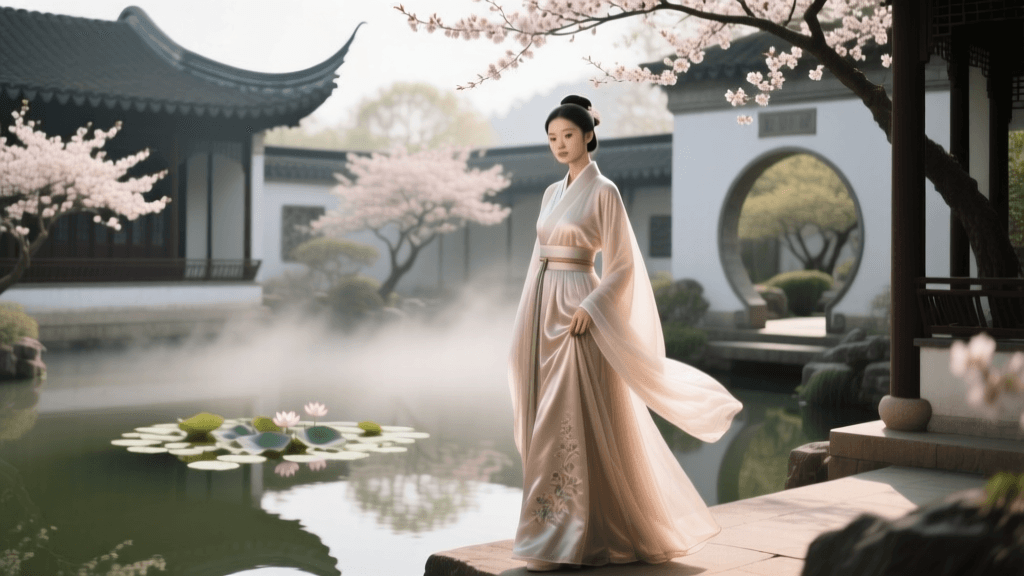
For those who prefer the understated elegance, narrow sleeves, and refined aesthetics of the Song and Ming dynasties, Suzhou is unparalleled. The Classical Gardens of Suzhou, recognized by the UNESCO World Heritage Centre, provide an intimate, poetic backdrop. Wearing a Ming-style Aoqun (a lined jacket paired with a Mamianqun) while strolling through the Humble Administrator's Garden or the Master of the Nets Garden creates a living painting. The intricate lattice windows, koi ponds, and weeping willows perfectly frame the structured lines and subtle woven patterns of Ming-era textiles.
3. Luoyang: Wei, Jin, and Northern Wei Majesty
Luoyang has rapidly emerged as a premier destination for enthusiasts of the Wei and Jin dynasties, characterized by flowing, ethereal silhouettes, wide sashes, and a sense of scholarly detachment. The Longmen Grottoes and the Luoyi Ancient City offer a rugged, spiritual contrast to the delicate, wind-swept layers of a Daxiushan (large-sleeved衫). The 2026 high-speed rail network makes Luoyang easily accessible from Xi'an, allowing travelers to experience multiple historical eras in a single trip.
Destination & Style Matching Guide (2026)
To help you plan your itinerary, refer to this quick-reference table matching destinations with their ideal historical styles and travel logistics.
| Destination | Ideal Historical Era | Recommended Garment Style | Best Season to Visit | 2026 Travel Tip |
|---|---|---|---|---|
| Xi'an | Tang Dynasty | Qixiong Ruqun, Yuanlingpao | Spring & Autumn | Book evening passes for Datang Everbright City to avoid daytime crowds. |
| Suzhou | Song & Ming Dynasties | Aoqun, Beizi, Mamianqun | Spring (April) & Autumn | Visit gardens at 6:30 AM right at opening for uninterrupted photography. |
| Luoyang | Wei, Jin, Northern Wei | Daxiushan, Zaofan, Wide Sashes | Spring (Peony Festival) | Rent a local e-bike to navigate the sprawling Luoyi Ancient City ruins. |
| Hangzhou | Song Dynasty | Qunshan, Narrow-sleeve Ru | Autumn (September) | Take a private wooden boat on the West Lake for misty morning portraits. |
Cultural Etiquette and Modern Conveniences
As the popularity of Hanfu has surged, so has the etiquette surrounding its wear. According to cultural historians and institutions like the Smithsonian National Museum of Asian Art, understanding the historical context of your garments elevates the experience from mere cosplay to genuine cultural appreciation. When visiting sacred sites, temples, or active places of worship, ensure your Hanfu is modestly layered, avoiding overly sheer fabrics or excessively dramatic trailing sleeves that might disrupt the space.
Fortunately, the hospitality industry in 2026 has caught up with this demand. Many boutique hotels in Xi'an, Suzhou, and Hangzhou now offer 'Hanfu-Friendly' rooms. These rooms are equipped with extra-wide wooden wardrobes, full-length tri-fold mirrors, dedicated steaming stations, and even complimentary traditional hair-styling kits. When booking your accommodation, look for these specific amenities to ensure your garments are stored safely and elegantly throughout your stay.
Conclusion
Traveling with Hanfu in 2026 is a deeply rewarding endeavor that bridges the gap between ancient artistry and modern exploration. By employing strategic packing techniques, utilizing modern garment care tools, and selecting destinations that historically align with your wardrobe, you can ensure a seamless and breathtaking journey. Whether you are capturing the vibrant energy of Tang-era Xi'an or the quiet reflection of a Ming-era Suzhou garden, your carefully packed Hanfu will allow you to step directly into the living tapestry of Asian history.