Best Japanese Fashion School Wafuku Workshops & Online Courses 2026
The 2026 Renaissance of Wafuku Education
The global appreciation for sustainable, slow fashion has catalyzed a massive resurgence in traditional Japanese garment making, known collectively as Wafuku. In 2026, international students, textile artists, and fashion designers are increasingly looking toward Japan to master the intricate arts of kimono pattern drafting, shibori dyeing, and traditional hand-sewing techniques. Unlike Western fashion education, which often prioritizes rapid prototyping and mass production, Japanese fashion schools emphasize a deep, meditative understanding of textiles, zero-waste cutting methods, and ancestral construction techniques.
For those unable to relocate to Japan for a multi-year degree, short-term intensive workshops and advanced online learning platforms have become the premier avenues for study. These programs bridge the gap between ancient craftsmanship and modern digital pedagogy, allowing global enthusiasts to learn directly from certified senshoku (textile) masters and experienced kimono kitsuke (dressing) instructors. Whether you are looking to draft your first yukata from scratch or master the complex geometry of a formal uchikake, the educational landscape in 2026 offers unprecedented access to Japan's sartorial heritage.
Premier In-Person Workshops at Japanese Fashion Schools
Bunka Fashion College: Intensive Kimono Pattern Drafting
Located in the heart of Tokyo's Shibuya district, Bunka Fashion College remains the most prestigious fashion institution in Asia. While globally renowned for its avant-garde contemporary design programs, Bunka's specialized short-term workshops in traditional Japanese tailoring are highly sought after by international students. In 2026, their 'Global Wafuku Intensive' runs during the summer and winter academic breaks, offering a rigorous four-week curriculum focused entirely on traditional pattern drafting and construction.
Students in this program learn the unique proportional system of Wafuku, which relies on the shaku (traditional Japanese ruler) and a modular, straight-line cutting method that ensures zero fabric waste. The 2026 curriculum includes hands-on modules for constructing the kosode (the precursor to the modern kimono), the haori (jacket), and the hakama (pleated trousers). Tuition for the four-week intensive is approximately 380,000 JPY, which includes access to Bunka's extensive historical textile archives and specialized industrial sewing labs equipped with traditional tensioning tools.
Kyoto University of Art and Design: Textile and Shibori Immersions
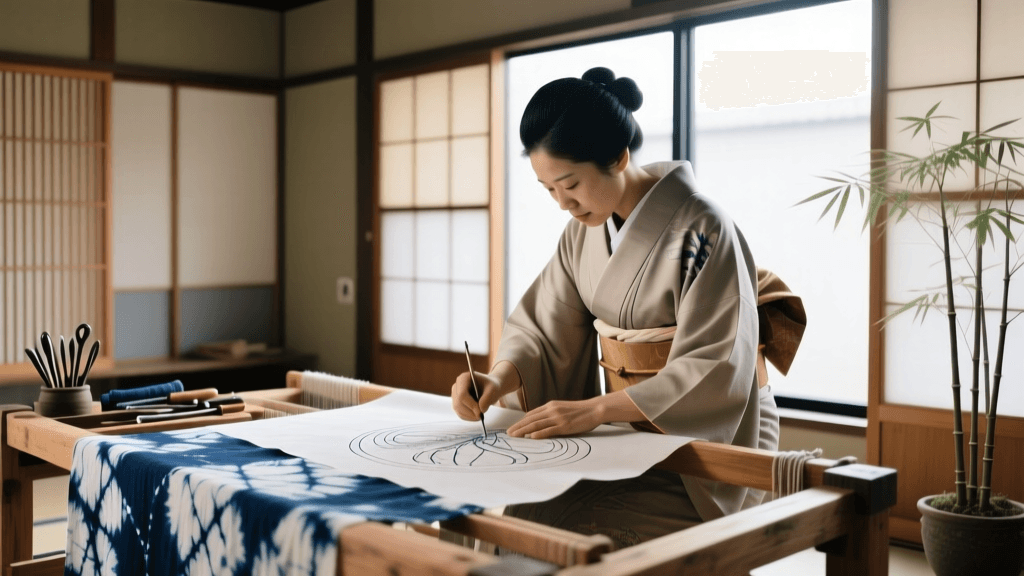
For those more interested in the surface design and dyeing aspects of traditional garments, Kyoto remains the undisputed cultural capital. The Kyoto University of Art and Design, in collaboration with local artisan guilds, offers two-week summer immersions focused on Kyo-Yuzen (resist dyeing) and Kanoko Shibori (intricate tie-dyeing). These workshops are held in historic machiya (wooden townhouses) converted into studio spaces, providing an authentic atmospheric backdrop for learning.
Participants work directly with multi-generational dye masters to create their own obi (sash) fabrics. The 2026 schedule introduces a new module on natural indigo fermentation and botanical dye extraction, aligning with the growing global demand for eco-friendly textile practices. Costs for the two-week Kyoto immersion hover around 250,000 JPY, excluding accommodation, but the program includes all raw silk materials, natural dyes, and specialized resist pastes.
Top Online Learning Platforms for Traditional Japanese Garments
While in-person study is ideal, the geographical and financial barriers have led to the development of highly sophisticated online learning platforms. By 2026, digital Wafuku education has moved far beyond simple video tutorials. Institutions and private master artisans now utilize hybrid models that combine high-definition multi-angle streaming with augmented reality (AR) feedback mechanisms.
One of the leading digital initiatives is the 'Virtual Wafuku Atelier,' an online academy backed by the Japan Traditional Crafts Aoyama Square network. This platform offers modular courses ranging from basic yukata sewing to advanced kumihimo (braiding) for obi accessories. Students receive physical material kits shipped globally, which include pre-measured silk bolts, bamboo marking tools, and specialized threads. The platform's proprietary AR app allows students to scan their completed garments using a smartphone, providing instant digital feedback on seam allowances, drape, and structural symmetry based on traditional Wafuku standards.
Another notable platform is 'Kitsure Digital,' which focuses on the intersection of traditional Japanese textiles and modern wardrobe integration. Their 2026 masterclasses teach students how to deconstruct and reconstruct vintage kimono fabrics into contemporary, everyday silhouettes without destroying the historical integrity of the textile. Subscriptions to these platforms typically range from 45,000 to 60,000 JPY annually, offering a cost-effective alternative to traveling to Japan.
Comparison: In-Person vs. Online Wafuku Learning in 2026
Choosing between traveling to Japan for an intensive workshop or studying from your home studio depends on your learning style, budget, and specific goals. Below is a detailed comparison of the two primary educational pathways available in 2026.
| Feature | In-Person (Tokyo/Kyoto Schools) | Online/Hybrid Platforms |
|---|---|---|
| Average Cost | 250,000 - 400,000 JPY (plus travel) | 45,000 - 80,000 JPY (annual access) |
| Duration | 2 to 4 weeks (Full-time intensive) | Self-paced or 6-month cohorts |
| Material Access | Unlimited studio access, rare silks | Shipped kits, standard practice fabrics |
| Instructor Feedback | Immediate, hands-on physical correction | Asynchronous video review, AR scanning |
| Best For | Advanced tailoring, complex dyeing | Basic sewing, pattern theory, upcycling |
Essential Wafuku Tailoring Toolkit for 2026 Students
Whether you are enrolling in an in-person workshop in Shibuya or logging into an online masterclass from London, mastering Wafuku requires a specific set of traditional tools. Western sewing kits are insufficient for the precise, low-tension hand-sewing required for silk kimono construction. According to guidelines published by the Ministry of Economy, Trade and Industry regarding traditional craft preservation, utilizing authentic tools is vital for maintaining the structural integrity of the garments.
- Shaku (Traditional Ruler): Unlike the metric system, the traditional shaku is approximately 37.8 centimeters long, divided into 10 sun. Pattern drafting relies heavily on these specific proportions to ensure the garment drapes correctly on the body.
- Hera (Bamboo Marking Tool): Chalk and fabric pens can damage delicate silk fibers. A hera is a smooth, spatula-like bamboo tool used to press temporary creases and mark seam lines by slightly displacing the fabric weave without leaving residue.
- Kakehari (Tensioning Tool): A small, needle-like clamp attached to a weighted cord. It is used to hold the fabric taut while hand-sewing long, straight seams, ensuring perfectly even stitch tension without stretching the bias.
- Chikoshi (Thimble Ring): Worn on the middle finger rather than the index finger, this metal or leather ring allows the sewer to push the needle through multiple layers of silk and batting with precise, controlled force.
- Kuguri (Basting Thread): Traditional Wafuku construction relies heavily on basting before final sewing. Specialized, slightly sticky silk basting threads are used to hold garments together temporarily, allowing for easy disassembly and cleaning—a hallmark of traditional kimono maintenance.
Application Tips and Visa Requirements
For international students planning to attend in-person workshops in 2026, navigating Japanese immigration is straightforward but requires careful planning. Short-term intensive courses (under 90 days) generally fall under the 'Temporary Visitor' visa category, which is granted upon arrival for citizens of over 70 countries. However, you must provide a formal letter of acceptance or enrollment confirmation from the fashion school or workshop organizer to present at immigration if requested.
It is highly recommended to apply for workshops at least six months in advance. Institutions like Bunka Fashion College and the Kyoto artisan guilds have strict quotas for international students to ensure adequate translation support and personalized instruction. Furthermore, securing accommodation near the school is crucial; Tokyo's public transit is efficient, but living within walking distance of your studio allows for the long, immersive hours required to master the meticulous art of Wafuku tailoring. As the global community continues to embrace the sustainability and profound beauty of traditional Japanese garments, these educational pathways serve as vital bridges, keeping ancient textile arts vibrant and relevant in the modern era.