Hanfu Fabric Drape & Comfort: 2026 Textile Analysis
The Evolution of Hanfu Textiles in 2026
The global resurgence of traditional Chinese clothing has entered a sophisticated new phase in 2026. No longer confined to historical reenactments or occasional festival wear, Hanfu has firmly integrated into daily wardrobes through the Xin Zhongshi (new Chinese style) movement. This evolution is heavily driven by advancements in textile science, specifically regarding fabric drape, weight, and thermoregulatory comfort. Modern wearers demand garments that honor ancient aesthetics while performing like contemporary luxury apparel. Understanding how different fibers behave when cut into traditional silhouettes—such as the flowing Qixiong Ruqun or the structured Mamianqun—is essential for both designers and consumers navigating the 2026 market.
Historically, the luminous quality and prestige of silk made it the cornerstone of Chinese textile heritage, as detailed by The Metropolitan Museum of Art. Today, while authentic mulberry silk remains the gold standard for formal wear, the 2026 Hanfu market is dominated by innovative blends. Cupro, Tencel, and high-density cotton-linen weaves are being engineered to mimic the drape of traditional silks while offering superior breathability and machine-washable convenience. This analysis breaks down the physics of fabric drape and provides actionable recommendations for selecting the right textile for specific Hanfu garments.
Understanding Fabric Drape in Traditional Garments
The Physics of the Flow
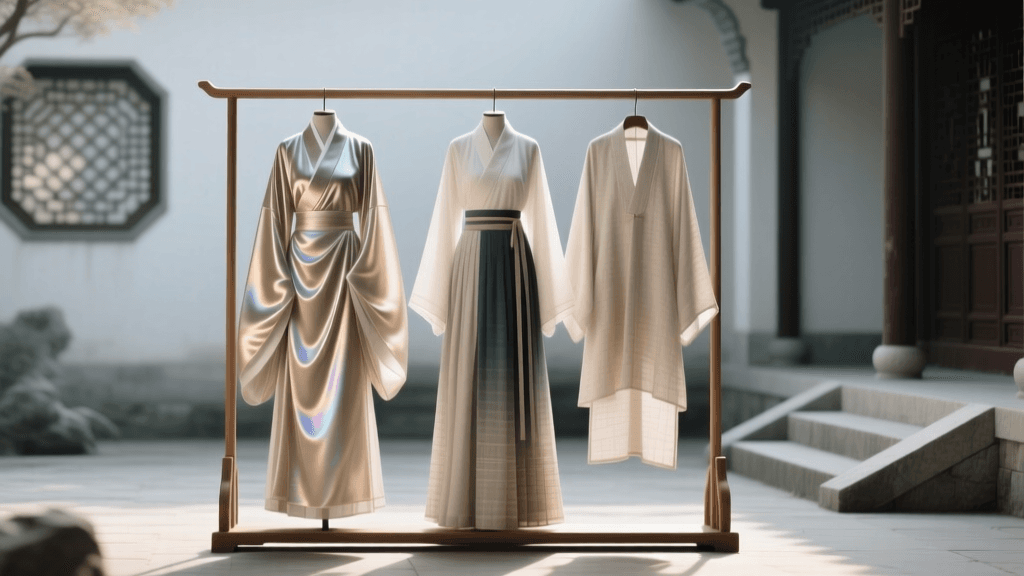
In textile engineering, 'drape' refers to the ability of a fabric to hang or fold under its own weight. For Hanfu, drape is arguably the most critical visual element. The sweeping sleeves of a Daxiushan or the cascading folds of a chest-high skirt rely entirely on the fabric's bending stiffness and shear modulus. A fabric with high drape (low stiffness) will cling to the body's contours and pool elegantly at the floor, creating a romantic, ethereal silhouette. Conversely, a fabric with low drape (high stiffness) will project outward, holding architectural shapes and sharp pleats.
The structural properties of natural fibers dictate these behaviors. For instance, the triangular prism-like structure of silk fibers not only refracts light to create a signature shimmer but also allows the yarns to pack tightly, resulting in a fluid, heavy drape, a phenomenon extensively documented in Britannica's comprehensive guide to silk. In 2026, manufacturers are utilizing sand-washing techniques on mid-weight silks (19 to 22 momme) to break down the sericin residue, resulting in a 'peach skin' texture that dramatically increases fluidity without sacrificing tensile strength.
2026 Hanfu Fabric Comparison Chart
Selecting the correct material requires balancing visual flow with physical comfort. Below is a comparative analysis of the most prominent fabrics used in the 2026 Hanfu market, categorized by weight, drape coefficient, and ideal application.
| Fabric Type | Weight Metric | Drape Quality | Breathability | Best Hanfu Style | Avg. 2026 Price (USD) |
|---|---|---|---|---|---|
| Mulberry Silk (Charmeuse) | 19-22 Momme | High Flow / Fluid | Moderate | Qixiong Ruqun, Daxiushan | $120 - $180 |
| Xiangyunsha (Gambiered Gauze) | 25-30 Momme | Structured / Crisp | High | Mamianqun, Ming Dynasty Ao | $150 - $250 |
| Linen-Cotton Blend | 160-180 GSM | Moderate / Stiff | Very High | Summer Beizi, Song Dynasty Ku | $60 - $90 |
| Cupro-Tencel Blend | 140-160 GSM | High Flow / Heavy | Very High | Everyday Ruqun, Pibo | $80 - $110 |
| Jacquard Polyester-Silk | 120 GSM | Moderate / Bouncy | Low | Pleated Skirts, Outerwear | $40 - $70 |
Comfort and Breathability: A Seasonal Breakdown
While visual drape dictates the aesthetic success of a Hanfu outfit, thermal comfort dictates its wearability. The traditional layering system of Hanfu can quickly become oppressive in humid climates if the wrong fibers are chosen. In 2026, textile engineers have focused heavily on the microclimate between the skin and the garment.
Silk is a natural protein fiber that excels in temperature regulation, keeping the wearer cool in summer and warm in winter. However, tightly woven silk brocades can trap heat. For peak summer wear, the market has shifted toward Xiangyunsha, a heritage fabric dyed with river mud and gambier juice. The mud-dyeing process creates microscopic pores in the silk, enhancing airflow and giving the fabric a cooling sensation against the skin. For plant-based alternatives, the moisture-wicking capabilities of flax fibers are highlighted in Britannica's textile archives on linen. Modern linen-cotton blends have solved the historical issue of linen's harsh wrinkling by introducing a 30% cotton warp, providing the cooling benefits of flax with the soft, matte drape of cotton.
Style-Specific Fabric Recommendations
Mamianqun (Horse-Face Skirt)
The Mamianqun is defined by its flat front and back panels flanked by deep, intricate knife pleats. The greatest challenge with this garment is pleat retention. If a fabric is too fluid (like a lightweight charmeuse), the pleats will collapse and splay open when walking, ruining the architectural silhouette. For 2026, the optimal choice is a mid-to-heavy weight Xiangyunsha or a high-density jacquard weave. These fabrics possess the necessary shear stiffness to hold sharp pleats under pressure. When purchasing, look for skirts that have undergone high-heat industrial pleating and feature a GSM of at least 180 to ensure the pleats remain crisp through years of wear.
Beizi (Long Outer Jacket)
The Beizi, a long, open-front jacket popularized during the Song Dynasty, requires a completely different textile approach. Because it is worn as an outer layer over a base top and skirt, the Beizi needs to cascade vertically in long, unbroken lines. A stiff fabric will cause the Beizi to flare out awkwardly at the hips. The best materials for a Beizi are lightweight linen blends, silk-cotton voiles, or modern Cupro. Cupro, a regenerated cellulose fiber derived from cotton linter, has become a favorite in the 2026 Xin Zhongshi market because it mimics the heavy, liquid drape of silk charmeuse but offers the matte finish and breathability of cotton, making it perfect for transitional spring and autumn weather.
Qixiong Ruqun (Chest-High Skirt)
This iconic Tang Dynasty silhouette features a skirt tied high above the bust, often accompanied by a sheer shawl (Pibo). The skirt requires massive yardage and a fabric that gathers tightly without adding bulk at the waistband. A 19-momme silk chiffon or a lightweight Tencel blend is ideal. These fabrics possess a high drape coefficient, allowing the skirt to pool elegantly around the ankles while remaining lightweight enough to stay securely tied at the chest without slipping. For the Pibo, a silk organza or a metallic-threaded gauze provides the necessary ethereal stiffness to float on the wind rather than clinging to the arms.
Caring for Modern and Traditional Blends
The longevity of a Hanfu garment's drape is directly tied to its maintenance. Traditional silks require meticulous care to prevent the fibers from fracturing, which leads to a permanent loss of fluidity. In 2026, the golden rule for silk Hanfu is the use of pH-neutral, enzyme-free detergents. Standard alkaline laundry detergents strip the natural sericin and fibroin proteins, causing the silk to become brittle and stiff.
For structured garments like the Mamianqun, never wring or twist the fabric. After a gentle hand wash or professional dry clean, the skirt should be hung on a specialized multi-clip hanger to air dry, allowing gravity to naturally pull the pleats back into alignment. Conversely, modern Cupro and Tencel blends are remarkably resilient. They can typically withstand a gentle machine wash on a cold cycle, provided they are placed in a mesh laundry bag to prevent friction pilling. Steaming is always preferred over direct ironing; the introduction of moist heat relaxes the hydrogen bonds in the fibers, instantly restoring the garment's original drape and removing surface wrinkles without risking scorch marks.
Conclusion
The intersection of ancient design and modern textile science has made 2026 an exceptional year for Hanfu enthusiasts. By understanding the physics of fabric drape and the thermoregulatory properties of natural and regenerated fibers, wearers can curate a wardrobe that is both historically evocative and supremely comfortable. Whether you are investing in a structured, mud-dyed Xiangyunsha Mamianqun or a flowing, eco-friendly Cupro Beizi, prioritizing the textile's mechanical properties will ensure your garments move beautifully and last for generations.