Hanfu in Kunqu & Peking Opera: 2026 Stage Costume Guide
The Intersection of Hanfu and Traditional Chinese Opera
The visual splendor of traditional Chinese performing arts is inextricably linked to the historical evolution of Hanfu. While modern Hanfu enthusiasts often focus on the accurate recreation of everyday historical dress, the stage costumes of Peking Opera (Jingju) and Kunqu Opera represent a highly stylized, theatrical branch of the Hanfu family tree. Known collectively as Xifu (opera costumes), these garments are largely based on the official and scholarly dress of the Ming Dynasty, exaggerated for dramatic effect and character signaling. As we navigate the global performing arts landscape in 2026, theater companies and cultural preservationists are finding new ways to honor these Hanfu roots while adapting to the rigorous demands of modern stagecraft.
According to Encyclopædia Britannica's comprehensive guide to Peking Opera, the costume system is not merely decorative; it is a complex visual language that immediately communicates a character's social status, profession, and moral alignment to the audience. Today, the intersection of historical Hanfu authenticity and 21st-century performance technology has created a renaissance in opera costume design, blending centuries-old Suzhou embroidery techniques with cutting-edge textile engineering.
Core Hanfu-Derived Garments in 2026 Productions
To understand the modern stage wardrobe, one must first recognize the foundational Hanfu silhouettes that dictate opera costuming. In 2026, top-tier troupes are investing heavily in the historical accuracy of these base patterns, even as the outer fabrics evolve.
The Mang (Python Robe)
Derived from the Ming Dynasty court robes, the Mang is the ultimate symbol of imperial or high-ranking official authority on stage. It features a round collar, wide sleeves, and intricate embroidery of four-clawed pythons (to distinguish it from the emperor's five-clawed dragon). In contemporary 2026 productions, the structural integrity of the Mang is paramount. Costumers now utilize 3D body scanning to ensure the heavy, stiffened collars sit perfectly flush against the actor's neck without restricting the vocal diaphragm during demanding arias.
The Pei (Informal Robe)
Rooted in the traditional Hanfu cross-collar (jiaoling youren) aesthetic, the Pei is worn by scholars, nobles, and high-status women in informal settings. The elegance of the Pei relies entirely on its drape. For Kunqu Opera, which emphasizes fluid, poetic movements, the 2026 standard for a Pei involves a crepe-back satin that mimics the soft, liquid fall of historical raw silk while offering the stretch required for deep, grounded stances.
Shuixiu (Water Sleeves)
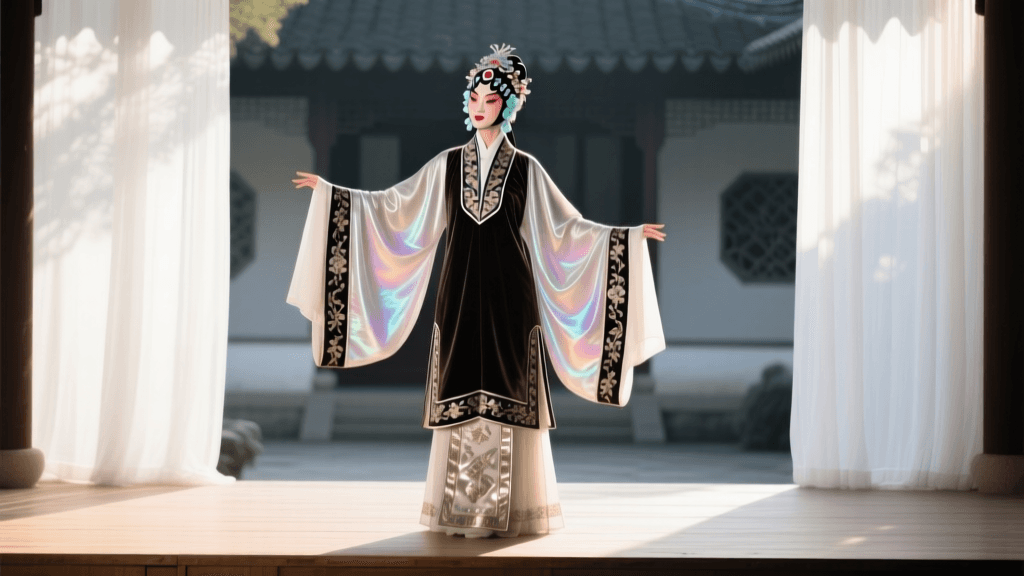
Perhaps the most iconic extension of the Hanfu sleeve in performance arts is the Shuixiu, or water sleeve. Originally an exaggeration of the long, flowing cuffs of Hanfu inner garments, water sleeves are now separate white silk or chiffon extensions sewn onto the cuffs of the Mang or Pei. Mastering the flick, ripple, and fold of the water sleeve takes years of training. In 2026, performers favor a specialized silk-chiffon blend that is weighted at the hem with micro-lead threading, allowing for sharper, more controlled snaps under bright LED stage lighting.
2026 Material Innovations and Stage Lighting
The transition to volumetric LED lighting and high-definition broadcast streaming has fundamentally changed how opera Hanfu is constructed. Traditional heavy silks, while historically accurate, can appear flat or overly reflective under modern stage rigs. Furthermore, the physical toll of wearing heavily embroidered, non-breathable garments for three-hour performances has driven a demand for material innovation.
Below is a comparison of the primary fabrics utilized in 2026 professional opera Hanfu adaptations:
| Fabric Type | Weight (g/m²) | Lighting Interaction | 2026 Stage Application |
|---|---|---|---|
| Traditional Heavy Silk Satin | 120-150 | Absorbs light, rich depth | Kunqu scholarly roles, historical revivals |
| Performance Lurex-Silk Blend | 85-100 | Reflects LED, high brilliance | Peking Opera martial and imperial roles |
| Crepe-back Satin with Tech-Lining | 110 | Matte finish, soft drape | Female Dan roles, romantic Kunqu scenes |
| Bamboo-Charcoal Moisture-Wicking Base | 60 | N/A (Undergarment) | Universal base layer for heavy Mang robes |
A major breakthrough in 2026 is the use of gold couching techniques that utilize micro-woven metallic threads rather than solid gold foil wrapping. This prevents the 'blinding glare' effect on camera while maintaining the opulent texture expected of a Mang robe. Additionally, the inner linings of these heavy Hanfu-inspired garments now routinely feature bamboo-charcoal infused meshes, which regulate body temperature and wick away sweat, preserving the delicate outer embroidery from salt damage.
Sourcing, Fitting, and Maintenance for Troupes
For theater companies, university programs, and serious collectors looking to acquire stage-ready Hanfu opera garments in 2026, the market is highly specialized. Authentic, hand-embroidered pieces remain a significant investment, while machine-assisted alternatives offer budget-friendly options for touring companies.
Sourcing and Costs
- Bespoke Hand-Embroidered Mang Robe: Sourced directly from master workshops in Suzhou or Hangzhou. Expect to pay between $6,500 and $14,000 USD. Lead times are typically 4 to 6 months.
- Machine-Embroidered Pei Robe: Ideal for ensemble casts and touring. Prices range from $800 to $1,800 USD, utilizing high-tensile rayon threads that mimic silk sheen.
- Custom Water Sleeves: Usually priced per pair ($120 - $250 USD), requiring precise weight calibration based on the actor's height and arm strength.
Fitting Protocols
Proper fitting of a Hanfu-derived opera costume is vastly different from Western theatrical tailoring. The Mang robe, for instance, must be measured from the nape of the neck to a point exactly two inches above the stage floor. This specific clearance prevents the hem from catching under the thick-soled platform boots (hou di xue) worn by male officials, while allowing the actor to execute the Yuanba (circular walking) step without tripping. The shoulders must be padded and squared, extending beyond the actor's natural shoulder line to create the imposing, architectural silhouette characteristic of Ming Dynasty court aesthetics.
Maintenance and Preservation
The preservation of these garments in 2026 relies on strict, scientifically backed wardrobe protocols. Machine washing or traditional dry cleaning is strictly forbidden, as the solvents can dissolve the natural glues used in the gold couching and destabilize the silk fibers.
Modern theater wardrobes now utilize ozone treatment chambers to neutralize odors and bacteria after performances. This non-invasive method ensures that the heavy perspiration generated during martial sequences does not degrade the historical Hanfu silhouettes over time.
For spot cleaning, costumers use specialized, pH-neutral enzymatic foams applied with micro-brushes, working strictly in the direction of the silk weave. Garments are stored flat in acid-free tissue paper within climate-controlled cedar chests, preventing the deep creases that can permanently fracture metallic embroidery threads.
The Role of Kunqu in Preserving Hanfu Aesthetics
While Peking Opera often favors bold colors and high-contrast martial aesthetics, Kunqu Opera remains the bastion of refined, scholarly Hanfu elegance. Recognized by UNESCO's Intangible Cultural Heritage registry as a masterpiece of oral and intangible heritage, Kunqu's slower, more deliberate choreography demands costumes that move like water. The subtle sway of a cross-collar Pei or the gentle cascade of a pleated skirt (mamianqun) is just as critical to the performance as the singing itself.
In 2026, the continued global revival of the Hanfu movement has deeply influenced Kunqu productions. Audiences are increasingly knowledgeable about historical textiles, prompting directors to strip away the garish, synthetic additions of the late 20th century in favor of historically accurate, muted color palettes and natural silk lusters. This synergy between the modern Hanfu community and traditional performing arts ensures that the theatrical descendants of China's historical dress continue to evolve, captivating new generations while honoring the meticulous craftsmanship of the past.