2026 Kyoto Kimono & Seoul Hanbok Tailoring Workshops Compared
The Renaissance of Heritage Tailoring in 2026
The global shift toward slow fashion and heritage craftsmanship has reached a pivotal moment in 2026. For textile enthusiasts, fashion historians, and independent designers, learning traditional Asian garment making is no longer just a niche hobby; it is a vital pursuit of cultural preservation and sustainable design. East Asia remains the epicenter of this movement, with Japan and South Korea offering the most immersive, technically rigorous workshops in the world. Rather than simply purchasing finished garments, a new generation of makers is traveling to Kyoto and Seoul to study the architectural precision of the kimono and the fluid, structural elegance of the hanbok. This comprehensive guide compares the premier tailoring masterclasses and draping seminars available in 2026, providing you with the exact costs, techniques, and application strategies needed to secure your place in these highly competitive programs.
Kyoto Kimono Tailoring Masterclasses: Precision and Yuzen Dyeing
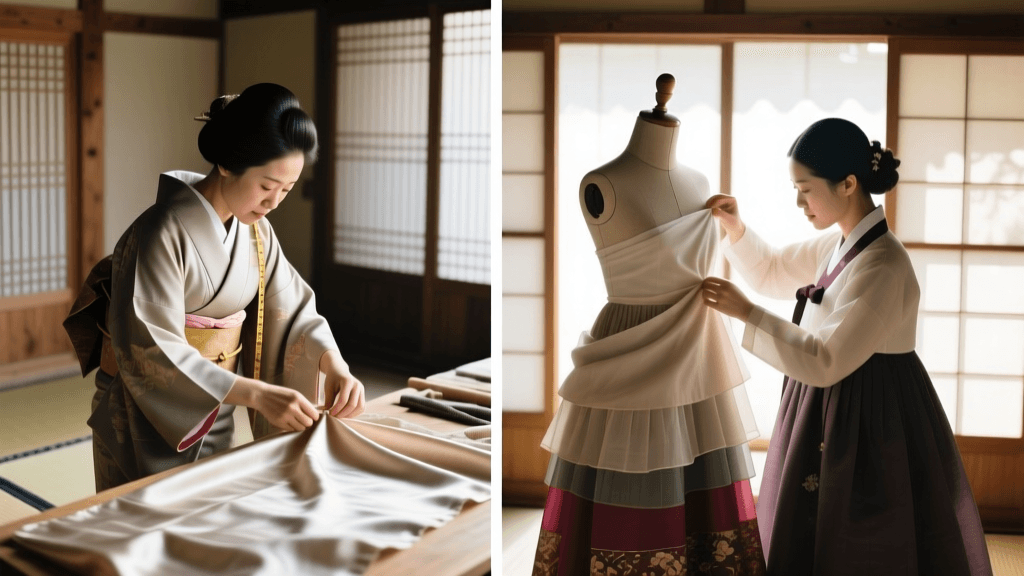
Kyoto remains the undisputed capital of Japanese textile arts. In 2026, the city's masterclasses focus heavily on the intersection of traditional straight-line cutting, known as chokusen-dachi, and the meticulous application of Yuzen resist dyeing. Unlike Western tailoring, which relies on curved seams and darts to contour the body, kimono construction utilizes a geometric, zero-waste approach. The fabric is cut into straight panels based on the traditional shaku measurement system, where one shaku equals approximately 37.8 centimeters. This method ensures that the garment can be entirely disassembled, cleaned, and re-tailored, a cornerstone of Japanese sustainability.
According to the Kyoto Museum of Traditional Crafts, the 2026 curriculum for international students has been expanded to include hands-on experience with Tango chirimen, a highly prized silk crepe from the northern Kyoto coast. Students spend their mornings mastering the use of the hera, a specialized bamboo spatula used to mark silk without leaving permanent ink stains. Afternoons are dedicated to the basting process, using long, temporary stitches to hold the delicate silk panels together before the final sewing. The physical toll of hand-sewing heavy silk linings is significant, but the resulting structural integrity of a hand-stitched kimono is unparalleled. Master artisans emphasize that the tension of the thread must be perfectly calibrated to allow the silk to breathe and drape naturally over the wearer's obi sash.
Seoul Hanbok Construction Seminars: Curves and Goreum Tying
While the kimono is defined by its straight lines, the traditional Korean hanbok is celebrated for its graceful curves and volumetric silhouettes. The 2026 hanbok construction seminars in Seoul focus intensely on the baerae, the elegant, curved underarm line of the jeogori (jacket), and the intricate pleating of the chima (skirt). The Korean measurement system, utilizing the cheok (approximately 30.3 centimeters), requires a different spatial awareness from the maker, particularly when calculating the generous ease required for the hanbok's signature flowing movement.
The National Museum of Korea frequently partners with local artisan guilds to host intensive draping seminars that highlight the historical evolution of the hanbok's proportions. In 2026, a major focus of these workshops is the revival of Myeongju, a traditional Korean silk that is lighter and more breathable than Japanese crepe, making it ideal for the layered aesthetics of the hanbok. One of the most challenging and rewarding modules in the Seoul seminars is the creation and tying of the goreum, the long, flowing ribbons that fasten the jacket. The modern standard for the goreum knot was established in the late 20th century, but 2026 seminars are now teaching the older, more complex Joseon-era tying techniques, which require precise manipulation of the silk's grain to ensure the ribbons fall in perfect, symmetrical arcs.
2026 Workshop Comparison: Kyoto vs. Seoul
Choosing between a kimono and hanbok workshop depends on your design goals, budget, and the specific tailoring philosophies you wish to absorb. Below is a detailed comparison of the standard two-week intensive programs available in 2026.
| Feature | Kyoto Kimono Intensive | Seoul Hanbok Seminar |
|---|---|---|
| Duration | 14 Days (120 Hours) | 14 Days (100 Hours) |
| 2026 Tuition Cost | ¥185,000 (Approx. $1,250 USD) | ₩1,450,000 (Approx. $1,080 USD) |
| Primary Techniques | Chokusen-dachi (straight cutting), Yuzen resist dyeing, basting | Baerae (curved sleeves), Chima pleating, Goreum tying |
| Fabric Focus | Tango chirimen silk crepe, Rinzu figured satin | Myeongju silk, Moshi ramie |
| Measurement System | Shaku (37.8 cm) | Cheok (30.3 cm) |
| Language Support | Japanese with English interpreters | Korean with English subtitles/guides |
Essential Tools for the 2026 Garment Maker
While most workshops provide the heavy equipment and specialized silks, serious students are expected to bring their own personal hand tools. Investing in high-quality, traditional tools before your 2026 trip will significantly enhance your learning experience.
- Hera (Bamboo Spatula): Essential for marking silk. Unlike chalk or disappearing ink, the hera creates a temporary crease in the fabric's grain that vanishes after steaming. Look for ones made from aged, smoked bamboo to prevent splintering on delicate chirimen.
- Shaku Ruler: A traditional Japanese measuring stick. While metric rulers are common, learning to read a shaku ruler is crucial for understanding vintage kimono patterns and communicating with Kyoto masters.
- Silk Weights (Bunchin): Heavy, smooth stones or brass weights used to hold slippery silk in place on the cutting table. You will need at least four to manage the long, narrow kimono panels.
- Korean Thimble (Golmu): Unlike Western metal thimbles, the traditional Korean golmu is often made of leather or layered cloth, protecting the side of the finger while allowing for the high-tension pulling required when sewing thick hanbok collars.
Modern Styling and 2026 Runway Integration
A significant addition to the 2026 workshop syllabi is the integration of traditional garments into contemporary wardrobes. The Korean Craft and Design Foundation has introduced a final-week module in Seoul dedicated to styling the hanbok for modern urban environments. Students learn how to scale down the voluminous chima into midi-length skirts suitable for office wear, and how to pair a simplified jeogori with high-waisted denim. Similarly, Kyoto workshops now offer seminars on upcycling vintage, damaged kimono silks into modern haori jackets and wide-leg trousers. This fusion of historical construction techniques with modern silhouette design is driving a massive resurgence in demand for traditionally trained tailors who understand both the heritage and the contemporary market.
Application Timelines and Visa Requirements for 2026
Securing a spot in these elite 2026 workshops requires meticulous planning. Applications for the spring and autumn cohorts typically open in September of the preceding year. Because class sizes are strictly limited to eight students to ensure personalized instruction from master artisans, portfolios or detailed statements of intent are often required. For international applicants, Japan and South Korea both offer specific cultural activity visas for courses exceeding 90 days. However, the standard two-week intensives fall under standard tourist or short-term business visas, which are easily obtainable for most Western passport holders. It is highly recommended to book your accommodations at least six months in advance, as the neighborhoods surrounding the Kyoto craft centers and Seoul's Insadong district experience peak occupancy during the 2026 cherry blossom and autumn foliage seasons.
Conclusion
Mastering the art of traditional Asian garment making is a profound journey into the history, mathematics, and aesthetics of Eastern culture. Whether you are drawn to the geometric zero-waste precision of the Kyoto kimono or the sweeping, curved elegance of the Seoul hanbok, the 2026 workshops offer an unparalleled opportunity to learn directly from living national treasures. By preparing thoroughly, understanding the unique tools and measurements, and respecting the deep cultural lineage of these garments, you will return home not just with a finished piece of clothing, but with a lifelong mastery of heritage craftsmanship.