Modern Hanbok in 2026 Global Fashion Media: Editorial Styling Guide
The Evolution of the Hanbok in Global Fashion Media
The global fashion landscape in 2026 has fully embraced the structural elegance of the hanbok. Once relegated to ceremonial wear or misunderstood as mere costume in Western media, Korea’s traditional garment has secured a permanent, respected position in high-fashion editorials. Following the cultural dialogues and appropriation debates of the early 2020s, 2026 marks a definitive new era. Top-tier publications like Vogue, Harper's Bazaar, and Elle are now collaborating directly with Korean heritage artisans and contemporary designers to feature the Saenghwal Hanbok (everyday hanbok) in their Spring/Summer and Autumn/Winter campaigns.
According to Encyclopedia Britannica, the hanbok's basic structure—comprising the jeogori (jacket) and chima (skirt) or baji (trousers)—has remained largely intact for centuries. However, the 2026 editorial interpretations are radically reimagining proportions, textiles, and styling contexts, transforming the garment into a canvas for avant-garde expression while maintaining its cultural soul.
Defining the 2026 Saenghwal Hanbok Aesthetic
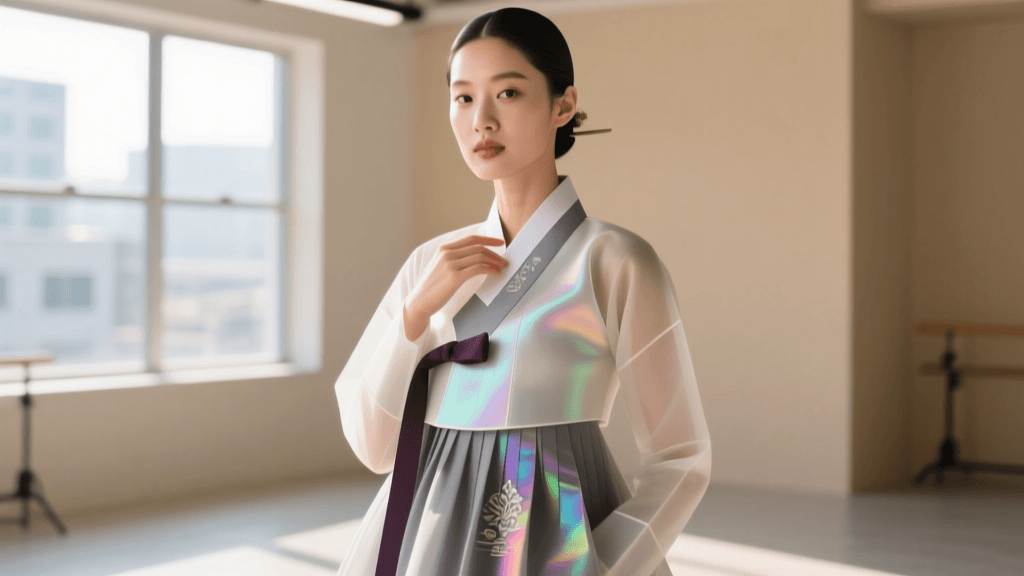
The Saenghwal Hanbok movement, which translates to "living hanbok," focuses on adapting traditional silhouettes for modern, dynamic lifestyles. In 2026 fashion media, this translates to garments that are structurally faithful but functionally liberated. Fashion directors are moving away from the stiff, heavily embroidered ceremonial gowns and instead favoring fluid, architectural pieces that interact beautifully with studio lighting and urban environments.
Key characteristics of the 2026 editorial hanbok include:
- Asymmetrical Hemlines: Breaking the traditional circular symmetry of the chima with high-low cuts that reveal structured footwear.
- Deconstructed Goreum: The traditional chest ties (goreum) are being elongated, thickened, or replaced by minimalist magnetic closures hidden beneath silk lapels.
- Muted Earth Tones & Hyper-Neons: Moving beyond the traditional Obangsaek (five cardinal colors), 2026 editorials favor either hyper-saturated digital neons or deeply muted, organic tones like matcha, charcoal, and oxidized copper.
Top Designers Dominating 2026 Editorial Spreads
To achieve an authentic yet fashion-forward look, global stylists are pulling pieces from a specific cohort of Seoul-based designers who have mastered the balance of heritage and haute couture.
Tchae Kim (Kim Young-Jin)
Tchae Kim is the undisputed master of the structural jeogori. For 2026 editorials, stylists rely on her brand for sharp, architectural jackets that mimic the rigidity of haute couture blazers. Her use of stiffened Myeongju silk creates dramatic, gravity-defying sleeves that photograph exceptionally well in high-contrast studio setups. A bespoke silk jeogori from Tchae Kim's 2026 atelier collection starts at $1,450, with lead times of 8 to 12 weeks.
Leesle (Hwang Yi-seul)
For street-style editorials and dynamic outdoor shoots, Leesle is the go-to brand. Hwang Yi-seul specializes in washable, durable cotton and linen blends that allow models to move freely. Her 2026 "Urban Nomad" line features hanbok-inspired wrap skirts and cropped jackets that integrate seamlessly with Western streetwear staples like oversized denim and combat boots.
Danha (Kim Dan-ha)
Favored by global pop icons and avant-garde fashion houses, Danha focuses on eco-friendly, upcycled textiles. Her 2026 collections utilize reclaimed vintage silk and deadstock brocade, making her pieces highly sought after for sustainability-focused fashion spreads. Danha’s designs often feature exaggerated, volumetric sleeves and corseted chima waistlines.
Actionable Styling Techniques for Fashion Editors
Styling a hanbok for a 2026 global fashion shoot requires a departure from traditional dressing rules. Here are actionable techniques for stylists and fashion students looking to integrate the garment into contemporary editorials:
1. Silhouette Manipulation and Proportions
The traditional hanbok relies on a voluminous lower half and a fitted, cropped upper half. To modernize this for 2026 high fashion, disrupt the ratio. Pair a cropped, structural jeogori with wide-leg, high-waisted tailored wool trousers instead of a skirt. For high-waisted editorial trousers, crop the jeogori hem to sit exactly 1.5 inches above the navel, creating a sharp, elongated leg line that appeals to modern luxury aesthetics.
2. Fabric Mixing and Layering
Contrast is the visual hook of modern editorials. Layer a delicate, translucent silk jeogori over a structured vegan leather bustier or a heavy, ribbed-knit turtleneck. The juxtaposition of traditional Korean silk against industrial, Western textiles creates a compelling visual narrative that resonates with contemporary fashion critics.
3. Reimagining the Norigae
The norigae is a traditional decorative pendant tied to the goreum or waist. In 2026, stylists are repurposing oversized, jewel-encrusted norigae as structural bag charms on luxury handbags, or pinning them to the lapels of oversized Western blazers to introduce a subtle Korean heritage accent to standard suiting.
"The hanbok is no longer just a subject of cultural exhibitions; it is an active participant in the global fashion dialogue. In 2026, we style it not as a costume, but as a masterclass in volume and architectural tailoring." — Senior Fashion Director, Paris Edition
2026 Global Media Hanbok Trend Comparison
The following table outlines how different sectors of the global fashion media are approaching the hanbok in their 2026 publications:
| Media Sector | Preferred Hanbok Style | Key Designer Focus | 2026 Styling Priority |
|---|---|---|---|
| High-Fashion Couture (e.g., Vogue) | Architectural, stiffened silk | Tchae Kim | Exaggerated sleeve volume and sharp lapels |
| Street Style & Youth (e.g., Hypebeast) | Cotton/linen blends, wrap skirts | Leesle | Mixing with sneakers, denim, and tech-wear |
| Avant-Garde / Indie (e.g., Dazed) | Upcycled, asymmetrical, corseted | Danha | Subversive layering and sustainable textiles |
| Bridal & Luxury Lifestyle | Modernized ceremonial, pastel silks | Bibaan (Custom) | Minimalist goreum, pearl embellishments |
Sourcing and Budgeting for 2026 Fashion Shoots
For international stylists and production teams, sourcing authentic, high-quality modern hanbok requires planning and a dedicated budget. In 2026, the most prestigious showrooms are concentrated in Seoul's Bukchon Hanok Village and the Cheongdam-dong fashion district.
- Rental vs. Purchase: While some showrooms offer editorial rentals (typically ranging from $150 to $400 per day per garment), bespoke purchases are often required for highly specific custom fits or rare archival textiles.
- Budgeting: A complete, editorial-ready Saenghwal Hanbok ensemble (jeogori, chima/baji, and undergarments) from a recognized designer will cost between $1,200 and $3,500 in 2026.
- Undergarments (Sokgot): Never skip the traditional under-layers. The volume of the chima relies entirely on the sokchima (underskirt) and dan-sokgot. Budget an additional $150 for proper structural undergarments, or the outer skirt will collapse on camera.
- Shipping and Customs: Allow at least 3 weeks for international DHL/FedEx shipping from Seoul to New York or Paris, factoring in potential customs holds for high-value silk garments.
Navigating Cultural Appreciation in Fashion Media
As the hanbok's popularity surges, the responsibility to portray it with cultural accuracy and respect is paramount. The fashion industry has learned hard lessons from past missteps, and 2026 editorial guidelines are strict regarding cultural appreciation versus appropriation.
Institutions like the Victoria and Albert Museum's Asian Collections emphasize the importance of understanding the historical and social context of traditional garments before they are placed on a runway or in a magazine spread. To ensure respectful styling:
- Avoid "Costuming": Do not mix the hanbok with stereotypical or unrelated Asian cultural props (e.g., bamboo hats, chopsticks, or geisha-style makeup). The hanbok is distinctly Korean and must be styled within its own cultural or a strictly modern, neutral context.
- Respect the Collar (Git): The left side of the jeogori collar must always overlap the right side. Reversing this is traditionally reserved for dressing the deceased. A skilled stylist or on-set cultural consultant must verify the wrap direction before the camera clicks.
- Credit the Artisans: Always credit the specific Korean designer and, if applicable, the regional textile artisans who wove the silk. Erasing the origin of the garment in favor of a vague "Asian-inspired" label is unacceptable in 2026 fashion journalism.
Conclusion
The integration of the hanbok into global fashion media in 2026 is a testament to the garment's timeless adaptability and the visionary work of contemporary Korean designers. By understanding the structural nuances of the jeogori, respecting the cultural heritage of the silhouette, and employing bold, modern styling techniques, fashion editors can create breathtaking editorials that honor the past while defining the future of global style. As the lines between Eastern heritage and Western haute couture continue to blur, the modern hanbok stands as a pillar of architectural beauty and cultural pride.