Pacific Northwest Button Blanket Sourcing Guide 2026
The Living Tradition of the Pacific Northwest Button Blanket
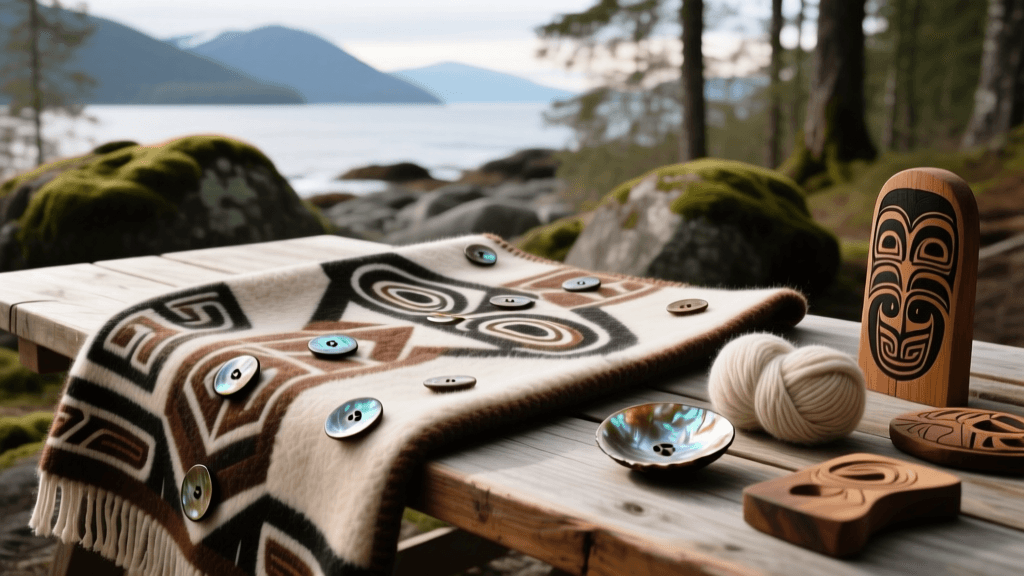
The button blanket is one of the most striking and culturally significant garments to emerge from the Pacific Northwest Coast. Developed in the late 19th century following the introduction of trade goods, these magnificent textiles are worn by the Haida, Tlingit, Kwakwaka'wakw, Tsimshian, and other coastal nations during potlatches, dances, and ceremonies. Unlike the woven Chilkat or Ravenstail blankets, the button blanket is a masterful fusion of Indigenous crest design and imported textiles, characterized by dark wool backgrounds, vibrant red appliqué, and the rhythmic, percussive shine of hundreds of shell buttons.
As we navigate the cultural revitalization movements of 2026, the creation of button blankets remains a deeply respected practice. Sourcing the correct materials is not merely a matter of aesthetics; it is about honoring the weight, drape, and acoustic properties required for ceremonial dance. Whether you are an Indigenous artisan continuing your family's lineage of regalia makers, or a textile student studying the intersection of global trade and Indigenous adaptation, understanding the modern supply chain for these traditional materials is essential.
Sourcing the Foundation: Melton Wool and Trade Cloth
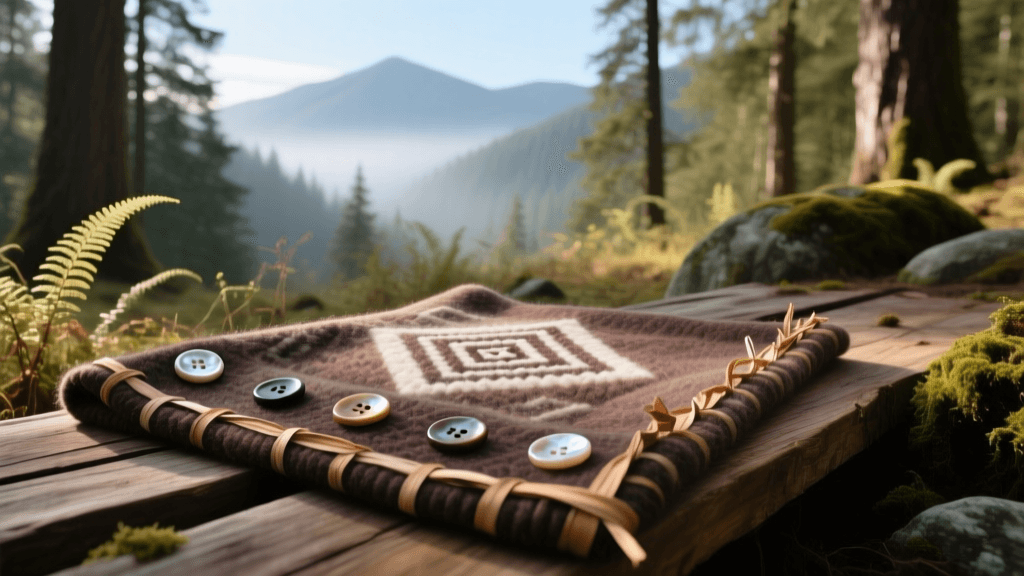
The foundation of any authentic button blanket is a heavy, dense wool that can support the weight of hundreds of shell buttons without sagging or tearing. Historically, this was achieved using Hudson's Bay point blankets or heavy trade strouding. Today, the gold standard for regalia makers is 100% wool Melton.
In 2026, global supply chain shifts have impacted the availability of traditional English Melton wool, prompting many Northwest Coast artisans to turn to specialized North American and European textile mills. When sourcing Melton wool for a button blanket, you must look for a weight of at least 24 to 30 ounces per linear yard. This heavy weight ensures the blanket drapes properly over the shoulders and swings with the necessary momentum during dance.
- Base Colors: Navy blue and black are the traditional and most widely accepted base colors. Black provides a stark, dramatic contrast for red appliqué, while navy blue connects to the historic trade blankets of the 19th century.
- Appliqué Broadcloth: For the crest and border detailing, artisans use a lighter, tightly woven wool broadcloth or flannel in vibrant red. In 2026, many makers source high-grade merino wool blends that resist fraying when cut into the complex ovoid and U-form shapes characteristic of Northwest Coast formline design.
- Sourcing Tip: Avoid synthetic blends. Polyester-cotton blends lack the acoustic 'thud' required when the blanket is snapped during a dance, and they do not hold the heavy tension of shell buttons over time.
The Crest and the Shine: Mother-of-Pearl and Abalone
The defining feature of the button blanket is, of course, the buttons. The rhythmic clacking of shell buttons against one another during a potlatch dance is a sound that resonates through the ancestral halls of the Northwest Coast. Traditionally, these were made from abalone, dentalium, and mother-of-pearl (MOP) traded or harvested locally.
In 2026, sustainable shellfish harvesting regulations and marine conservation efforts have changed how artisans source these materials. While hand-carved abalone buttons remain the pinnacle of heirloom regalia, laser-cut mother-of-pearl buttons have become the standard for outlining crests due to their uniformity and ethical sourcing certifications.
2026 Button Sizing and Application Chart
| Button Type | Size Range | Best Application | 2026 Sourcing Note |
|---|---|---|---|
| White Mother-of-Pearl | 15mm - 20mm | Outlining crest shapes, border detailing, filling background spaces | Ensure ethical shellfish harvesting certifications; widely available from lapidary suppliers |
| Dark Mother-of-Pearl | 20mm - 25mm | Contrast outlining on red broadcloth, creating depth in formline joints | Slightly rarer; source from specialized Pacific Rim lapidary artisans |
| Abalone Shell | 30mm - 50mm | Centerpiece accents, eyes of animal crests, high-status border nodes | Highly regulated; prioritize reclaimed vintage stock or certified sustainable aquaculture |
| Wooden Core w/ Shell | 25mm+ | Heavy dance regalia to reduce overall blanket weight and shoulder strain | Custom turned by local Indigenous woodworkers and inlaid by shell artists |
Sacred Accents: Western Red Cedar Bark and Ermine
While wool and shell form the body of the blanket, the borders and necklines are often adorned with sacred natural materials. Western Red Cedar (Thuja plicata) inner bark is traditionally processed into a soft, fibrous material that can be woven or tied into fringes along the bottom edge of the blanket.
Harvesting cedar bark is a highly seasonal and spiritual practice. In the Pacific Northwest, the optimal harvesting window occurs in late May and June when the sap is running, allowing the outer bark to be cleanly separated from the inner cambium layer. In 2026, Indigenous land stewardship programs and tribal forestry departments have established strict protocols for bark harvesting to ensure the health of the trees. Artisans must obtain permits and follow traditional methods of taking only a vertical strip from one side of the tree to prevent girdling and death.
Historically, the white pelts of ermine (short-tailed weasels) were sewn along the neckline and top border to signify high rank and spiritual purity. Due to modern wildlife protection laws and shifting ethical standards, many regalia makers in 2026 are turning to high-quality, ethically sourced faux furs or collaborating with Indigenous trappers who utilize byproduct pelts from regulated, sustainable subsistence trapping programs.
Modern Notions: Thread, Sinew, and Needles
Sewing a button blanket is an exercise in endurance. The sheer weight of the materials demands heavy-duty notions. Traditional sinew, while historically accurate, can be brittle and difficult to source in the quantities needed for a modern dance blanket.
Today's regalia makers rely on advanced synthetic alternatives that mimic the properties of sinew while offering superior tensile strength. Waxed polyester thread or flat artificial sinew (often made from high-denier nylon) are the standards in 2026. These materials grip the wool tightly, preventing the heavy shell buttons from loosening during vigorous movement. When attaching buttons, artisans use heavy-duty upholstery needles or specialized leather needles with reinforced eyes to prevent breakage when pulling thick, waxed threads through dense Melton wool and hard shell.
Design Protocols and Cultural Intellectual Property
It is vital to address the cultural protocols surrounding the creation of button blankets. In 2026, the conversation around Indigenous intellectual property and cultural appropriation is more prominent than ever. The crests depicted on button blankets—such as the Raven, Eagle, Killer Whale, or Bear—are not merely decorative motifs; they are the legal and spiritual property of specific clans, families, and nations.
Only individuals who hold the hereditary right to display a specific crest may commission or wear a blanket bearing that design. For non-Indigenous artisans, students, or collectors, it is imperative to understand that reproducing these crests without permission is a violation of Indigenous cultural sovereignty. Institutions like the Sealaska Heritage Institute provide extensive resources and guidelines on the ethical engagement with Northwest Coast art, emphasizing the importance of supporting Indigenous artists directly rather than attempting to replicate sacred regalia.
Preservation and Care for Heirloom Regalia
A well-made button blanket is an heirloom meant to be passed down through generations. However, the combination of organic wool, shell, and cedar bark makes these garments susceptible to environmental damage. Proper archival storage is critical.
In 2026, museum conservation standards recommend storing button blankets flat in acid-free, archival-quality textile boxes. Hanging a button blanket for long periods will cause the heavy wool to stretch and the threads holding the buttons to snap under the gravitational stress. To protect against moth damage, avoid chemical mothballs, which can degrade the shell's nacre and leave toxic residues on the wool. Instead, utilize natural deterrents like blocks of aromatic cedar, and employ the deep-freeze method (sealing the blanket in a plastic bag and freezing it for 72 hours) to eliminate any existing textile pests before long-term storage.
For those looking to study historical examples and understand the evolution of these techniques, the Museum of Anthropology at UBC and the Burke Museum maintain world-class collections of Northwest Coast regalia, offering invaluable visual references for contemporary artisans striving to maintain the highest standards of traditional craftsmanship.