Mormon Temple Garments 2026: History, Styles & Buying Guide
Understanding Mormon Temple Garments
For members of The Church of Jesus Christ of Latter-day Saints (often referred to as the LDS or Mormon Church), temple garments represent a deeply personal, sacred, and lifelong commitment. Often misunderstood by those outside the faith, these undergarments are not magical or mystical; rather, they serve as a constant, physical reminder of the covenants (promises) made with God during the sacred temple endowment ordinance. As we navigate the landscape of religious and traditional clothing in 2026, the LDS temple garment stands out as a unique intersection of 19th-century American history, modern textile innovation, and profound spiritual devotion.
From an anthropological and comparative religious perspective, the use of sacred undergarments is not unique to the Latter-day Saint tradition. Similar practices can be found globally, such as the Tallit Katan (a fringed undershirt worn by Orthodox Jewish men) or the Kachera (a specific undergarment worn by initiated Sikhs). In each of these traditions, the clothing acts as a boundary between the sacred and the profane, grounding the wearer's spiritual identity in their daily, physical reality. According to the official Gospel Topics Essay on Temple Garments, the garments are viewed by members as a form of spiritual armor, providing a daily reminder of their faith and moral commitments.
The Historical Evolution: From Nauvoo to the Modern Era
The origins of the LDS temple garment date back to the early 1840s in Nauvoo, Illinois. When the Prophet Joseph Smith introduced the temple endowment to early Church members, he also introduced the concept of the sacred garment. The original 19th-century design was a one-piece, full-body union suit that extended to the wrists and ankles, reflecting the modesty standards and practical undergarment styles of the Victorian era. These early garments were typically made of heavy cotton or wool flannel and were entirely handmade by the wearer or their family.
As the Church migrated to the American West and eventually expanded globally, the practical needs of the members necessitated design changes. In the 1920s and 1930s, the First Presidency of the Church authorized the splitting of the one-piece suit into a two-piece design (a top and bottom), which was a monumental shift for member comfort and hygiene. By the 1970s, as short-sleeved shirts and shorts became culturally acceptable and practical for warmer climates, the Church authorized short-sleeve and knee-length variations.
Entering the 21st century, the evolution accelerated. The Church began partnering with advanced textile manufacturers to introduce synthetic blends, moisture-wicking fabrics, and women-specific cuts. By 2026, the historical trajectory from a heavy, one-piece wool suit to a diverse, technologically advanced catalog of options reflects the Church's massive global demographic shift, with millions of members residing in tropical, humid, and highly active environments.
Sacred Symbolism and the Marks of the Covenant
What truly separates LDS temple garments from standard modest undergarments are the specific "marks" or symbols woven or embroidered into the fabric. These marks are not decorative; they are deeply symbolic, representing the covenants made during the temple endowment. They serve as visual and tactile reminders of the wearer's promise to live a moral life, dedicate their time and talents to God's work, and maintain personal integrity.
Because of these sacred marks, the garments are treated with a high degree of respect. Members are instructed to wear them day and night, removing them only for activities where they would be damaged or where wearing them is impractical, such as swimming, showering, or participating in contact sports. The garment is considered a private matter, and members generally do not discuss the specific details of the marks or the temple ceremonies with those who have not participated in them.
The 2026 Lineup: Fabrics, Fits, and Inclusivity
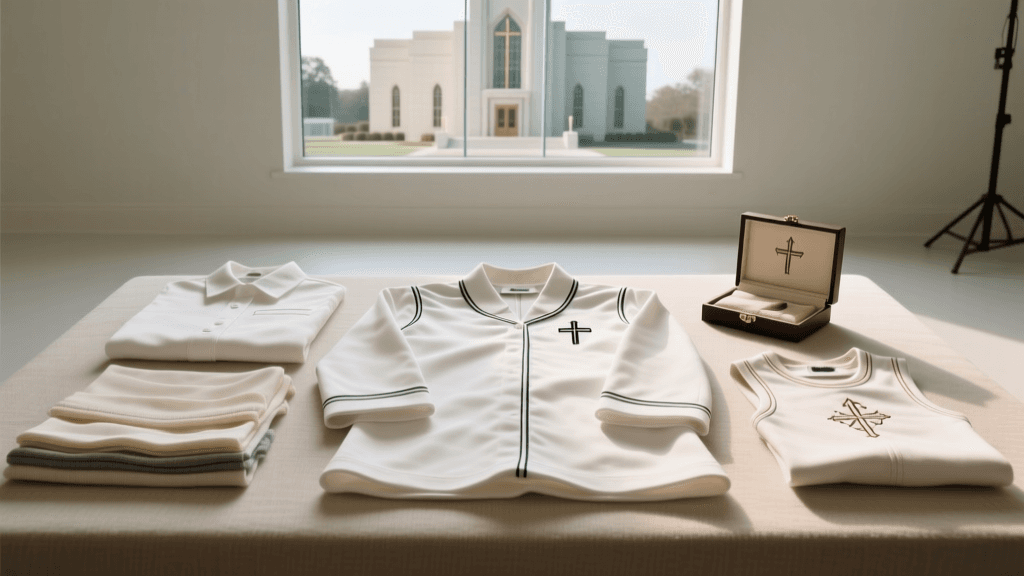
The 2026 catalog available through LDS Distribution Services represents the most diverse and inclusive lineup in the garment's history. Recognizing that a one-size-fits-all approach does not serve a global membership of over 17 million people, the Church now offers a wide array of fabrics, necklines, and hemlines.
2026 Fabric Technology Comparison
| Fabric Type | Best Climate / Use Case | Key Features (2026 Lineup) |
|---|---|---|
| Cotton | Temperate / Everyday Wear | Breathable, traditional feel, durable, 100% natural fiber. |
| Stretch Cotton | Active / Moderate Climates | Cotton-spandex blend for mobility, retains shape after washing. |
| Mesh | Hot / Humid Environments | Highly breathable, lightweight, quick-drying, ideal for tropical regions. |
| Ultra-Light | Extreme Heat / Travel | Microfiber blend, moisture-wicking, discreet under thin clothing. |
| Sport | Athletics / Gym / Labor | Sweat-wicking, anti-odor properties, maximum stretch and durability. |
Women's Styles in 2026
Historically, women's garments were limited to basic, high-necked, cap-sleeve designs that often conflicted with modern professional and casual wardrobes. Following extensive feedback from female members over the last decade, the 2026 lineup offers unprecedented versatility. Women can now choose from:
- Camisoles: Designed with wider straps and lower necklines to remain hidden under modern blouses and dresses while keeping the sacred marks intact and properly placed.
- Cap Sleeves & T-Sleeves: Available in round-neck, V-neck, and scoop-neck variations.
- Bottoms: Options range from standard briefs to French-cut, boy-shorts, and knee-length capris, accommodating everything from athletic wear to formal skirts.
- Maternity Options: Specialized stretch panels and empire-waist tops designed to accommodate pregnancy comfortably without compromising the placement of the covenant marks.
Men's Styles in 2026
Men's options have similarly evolved to prioritize comfort and discretion. The 2026 catalog includes crew-neck and V-neck tops (both t-shirt and tank-top styles). Bottoms include traditional briefs, boxer-briefs, and extended knee-length options for members who wear shorts for work or recreation in hot climates.
Purchasing and Global Distribution in 2026
Access to temple garments is strictly regulated by the Church. As of 2026, only members who have received their temple endowment are authorized to purchase them. This authorization is linked digitally to the member's official Church Account. Attempting to purchase garments without this digital clearance is impossible through official channels.
Members can purchase garments through local Distribution Centers located in meetinghouses and temples worldwide, or via the Official Church Distribution Store online. In 2026, the Church's global logistics network has significantly improved international shipping. Regional distribution hubs in South America, Africa, and Asia have reduced wait times for international orders from several weeks to just a few days. Pricing in 2026 remains heavily subsidized by the Church to ensure accessibility; standard cotton tops typically range from $10 to $12 USD, while specialized fabrics like the Ultra-Light or Sport lines may range from $14 to $18 USD.
Care, Maintenance, and Respectful Disposal
Caring for temple garments in 2026 is straightforward, though it is governed by principles of respect. A common historical myth was that garments had to be washed separately from other clothing. Current Church handbooks and guidelines clarify that garments can be washed and dried with regular laundry using standard detergents. However, members are encouraged to treat them respectfully, avoiding tossing them on the floor or treating them as common rags.
When a garment becomes worn out, torn, or unusable, it cannot simply be thrown in the trash or donated to a thrift store due to the sacred marks it bears. The official 2026 guidelines for disposal require members to carefully cut out the marks from the fabric and destroy them (usually by shredding or cutting them into unrecognizable pieces). Once the marks are removed and destroyed, the remaining fabric can be discarded in the regular trash. While older generations of members often burned worn-out garments, the Church no longer recommends burning due to environmental concerns and fire hazards, favoring the cut-and-discard method.
Conclusion
The Mormon temple garment is far more than a piece of clothing; it is a living, breathing artifact of American religious history that has adapted to the modern world without losing its core spiritual significance. The 2026 lineup of LDS garments reflects a faith that is deeply rooted in 19th-century covenants while fully embracing 21st-century textile science, global diversity, and the practical needs of its members. Whether crafted from traditional cotton or advanced moisture-wicking mesh, the garment remains a quiet, hidden anchor for millions of Latter-day Saints navigating the complexities of the modern world.