Northwest Coast Button Blankets & Regalia Guide 2026
The Living Tradition of Northwest Coast Regalia
The Indigenous peoples of the Pacific Northwest Coast—including the Tlingit, Haida, Tsimshian, Kwakwaka'wakw, and Nuu-chah-nulth—possess one of the most visually striking and culturally profound textile and garment traditions in the Americas. Far from being static relics of the past, these dress traditions are living, evolving practices that continue to define ceremonial life, potlatches, and community gatherings in 2026. For contemporary artisans, dancers, and cultural preservationists, creating authentic regalia requires a deep understanding of both ancestral techniques and modern, ethical material sourcing.
According to the Sealaska Heritage Institute, the revitalization of Northwest Coast arts has seen a massive surge in the 2020s, with a new generation of weavers and seamstakes taking up the mantle of their ancestors. However, as environmental regulations tighten and global supply chains shift, sourcing the right materials in 2026 requires careful navigation. This guide explores the anatomy of the iconic button blanket, the intricacies of Chilkat and Ravenstail weaving, and where to find the best ethical materials today.
The Anatomy and Evolution of the Button Blanket
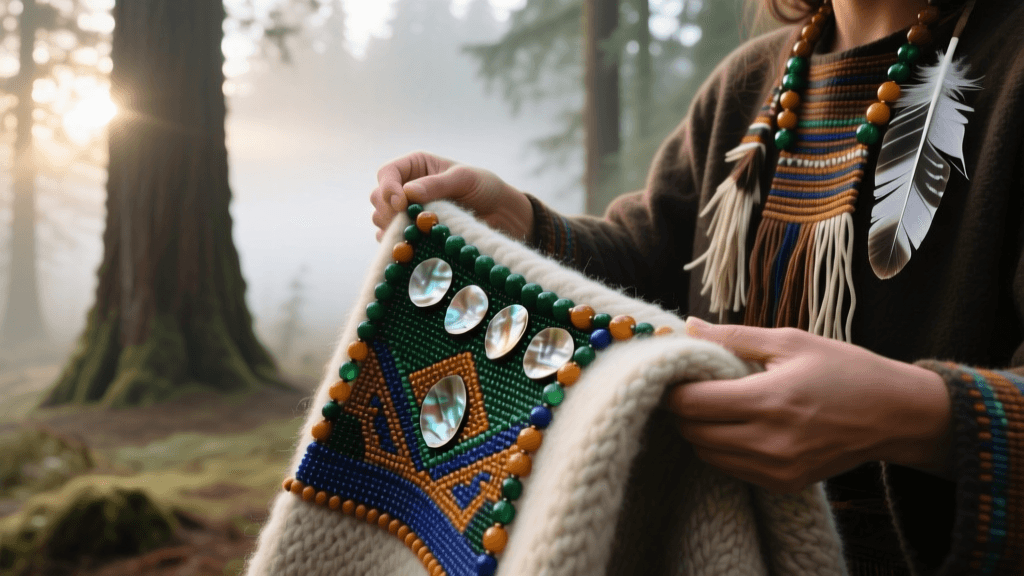
The button blanket, or ceremonial robe, is a hallmark of Northwest Coast regalia. Unlike the ancient woven garments that preceded it, the button blanket emerged in the mid-19th century following the introduction of trade goods. Indigenous women brilliantly adapted Hudson's Bay Company point blankets, wool stroud, and glass beads to create a new medium for displaying clan crests and family histories.
Today, the button blanket remains the premier ceremonial garment worn during potlatches and dances. The construction relies on a heavy wool base, typically in black or dark navy, which serves as the background for vibrant red, blue, green, or white appliqué. The appliqué forms the 'formline' design—the distinctive, flowing, and highly structured artistic style of the region that depicts eagles, ravens, bears, whales, and supernatural beings. The garment is heavily adorned with hundreds, sometimes thousands, of buttons, which catch the firelight and modern stage lighting during dances, creating a mesmerizing visual and auditory effect.
2026 Material Sourcing Guide for Artisans
Creating a museum-quality, dance-ready button blanket in 2026 requires specific materials that balance durability, drape, and cultural authenticity. Here is what contemporary makers need to know about sourcing.
Melton Wool: The Foundation
In 2026, the gold standard for button blanket bases is 100% wool Melton cloth. Melton is heavily milled, creating a dense, felt-like fabric that does not fray when cut, making it absolutely essential for the intricate appliqué work of formline designs. Artisans should look for Melton wool weighing between 24 oz and 30 oz per linear yard. Lighter weights will not support the heavy beadwork and shell embellishments, causing the blanket to sag, while anything heavier becomes too stiff for a dancer to move comfortably.
Sourcing 100% wool Melton has become slightly more challenging due to shifting global textile manufacturing, but specialized heritage fabric suppliers in the US and Canada still stock the required weights. When purchasing the red appliqué wool, a slightly lighter weight (around 18 oz to 20 oz) broadcloth or flannel is often preferred so the blanket does not become overly bulky at the seams.
Beadwork and Embellishments
While early button blankets utilized large trade buttons, modern 2026 regalia often features intricate beadwork outlining the formline designs, alongside traditional buttons. For outline beadwork, Japanese seed beads (sizes 11/0 or 12/0) from manufacturers like Miyuki or Toho are the industry standard due to their uniform shape, which ensures smooth, even lines along the curved edges of the crest. For filling in larger areas or creating fringe, larger glass beads, brass sequins, and traditional mother-of-pearl buttons are heavily utilized.
Ethical Sourcing of Abalone and Dentalium
Abalone shell (Haliotis rufescens) is sacred to Northwest Coast cultures, used for jewelry, mask inlays, and garment embellishments. Due to severe overharvesting and environmental shifts, wild red abalone harvesting remains strictly regulated and largely closed in many parts of the Pacific coast as of 2026. To respect conservation laws and ensure ethical practices, contemporary artisans have largely shifted to two alternatives:
- Farmed US Abalone: Sustainably raised in aquaculture facilities in California and Washington, providing legally harvested, high-quality shell.
- New Zealand Paua Shell: Harvested under strict, sustainable quotas, Paua offers the same iridescent blues and greens as traditional abalone and is widely accepted in the contemporary Indigenous art market.
Dentalium shells, traditionally used for fringe and chest pieces, are now frequently sourced from ethical international suppliers who harvest them as byproducts of the food trade, ensuring no species are targeted solely for the craft market.
Chilkat and Ravenstail Weaving in the Modern Era
While button blankets represent the post-contact evolution of regalia, Chilkat and Ravenstail weaving represent the ancient, pre-contact pinnacle of Northwest Coast textile art. Originating with the Tsimshian and perfected by the Tlingit, Chilkat robes are incredibly complex, featuring curved formline designs woven directly into the fabric using mountain goat wool and yellow cedar bark.
The Burke Museum notes that the revival of these weaving techniques is one of the most significant cultural achievements of the current era. In 2026, sourcing mountain goat wool is heavily managed. Weavers often collaborate directly with tribal hunters who harvest goats for subsistence, carefully cleaning and spinning the undercoat. Because mountain goat wool is incredibly rare and time-consuming to process, many emerging weavers practice their tension and technique using high-quality, commercially spun merino or Romney sheep wool before transitioning to the sacred mountain goat fiber for their final ceremonial pieces.
Yellow cedar bark (Callitropsis nootkatensis) is harvested in the spring when the sap is running. Weavers in 2026 are increasingly partnering with tribal forestry departments to ensure that bark stripping is done sustainably, taking only vertical strips from specific trees to ensure the forest's long-term health.
Regional Variations in Regalia
It is crucial to recognize that 'Northwest Coast' is a broad umbrella. The National Park Service's documentation on Tlingit culture highlights the distinct differences across regions:
- Northern (Tlingit, Haida, Tsimshian): Heavily focused on strict formline rules, Chilkat weaving, and intricate beadwork. Button blankets often feature a large central crest with smaller subsidiary crests.
- Central (Kwakwaka'wakw): Regalia is often more sculptural and three-dimensional, incorporating carved wooden masks, cedar bark neck rings, and vibrant, bold colors. Their woven blankets often feature geometric patterns rather than strict formline.
- Southern (Nuu-chah-nulth, Coast Salish): Known for incredible basketry, whaler's hats, and distinct spindle-whorl weaving traditions. Coast Salish garments often feature intricate geometric knitting and weaving patterns rather than the painted or appliquéd crests of the north.
Comparison Chart: Traditional vs. 2026 Contemporary Materials
| Material Component | 19th Century Historical Sourcing | 2026 Ethical & Contemporary Sourcing |
|---|---|---|
| Blanket Base | Hudson's Bay point blankets, trade stroud | 24oz - 30oz 100% Wool Melton cloth |
| Appliqué Fabric | Trade flannel, recycled military uniforms | 18oz Wool broadcloth, premium felt |
| Iridescent Shell | Wild harvested local Red Abalone | Sustainably farmed US Abalone, NZ Paua |
| Weaving Fiber | Wild mountain goat wool, dog wool | Subsistence-hunted goat, ethical Merino |
| Bark Fiber | Unregulated yellow cedar bark harvesting | Tribal forestry-managed sustainable stripping |
Caring for and Preserving Ceremonial Garments
A high-quality button blanket or woven robe is a massive investment of time, money, and spiritual energy. In 2026, museum-grade preservation techniques are increasingly being adopted by Indigenous families to protect their regalia between potlatches.
Garments should never be dry-cleaned using harsh modern chemicals, as this can strip the natural lanolin from the wool and dull the iridescence of the abalone shell. Instead, blankets are aired out in a clean, shaded environment after use. When storing, regalia must be folded carefully with acid-free tissue paper padding the folds to prevent permanent creasing of the Melton wool and to protect the glass beads from crushing against one another. Cedar boxes or breathable cotton storage bags are preferred over plastic bins, which can trap moisture and lead to mold growth on the natural fibers.
Conclusion
The creation of Pacific Northwest Coast regalia in 2026 is a powerful testament to Indigenous resilience and adaptation. By blending the strict, sacred rules of formline design and ancestral weaving with modern, ethically sourced materials, today's artisans ensure that the button blankets and Chilkat robes will continue to dance, sing, and tell the stories of their clans for generations to come. Whether you are a seasoned maker or a community member looking to commission a piece, understanding the origins and ethics of these materials is the first step in honoring this magnificent textile tradition.