Okinawan Ryusou and Bingata: Japan's Tropical Garment Traditions
Beyond the Mainland: The Ryukyuan Sartorial Identity
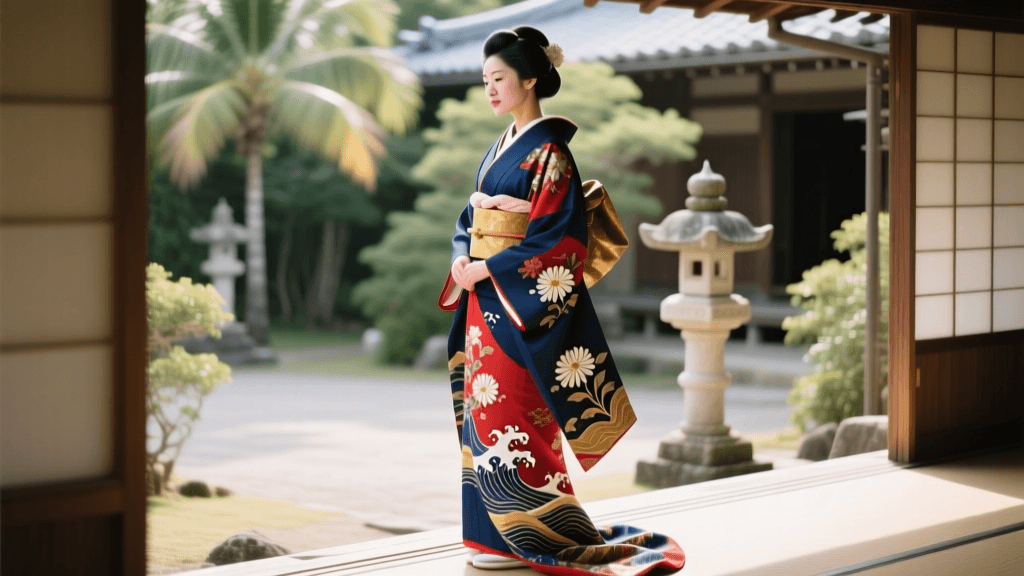
When discussing traditional Japanese clothing, the global imagination almost exclusively defaults to the mainland kimono—a structured, layered, and highly codified garment born from the temperate climates and samurai-era aesthetics of Kyoto and Edo. However, Japan’s southernmost prefecture of Okinawa boasts a radically different, deeply vibrant clothing tradition. Shaped by a subtropical climate, indigenous beliefs, and a rich history as the independent Ryukyu Kingdom (1429–1879), Okinawan traditional dress, known as Ryusou (琉装), represents one of the most fascinating regional variations in Asian textile history.
The Ryukyu Kingdom was a maritime trading hub that connected Japan, China, Korea, and Southeast Asia. This cosmopolitan exchange is woven directly into the fabric of Okinawan garments. According to the Okinawa Prefectural Museum, Ryukyuan textiles absorbed Chinese silk-weaving techniques, Southeast Asian dyeing methods, and indigenous animistic motifs, resulting in a sartorial culture that is distinctly separate from the mainland. For collectors, cultural enthusiasts, and travelers, understanding the Ryusou and its iconic textiles offers a masterclass in how geography and trade dictate fashion.
The Anatomy of the Ryusou
Unlike the restrictive, tightly bound silhouette of the mainland kimono, the Ryusou is designed for breathability, movement, and comfort in high humidity. The garments are generally loose-fitting, utilizing wide sleeves and lightweight, unlined fabrics.
Core Garment Components
- Uchikake (Outer Robe): Worn by both men and women of the noble classes, the Uchikake is a flowing, open-front robe. In Okinawa, it is often made of sheer, lightweight silk or ramie, allowing the vibrant inner layers to show through.
- Dujin (Inner Garment): A wrap-style tunic worn against the skin or over an underlayer. It features a relaxed collar that is not pulled tight against the neck, contrasting sharply with the rigid eri (collar) of mainland kimono.
- Kushunshi (Wrap Skirt): A long, pleated or flat wrap skirt worn by women, typically featuring bold geometric patterns or subtle resist-dyed motifs.
- Hachimachi (Headwear): A traditional turban-like headwrap worn by men, with specific colors and tying methods historically denoting social rank within the Ryukyu court.
Textiles of the Subtropics: Bingata, Bashofu, and Minsaa
The soul of the Ryusou lies in its textiles. The Agency for Cultural Affairs in Japan has designated several Okinawan textile techniques as Important Intangible Cultural Properties due to their complexity and historical significance.
Bingata: The Soul of Okinawan Resist Dyeing
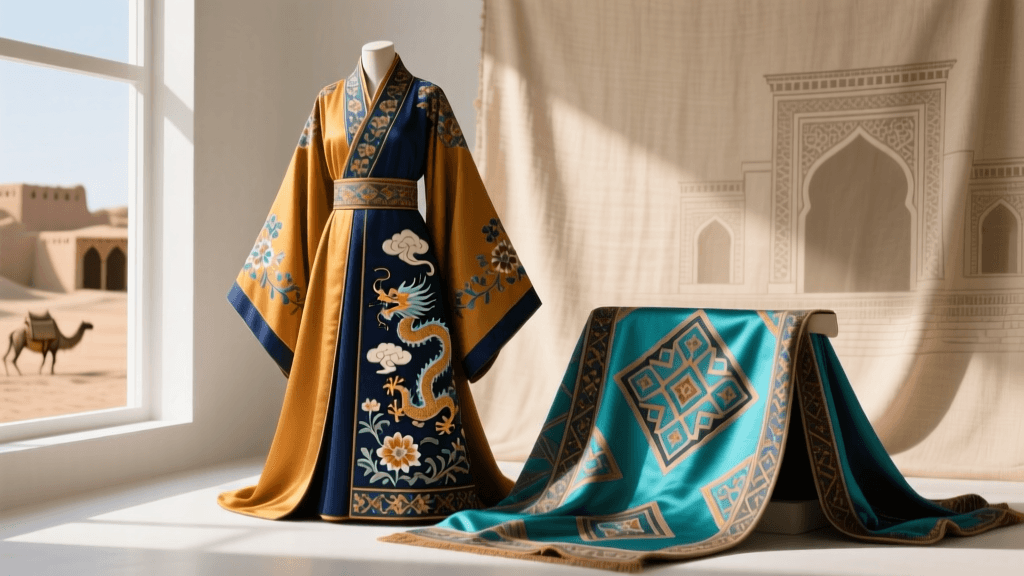
Bingata is a vibrant, stencil-based resist dyeing technique unique to Okinawa. Artisans carve intricate mulberry paper stencils, apply a sweet potato paste resist to the fabric, and then hand-paint mineral and plant-based pigments into the negative spaces. The motifs are distinctly tropical and auspicious: peonies, dragons, ocean waves, banana leaves, and hibiscus. Unlike mainland kimono, which strictly adhere to seasonal rules (e.g., cherry blossoms only in early spring), Bingata motifs are often worn year-round to evoke the eternal summer of the islands.
Kijoka no Bashofu: The Miracle of Banana Fiber
Before the widespread importation of cotton and silk, Okinawans wove Bashofu from the fibers of the Japanese fiber banana plant. The Association for the Promotion of Traditional Craft Industries notes that producing a single tanmono (bolt of cloth) requires the stalks of over 200 banana trees. The fibers are boiled, scraped, hand-twisted into microscopic threads, and woven into a fabric that resembles linen but is remarkably lightweight, crisp, and cool to the touch.
Minsaa: The Geometry of Eternal Love
Minsaa is a traditional indigo-dyed cotton weaving technique originating from the Yaeyama Islands. The name translates to 'cotton' (min) and 'narrow' (saa). Minsaa sashes are characterized by alternating geometric blocks of four and nine squares. In the local dialect, 'four' (yo) and 'nine' (kokono) sound like the phrase 'for all generations,' making the Minsaa sash a traditional symbol of eternal love and prosperity, often given as a betrothal gift.
Mainland Kimono vs. Okinawan Ryusou
To understand the practical differences between these regional variations, refer to the comparison chart below:
| Feature | Mainland Kimono | Okinawan Ryusou |
|---|---|---|
| Climate Adaptation | Temperate; layered, padded in winter | Subtropical; sheer, unlined, breathable |
| Silhouette | Structured, tubular, restrictive | Flowing, wide-sleeved, relaxed |
| Collar Style | Pulled tight, rigid, flat against neck | Loose, relaxed, showing inner layers |
| Fastening | Stiff, wide Obi tied at the back | Soft sash (Minsaa/Silk) tied at front/side |
| Motifs | Strictly seasonal, native flora/fauna | Year-round tropical, Chinese influences |
| Footwear | Tabi socks with Zori sandals | Barefoot or simple straw sandals |
Practical Guide: Commissioning, Buying, and Wearing
For textile collectors, fashion historians, or travelers looking to purchase authentic Ryukyuan garments, navigating the Okinawan market requires specific knowledge of sizing, costs, and wearing techniques.
Sizing and Measurements
Unlike Western clothing, the Ryusou is highly adaptable due to its wrap-style construction. However, understanding traditional measurements is crucial when buying vintage or commissioning custom pieces:
- Tanmono Width: Standard fabric bolts are approximately 38 to 40 cm wide. The body width (mi-haba) of a Ryusou is usually constructed from two full panels, allowing for a generous wrap.
- Sleeve Length (Sode-take): Ryusou sleeves are typically shorter in drop but wider in circumference than mainland kimono, measuring around 45 to 50 cm to catch the ocean breeze.
- Minsaa Sash Dimensions: Authentic Yaeyama Minsaa sashes are narrow, usually measuring 10 to 12 cm in width and 2 to 3 meters in length, designed to be wrapped multiple times around the waist.
Cost Breakdown and Timing
Authentic Okinawan textiles are labor-intensive, and prices reflect the artisanal hours required. If you are visiting Naha or the craft villages in the north, expect the following market rates:
- Vintage Cotton Bingata (Yukata-style): $150 – $400 USD. Readily available in antique shops along Kokusai Dori in Naha.
- Handwoven Minsaa Sash: $80 – $250 USD. A perfect, accessible entry point into Okinawan textiles.
- Custom Silk Bingata Uchikake: $3,000 – $8,000+ USD. Commissioning a piece from a master dyer in Shuri takes 3 to 6 months due to the stencil-carving and hand-painting process.
- Authentic Kijoka Bashofu: $15,000+ USD. As a designated National Treasure craft, true Bashofu is exceptionally rare. Commissioning a full garment can take over a year.
How to Wear the Ryusou
Wearing the Ryusou is an exercise in relaxed elegance. Follow these actionable steps for proper styling:
- Wrap Left Over Right: Just like the mainland kimono, always wrap the left side of the Dujin over the right side. (Right over left is strictly reserved for dressing the deceased).
- Leave the Collar Open: Do not pull the collar tight. Allow a generous V-shape at the chest to promote airflow and reveal the contrasting colors of your inner layers.
- Tie at the Front: Wrap your Minsaa or soft silk sash around the waist and tie it in a simple, flat knot at the front or slightly to the side. Never tie it at the back, as the front knot is a historical marker of Ryukyuan merchant and noble classes.
- The Skirt Pool: When wrapping the Kushunshi, allow the hem to rest just above the ankle or pool slightly over the foot, as traditional Ryukyuan dress was often worn barefoot in palaces with smooth wooden floors.
Preserving the Heritage
The survival of the Ryusou and its associated textiles is a testament to the resilience of the Okinawan people. Following the devastation of World War II, which destroyed much of the Ryukyu Kingdom's physical heritage, local artisans painstakingly reconstructed the lost Bingata stencils and Bashofu weaving techniques from memory and fragmented historical artifacts. Today, visiting the craft villages of Kijoka or the dyeing studios in Shuri is not merely a shopping excursion; it is an act of participating in the living, breathing continuation of Japan's most vibrant regional tradition.