Okinawan Ryusou and Bingata: Guide to Ryukyuan Garments
The Subtropical Elegance of Okinawan Ryusou
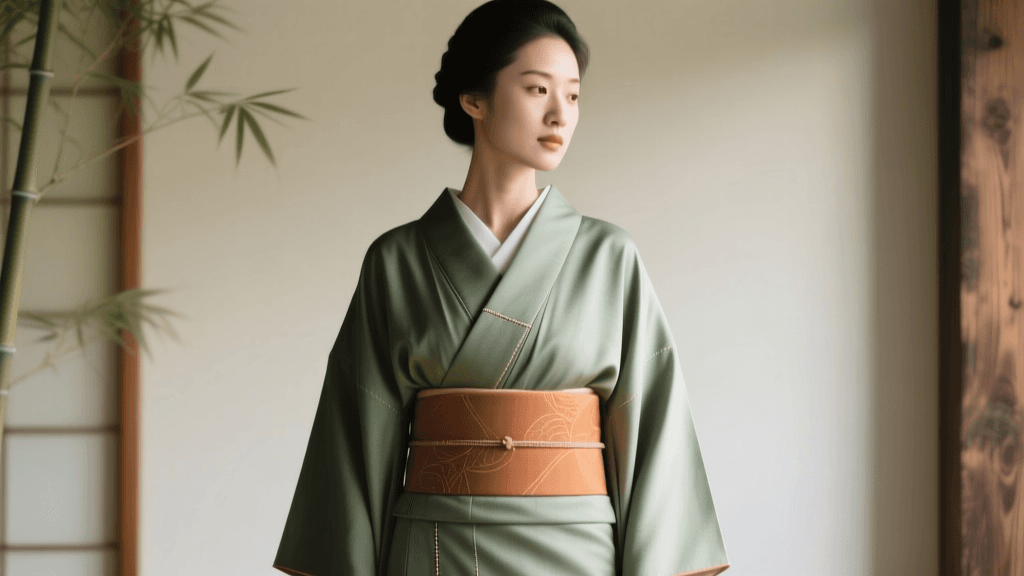
When exploring the rich tapestry of Japanese traditional clothing, most enthusiasts immediately think of the mainland kimono, yukata, and hakama. However, Japan’s southernmost prefecture, Okinawa, boasts a profoundly distinct sartorial heritage rooted in the independent Ryukyu Kingdom (1429–1879). Ryukyuan garments, collectively known as Ryusou, offer a fascinating regional variation that prioritizes breathability, vibrant stencil-dyed aesthetics, and unique draping techniques suited for a subtropical climate. For collectors, travelers, and cultural historians, understanding the nuances of Okinawan dress provides a vital counter-narrative to the standardized Edo and Kyoto styles.
Unlike the heavily layered silk garments of mainland Japan, Okinawan traditional clothing evolved through maritime trade with China, Southeast Asia, and mainland Japan. This resulted in a unique synthesis of indigenous weaving techniques, tropical material sourcing, and distinct dyeing methods. Today, the preservation of these garments is not just a matter of historical interest, but a living, breathing craft sector that offers practical, wearable art for modern consumers.
Mainland Kimono vs. Okinawan Ryusou: A Structural Comparison
To truly appreciate Ryukyuan garments, one must understand how they structurally and functionally diverge from their mainland counterparts. The following table outlines the primary differences in design, material, and styling.
| Feature | Mainland Japanese Kimono | Okinawan Ryusou |
|---|---|---|
| Primary Climate | Temperate (Four distinct seasons) | Subtropical (Hot, highly humid, typhoon-prone) |
| Standard Fabrics | Silk, heavy cotton, wool, synthetic blends | Ramie, banana fiber (Bashofu), lightweight cotton |
| Garment Length | Floor-length (requires waist folding) | Ankle-length (worn straight, no waist fold) |
| Obi / Belt Style | Wide, heavily padded, complex knots (e.g., Otaiko) | Narrow, lightweight, simple front/side knots (Uchinanchu) |
| Sleeve Construction | Variable (Furisode, Tomesode) with sewn underarm | Wide, open underarm seams for maximum ventilation |
The Magic of Ryukyuan Textiles: Bingata and Bashofu
The soul of the Ryusou lies in its textiles. Okinawa is home to several designated Intangible Cultural Properties, but two stand out globally for their beauty and craftsmanship: Bingata and Bashofu.
Bingata: The Stencil-Dyed Masterpiece
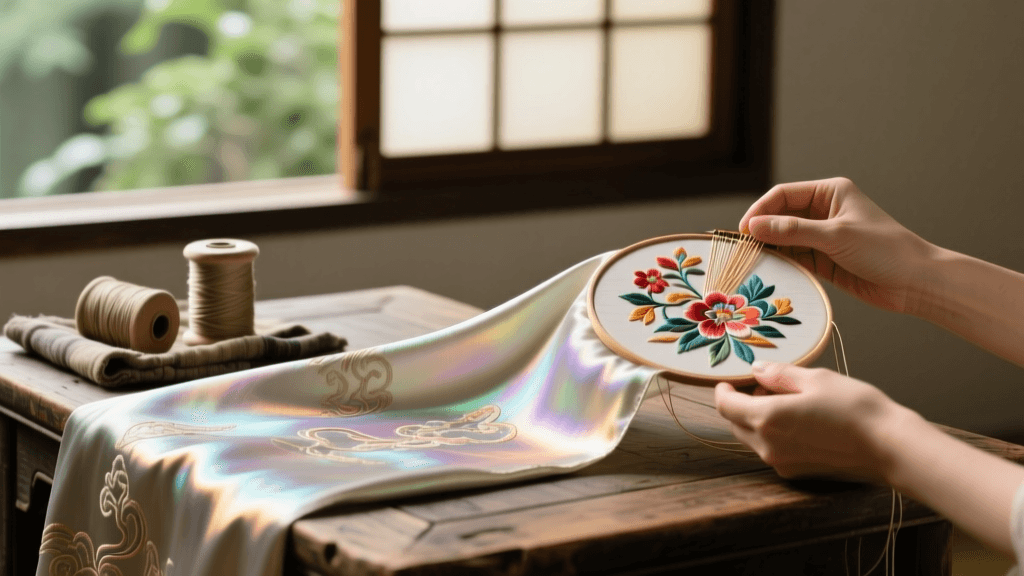
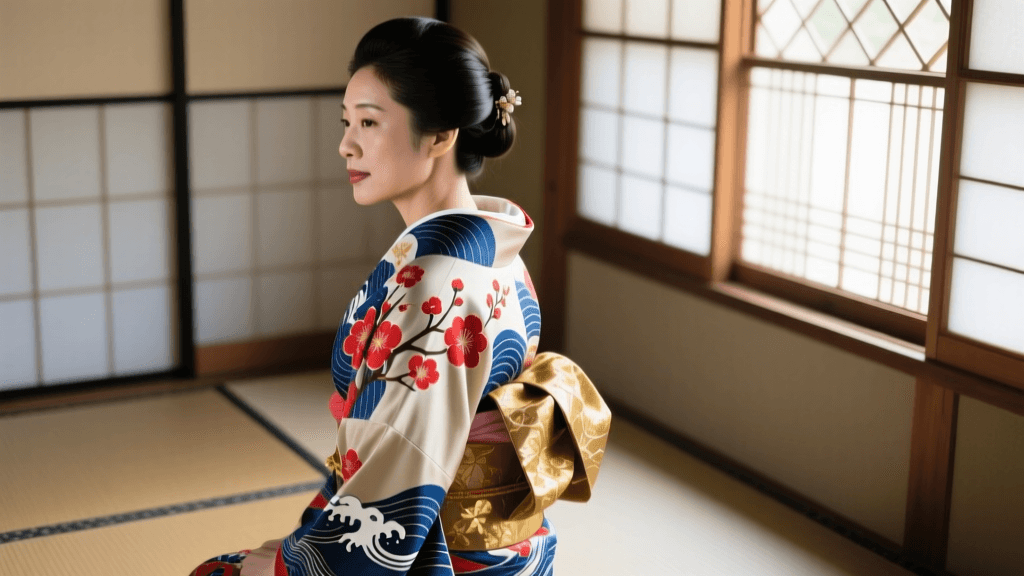
Bingata is Okinawa’s iconic resist-dyeing technique, historically reserved for Ryukyuan royalty and the warrior class. The process involves cutting intricate motifs into paper stencils, applying a rice-paste resist to the fabric, and then hand-painting vibrant pigments into the exposed areas. Traditional motifs include the Ryukyuan hibiscus, ocean waves, pine trees, and Chinese-inspired dragons and phoenixes. According to the Japan Kogei Association, the preservation of Bingata requires master artisans to mix natural pigments, such as sulfur yellow and indigo, ensuring the colors remain vivid despite the harsh Okinawan sun.
Bashofu: The Breathable Banana Fiber
While Bingata represents the vibrant aristocracy, Kijoka no Bashofu represents the resilient spirit of the Okinawan people. Woven from the fibers of the Japanese banana plant (Musa basjoo), Bashofu is incredibly lightweight, crisp, and breathable. The production process in Ogimi Village is staggeringly labor-intensive: it takes approximately 200 banana trees, harvested and processed entirely by hand, to produce a single tanmono (a standard kimono bolt of about 12 meters). The resulting fabric has a linen-like texture that softens beautifully with age and wear.
Practical Guide: Buying Ryukyuan Garments in Okinawa
For those looking to purchase authentic Ryukyuan garments, whether as a wearable souvenir or an investment piece, understanding the local market, costs, and lead times is essential. The Visit Okinawa cultural tourism board recommends visiting specific craft villages and established studios to guarantee authenticity.
Where to Buy and What to Expect
- Shuri Ryusen (Naha City): One of the most accessible and famous Bingata studios. They offer everything from small accessories to full custom kimono. Timing: Off-the-rack cotton yukata can be purchased same-day. Custom silk Bingata takes 3 to 6 months.
- Kijoka Bashofu Hall (Ogimi Village): Located in northern Okinawa, this is the epicenter of banana-fiber weaving. Timing: Due to the scarcity of weavers and the labor-intensive process, commissioning a custom Bashofu kimono can take 12 to 18 months.
- Tsuboya Pottery Street (Naha City): While primarily known for ceramics, several boutique textile shops here sell modern, ready-to-wear Ryusou and Bingata aloha shirts.
Cost Breakdown (Estimates in JPY and USD)
- Bingata Cotton Yukata (Ready-to-wear): ¥25,000 – ¥45,000 ($170 – $300 USD). Ideal for summer festivals and casual wear.
- Bingata Silk Kimono (Custom Commission): ¥300,000 – ¥600,000+ ($2,000 – $4,000+ USD). Reserved for formal events, weddings, and collectors.
- Authentic Kijoka no Bashofu Kimono: ¥800,000 – ¥1,500,000+ ($5,500 – $10,000+ USD). A museum-grade investment piece and a recognized UNESCO Intangible Cultural Heritage craft.
- Bingata Obi / Sash: ¥15,000 – ¥40,000 ($100 – $270 USD). A great entry point for incorporating Ryukyuan style into mainland kimono ensembles.
Sizing, Measurements, and Styling the Ryusou
Wearing a Ryusou requires a different approach to measuring and styling than a mainland kimono. If you are commissioning a piece or buying vintage, pay close attention to these regional variations.
Crucial Measurements
When tailoring a Ryusou, the yuki (sleeve span from the center back to the wrist) is measured similarly to mainland garments. However, the take (body length) is intentionally cut 5 to 10 centimeters shorter. While a standard mainland kimono is tailored to touch the floor (requiring the ohashori fold at the waist to adjust height), the Ryusou is designed to rest just above the ankles. This prevents the hem from dragging in humid, rainy environments and allows for maximum airflow around the legs. Furthermore, the sleeves are often cut wider and left entirely open at the underarm, unlike the partially sewn underarms of mainland women's kimono.
The Uchinanchu Knot
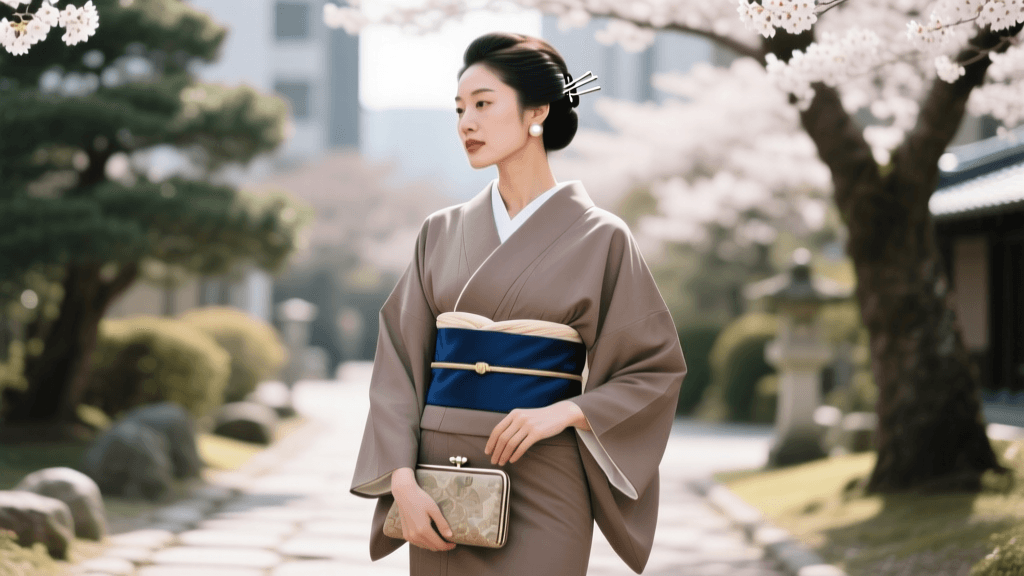
Mainland kimono require a complex array of accessories to tie the obi: the obijime (cord), obiage (sash), and obi-ita (stiffener). The Ryusou simplifies this. The Okinawan sash is generally narrower (about 10-15 cm wide) and is tied in a simple, flat knot at the front or slightly off-center, known as the Uchinanchu knot. This knot is secure but easy to untie, reflecting the relaxed, practical nature of island living. Footwear also differs; while mainland styles demand tabi socks and zori sandals, traditional Ryusou is often worn barefoot or with simple, unlined straw sandals to keep cool.
Caring for Your Okinawan Textiles
The subtropical origins of these garments dictate their care. Bingata pigments, while vibrant, are susceptible to UV fading. Never dry a Bingata garment in direct sunlight; always dry it in the shade. Modern cotton Bingata can be gently hand-washed in cold water using a neutral pH detergent, but antique silk pieces or delicate Bashofu must be dry-cleaned by specialists familiar with natural dyes and plant fibers. When storing Bashofu, avoid plastic covers, as the banana fiber needs to breathe; wrap it in acid-free tatou paper and store it in a cool, dry place with natural desiccants.
Conclusion
The Ryusou and its associated textiles, Bingata and Bashofu, represent a vital, vibrant branch of Japanese sartorial history. By understanding the regional variations, structural differences, and the immense labor required to produce these garments, collectors and enthusiasts can make informed, respectful purchases. Whether you are walking the streets of Naha in a breezy cotton Bingata yukata or preserving a museum-quality Bashofu bolt, you are participating in the enduring legacy of the Ryukyu Kingdom.
Authoritative Sources
- Japan Kogei Association (Japan Traditional Crafts) - Guidelines on the preservation of Bingata and Bashofu techniques.
- Visit Okinawa Official Tourism Board - Regional directories for authentic craft villages and studios.
- Shuri Ryusen Bingata Studio - Historical context and modern applications of Ryukyuan stencil dyeing.